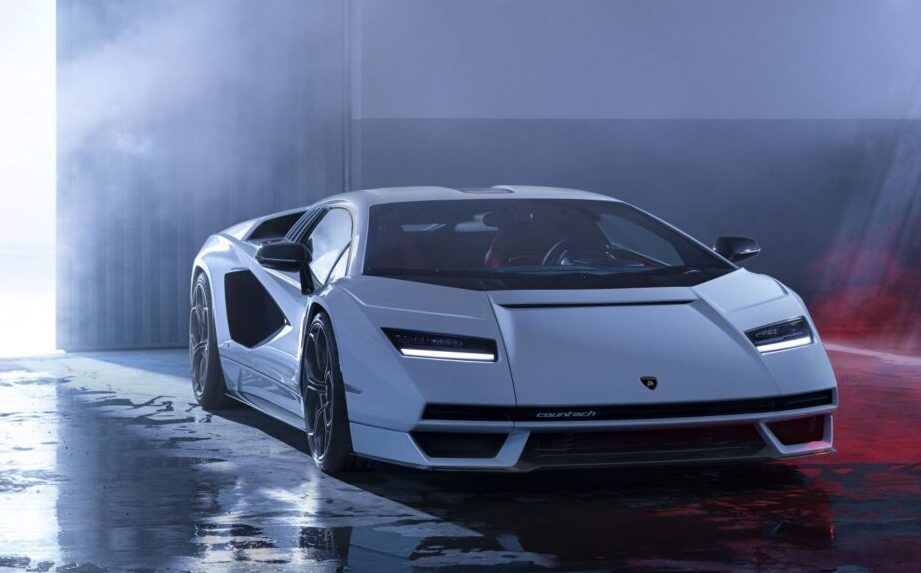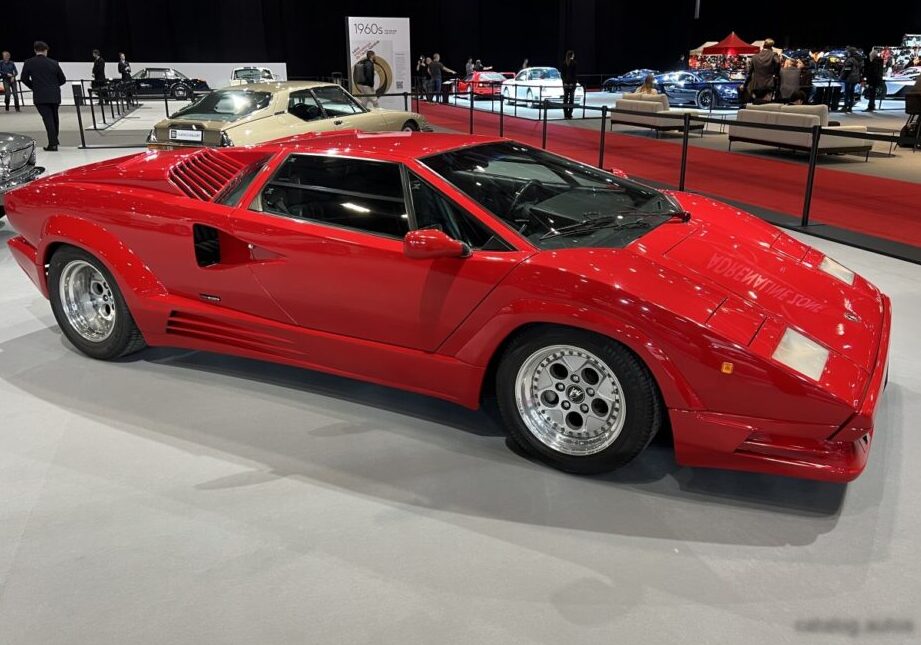
The Lamborghini Countach LP5000 QV, produced in 1988, represents the pinnacle of the original Countach lineage. “QV” stands for “Quattrovalvole” (four valves), signifying a crucial upgrade to the engine. This iteration, built from 1985 to 1988, was the final and most refined version of the iconic wedge-shaped supercar that defined Lamborghini throughout the 1970s and 80s. It served as a bridge between the earlier, more raw Countach models and the forthcoming Diablo, solidifying the Countach’s status as a design and performance icon. The LP5000 QV was primarily aimed at the high-end sports car market, competing with Ferrari and other exotic manufacturers, and was sold globally, with a significant presence in Europe, North America, and Japan.
Technical Specifications
| Brand | Lamborghini |
| Model | Countach |
| Generation | Countach |
| Type (Engine) | LP5000 QV (455 Hp) |
| Start of production | 1988 year |
| End of production | 1988 year |
| Powertrain Architecture | Internal Combustion engine |
| Body type | Coupe |
| Seats | 2 |
| Doors | 2 |
| Fuel Type | Petrol (Gasoline) |
| Acceleration 0 – 100 km/h | 5 sec |
| Acceleration 0 – 62 mph | 5 sec |
| Acceleration 0 – 60 mph | 4.8 sec |
| Maximum speed | 295 km/h / 183.3 mph |
| Weight-to-power ratio | 3.3 kg/Hp, 305.4 Hp/tonne |
| Weight-to-torque ratio | 3 kg/Nm, 335.6 Nm/tonne |
| Power | 455 Hp @ 7000 rpm |
| Power per litre | 88.1 Hp/l |
| Torque | 500 Nm @ 5200 rpm / 368.78 lb.-ft. @ 5200 rpm |
| Maximum engine speed | 7300 rpm |
| Engine layout | Middle, Longitudinal |
| Engine displacement | 5167 cm3 / 315.31 cu. in. |
| Number of cylinders | 12 |
| Engine configuration | V-engine |
| Cylinder Bore | 85.5 mm / 3.37 in. |
| Piston Stroke | 75 mm / 2.95 in. |
| Compression ratio | 9.5:1 |
| Number of valves per cylinder | 4 |
| Fuel injection system | Multi-port manifold injection |
| Engine aspiration | Naturally aspirated engine |
| Kerb Weight | 1490 kg / 3284.89 lbs |
| Trunk (boot) space – maximum | 240 l / 8.48 cu. ft |
| Fuel tank capacity | 120 l / 31.7 US gal | 26.4 UK gal |
| Length | 4140 mm / 162.99 in. |
| Width | 2000 mm / 78.74 in. |
| Height | 1070 mm / 42.13 in. |
| Wheelbase | 2500 mm / 98.43 in. |
| Front track | 1536 mm / 60.47 in. |
| Rear (Back) track | 1606 mm / 63.23 in. |
| Drivetrain Architecture | The Internal combustion engine (ICE) drives the rear wheels of the vehicle. |
| Drive wheel | Rear wheel drive |
| Number of gears and type of gearbox | 5 gears, manual transmission |
| Front suspension | Independent coil spring, Wishbone |
| Rear suspension | Independent coil spring |
| Front brakes | Ventilated discs |
| Rear brakes | Ventilated discs |
| Steering type | Steering rack and pinion |
| Front wheel tires | 225/50 VR15 |
| Rear wheel tires | 345/35 VR15 |
| Front wheel rims | 8.5J x 15 |
| Rear wheel rims | 12J x 15 |
Powertrain & Engine Architecture
The heart of the LP5000 QV is its 5.2-liter (5167 cc) naturally aspirated V12 engine. The key improvement over earlier Countach models was the addition of four valves per cylinder (hence “Quattrovalvole”), increasing the engine’s breathing capacity and overall efficiency. This engine, designated as the Lamborghini engine code DOHC, produced 455 horsepower at 7,000 rpm and 368.78 lb-ft of torque at 5,200 rpm. The engine featured a 9.5:1 compression ratio and utilized Bosch K-Jetronic multi-port fuel injection. The V12’s layout was longitudinal, mid-mounted to optimize weight distribution. The engine was paired exclusively with a five-speed manual transmission, delivering power to the rear wheels. The transmission was known for its robust construction but could be somewhat notchy in operation, requiring a skilled driver for smooth shifts.
Driving Characteristics
The LP5000 QV offered a significant step up in performance compared to earlier Countach variants. The increased horsepower and improved engine breathing resulted in a 0-60 mph time of around 4.8 seconds and a top speed of 183.3 mph. However, the Countach QV wasn’t about outright acceleration in the modern sense. Its character was defined by the raw, visceral experience of piloting a powerful, rear-wheel-drive supercar with limited electronic aids. The steering was direct, but required significant effort, and the suspension, while independent, was firm, transmitting road imperfections directly to the cabin. The five-speed manual transmission demanded precise timing and coordination. The QV’s wide rear tires (345/35 VR15) provided substantial grip, but the car could still be challenging to handle at the limit, requiring respect and careful throttle control.
Equipment & Trim Levels
The LP5000 QV was relatively sparsely equipped by modern standards, focusing on the driving experience rather than luxury features. Standard features included leather upholstery, air conditioning, and power windows. However, options were available to personalize the car, including upgraded audio systems, different wheel designs, and custom paint colors. The interior design was typically minimalist, with a focus on functionality. The dashboard featured a comprehensive array of gauges, including a speedometer, tachometer, oil pressure gauge, water temperature gauge, and fuel level indicator. The QV generally featured a black interior, though other colors were available through the factory customization program.
Chassis & Braking
The Countach QV utilized a tubular steel chassis, providing a rigid and lightweight foundation for the car. The suspension consisted of independent coil springs and wishbone setups at all four corners. The braking system featured ventilated discs on all four wheels, providing adequate stopping power for the car’s performance capabilities. However, the braking system lacked ABS, requiring the driver to rely on their own skill and judgment during hard braking maneuvers. The car’s wide track and low center of gravity contributed to its stability and handling characteristics.
Market Reception & Comparison
The LP5000 QV was widely praised by automotive journalists for its stunning design, exhilarating performance, and overall driving experience. It was considered a significant improvement over earlier Countach models, offering increased power, improved handling, and a more refined driving experience. Compared to the earlier LP400 and LP5000S models, the QV offered a noticeable performance boost and a more sophisticated engine. While the QV was more expensive than the earlier models, its increased performance and exclusivity justified the price premium for many enthusiasts. Fuel economy, unsurprisingly, was poor, averaging around 10-12 mpg in real-world driving.
Legacy
The Lamborghini Countach LP5000 QV remains a highly sought-after collector’s car today. Its iconic design and limited production numbers have contributed to its enduring appeal. The QV’s V12 engine is known for its reliability, provided it has been properly maintained. However, maintenance costs can be substantial, due to the complexity of the engine and the scarcity of parts. The QV represents the culmination of the Countach’s evolution and is widely regarded as one of the most iconic supercars of all time. Its influence can be seen in the design of subsequent Lamborghini models, and it continues to inspire automotive enthusiasts around the world. Values for well-maintained examples have steadily increased in recent years, reflecting the car’s historical significance and collectibility.