
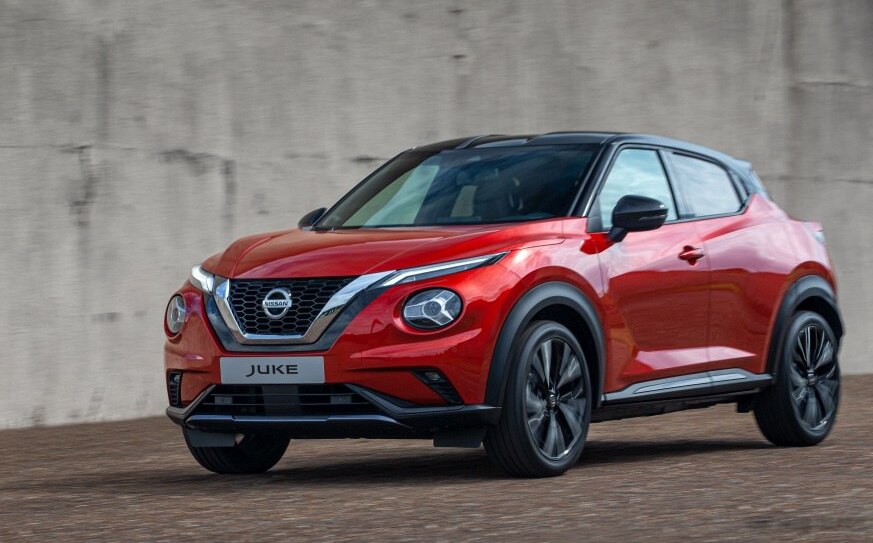
The Nissan Juke II 1.0 DIG-T (117 hp) DCT represents an entry-level powertrain option within the second generation Juke lineup, produced from September 2019 through October 2020. Positioned as a fuel-efficient and accessible variant, it aimed to broaden the Juke’s appeal to a wider customer base, particularly in European markets where smaller displacement turbocharged engines were increasingly popular. This model marked a significant shift for the Juke, moving away from the naturally aspirated engines of the first generation and embracing downsized, forced-induction technology. It’s built on the CMF-B platform, shared with other Renault-Nissan-Mitsubishi Alliance vehicles.
Technical Specifications
| Brand | Nissan |
| Model | Juke |
| Generation | Juke II |
| Type (Engine) | 1.0 DIG-T (117 Hp) DCT |
| Start of production | September, 2019 |
| End of production | October, 2020 |
| Powertrain Architecture | Internal Combustion engine |
| Body type | SUV, Crossover |
| Seats | 5 |
| Doors | 5 |
| Fuel Type | Petrol (Gasoline) |
| Acceleration 0 – 100 km/h | 11.1 sec |
| Acceleration 0 – 62 mph | 11.1 sec |
| Acceleration 0 – 60 mph | 10.5 sec |
| Maximum speed | 180 km/h (111.85 mph) |
| Emission standard | Euro 6 d-TEMP |
| Weight-to-power ratio | 10.3 kg/Hp, 96.7 Hp/tonne |
| Weight-to-torque ratio | 6.7 kg/Nm, 148.8 Nm/tonne |
| Power | 117 Hp @ 5250 rpm |
| Power per litre | 117.1 Hp/l |
| Torque | 180 Nm @ 1750 rpm (132.76 lb.-ft. @ 1750 rpm) |
| Engine layout | Front, Transverse |
| Engine Model/Code | HR10DDT |
| Engine displacement | 999 cm3 (60.96 cu. in.) |
| Number of cylinders | 3 |
| Engine configuration | Inline |
| Engine aspiration | Turbocharger, Intercooler |
| Engine oil capacity | 4.1 l (4.33 US qt | 3.61 UK qt) |
| Coolant | 6.5 l (6.87 US qt | 5.72 UK qt) |
| Kerb Weight | 1210 kg (2667.59 lbs) |
| Trunk (boot) space – maximum | 422 l (14.9 cu. ft) |
| Length | 4210 mm (165.75 in) |
| Width | 1800 mm (70.87 in) |
| Height | 1595 mm (62.8 in) |
| Wheelbase | 2636 mm (103.78 in) |
| Drivetrain Architecture | The Internal combustion engine (ICE) drives the front wheels of the vehicle. |
| Drive wheel | Front wheel drive |
| Number of gears and type of gearbox | 7 gears, automatic transmission DCT |
| Front suspension | Independent type McPherson |
| Rear suspension | Semi-independent, coil spring |
| Front brakes | Disc, 280 mm |
| Rear brakes | Disc, 260 mm |
| Assisting systems | ABS (Anti-lock braking system) |
| Steering type | Steering rack and pinion |
| Tires size | 215/65 R16; 215/60 R17; 225/45 R19 |
| Wheel rims size | 16; 17; 19 |
Powertrain & Engine Architecture
The heart of this Juke variant is the HR10DDT, a 1.0-liter, three-cylinder turbocharged gasoline engine. This engine is part of Nissan’s DIG-T (Direct Injection Gasoline – Turbocharged) series. It utilizes direct fuel injection, a technology that improves combustion efficiency and power output. The HR10DDT features a single-scroll turbocharger with an intercooler to manage intake air temperature. The engine’s valvetrain employs variable valve timing (VVT) on both the intake and exhaust sides, optimizing performance across the rev range. Paired with this engine is a seven-speed dual-clutch transmission (DCT). This DCT provides quick and smooth gear changes, contributing to a more engaging driving experience compared to a traditional automatic transmission. The DCT’s programming prioritizes fuel efficiency, with taller gear ratios in the higher gears.
Driving Characteristics
The 117 hp output and 180 Nm (132.76 lb-ft) of torque deliver adequate, though not exhilarating, performance. Acceleration from 0-60 mph takes around 10.5 seconds, making it suitable for urban and suburban driving. Compared to the higher-output 1.6 DIG-T variants, this engine feels less responsive, particularly during overtaking maneuvers. The DCT transmission generally shifts smoothly, but can exhibit some hesitation at low speeds. The gear ratios are tuned for fuel economy, meaning the engine can feel strained when climbing hills or carrying a full load. The front-wheel-drive configuration provides predictable handling, but lacks the all-weather capability of the optional all-wheel-drive system available on other Juke trims.
Equipment & Trim Levels
The 1.0 DIG-T (117 hp) DCT typically served as the entry point to the Juke II range. Standard equipment generally included air conditioning, a touchscreen infotainment system with Apple CarPlay and Android Auto compatibility, Bluetooth connectivity, and a suite of safety features such as automatic emergency braking and lane departure warning. Interior upholstery was typically cloth, and the dashboard featured a simple, functional design. Optional extras included alloy wheels, a larger touchscreen display, a rearview camera, and parking sensors. Higher trim levels, such as the Tekna, added features like leather upholstery, a Bose sound system, and advanced driver-assistance systems.
Chassis & Braking
The Juke II utilizes a McPherson strut front suspension and a semi-independent coil spring rear suspension. This setup provides a comfortable ride quality, although it’s not particularly sporty. The front brakes are ventilated discs measuring 280mm, while the rear brakes are solid discs measuring 260mm. ABS (Anti-lock Braking System) is standard. The steering is a rack and pinion system, providing reasonably precise control. The weight of this variant, around 1210 kg (2667.59 lbs), is relatively light for a crossover, contributing to its decent fuel economy.
Market Reception & Comparison
Critics generally praised the Juke II 1.0 DIG-T for its fuel efficiency and affordability. However, some reviewers found the engine to be underpowered, particularly when compared to the more potent 1.6 DIG-T options. Fuel economy figures typically ranged from 45-50 mpg (combined cycle), making it a competitive offering in its class. Compared to the 1.6 DIG-T, the 1.0 DIG-T offered lower running costs but sacrificed performance. The 1.6 DIG-T provided a more engaging driving experience, while the 1.0 DIG-T prioritized economy. Reliability reports have been generally positive, with few major issues reported with the HR10DDT engine or the DCT transmission.
Legacy
The Nissan Juke II 1.0 DIG-T (117 hp) DCT represents a key step in Nissan’s strategy to offer a wider range of powertrain options in the compact crossover segment. While not the most powerful Juke variant, it provided an accessible and fuel-efficient entry point to the model range. On the used car market, these models are generally well-regarded for their reliability and low running costs. The HR10DDT engine has proven to be a durable and efficient unit, and the DCT transmission, while requiring occasional maintenance, has also demonstrated good long-term reliability. As a result, the Juke II 1.0 DIG-T remains a popular choice for buyers seeking a practical and economical crossover.


