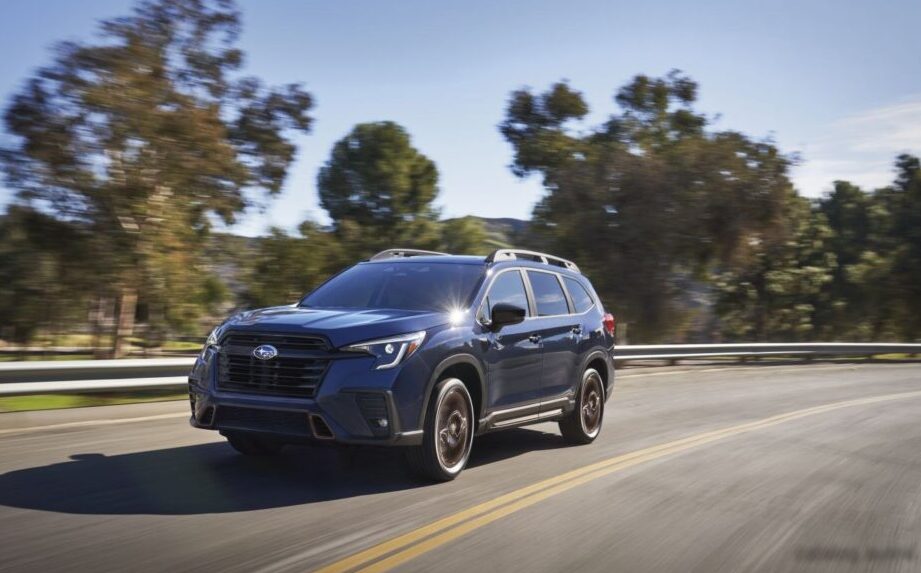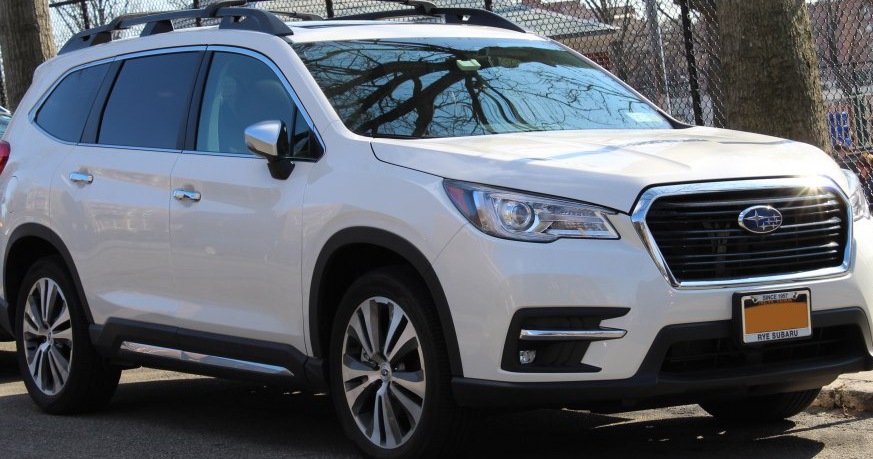
The Subaru Ascent 2.4, equipped with a 260 horsepower engine and a continuously variable transmission (CVT) paired with all-wheel drive, represents Subaru’s entry into the highly competitive three-row mid-size SUV segment. Introduced for the 2019 model year (covering production years 2018-2023), the Ascent was designed to address a gap in Subaru’s lineup, offering a larger vehicle capable of comfortably seating up to eight passengers. It’s built on Subaru’s Global Platform, a modular architecture also underpinning the Impreza, Forester, and Crosstrek, but significantly scaled up to accommodate the larger dimensions and increased weight of the SUV. This variant, with its 2.4-liter turbocharged engine and CVT, quickly became the mainstay of the Ascent lineup, offering a balance of power, efficiency, and Subaru’s renowned symmetrical all-wheel drive system.
Technical Specifications
| Brand | Subaru |
| Model | Ascent |
| Generation | Ascent |
| Type (Engine) | 2.4 (260 Hp) AWD CVT |
| Start of production | 2018 year |
| End of production | 2023 year |
| Powertrain Architecture | Internal Combustion engine |
| Body type | SUV |
| Seats | 7-8 |
| Doors | 5 |
| Fuel consumption (economy) – urban | 11.2-11.7 l/100 km (21 – 20.1 US mpg) |
| Fuel consumption (economy) – extra urban | 8.7-9 l/100 km (27 – 26.1 US mpg) |
| Fuel Type | Petrol (Gasoline) |
| Weight-to-power ratio | 7.7 kg/Hp, 129.4 Hp/tonne |
| Weight-to-torque ratio | 5.3 kg/Nm, 187.2 Nm/tonne |
| Power | 260 Hp @ 5600 rpm |
| Power per litre | 108.9 Hp/l |
| Torque | 376 Nm @ 2000-4800 rpm (277.32 lb.-ft. @ 2000-4800 rpm) |
| Engine layout | Front, Longitudinal |
| Engine Model/Code | FA24 |
| Engine displacement | 2387 cm3 (145.66 cu. in.) |
| Number of cylinders | 4 |
| Engine configuration | Boxer |
| Cylinder Bore | 94 mm (3.7 in.) |
| Piston Stroke | 86 mm (3.39 in.) |
| Number of valves per cylinder | 4 |
| Fuel injection system | Direct injection |
| Engine aspiration | Turbocharger, Intercooler |
| Engine oil capacity | 4.5 l (4.76 US qt | 3.96 UK qt) |
| Coolant | 11.1 l (11.73 US qt | 9.77 UK qt) |
| Kerb Weight | 2009-2088 kg (4429.09 – 4603.25 lbs.) |
| Trunk (boot) space – minimum | 555 l (19.6 cu. ft.) |
| Fuel tank capacity | 73 l (19.28 US gal | 16.06 UK gal) |
| Length | 4999 mm (196.81 in.) |
| Width | 1930 mm (75.98 in.) |
| Width with mirrors folded | 2177 mm (85.71 in.) |
| Width including mirrors | 2187 mm (86.1 in.) |
| Height | 1819 mm (71.61 in.) |
| Wheelbase | 2891 mm (113.82 in.) |
| Front track | 1636 mm (64.41 in.) |
| Rear (Back) track | 1631 mm (64.21 in.) |
| Ride height (ground clearance) | 221 mm (8.7 in.) |
| Approach angle | 17.6° |
| Departure angle | 21.8° |
| Ramp-over (brakeover) angle | 18.2° |
| Drive wheel | All wheel drive (4×4) |
| Number of gears and type of gearbox | automatic transmission CVT Lineartronic |
| Front brakes | Ventilated discs |
| Rear brakes | Ventilated discs |
| Assisting systems | ABS (Anti-lock braking system) |
| Tires size | 245/60 R18 105H; 245/50 R20 102H |
| Wheel rims size | 7.5J x 18; 7.5J x 20 |
Powertrain & Engine Architecture
The heart of the Subaru Ascent 2.4 is the FA24 2.4-liter turbocharged four-cylinder Boxer engine. This engine is a key component of Subaru’s strategy to improve fuel efficiency and reduce emissions while maintaining performance. The Boxer configuration, with horizontally opposed pistons, provides a low center of gravity, contributing to the vehicle’s stability and handling. Direct fuel injection and a twin-scroll turbocharger enhance power delivery and responsiveness. The engine produces 260 horsepower at 5600 rpm and 277 lb-ft of torque between 2000 and 4800 rpm. This power is then channeled through a Lineartronic CVT (Continuously Variable Transmission). Subaru’s CVT is programmed to simulate gear changes, providing a more natural driving experience than some other CVTs. The CVT is specifically tuned for the Ascent’s weight and torque characteristics, prioritizing smooth acceleration and fuel efficiency. The engine utilizes a timing chain, reducing maintenance compared to timing belts.
Driving Characteristics
The 2.4-liter turbocharged engine and CVT combination in the Ascent delivers adequate performance for everyday driving and highway cruising. While not a sports SUV, the Ascent offers sufficient power for merging onto freeways and passing other vehicles. The CVT effectively utilizes the engine’s torque band, providing smooth and linear acceleration. Compared to a traditional automatic transmission, the CVT allows the engine to operate at its most efficient rpm, contributing to improved fuel economy. However, some drivers may notice a slight disconnect between engine speed and vehicle acceleration, a common characteristic of CVTs. Compared to the base 2.0-liter naturally aspirated engine (available in some markets), the 2.4 turbo offers a significant performance upgrade, particularly in terms of low-end torque. It also feels more responsive than the hypothetical diesel options that were never offered in the US market.
Equipment & Trim Levels
The Subaru Ascent 2.4 AWD CVT was offered in several trim levels, including Base, Premium, Limited, and Touring. The base model typically included standard features such as three-zone automatic climate control, a 6.5-inch touchscreen infotainment system with Apple CarPlay and Android Auto compatibility, and Subaru’s EyeSight driver-assist technology suite (including adaptive cruise control, lane departure warning, and automatic emergency braking). Higher trim levels added features like leather upholstery, a larger 8-inch touchscreen, a premium Harman Kardon audio system, and power-adjustable front seats. Optional extras included a rear-seat entertainment system and a panoramic sunroof. The Premium trim was the most popular, striking a balance between features and price.
Chassis & Braking
The Ascent’s chassis is built on Subaru’s Global Platform, providing a rigid and stable foundation. The suspension consists of MacPherson struts in the front and a double-wishbone setup in the rear. The suspension is tuned for comfort, prioritizing a smooth ride over sporty handling. All-wheel drive is standard, utilizing a symmetrical system that distributes power to all four wheels for enhanced traction in various conditions. The braking system features ventilated discs on all four wheels, providing adequate stopping power. Anti-lock brakes (ABS) and electronic brake-force distribution (EBD) are standard safety features.
Market Reception & Comparison
The Subaru Ascent was generally well-received by automotive critics, praised for its spacious interior, standard all-wheel drive, and comprehensive safety features. The 2.4-liter turbocharged engine was considered a good match for the vehicle’s size and weight, providing sufficient power for most driving situations. Fuel economy was competitive within the mid-size SUV segment, although not class-leading. Compared to rivals like the Honda Pilot and Toyota Highlander, the Ascent offered a more unique driving experience due to its Boxer engine and standard all-wheel drive. Some critics noted that the CVT could feel less engaging than traditional automatic transmissions. Reliability has been generally good, with few major issues reported.
Legacy
The Subaru Ascent has quickly become a significant model for Subaru, contributing to increased sales and brand recognition. The FA24 engine has proven to be a reliable and durable powerplant, and the Lineartronic CVT has demonstrated its capability in handling the engine’s torque output. In the used car market, the 2019-2023 Ascent 2.4 AWD CVT models hold their value relatively well, due to their reputation for reliability, safety, and practicality. The Ascent filled a crucial need for Subaru, providing a family-friendly SUV that maintains the brand’s core values of safety, durability, and all-weather capability. It remains a popular choice for families seeking a versatile and reliable vehicle.