
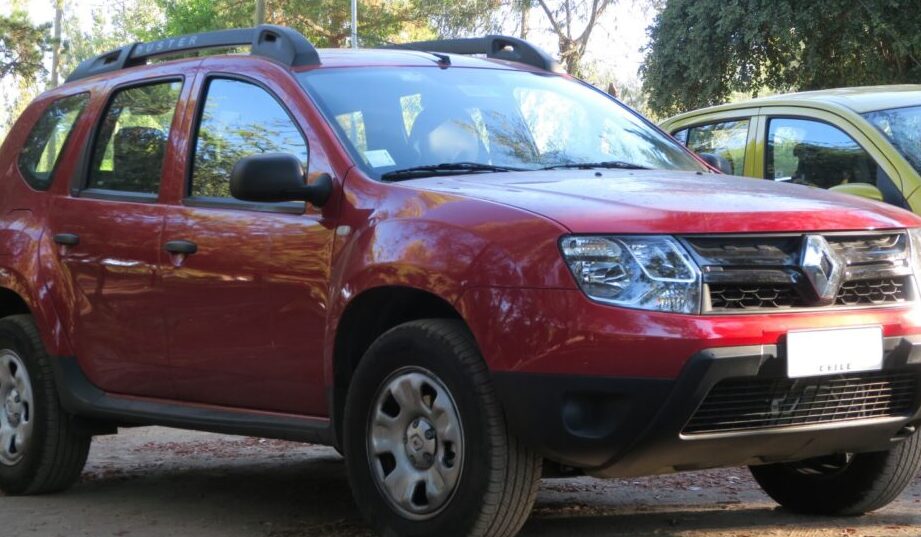
The Renault Duster I (facelift 2015) 2.0 (143 Hp) AWD represents a significant offering within the first generation of the Duster, produced from June 2015 to May 2021. Positioned as a mid-range to upper-mid-range trim level, this variant combined a naturally aspirated 2.0-liter gasoline engine with a six-speed manual transmission and Renault’s all-wheel-drive system. The Duster, initially launched in 2010, was designed to offer affordable SUV capability, particularly targeting emerging markets. The facelift in 2015 brought styling updates and refinements to the original design, enhancing its appeal in both European and South American markets. This 2.0L AWD version aimed to provide a balance of performance, practicality, and all-weather capability for buyers seeking a versatile and robust vehicle.
Technical Specifications
| Brand | Renault |
| Model | Duster |
| Generation | Duster I (facelift 2015) |
| Type (Engine) | 2.0 (143 Hp) AWD |
| Start of production | June, 2015 |
| End of production | May, 2021 |
| Powertrain Architecture | Internal Combustion engine |
| Body type | SUV |
| Seats | 5 |
| Doors | 5 |
| Fuel consumption (urban) | 10.1 l/100 km (23.3 US mpg, 28 UK mpg, 9.9 km/l) |
| Fuel consumption (extra urban) | 6.5 l/100 km (36.2 US mpg, 43.5 UK mpg, 15.4 km/l) |
| Fuel consumption (combined) | 7.8 l/100 km (30.2 US mpg, 36.2 UK mpg, 12.8 km/l) |
| CO2 emissions | 177 g/km |
| Fuel Type | Petrol (Gasoline) |
| Acceleration 0 – 100 km/h | 10.3 sec |
| Acceleration 0 – 62 mph | 10.3 sec |
| Acceleration 0 – 60 mph | 9.8 sec |
| Maximum speed | 180 km/h (111.85 mph) |
| Emission standard | Euro 5 |
| Weight-to-power ratio | 9.6 kg/Hp, 104.4 Hp/tonne |
| Weight-to-torque ratio | 7 kg/Nm, 142.3 Nm/tonne |
| Power | 143 Hp @ 5750 rpm |
| Power per litre | 71.6 Hp/l |
| Torque | 195 Nm @ 4000 rpm (143.82 lb.-ft. @ 4000 rpm) |
| Engine layout | Front, Transverse |
| Engine Model/Code | F4R |
| Engine displacement | 1998 cm3 (121.93 cu. in.) |
| Number of cylinders | 4 |
| Engine configuration | Inline |
| Cylinder Bore | 82.7 mm (3.26 in.) |
| Piston Stroke | 93 mm (3.66 in.) |
| Compression ratio | 11.1:1 |
| Number of valves per cylinder | 4 |
| Fuel injection system | Multi-port manifold injection |
| Engine aspiration | Naturally aspirated engine |
| Engine oil capacity | 5.4 l (5.71 US qt | 4.75 UK qt) |
| Kerb Weight | 1370-1395 kg (3020.33 – 3075.45 lbs.) |
| Max. weight | 1870 kg (4122.64 lbs.) |
| Max load | 475-500 kg (1047.2 – 1102.31 lbs.) |
| Trunk (boot) space – minimum | 408 l (14.41 cu. ft.) |
| Trunk (boot) space – maximum | 1570 l (55.44 cu. ft.) |
| Fuel tank capacity | 50 l (13.21 US gal | 11 UK gal) |
| Permitted trailer load with brakes (12%) | 1500 kg (3306.93 lbs.) |
| Permitted trailer load without brakes | 720 kg (1587.33 lbs.) |
| Length | 4315 mm (169.88 in.) |
| Width | 1822 mm (71.73 in.) |
| Width including mirrors | 2000 mm (78.74 in.) |
| Height | 1695 mm (66.73 in.) |
| Wheelbase | 2674 mm (105.28 in.) |
| Front track | 1559 mm (61.38 in.) |
| Rear (Back) track | 1560 mm (61.42 in.) |
| Front overhang | 816 mm (32.13 in.) |
| Rear overhang | 825 mm (32.48 in.) |
| Ride height (ground clearance) | 210 mm (8.27 in.) |
| Approach angle | 29.3° |
| Departure angle | 34.9° |
| Ramp-over (brakeover) angle | 23° |
| Drive wheel | All wheel drive (4×4) |
| Number of gears and type of gearbox | 6 gears, manual transmission |
| Front suspension | Independent, type McPherson with coil spring and anti-roll bar |
| Rear suspension | Independent multi-link spring suspension with stabilizer |
| Front brakes | Ventilated discs |
| Rear brakes | Drum |
| Assisting systems | ABS (Anti-lock braking system) |
| Steering type | Steering rack and pinion |
| Power steering | Hydraulic Steering |
| Tires size | 215/65 R16 |
| Wheel rims size | 16 |
Powertrain & Engine Architecture
The heart of the Duster 2.0 AWD is the F4R engine, a 1.998-liter inline-four cylinder gasoline engine. This engine, a product of Renault’s engineering, had been in production for many years and was known for its relative simplicity and durability. It utilizes a multi-point fuel injection system, delivering fuel to each cylinder individually for optimized combustion. The engine features a double overhead camshaft (DOHC) valvetrain with four valves per cylinder, contributing to its respectable power output. The 143 horsepower peak is achieved at 5750 rpm, while the 195 Nm (143.82 lb-ft) of torque is available at 4000 rpm. The six-speed manual transmission was the standard offering for this variant, providing drivers with good control over the engine’s power band. The transmission’s gear ratios were tuned to balance acceleration with fuel efficiency, although the AWD system added weight and slightly impacted overall performance.
Driving Characteristics
The Duster 2.0 AWD, with its 143 hp and manual transmission, offered a reasonably engaging driving experience. While not a sports SUV, it provided sufficient power for everyday driving and occasional off-road excursions. Acceleration from 0-60 mph took around 9.8 seconds, which was competitive for its class. The manual gearbox allowed for precise control, and the AWD system provided enhanced traction on slippery surfaces. The higher weight of the AWD system, compared to the front-wheel-drive versions, was noticeable, particularly during spirited driving. The suspension, tuned for comfort and durability, provided a stable ride on paved roads, but could feel somewhat firm on rough terrain. The gear ratios were well-matched to the engine’s torque curve, providing adequate pulling power in most situations.
Equipment & Trim Levels
The 2.0 AWD trim of the Duster I (facelift 2015) typically included features such as air conditioning, power windows, central locking, and an audio system with USB connectivity. Safety equipment included ABS, front airbags, and seatbelt pretensioners. Higher trim levels within the 2.0 AWD range offered additional features like alloy wheels, fog lights, a more advanced audio system, and parking sensors. Interior upholstery was typically cloth, with options for upgraded materials on higher-spec models. The dashboard layout was functional and straightforward, prioritizing practicality over luxury.
Chassis & Braking
The Duster’s chassis was a robust body-on-frame construction, contributing to its durability and off-road capability. The front suspension utilized a McPherson strut setup with a coil spring and anti-roll bar, while the rear suspension employed an independent multi-link system with a stabilizer bar. This configuration provided a good balance of ride comfort and handling. The braking system featured ventilated discs on the front wheels and drum brakes on the rear. While adequate for most driving conditions, the rear drum brakes were a cost-saving measure and didn’t offer the same stopping power as disc brakes.
Market Reception & Comparison
The Renault Duster 2.0 AWD was generally well-received by automotive critics as a practical and affordable SUV. It was praised for its spacious interior, robust build quality, and all-weather capability. However, some critics noted that the engine could feel underpowered when fully loaded or tackling steep inclines. Compared to the base 1.6-liter engine, the 2.0-liter offered a significant performance boost. Compared to diesel variants, the 2.0L petrol offered a different driving experience, prioritizing responsiveness over fuel economy. Fuel economy figures of around 30.2 US mpg combined were respectable for its class, but lower than those achieved by the diesel models.
Legacy
The Renault Duster I (facelift 2015) 2.0 AWD has proven to be a reliable and durable vehicle in the used car market. The F4R engine is known for its longevity, and the manual transmission is relatively simple to maintain. While some owners have reported minor issues with the suspension components, overall reliability has been good. The Duster’s affordability and practicality have made it a popular choice for budget-conscious buyers seeking a versatile SUV. Today, well-maintained examples of this variant continue to offer good value and remain a viable option for those seeking a capable and dependable vehicle.


