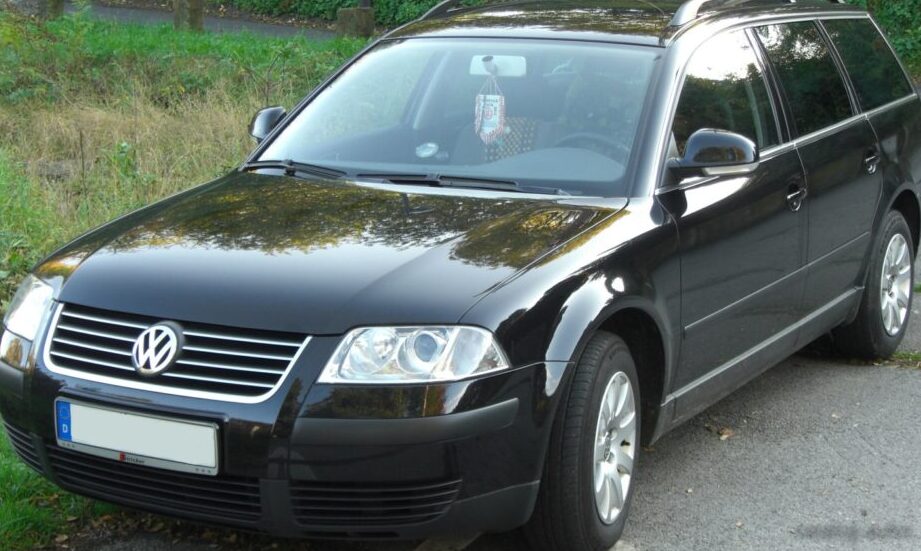
The Volkswagen Passat Variant (B5.5) 1.9 TDI with a 100 horsepower output and automatic transmission represents a significant offering within the broader B5.5 Passat range, produced between 2000 and 2005. Positioned as a practical and economical choice, this variant catered to buyers prioritizing fuel efficiency and comfortable long-distance travel over outright performance. The B5.5 generation, a facelift of the B5 Passat, brought updated styling, improved refinement, and enhanced safety features to Volkswagen’s mid-size offering. This particular configuration was primarily sold in Europe, where diesel engines and station wagons (known as ‘Variants’ in Volkswagen terminology) were highly popular. It offered a compelling blend of space, practicality, and relatively low running costs.
Technical Specifications
| Brand | Volkswagen |
| Model | Passat |
| Generation | Passat Variant (B5.5) |
| Type (Engine) | 1.9 TDI (100 Hp) Automatic |
| Start of production | 2000 year |
| End of production | 2005 year |
| Powertrain Architecture | Internal Combustion engine |
| Body type | Station wagon (estate) |
| Seats | 5 |
| Doors | 5 |
| Fuel consumption (economy) – urban (NEDC) | 9.7 l/100 km (24.2 US mpg, 29.1 UK mpg, 10.3 km/l) |
| Fuel consumption (economy) – extra urban (NEDC) | 5.5 l/100 km (42.8 US mpg, 51.4 UK mpg, 18.2 km/l) |
| Fuel consumption (economy) – combined (NEDC) | 7 l/100 km (33.6 US mpg, 40.4 UK mpg, 14.3 km/l) |
| CO2 emissions (NEDC) | 189 g/km |
| Fuel Type | Diesel |
| Acceleration 0 – 100 km/h | 14.8 sec |
| Acceleration 0 – 62 mph | 14.8 sec |
| Acceleration 0 – 60 mph | 14.1 sec |
| Maximum speed | 178 km/h (110.6 mph) |
| Emission standard | Euro 3 |
| Weight-to-power ratio | 16.4 kg/Hp, 61.1 Hp/tonne |
| Weight-to-torque ratio | 6.6 kg/Nm, 152.6 Nm/tonne |
| Power | 100 Hp @ 4000 rpm |
| Power per litre | 52.7 Hp/l |
| Torque | 250 Nm @ 1900 rpm (184.39 lb.-ft. @ 1900 rpm) |
| Engine layout | Front, Longitudinal |
| Engine Model/Code | AVB |
| Engine displacement | 1896 cm3 (115.7 cu. in.) |
| Number of cylinders | 4 |
| Engine configuration | Inline |
| Cylinder Bore | 79.5 mm (3.13 in.) |
| Piston Stroke | 95.5 mm (3.76 in.) |
| Compression ratio | 19:1 |
| Number of valves per cylinder | 2 |
| Fuel injection system | Pump-nozzle (Unit Injector) |
| Engine aspiration | Turbocharger, Intercooler |
| Valvetrain | SOHC |
| Engine oil capacity | 3.6 l (3.8 US qt | 3.17 UK qt) |
| Coolant | 7 l (7.4 US qt | 6.16 UK qt) |
| Kerb Weight | 1638 kg (3611.17 lbs.) |
| Max. weight | 2040 kg (4497.43 lbs.) |
| Max load | 402 kg (886.26 lbs.) |
| Trunk (boot) space – minimum | 495 l (17.48 cu. ft.) |
| Trunk (boot) space – maximum | 1600 l (56.5 cu. ft.) |
| Fuel tank capacity | 62 l (16.38 US gal | 13.64 UK gal) |
| Max. roof load | 100 kg (220.46 lbs.) |
| Permitted trailer load with brakes (12%) | 1400 kg (3086.47 lbs.) |
| Permitted trailer load without brakes | 650 kg (1433 lbs.) |
| Permitted towbar download | 75 kg (165.35 lbs.) |
| Length | 4682 mm (184.33 in.) |
| Width | 1746 mm (68.74 in.) |
| Height | 1498 mm (58.98 in.) |
| Wheelbase | 2703 mm (106.42 in.) |
| Minimum turning circle | 11.4 m (37.4 ft.) |
| Drivetrain Architecture | The Internal combustion engine (ICE) drives the front wheels of the vehicle. |
| Drive wheel | Front wheel drive |
| Number of gears and type of gearbox | 4 gears, automatic transmission |
| Front suspension | Independent multi-link suspension, Transverse stabilizer |
| Rear suspension | Trailing arm, Torsion |
| Front brakes | Ventilated discs |
| Rear brakes | Disc |
| Assisting systems | ABS (Anti-lock braking system) |
| Steering type | Steering rack and pinion |
| Power steering | Hydraulic Steering |
| Tires size | 195/65 R15 |
| Wheel rims size | 6J x 15 |
Powertrain & Engine Architecture
The heart of this Passat Variant is the 1.9-liter (1896 cc) inline-four cylinder diesel engine, designated the AVB engine code. This engine is a member of Volkswagen’s well-regarded TDI (Turbocharged Direct Injection) family. It utilizes a pump-nozzle (unit injector) fuel injection system, a technology known for its high injection pressures and precise fuel delivery, contributing to both efficiency and reduced emissions. The engine features a single overhead camshaft (SOHC) valvetrain operating two valves per cylinder. A turbocharger with an intercooler is employed to boost power output, providing 100 horsepower at 4000 rpm and a substantial 250 Nm (184 lb-ft) of torque at a low 1900 rpm. The automatic transmission is a conventional four-speed unit, designed for smooth operation and ease of use. It’s important to note that this transmission isn’t known for its sportiness, prioritizing comfort and fuel economy over rapid shifts.
Driving Characteristics
The 1.9 TDI 100 hp automatic Passat Variant delivers a driving experience focused on practicality and comfort. Acceleration is modest, taking approximately 14.8 seconds to reach 62 mph (100 km/h). The automatic transmission, while smooth, can feel somewhat sluggish, particularly when attempting quicker overtaking maneuvers. The engine’s strong low-end torque, however, makes it well-suited for everyday driving and hauling loads. Compared to the more powerful 1.8T petrol or the higher-output TDI variants, this version feels noticeably slower. However, it offers significantly better fuel economy. The gear ratios are optimized for fuel efficiency rather than performance, resulting in a relaxed cruising experience on the highway. The longitudinal engine layout contributes to a balanced weight distribution, enhancing stability.
Equipment & Trim Levels
The 1.9 TDI 100 hp automatic Passat Variant typically came equipped with a reasonable level of standard features. These generally included central locking, electric front windows, power steering, an ABS anti-lock braking system, and a basic stereo system. Interior upholstery was usually cloth, with a functional, if somewhat understated, dashboard layout. Optional extras included alloy wheels, a sunroof, climate control, upgraded audio systems, and parking sensors. Trim levels varied slightly depending on the market, but this configuration generally represented a mid-range offering, bridging the gap between the base models and the more luxurious trims.
Chassis & Braking
The B5.5 Passat Variant featured an independent multi-link suspension at the front, providing a comfortable ride and good handling characteristics. The rear suspension utilized a trailing arm setup with torsion beam, a cost-effective solution that offered a reasonable balance of comfort and stability. Brakes consisted of ventilated discs at the front and solid discs at the rear. ABS was standard, enhancing braking performance and safety. Stabilizer bars were fitted front and rear to reduce body roll during cornering. The suspension tuning was geared towards comfort, prioritizing a smooth ride over sporty handling.
Market Reception & Comparison
The 1.9 TDI 100 hp automatic Passat Variant was well-received in European markets as a practical and economical family car. Critics praised its fuel efficiency, spacious interior, and comfortable ride. However, the automatic transmission and relatively low power output were sometimes criticized. Compared to the 1.8T petrol engine, the TDI offered significantly better fuel economy but less outright performance. The higher-output TDI variants (typically 130 hp or 150 hp) provided a more engaging driving experience but at the cost of increased fuel consumption and potentially higher maintenance costs. The 1.9 TDI automatic represented a sweet spot for buyers prioritizing economy and practicality.
Legacy
The AVB 1.9 TDI engine, when properly maintained, is known for its durability and reliability. The four-speed automatic transmission, while not the most sophisticated, is generally robust. Today, these Passat Variants can be found on the used car market at affordable prices. They represent a good value for buyers seeking a practical and economical estate car. Common issues include wear and tear on suspension components, potential turbocharger issues (if not regularly serviced), and occasional problems with the automatic transmission’s electronic control unit. However, with regular maintenance, these cars can continue to provide reliable transportation for many years.