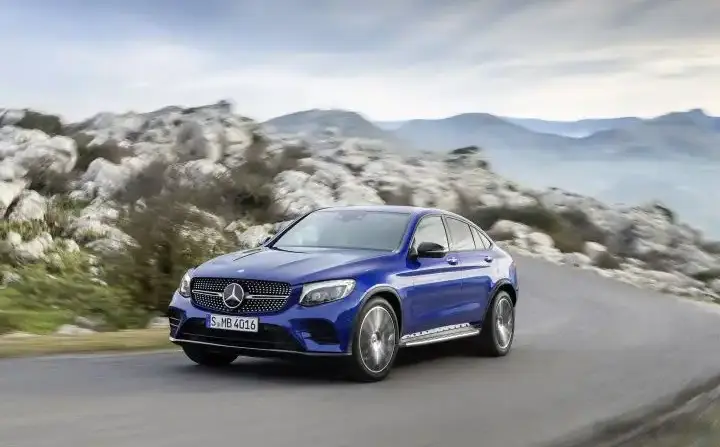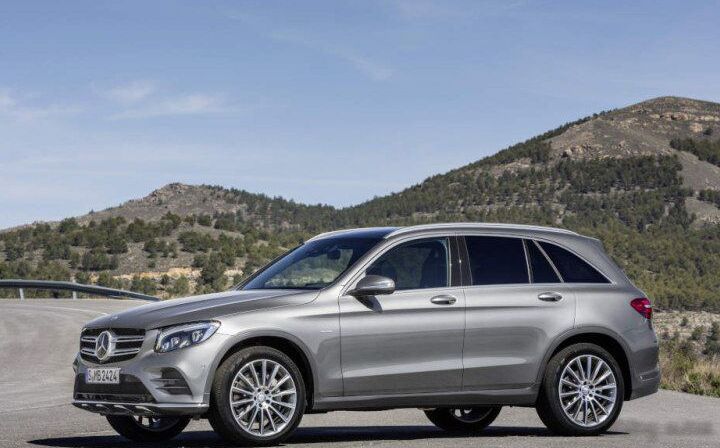
The Mercedes-Benz GLC F-CELL, specifically the X253 generation produced between November 2019 and April 2020, represents a unique offering in the luxury SUV segment. This variant combined a hydrogen fuel cell with a plug-in hybrid electric powertrain, designated as a PFCEV (Plug-in Fuel Cell Electric Vehicle). It was positioned as a technology demonstrator and early adopter vehicle, showcasing Mercedes-Benz’s commitment to alternative fuel technologies. The F-CELL aimed to provide zero-emission driving with the convenience of refueling with hydrogen, supplemented by electric-only range for shorter trips. It occupied a niche position within the GLC lineup, above the conventional gasoline and diesel models, and catered to environmentally conscious buyers willing to embrace emerging technologies.
Technical Specifications
| Brand | Mercedes-Benz |
| Model | GLC |
| Generation | GLC SUV (X253) |
| Type (Engine) | F-CELL 13.5 kWh (211 Hp) 4MATIC |
| Start of production | November, 2019 |
| End of production | April, 2020 |
| Powertrain Architecture | PFCEV (Plug-in Fuel Cell Electric Vehicle) |
| Body type | SUV |
| Seats | 5 |
| Doors | 5 |
| Fuel consumption (economy) – combined (NEDC) | 0.34 kg/100 km |
| Fuel Type | Hydrogen / electricity |
| Maximum speed | 160 km/h, Electronically limited (99.42 mph) |
| Gross battery capacity | 13.5 kWh |
| Battery technology | Lithium-ion (Li-Ion) |
| Battery location | Inside the trunk |
| All-electric range (NEDC) | 51 km (31.69 mi) |
| Average Energy consumption (NEDC) | 13.7 kWh/100 km (22.05 kWh/100 mi) |
| MPGe | 153 |
| km/kWh | 7.3 |
| mi/kWh | 4.5 |
| Electric motor power | 211 Hp |
| Electric motor Torque | 365 Nm (269.21 lb.-ft.) |
| Kerb Weight | 2130 kg (4695.85 lbs.) |
| Trunk (boot) space – minimum | 505 l (17.83 cu. ft.) |
| Trunk (boot) space – maximum | 1600 l (56.5 cu. ft.) |
| Fuel tank capacity | 4.4 kg |
| Max. roof load | 75 kg (165.35 lbs.) |
| Length | 4671 mm (183.9 in.) |
| Width | 2096 mm (82.52 in.) |
| Height | 1653 mm (65.08 in.) |
| Wheelbase | 2873 mm (113.11 in.) |
| Front track | 1625 mm (63.98 in.) |
| Rear (Back) track | 1621 mm (63.82 in.) |
| Ride height (ground clearance) | 123 mm (4.84 in.) |
| Minimum turning circle (turning diameter) | 11.8 m (38.71 ft.) |
| Approach angle | 19.9° |
| Departure angle | 16.5° |
| Ramp-over (brakeover) angle | 12.1° |
| Drivetrain Architecture | The Internal combustion engine (ICE) drives permanently the four wheels of the vehicle. |
| Drive wheel | All wheel drive (4×4) |
| Number of gears and type of gearbox | 1 gears, automatic transmission |
| Front suspension | Independent multi-link suspension |
| Rear suspension | Independent multi-link suspension |
| Front brakes | Ventilated discs |
| Rear brakes | Disc |
| Assisting systems | ABS (Anti-lock braking system) |
| Steering type | Steering rack and pinion |
| Power steering | Electric Steering |
Powertrain & Engine Architecture
The GLC F-CELL’s powertrain was a complex system integrating a hydrogen fuel cell, a lithium-ion battery pack, and an electric motor. The fuel cell stack, supplied by Daimler, combined hydrogen from the tank with oxygen from the air to generate electricity, with water as the only emission. This electricity powered the 211 horsepower electric motor, which in turn drove all four wheels via a single-speed automatic transmission. The 13.5 kWh lithium-ion battery pack provided a buffer, allowing for all-electric driving for up to 51 kilometers (32 miles) under the NEDC standard. The fuel cell system itself was capable of providing a continuous power output, making it suitable for longer journeys. The hydrogen tank, holding 4.4 kg of hydrogen, was located under the floor of the vehicle, impacting trunk space. The system operated at 700 bar pressure, requiring robust safety measures.
Driving Characteristics
The driving experience in the GLC F-CELL was characterized by smooth, quiet acceleration typical of electric vehicles. The single-speed automatic transmission provided seamless power delivery. While the 211 hp output wasn’t particularly high for a luxury SUV, the instant torque of the electric motor provided adequate performance for everyday driving. The vehicle could operate in several modes: hybrid mode, where the fuel cell and battery worked in tandem; electric mode, utilizing only the battery; and fuel cell mode, relying solely on the hydrogen fuel cell. The all-wheel-drive system provided good traction and stability in various conditions. Compared to the gasoline-powered GLC models, the F-CELL offered a more refined and silent driving experience. However, the limited hydrogen refueling infrastructure was a significant practical constraint.
Equipment & Trim Levels
The GLC F-CELL was generally well-equipped, reflecting its premium positioning. Standard features included leather upholstery, a large infotainment screen with navigation, advanced driver-assistance systems (such as adaptive cruise control and lane-keeping assist), and automatic climate control. The interior design mirrored that of other GLC models, with a focus on luxury and comfort. Optional extras included a panoramic sunroof, upgraded audio system, and various customization options for interior trim and exterior paint. Due to its limited production run and focus on technology demonstration, the F-CELL didn’t have the extensive range of trim levels found in the conventional GLC models.
Chassis & Braking
The GLC F-CELL utilized the standard GLC SUV chassis, featuring an independent multi-link suspension at both the front and rear. This suspension setup provided a comfortable ride and good handling characteristics. The vehicle was equipped with ventilated disc brakes at the front and solid disc brakes at the rear, providing adequate stopping power. The electronic stability program (ESP) and anti-lock braking system (ABS) were standard features, enhancing safety. The added weight of the fuel cell system and battery pack, approximately 2130 kg (4696 lbs), was compensated for by the suspension tuning to maintain a balanced driving experience.
Market Reception & Comparison
The Mercedes-Benz GLC F-CELL received generally positive reviews from automotive critics, who praised its innovative technology and zero-emission driving capabilities. However, the limited hydrogen refueling infrastructure was a major drawback, hindering its practicality. Compared to the gasoline and diesel GLC models, the F-CELL offered a more environmentally friendly alternative, but at a significantly higher price point. Fuel economy, measured in kilograms of hydrogen per 100 kilometers, was competitive with other fuel cell vehicles. Reliability data was limited due to the small production volume, but the core components – the fuel cell stack and electric motor – were generally considered robust.
Legacy
The GLC F-CELL served as an important stepping stone in Mercedes-Benz’s development of hydrogen fuel cell technology. While the model’s production run was short-lived, it provided valuable real-world data and experience that informed the company’s subsequent efforts in this area. The limited availability of hydrogen refueling stations ultimately hampered the F-CELL’s success, but it demonstrated the potential of fuel cell vehicles as a viable alternative to conventional gasoline and diesel cars. In the used car market, the GLC F-CELL remains a rare and sought-after vehicle among technology enthusiasts and early adopters, representing a unique chapter in the history of automotive innovation.