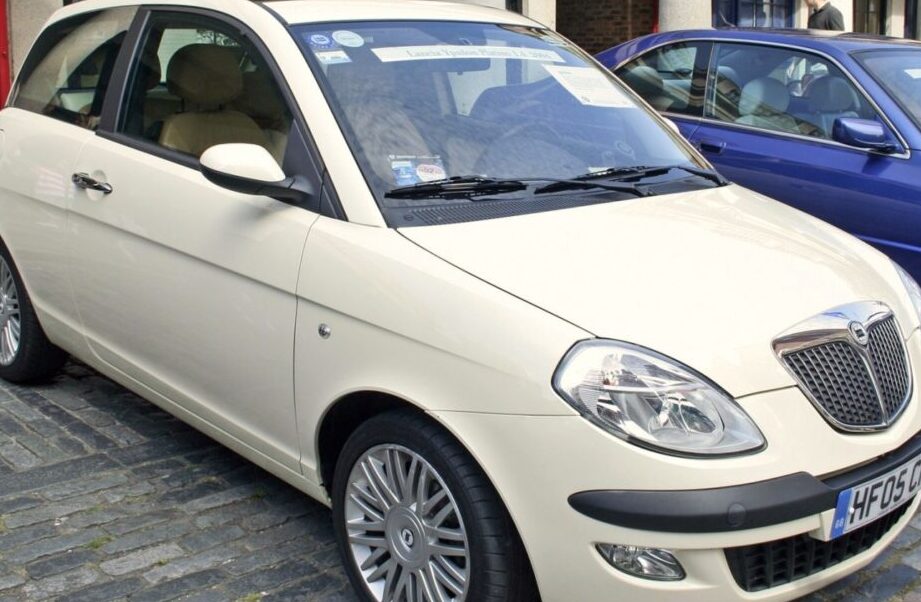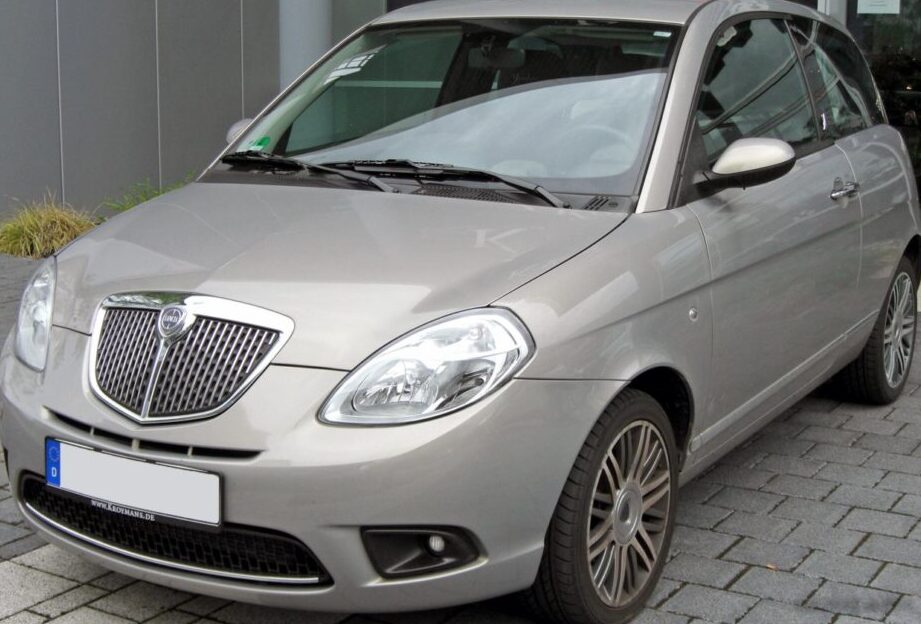
The Lancia Ypsilon (843 series, post-facelift introduced in October 2006) 1.3 Multijet 16V 90 Hp DFN represents a significant iteration of Lancia’s popular city car. Positioned as an economical and practical option within the Ypsilon range, this variant aimed to appeal to buyers prioritizing fuel efficiency and ease of driving. Production continued until February 2010. The facelift brought styling updates and refinements to the already successful 843 platform, which was based on the Fiat Punto’s underpinnings (the 188 project). This particular engine and transmission combination was a key offering in several European markets, particularly Italy, where the Ypsilon enjoyed considerable popularity.
Technical Specifications
| Brand | Lancia |
| Model | Ypsilon |
| Generation | Ypsilon (843, facelift 2006) |
| Type (Engine) | 1.3 Multijet 16V (90 Hp) DFN |
| Start of production | October, 2006 |
| End of production | February, 2010 |
| Powertrain Architecture | Internal Combustion engine |
| Body type | Hatchback |
| Seats | 4 |
| Doors | 3 |
| Fuel consumption (urban) | 5.2 l/100 km (45.2 US mpg, 54.3 UK mpg, 19.2 km/l) |
| Fuel consumption (extra urban) | 3.8 l/100 km (61.9 US mpg, 74.3 UK mpg, 26.3 km/l) |
| Fuel consumption (combined) | 4.3 l/100 km (54.7 US mpg, 65.7 UK mpg, 23.3 km/l) |
| CO2 emissions | 114 g/km |
| Fuel Type | Diesel |
| Acceleration 0 – 100 km/h | 10.5 sec |
| Acceleration 0 – 62 mph | 10.5 sec |
| Acceleration 0 – 60 mph | 10 sec (Calculated) |
| Maximum speed | 175 km/h (108.74 mph) |
| Emission standard | Euro 4 |
| Weight-to-power ratio | 11.6 kg/Hp, 86.1 Hp/tonne |
| Weight-to-torque ratio | 5.2 kg/Nm, 191.4 Nm/tonne |
| Power | 90 Hp @ 4000 rpm |
| Power per litre | 72.1 Hp/l |
| Torque | 200 Nm @ 1750 rpm (147.51 lb.-ft. @ 1750 rpm) |
| Engine layout | Front, Transverse |
| Engine Model/Code | 199A3000 |
| Engine displacement | 1248 cm3 (76.16 cu. in.) |
| Number of cylinders | 4 |
| Engine configuration | Inline |
| Cylinder Bore | 69.6 mm (2.74 in.) |
| Piston Stroke | 82 mm (3.23 in.) |
| Compression ratio | 17.6:1 |
| Number of valves per cylinder | 4 |
| Fuel injection system | Diesel Commonrail |
| Engine aspiration | Turbocharger, Intercooler |
| Valvetrain | DOHC |
| Engine oil capacity | 3.2 l (3.38 US qt, 2.82 UK qt) |
| Coolant capacity | 6 l (6.34 US qt, 5.28 UK qt) |
| Kerb Weight | 1045 kg (2303.83 lbs.) |
| Max. weight | 1520 kg (3351.03 lbs.) |
| Max load | 475 kg (1047.2 lbs.) |
| Trunk (boot) space (minimum) | 215 l (7.59 cu. ft.) |
| Fuel tank capacity | 47 l (12.42 US gal, 10.34 UK gal) |
| Max. roof load | 75 kg (165.35 lbs.) |
| Permitted trailer load (braked) | 900 kg (1984.16 lbs.) |
| Permitted trailer load (unbraked) | 400 kg (881.85 lbs.) |
| Permitted towbar download | 60 kg (132.28 lbs.) |
| Length | 3810 mm (150 in.) |
| Width | 1704 mm (67.09 in.) |
| Height | 1530 mm (60.24 in.) |
| Wheelbase | 2388 mm (94.02 in.) |
| Front track | 1450 mm (57.09 in.) |
| Rear track | 1440 mm (56.69 in.) |
| Front overhang | 819 mm (32.24 in.) |
| Rear overhang | 603 mm (23.74 in.) |
| Turning circle | 9.83 m (32.25 ft.) |
| Drivetrain | Front wheel drive |
| Number of gears/gearbox type | 5 gears, automatic transmission DFN |
| Front suspension | Independent, McPherson with coil spring and anti-roll bar |
| Rear suspension | Torsion bar, transverse stabilizer |
| Front brakes | Ventilated discs, 257×22 mm |
| Rear brakes | Drum, 203×38 mm |
| Assisting systems | ABS (Anti-lock braking system) |
| Steering type | Steering rack and pinion |
| Power steering | Electric |
| Tires size | 185/65 R14; 195/55 R15; 195/45 R16 |
| Wheel rims size | 6J x 14; 6J x 15; 6.5J x 16 |
INTRODUCTION
The Lancia Ypsilon 843, particularly the post-2006 facelift, represented a continuation of Lancia’s commitment to stylish and compact urban transportation. This generation Ypsilon, built from 2003 to 2011, was a significant model for the brand, especially in its home market of Italy. The 1.3 Multijet 16V 90 Hp DFN variant occupied a middle ground in the Ypsilon lineup, offering a balance between affordability, fuel economy, and acceptable performance. It was designed to appeal to buyers who wanted a diesel engine for its efficiency but didn’t require the higher performance of other available options.
Powertrain & Engine Architecture
At the heart of this Ypsilon variant lies the 1.3 Multijet 16V engine, identified by the code 199A3000. This engine is a four-cylinder, inline diesel utilizing common rail direct injection and a turbocharger with intercooler. The 16V designation refers to the four valves per cylinder, enhancing breathing and contributing to improved power output. The Multijet technology, developed by Fiat (Lancia’s parent company at the time), allowed for multiple injection events per combustion cycle, resulting in smoother operation, reduced noise, and improved fuel efficiency. The DFN transmission is a five-speed automatic gearbox, specifically designed for this engine. It’s a conventional hydraulic automatic, offering smooth shifts but not the efficiency of more modern dual-clutch transmissions. The engine produces 90 horsepower at 4000 rpm and 200 Nm (147.51 lb-ft) of torque at 1750 rpm.
Driving Characteristics
The 1.3 Multijet 90 Hp Automatic Ypsilon delivers a comfortable, if not particularly exhilarating, driving experience. The automatic transmission prioritizes smooth shifts over rapid acceleration. Acceleration from 0-100 km/h takes around 10.5 seconds, which is adequate for city driving but feels sluggish on the open road. The engine’s torque is readily available from low revs, making it easy to navigate urban traffic. Compared to the manual transmission version of the same engine, the automatic suffers a slight performance penalty and reduced fuel economy. Higher-output versions, such as those with more powerful diesel engines or the petrol options, offered significantly more performance but at the cost of increased fuel consumption and higher purchase prices. The gear ratios are tuned for economy, meaning the engine can feel strained when climbing hills or overtaking at higher speeds.
Equipment & Trim Levels
The 1.3 Multijet 90 Hp DFN Ypsilon typically came equipped with a reasonable level of standard features. These included power steering, central locking, electric front windows, and an audio system. Air conditioning was often standard, but sometimes offered as an option depending on the specific market. Interior upholstery was typically cloth, with a relatively simple dashboard layout. Optional extras included alloy wheels, a sunroof, upgraded audio systems, and parking sensors. Trim levels varied by country, but generally, this variant sat in the mid-range of the Ypsilon lineup, offering a step up from the base models in terms of comfort and convenience.
Chassis & Braking
The Ypsilon 843 utilizes a front-engine, front-wheel-drive layout. The front suspension employs an independent McPherson strut setup with coil springs and an anti-roll bar, providing a comfortable ride and decent handling. The rear suspension features a torsion beam, which is a simpler and more cost-effective design. Braking is handled by ventilated discs on the front wheels and drum brakes on the rear. ABS (Anti-lock Braking System) was standard. The chassis was tuned for comfort and ease of driving rather than sporty handling. Stabilizer bar thickness was moderate, contributing to a balanced ride without excessive body roll.
Market Reception & Comparison
The Lancia Ypsilon 1.3 Multijet 90 Hp DFN was generally well-received by critics as a practical and economical city car. Its fuel efficiency was a major selling point, particularly in Europe where diesel fuel was often cheaper than petrol. Compared to other Ypsilon trims, this variant offered a good balance between price and running costs. The automatic transmission was appreciated by drivers seeking convenience, but some reviewers noted its lack of responsiveness compared to the manual gearbox. Competitors included the Fiat Punto, Renault Clio, and Peugeot 206, all of which offered similar engine and transmission options. The Ypsilon distinguished itself with its more stylish design and perceived higher level of interior quality.
Legacy
The 1.3 Multijet engine proved to be a reliable and durable unit, and many examples are still on the road today. The DFN automatic transmission, while not known for its exceptional performance, is generally considered reliable if properly maintained. In the used car market, this Ypsilon variant represents a relatively affordable and economical option. However, potential buyers should be aware of the typical wear and tear associated with any used vehicle, including checking for signs of diesel particulate filter issues and ensuring the automatic transmission has been serviced regularly. The Ypsilon 843, and this variant in particular, remains a popular choice for those seeking a small, stylish, and fuel-efficient city car.