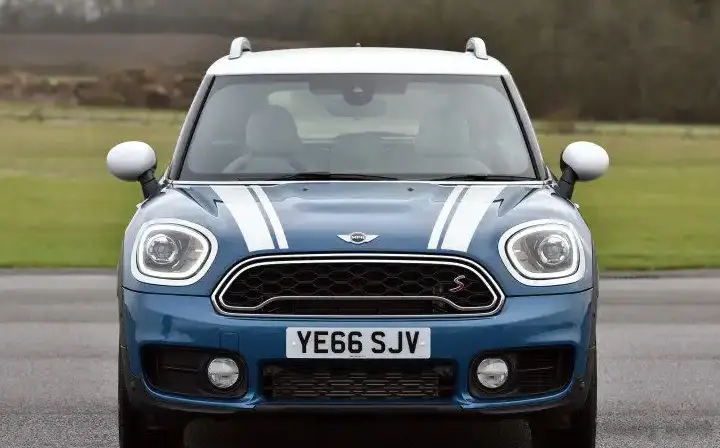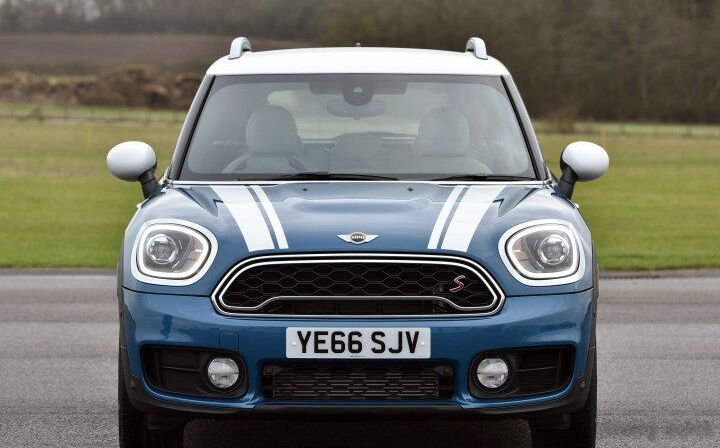
The Mini Countryman JCW 2.0 (231 Hp) represents the performance-oriented pinnacle of the second-generation Countryman (F60) lineup, produced primarily for the 2017 and 2018 model years. Positioned as the flagship trim, it offered a significant upgrade over the Cooper and Cooper S variants, targeting enthusiasts seeking a sporty and engaging driving experience within the compact SUV segment. Built upon the UKL2 platform – shared with BMW X1 and X2 models – the F60 Countryman marked a substantial increase in size and practicality compared to its predecessor, the R60. The JCW 2.0 aimed to deliver a blend of Mini’s signature handling characteristics with a potent turbocharged engine.
Technical Specifications
| Brand | Mini |
| Model | Countryman |
| Generation | Countryman (F60) |
| Type (Engine) | JCW 2.0 (231 Hp) |
| Start of production | 2017 |
| End of production | 2018 |
| Powertrain Architecture | Internal Combustion engine |
| Body type | SUV |
| Seats | 5 |
| Doors | 5 |
| Fuel consumption (economy) – urban | 9.4 l/100 km (25 US mpg) |
| Fuel consumption (economy) – extra urban | 6.2 l/100 km (37.9 US mpg) |
| Fuel consumption (economy) – combined | 7.4 l/100 km (31.8 US mpg) |
| CO2 emissions | 169 g/km |
| Fuel Type | Petrol (Gasoline) |
| Acceleration 0 – 100 km/h | 6.5 sec |
| Acceleration 0 – 62 mph | 6.5 sec |
| Acceleration 0 – 60 mph | 6.2 sec |
| Maximum speed | 234 km/h (145.4 mph) |
| Emission standard | Euro 6 |
| Weight-to-power ratio | 6.7 kg/Hp |
| Weight-to-torque ratio | 4.4 kg/Nm |
| Power | 231 Hp @ 5000-6000 rpm |
| Torque | 350 Nm @ 1450-4500 rpm (258.15 lb.-ft.) |
| Engine layout | Front, Transverse |
| Engine Model/Code | B48A20B |
| Engine displacement | 1998 cm3 (121.93 cu. in.) |
| Number of cylinders | 4 |
| Engine configuration | Inline |
| Cylinder Bore | 82 mm (3.23 in.) |
| Piston Stroke | 94.6 mm (3.72 in.) |
| Compression ratio | 10.2:1 |
| Number of valves per cylinder | 4 |
| Fuel injection system | Direct injection |
| Engine aspiration | Twin-power turbo, Intercooler |
| Engine oil capacity | 5.3 l (5.6 US qt | 4.66 UK qt) |
| Coolant | 5.8 l (6.13 US qt | 5.1 UK qt) |
| Kerb Weight | 1540 kg (3395.12 lbs.) |
| Max. weight | 2130 kg (4695.85 lbs.) |
| Max load | 590 kg (1300.73 lbs.) |
| Trunk (boot) space – minimum | 450 l (15.89 cu. ft.) |
| Trunk (boot) space – maximum | 1390 l (49.09 cu. ft.) |
| Fuel tank capacity | 51 l (13.47 US gal | 11.22 UK gal) |
| Length | 4299 mm (169.25 in.) |
| Width | 1822 mm (71.73 in.) |
| Height | 1557 mm (61.3 in.) |
| Wheelbase | 2670 mm (105.12 in.) |
| Front track | 1565 mm (61.61 in.) |
| Rear (Back) track | 1567 mm (61.69 in.) |
| Drag coefficient (Cd) | 0.34 |
| Minimum turning circle | 11.4 m (37.4 ft.) |
| Drivetrain Architecture | Front wheel drive |
| Number of gears | 6 |
| Type of gearbox | Manual transmission |
| Front suspension | Independent, type McPherson with coil spring and anti-roll bar |
| Rear suspension | Independent multi-link suspension |
| Front brakes | Ventilated discs |
| Rear brakes | Disc |
| Tires size | 225/50 R18 |
| Wheel rims size | 7.5J x 18 |
Powertrain & Engine Architecture
The heart of the Countryman JCW 2.0 is the BMW-sourced B48A20B 2.0-liter turbocharged inline-four engine. This engine is a member of BMW’s modular engine family, known for its efficiency and performance. It utilizes direct fuel injection, a twin-scroll turbocharger, and variable valve timing (VANOS) on both the intake and exhaust camshafts. The engine produces 231 horsepower at 5,000-6,000 rpm and 258 lb-ft of torque between 1,450 and 4,500 rpm. The six-speed manual transmission was standard, offering precise shifts and a direct connection to the engine. While an eight-speed automatic transmission was available as an option, the manual was favored by enthusiasts for its more engaging driving experience. The engine’s layout is front-transverse, contributing to the Countryman’s front-wheel-drive configuration.
Driving Characteristics
The JCW 2.0 delivers a noticeably more spirited driving experience than the Cooper and Cooper S models. Acceleration from 0 to 60 mph takes approximately 6.2 seconds, and the car reaches a top speed of 145.4 mph. The turbocharger provides strong low-end torque, making the car responsive in everyday driving situations. The six-speed manual transmission allows for precise control over the engine’s power band. Compared to the automatic, the manual offers a more connected feel and encourages more active driving. While the JCW 2.0 isn’t a track-focused performance car, it provides a satisfying level of agility and responsiveness for a compact SUV. The suspension is tuned to be firmer than the standard Countryman, reducing body roll and improving handling.
Equipment & Trim Levels
The JCW 2.0 came standard with a comprehensive list of features, including sport seats, a sport steering wheel, and JCW-specific exterior styling cues such as unique bumpers, side skirts, and a rear spoiler. Interior trim options included cloth/leatherette or full leather upholstery. Standard technology included a 6.5-inch infotainment system with Mini Connected services, Bluetooth connectivity, and a rearview camera. Optional extras included a larger 8.8-inch infotainment system with navigation, a Harman Kardon premium sound system, a panoramic sunroof, and adaptive dampers. The JCW trim also included performance-oriented features like Brembo brakes and a sport exhaust system.
Chassis & Braking
The Countryman JCW 2.0 features a McPherson strut front suspension and a multi-link rear suspension. The suspension components are stiffer than those found in the Cooper and Cooper S models, providing improved handling and stability. Brembo brakes with larger rotors and calipers are standard, offering enhanced stopping power. The steering is electric power-assisted, providing precise and responsive steering feel. The car rides on 18-inch alloy wheels with performance tires. The front brakes are ventilated discs, while the rear brakes are solid discs.
Market Reception & Comparison
Critics generally praised the Countryman JCW 2.0 for its engaging driving dynamics and powerful engine. However, some reviewers noted that the ride quality could be firm, especially on rough roads. Compared to the Cooper S, the JCW 2.0 offered a significant performance upgrade, but at a higher price point. Fuel economy was respectable for a performance SUV, with combined fuel consumption of around 31.8 US mpg. Reliability was generally good, although some owners reported minor issues with the infotainment system. The JCW 2.0 positioned itself as a premium offering within the compact SUV segment, competing with vehicles like the Audi SQ5 and the Porsche Macan (at a lower price point).
Legacy
The F60 Countryman JCW 2.0 remains a popular choice in the used car market, appealing to buyers seeking a sporty and practical SUV. The B48 engine has proven to be relatively reliable, although regular maintenance is essential. The six-speed manual transmission is highly sought after by enthusiasts. The JCW 2.0 represents a significant step forward in terms of performance and refinement for the Countryman model, establishing it as a credible contender in the premium compact SUV segment. Its blend of Mini’s iconic styling, BMW engineering, and a potent turbocharged engine ensures its continued appeal for years to come.