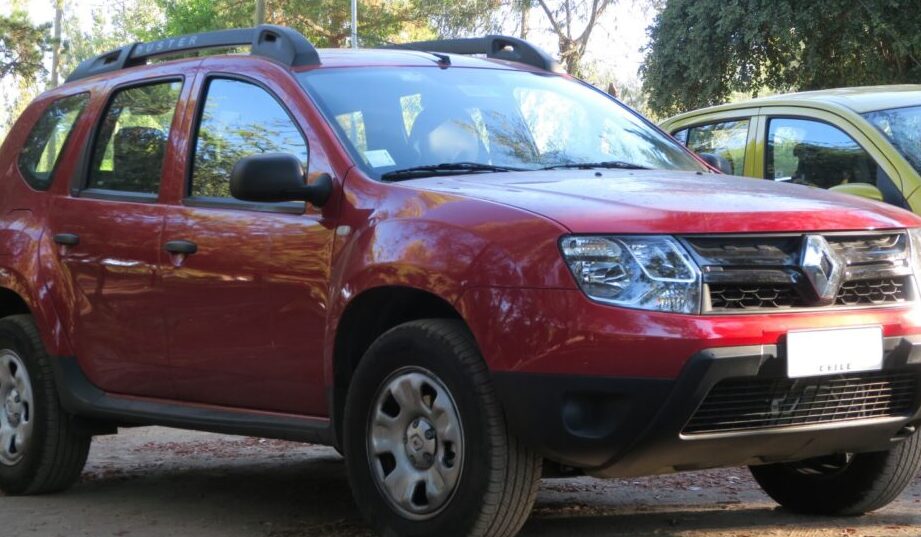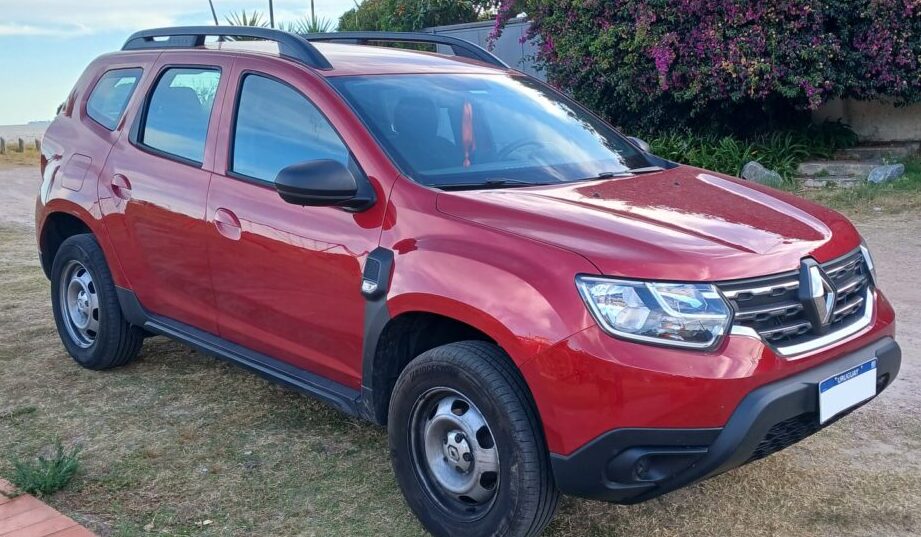
The Renault Duster II 1.3 TCe 4×4 CVT, produced from May 2021 through 2022, represents a significant iteration of Renault’s popular compact SUV. Positioned as a mid-range offering within the Duster II lineup, this variant combined a turbocharged gasoline engine with a continuously variable transmission (CVT) and all-wheel drive, aiming to provide a balance of fuel efficiency, capability, and affordability. It builds upon the foundation of the Duster II (introduced in 2018), which itself is based on the B0+ platform, also known as the 1HX0/A3 platform, shared with other Renault and Dacia models. This version was primarily marketed in Europe and other international markets where compact SUVs with all-wheel drive are in demand.
Technical Specifications
| Brand | Renault |
| Model | Duster |
| Generation | Duster II |
| Type (Engine) | 1.3 TCe (150 Hp) 4×4 CVT |
| Start of production | May, 2021 |
| End of production | 2022 |
| Powertrain Architecture | Internal Combustion engine |
| Body type | SUV |
| Seats | 5 |
| Doors | 5 |
| Fuel consumption (economy) – urban (NEDC) | 9.3 l/100 km (25.3 US mpg, 30.4 UK mpg, 10.8 km/l) |
| Fuel consumption (economy) – extra urban (NEDC) | 6 l/100 km (39.2 US mpg, 47.1 UK mpg, 16.7 km/l) |
| Fuel consumption (economy) – combined (NEDC) | 7.2 l/100 km (32.7 US mpg, 39.2 UK mpg, 13.9 km/l) |
| CO2 emissions (NEDC) | 167 g/km |
| Fuel Type | Petrol (Gasoline) |
| Acceleration 0 – 100 km/h | 10.4 sec |
| Acceleration 0 – 62 mph | 10.4 sec |
| Acceleration 0 – 60 mph | 9.9 sec |
| Maximum speed | 185 km/h (114.95 mph) |
| Emission standard | Euro 5 |
| Weight-to-power ratio | 9.4 kg/Hp, 106.5 Hp/tonne |
| Weight-to-torque ratio | 5.6 kg/Nm, 177.6 Nm/tonne |
| Power | 150 Hp @ 5250 rpm |
| Power per litre | 112.6 Hp/l |
| Torque | 250 Nm @ 1700 rpm (184.39 lb.-ft. @ 1700 rpm) |
| Engine layout | Front, Transverse |
| Engine Model/Code | H5H |
| Engine displacement | 1332 cm3 (81.28 cu. in.) |
| Number of cylinders | 4 |
| Engine configuration | Inline |
| Cylinder Bore | 72.2 mm (2.84 in.) |
| Piston Stroke | 81.4 mm (3.2 in.) |
| Number of valves per cylinder | 4 |
| Fuel injection system | Direct injection |
| Engine aspiration | Turbocharger, Intercooler |
| Kerb Weight | 1408 kg (3104.11 lbs.) |
| Max. weight | 1958 kg (4316.65 lbs.) |
| Max load | 550 kg (1212.54 lbs.) |
| Trunk (boot) space – minimum | 428 l (15.11 cu. ft.) |
| Trunk (boot) space – maximum | 1720 l (60.74 cu. ft.) |
| Fuel tank capacity | 50 l (13.21 US gal | 11 UK gal) |
| Max. roof load | 80 kg (176.37 lbs.) |
| Permitted trailer load with brakes (12%) | 1500 kg (3306.93 lbs.) |
| Permitted trailer load without brakes | 740 kg (1631.42 lbs.) |
| Length | 4341 mm (170.91 in.) |
| Width | 1804 mm (71.02 in.) |
| Width including mirrors | 2052 mm (80.79 in.) |
| Height | 1682 mm (66.22 in.) |
| Wheelbase | 2673 mm (105.24 in.) |
| Front track | 1557 mm (61.3 in.) |
| Rear (Back) track | 1563 mm (61.54 in.) |
| Front overhang | 838 mm (32.99 in.) |
| Rear overhang | 827 mm (32.56 in.) |
| Ride height (ground clearance) | 210 mm (8.27 in.) |
| Minimum turning circle (turning diameter) | 10.9 m (35.76 ft.) |
| Approach angle | 31° |
| Departure angle | 33° |
| Drivetrain Architecture | The Internal combustion engine (ICE) drives the front wheels permanently, and the rear wheels are driven through an electrically or mechanically operated clutch if necessary. |
| Drive wheel | All wheel drive (4×4) |
| Number of gears and type of gearbox | automatic transmission CVT |
| Front suspension | Independent, type McPherson with coil spring and anti-roll bar |
| Rear suspension | Independent multi-link spring suspension with stabilizer |
| Front brakes | Ventilated discs, 280×24 mm |
| Rear brakes | Drum |
| Assisting systems | ABS (Anti-lock braking system) |
| Steering type | Steering rack and pinion |
| Power steering | Electric Steering |
| Tires size | 215/65 R16; 215/60 R17 |
Powertrain & Engine Architecture
The heart of the Duster II 1.3 TCe 4×4 CVT is the Renault H5H engine, a 1.3-liter turbocharged inline-four cylinder gasoline engine. This engine is part of the Alliance’s (Renault-Nissan-Mitsubishi) modular engine family. It features direct fuel injection and a single turbocharger with an intercooler, producing 150 horsepower at 5250 rpm and 250 Nm (184 lb-ft) of torque at 1700 rpm. The engine incorporates Start & Stop technology for improved fuel economy. The engine’s design prioritizes efficiency and responsiveness, offering a good balance between power and fuel consumption. The CVT (Continuously Variable Transmission) is a key component, designed to provide smooth, stepless gear changes and optimize fuel efficiency. Unlike traditional automatic transmissions with fixed gear ratios, a CVT uses a belt or chain system to provide an infinite number of gear ratios within its range.
Driving Characteristics
The 1.3 TCe engine paired with the CVT delivers adequate performance for everyday driving. Acceleration from 0-100 km/h (0-62 mph) takes approximately 10.4 seconds. While not particularly sporty, the engine provides sufficient power for overtaking and navigating varied terrain. The CVT, while smooth, can sometimes feel less engaging than a traditional automatic or manual transmission, exhibiting a “rubber band” effect under hard acceleration. The all-wheel-drive system enhances traction, particularly on slippery surfaces, making it suitable for light off-road use. Compared to the base 1.6-liter engine, the 1.3 TCe offers a noticeable improvement in performance. However, it doesn’t match the responsiveness of higher-powered variants, such as those with larger displacement engines.
Equipment & Trim Levels
The 1.3 TCe 4×4 CVT trim typically included standard features such as air conditioning, power windows, central locking, and a basic audio system. Higher trim levels offered additional features like alloy wheels, a touchscreen infotainment system with navigation, rear parking sensors, and cruise control. Interior upholstery was generally cloth, with options for upgraded materials on higher trims. Safety features included ABS, ESC (Electronic Stability Control), and multiple airbags. The specific equipment levels varied depending on the market and optional packages selected by the buyer.
Chassis & Braking
The Duster II utilizes a McPherson strut front suspension and an independent multi-link rear suspension, providing a comfortable ride quality. The all-wheel-drive system adds to the vehicle’s stability and handling. Front brakes are ventilated discs, while rear brakes are drums. The braking system is assisted by ABS (Anti-lock Braking System). The suspension is tuned to balance comfort and handling, making it suitable for both on-road and light off-road driving. Stabilizer bars are included on both axles to reduce body roll during cornering.
Market Reception & Comparison
The Renault Duster II 1.3 TCe 4×4 CVT was generally well-received by automotive critics as a practical and affordable all-wheel-drive SUV. It was praised for its fuel efficiency, comfortable ride, and spacious interior. However, some reviewers noted the CVT’s lack of responsiveness and the relatively basic interior materials. Compared to other trims in the Duster II lineup, the 1.3 TCe 4×4 CVT offered a good balance between performance, fuel economy, and price. It was positioned as a more versatile option than the front-wheel-drive variants, while being more affordable than the higher-powered engine options.
Legacy
The Renault H5H 1.3 TCe engine has proven to be a relatively reliable powertrain. While some owners have reported minor issues with the turbocharger or fuel injectors, these are not widespread. The CVT transmission, when properly maintained, is generally durable. On the used car market, the Duster II 1.3 TCe 4×4 CVT represents a good value proposition for buyers seeking an affordable and capable all-wheel-drive SUV. Its combination of fuel efficiency, practicality, and all-weather capability continues to make it a popular choice.