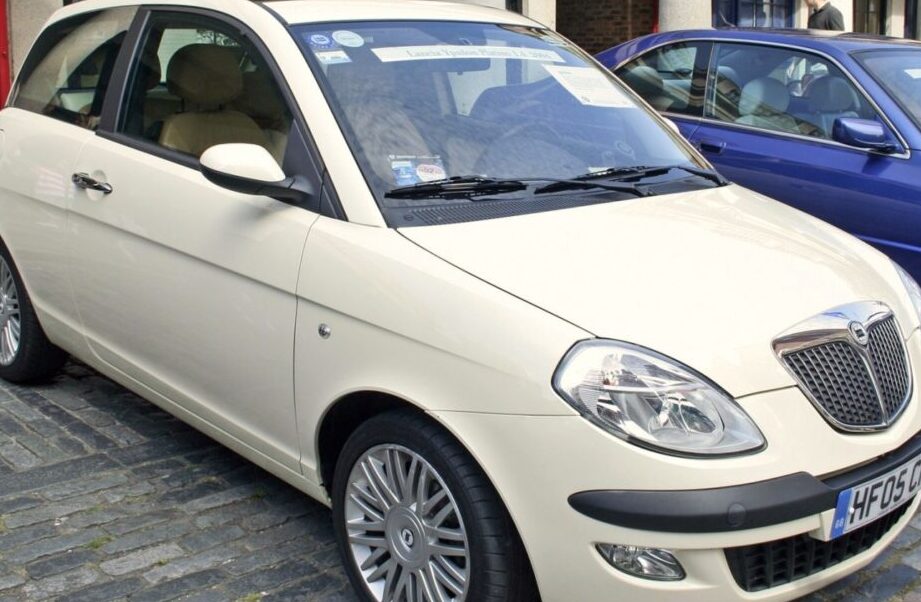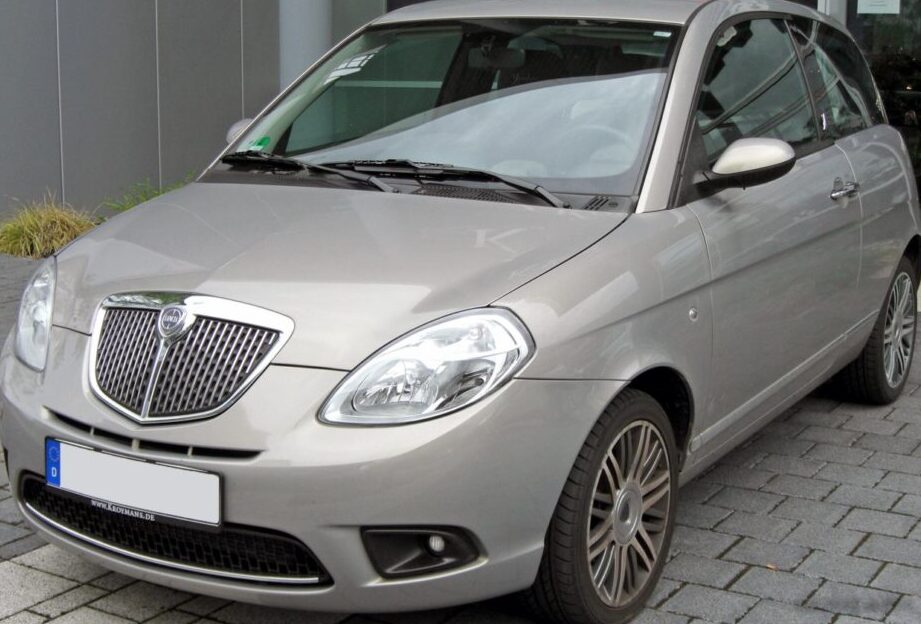
The Lancia Ypsilon (843 series, post-facelift introduced in October 2006) 1.4 16V, producing 95 horsepower, represented a key offering in the Italian city car segment. Produced through August 2010, this variant occupied a middle ground within the Ypsilon range, bridging the gap between the entry-level 1.1-liter engine and the more potent 1.4 Turbo. It was primarily marketed towards buyers seeking a balance of fuel efficiency, reasonable performance, and a touch of Italian style. The 843 series Ypsilon, a successor to the original Ypsilon (launched in 1995), was based on the Fiat/Lancia 1HX0/A3 platform, shared with the Fiat Punto. This facelift brought revised styling, improved interior materials, and updated safety features.
Technical Specifications
| Brand | Lancia |
| Model | Ypsilon |
| Generation | Ypsilon (843, facelift 2006) |
| Type (Engine) | 1.4 16V (95 Hp) |
| Start of production | October, 2006 |
| End of production | August, 2010 |
| Powertrain Architecture | Internal Combustion engine |
| Body type | Hatchback |
| Seats | 4 |
| Doors | 3 |
| Fuel consumption (economy) – urban (NEDC) | 8.5 l/100 km (27.7 US mpg, 33.2 UK mpg, 11.8 km/l) |
| Fuel consumption (economy) – extra urban (NEDC) | 5.4 l/100 km (43.6 US mpg, 52.3 UK mpg, 18.5 km/l) |
| Fuel consumption (economy) – combined (NEDC) | 6.6 l/100 km (35.6 US mpg, 42.8 UK mpg, 15.2 km/l) |
| CO2 emissions (NEDC) | 155 g/km |
| Fuel Type | Petrol (Gasoline) |
| Acceleration 0 – 100 km/h | 10.9 sec |
| Acceleration 0 – 62 mph | 10.9 sec |
| Acceleration 0 – 60 mph | 10.4 sec |
| Maximum speed | 175 km/h (108.74 mph) |
| Emission standard | Euro 4 |
| Weight-to-power ratio | 10.3 kg/Hp, 96.9 Hp/tonne |
| Weight-to-torque ratio | 7.7 kg/Nm, 130.6 Nm/tonne |
| Power | 95 Hp @ 5800 rpm |
| Power per litre | 69.4 Hp/l |
| Torque | 128 Nm @ 4500 rpm (94.41 lb.-ft. @ 4500 rpm) |
| Engine layout | Front, Transverse |
| Engine Model/Code | 843A1000 |
| Engine displacement | 1368 cm3 (83.48 cu. in.) |
| Number of cylinders | 4 |
| Engine configuration | Inline |
| Cylinder Bore | 72 mm (2.83 in.) |
| Piston Stroke | 84 mm (3.31 in.) |
| Compression ratio | 11:1 |
| Number of valves per cylinder | 4 |
| Fuel injection system | Multi-port manifold injection |
| Engine aspiration | Naturally aspirated engine |
| Valvetrain | DOHC |
| Engine oil capacity | 3.2 l (3.38 US qt, 2.82 UK qt) |
| Coolant | 4.5 l (4.76 US qt, 3.96 UK qt) |
| Kerb Weight | 980 kg (2160.53 lbs.) |
| Max. weight | 1495 kg (3295.91 lbs.) |
| Max load | 515 kg (1135.38 lbs.) |
| Trunk (boot) space – minimum | 215 l (7.59 cu. ft.) |
| Fuel tank capacity | 47 l (12.42 US gal, 10.34 UK gal) |
| Max. roof load | 75 kg (165.35 lbs.) |
| Permitted trailer load with brakes (12%) | 900 kg (1984.16 lbs.) |
| Permitted trailer load without brakes | 400 kg (881.85 lbs.) |
| Permitted towbar download | 60 kg (132.28 lbs.) |
| Length | 3810 mm (150 in.) |
| Width | 1704 mm (67.09 in.) |
| Height | 1530 mm (60.24 in.) |
| Wheelbase | 2388 mm (94.02 in.) |
| Front track | 1450 mm (57.09 in.) |
| Rear (Back) track | 1440 mm (56.69 in.) |
| Front overhang | 819 mm (32.24 in.) |
| Rear overhang | 603 mm (23.74 in.) |
| Minimum turning circle (turning diameter) | 9.83 m (32.25 ft.) |
| Drivetrain Architecture | The Internal combustion engine (ICE) drives the front wheels of the vehicle. |
| Drive wheel | Front wheel drive |
| Number of gears and type of gearbox | 6 gears, manual transmission |
| Front suspension | Independent, type McPherson with coil spring and anti-roll bar |
| Rear suspension | Transverse stabilizer, Torsion |
| Front brakes | Ventilated discs, 257×22 mm |
| Rear brakes | Drum, 203×38 mm |
| Assisting systems | ABS (Anti-lock braking system) |
| Steering type | Steering rack and pinion |
| Power steering | Electric Steering |
| Tires size | 185/65 R14; 195/55 R15; 195/45 R16 |
| Wheel rims size | 6J x 14; 6J x 15; 6.5J x 16 |
Powertrain & Engine Architecture
The heart of this Ypsilon variant is the 1.4-liter, 16-valve inline-four cylinder engine, designated as the 843A1000. This engine is a naturally aspirated unit, utilizing a multi-port fuel injection system. The engine’s double overhead camshaft (DOHC) valvetrain contributes to its relatively efficient breathing. The 1.4 16V engine produced 95 horsepower at 5800 rpm and 128 Nm (94.41 lb-ft) of torque at 4500 rpm. The engine featured a compression ratio of 11:1. The engine was transversely mounted, driving the front wheels. The standard transmission was a 6-speed manual gearbox, although a Dualogic automated manual transmission was also available as an option. The Dualogic system, while offering some convenience, was often criticized for its slow and jerky shifts compared to traditional automatics or even other automated manual transmissions of the time.
Driving Characteristics
The 1.4 16V Ypsilon offered a noticeable step up in performance compared to the base 1.1-liter model. While not a sports car, the 95 hp engine provided adequate power for city driving and comfortable cruising on highways. Acceleration from 0 to 100 km/h (0-62 mph) took approximately 10.9 seconds. The 6-speed manual transmission allowed for efficient engine operation at highway speeds, keeping the revs relatively low. Compared to the 1.4 Turbo, the 16V version felt less responsive, particularly at lower engine speeds, and lacked the Turbo’s mid-range punch. However, the naturally aspirated engine offered a more linear power delivery, which some drivers preferred. The gear ratios were tuned for fuel economy and everyday usability rather than outright performance.
Equipment & Trim Levels
The 1.4 16V Ypsilon typically came equipped with features such as air conditioning, power steering, central locking, and an audio system. Higher trim levels, such as the “Eleganza” and “Platinum,” added features like alloy wheels, fog lights, a leather-wrapped steering wheel, and upgraded interior trim. Optional extras included a sunroof, parking sensors, and a more sophisticated audio system with CD changer. Interior upholstery was typically cloth, with leather options available on higher trims. The dashboard layout was characterized by a rounded design, typical of Lancia’s styling at the time.
Chassis & Braking
The Ypsilon 843 series utilized a McPherson strut front suspension and a torsion beam rear suspension. This setup provided a comfortable ride, well-suited for urban environments. The front brakes were ventilated discs, measuring 257x22mm, while the rear brakes were drum brakes, sized at 203x38mm. Anti-lock Braking System (ABS) was standard. The suspension was tuned for comfort rather than sporty handling, resulting in a slight degree of body roll during cornering. Stabilizer bars were fitted to both the front and rear axles to help reduce body roll.
Market Reception & Comparison
The Lancia Ypsilon 1.4 16V was generally well-received by automotive critics as a stylish and practical city car. It was praised for its comfortable ride, attractive interior, and relatively fuel-efficient engine. However, some critics noted that the engine lacked the punch of the 1.4 Turbo and that the Dualogic transmission (when equipped) was not as smooth as a conventional automatic. Compared to rivals like the Fiat Punto, Renault Clio, and Peugeot 207, the Ypsilon offered a more premium feel and distinctive Italian styling. Fuel economy was competitive, averaging around 6.6 l/100 km (35.6 US mpg) in combined driving.
Legacy
The 1.4 16V Ypsilon, while not the most powerful or technologically advanced version of the 843 series, remains a popular choice in the used car market. The engine is known for its reliability, provided it is properly maintained. Common issues include occasional oil leaks and wear on the timing chain. The Dualogic transmission, if fitted, can require more frequent servicing. Today, these Ypsilons are appreciated for their retro charm, comfortable ride, and relatively low running costs, making them a viable option for buyers seeking a stylish and affordable city car.