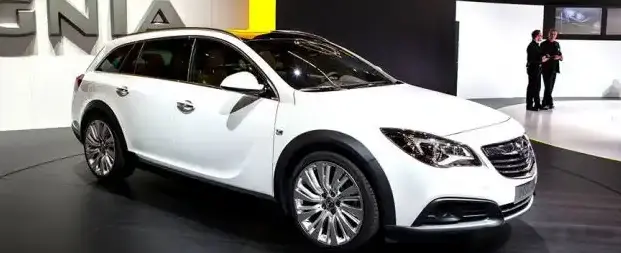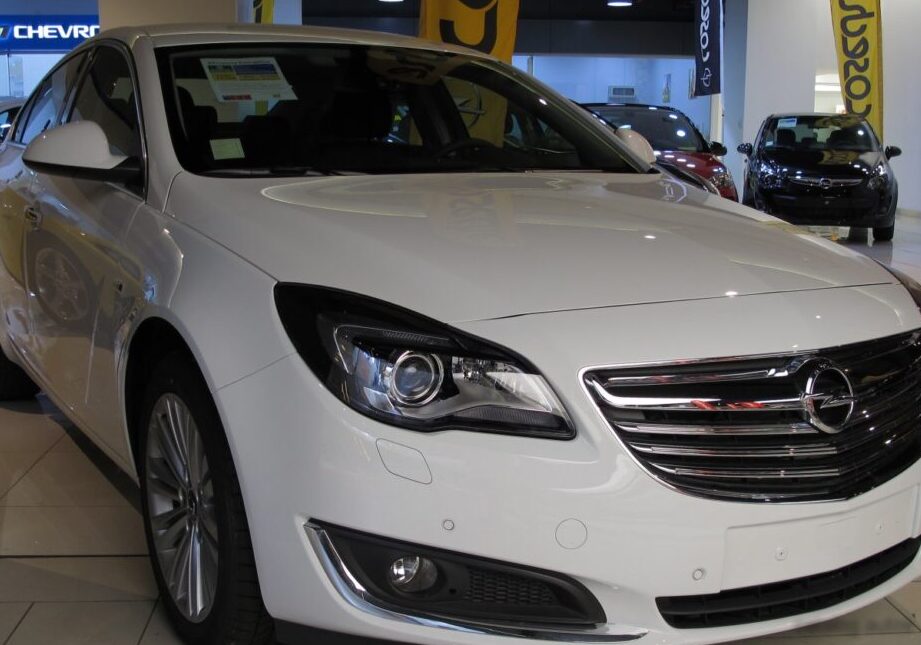
The Opel Insignia OPC 2.8 V6, produced from September 2013 to January 2017, represented the high-performance variant of the Insignia A hatchback, particularly after its 2013 facelift. Positioned as the flagship model, it aimed to deliver a blend of practicality, comfort, and spirited driving dynamics. This variant was primarily marketed in Europe, offering a compelling alternative to established performance hatchbacks and smaller executive cars. The “OPC” designation (Opel Performance Center) signified a focus on enhanced performance and handling compared to the standard Insignia models. It was a direct competitor to vehicles like the Ford Focus ST, Volkswagen Golf R, and Audi S3, offering a more spacious and practical package.
Technical Specifications
| Brand | Opel |
| Model | Insignia |
| Generation | Insignia Hatchback (A, facelift 2013) |
| Type (Engine) | OPC 2.8 V6 (325 Hp) AWD Turbo Ecotec Automatic |
| Start of production | September, 2013 |
| End of production | January, 2017 |
| Powertrain Architecture | Internal Combustion engine |
| Body type | Hatchback |
| Seats | 5 |
| Doors | 5 |
| Fuel consumption (urban) | 16.1 l/100 km (14.6 US mpg, 17.5 UK mpg, 6.2 km/l) |
| Fuel consumption (extra urban) | 7.5 l/100 km (31.4 US mpg, 37.7 UK mpg, 13.3 km/l) |
| Fuel consumption (combined) | 10.7 l/100 km (22 US mpg, 26.4 UK mpg, 9.3 km/l) |
| CO2 emissions | 251 g/km |
| Fuel Type | Petrol (Gasoline) |
| Acceleration 0 – 100 km/h | 6 sec |
| Acceleration 0 – 62 mph | 6 sec |
| Acceleration 0 – 60 mph | 5.7 sec |
| Maximum speed | 250 km/h (155.34 mph) |
| Emission standard | Euro 5 |
| Weight-to-power ratio | 5.4 kg/Hp, 184.1 Hp/tonne |
| Weight-to-torque ratio | 4.1 kg/Nm, 246.5 Nm/tonne |
| Power | 325 Hp @ 5250 rpm |
| Power per litre | 116.4 Hp/l |
| Torque | 435 Nm @ 5250 rpm (320.84 lb.-ft. @ 5250 rpm) |
| Engine layout | Front, Transverse |
| Engine Model/Code | A28NER, B28NER |
| Engine displacement | 2792 cm3 (170.38 cu. in.) |
| Number of cylinders | 6 |
| Engine configuration | V-engine |
| Cylinder Bore | 89 mm (3.5 in.) |
| Piston Stroke | 74.8 mm (2.94 in.) |
| Compression ratio | 9.5:1 |
| Fuel injection system | Multi-port manifold injection |
| Engine aspiration | Turbocharger, Intercooler |
| Engine oil capacity | 6.3 l (6.66 US qt | 5.54 UK qt) |
| Coolant | 6.7 l (7.08 US qt | 5.9 UK qt) |
| Kerb Weight | 1765 kg (3891.16 lbs.) |
| Max. weight | 2355 kg (5191.89 lbs.) |
| Max load | 590 kg (1300.73 lbs.) |
| Trunk (boot) space – minimum | 530 l (18.72 cu. ft.) |
| Trunk (boot) space – maximum | 1470 l (51.91 cu. ft.) |
| Fuel tank capacity | 70 l (18.49 US gal | 15.4 UK gal) |
| Max. roof load | 100 kg (220.46 lbs.) |
| Permitted trailer load with brakes (12%) | 1600 kg (3527.4 lbs.) |
| Permitted trailer load without brakes | 750 kg (1653.47 lbs.) |
| Length | 4842 mm (190.63 in.) |
| Width | 1858 mm (73.15 in.) |
| Width including mirrors | 2084 mm (82.05 in.) |
| Height | 1498 mm (58.98 in.) |
| Wheelbase | 2737 mm (107.76 in.) |
| Front track | 1585 mm (62.4 in.) |
| Rear (Back) track | 1587 mm (62.48 in.) |
| Minimum turning circle | 11.7 m (38.39 ft.) |
| Drive wheel | All wheel drive (4×4) |
| Number of gears | 6 |
| Gearbox type | automatic transmission |
INTRODUCTION
The Opel Insignia OPC 2.8 V6, launched after the 2013 facelift, was the performance halo car for the Insignia A range. Built on the GM’s Epsilon II platform (internal code 1HX0/A3), it aimed to provide a compelling blend of practicality and performance. The facelift brought styling updates, but the OPC variant was distinguished by its aggressive body kit, larger exhaust outlets, and unique alloy wheel designs. It was positioned above the standard Insignia trims, offering a more powerful engine, upgraded suspension, and enhanced braking system. The OPC was intended to appeal to drivers seeking a sporty and capable family car.
Powertrain & Engine Architecture
At the heart of the Insignia OPC lay the A28NER (and sometimes B28NER) 2.8-liter V6 engine. This engine was a naturally aspirated design, but crucially, it was paired with a twin-scroll turbocharger and intercooler to boost power output to 325 horsepower. The engine featured direct injection and a variable valve timing system, contributing to both performance and efficiency. The 60-degree V-angle configuration provided a relatively compact engine layout. The automatic transmission was a six-speed unit, specifically tuned for the OPC’s higher power output. It featured a manual shift mode for greater driver control. The transmission was designed to handle the substantial torque produced by the V6 engine, delivering smooth and responsive gear changes.
Driving Characteristics
The Insignia OPC 2.8 V6 offered a noticeably different driving experience compared to lower-powered Insignia variants. The turbocharged V6 delivered strong acceleration, with 0-60 mph times around 5.7 seconds. The all-wheel-drive system provided excellent traction, particularly in adverse weather conditions. While the automatic transmission wasn’t as engaging as a manual gearbox, it offered convenience and smooth operation. The OPC’s suspension was firmer than standard Insignia models, resulting in reduced body roll and improved handling. However, this came at the expense of some ride comfort. The steering was precise and well-weighted, providing good feedback to the driver. Compared to a manual transmission equipped Insignia, the automatic version offered slightly slower acceleration, but compensated with ease of use.
Equipment & Trim Levels
The Insignia OPC came generously equipped as standard. Key features included sports seats upholstered in Morrocana (a leatherette material), a leather-wrapped steering wheel, and aluminum pedal covers. Infotainment was provided by Opel’s IntelliLink system, offering touchscreen control and connectivity options. Standard safety features included ABS, traction control, and multiple airbags. Optional extras included a panoramic sunroof, adaptive cruise control, and a premium sound system. The interior trim was generally dark-themed, with accents of red stitching to emphasize the car’s sporty character. The OPC also featured unique instrument cluster graphics and a specific start-up screen.
Chassis & Braking
The Insignia OPC benefited from a revised chassis and upgraded braking system. The suspension featured stiffer springs and dampers, along with a thicker stabilizer bar, to reduce body roll and improve handling. The all-wheel-drive system utilized a multi-plate clutch to distribute torque between the front and rear axles, optimizing traction. The braking system featured larger front and rear discs, along with upgraded calipers, to provide increased stopping power. The front brakes were ventilated discs, while the rear brakes were solid discs. The OPC’s chassis was tuned to provide a balance between sporty handling and acceptable ride comfort.
Market Reception & Comparison
The Insignia OPC 2.8 V6 received generally positive reviews from automotive critics. It was praised for its strong performance, spacious interior, and competitive price. However, some critics noted that the automatic transmission wasn’t as engaging as a manual gearbox, and the ride could be firm on rough roads. Compared to other trims in the Insignia lineup, the OPC offered significantly more performance but at the cost of increased fuel consumption and a higher purchase price. The 2.0-liter turbo petrol and diesel variants offered better fuel economy, while the base models were more affordable. The OPC’s all-wheel-drive system provided a distinct advantage in terms of traction and stability compared to front-wheel-drive Insignia models.
Legacy
The Opel Insignia OPC 2.8 V6 has become a sought-after model in the used car market, particularly among enthusiasts. The engine is generally considered reliable, although regular maintenance is essential. The automatic transmission has proven to be durable, but it’s important to check for smooth operation and any signs of wear. The all-wheel-drive system requires periodic servicing to ensure optimal performance. While the Insignia OPC isn’t a rare car, well-maintained examples are becoming increasingly scarce. Its combination of performance, practicality, and relative affordability has cemented its place as a desirable performance hatchback.