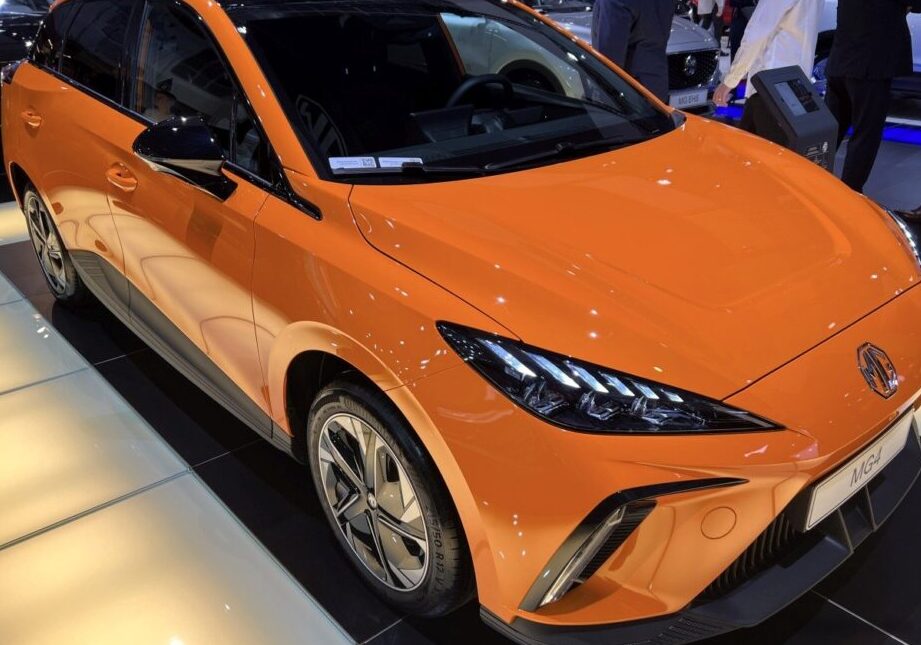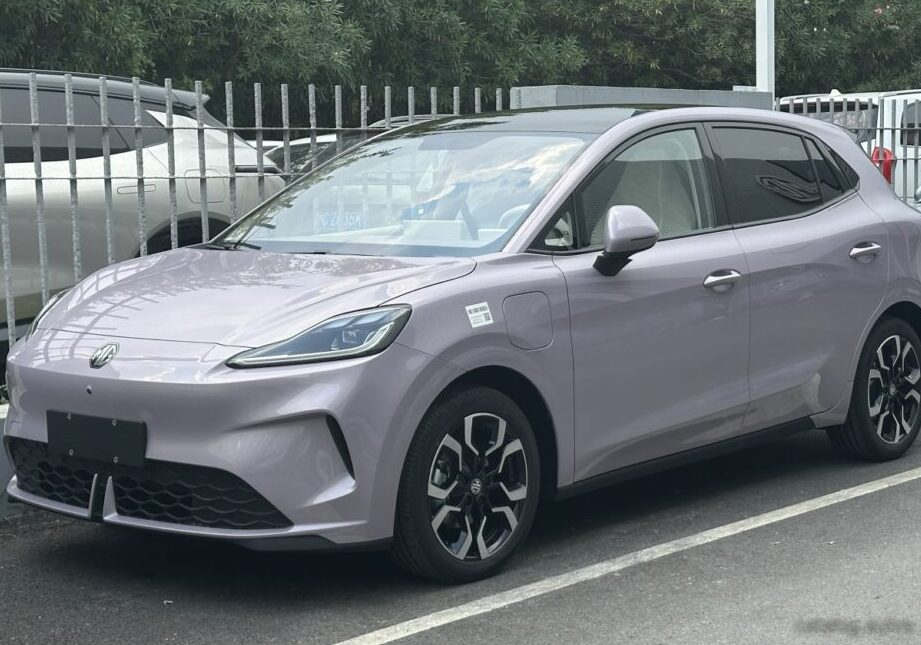
The MG4 EV II 42.8 kWh (163 Hp) is a battery electric vehicle (BEV) hatchback produced by the British-born, Chinese-owned automaker MG Motor. Introduced in July 2025, this variant represents an entry point into the MG4 EV lineup, offering a balance of affordability and range within the rapidly expanding electric vehicle market. Positioned as a competitor to vehicles like the Nissan Leaf and Chevrolet Bolt, the MG4 EV II aims to provide a practical and accessible electric driving experience. It is built on MG’s modular all-electric platform, designed for scalability and efficiency. The “II” designation signifies a specific trim level and battery capacity within the broader MG4 EV range.
Technical Specifications
| Brand | MG |
| Model | MG4 |
| Generation | MG4 EV II |
| Type (Engine) | 42.8 kWh (163 Hp) |
| Start of production | July, 2025 |
| Powertrain Architecture | BEV (Electric Vehicle) |
| Body type | Hatchback |
| Seats | 5 |
| Doors | 5 |
| Fuel Type | Electricity |
| Maximum speed | 160 km/h (99.42 mph) |
| Weight-to-power ratio | 8.7 kg/Hp, 115.2 Hp/tonne |
| Weight-to-torque ratio | 5.7 kg/Nm, 176.7 Nm/tonne |
| Gross battery capacity | 42.8 kWh |
| Battery technology | Lithium iron phosphate (LiFePO4) |
| Battery location | Below the floor |
| All-electric range (CLTC) | 437 km (271.54 mi) |
| Average Energy consumption (CLTC) | 10.4 kWh/100 km (16.74 kWh/100 mi) |
| MPGe | 201 |
| km/kWh | 9.6 |
| mi/kWh | 6 |
| Electric motor power | 163 Hp |
| Electric motor Torque | 250 Nm (184.39 lb.-ft.) |
| Electric motor model/code | TZ180XS1001 |
| Electric motor location | Front axle, Transverse |
| Electric motor type | Synchronous |
| System power | 163 Hp |
| System torque | 250 Nm (184.39 lb.-ft.) |
| Kerb Weight | 1415 kg (3119.54 lbs.) |
| Max. weight | 1850 kg (4078.55 lbs.) |
| Max load | 435 kg (959.01 lbs.) |
| Trunk (boot) space – minimum | 471 l (16.63 cu. ft.) |
| Trunk (boot) space – maximum | 1362 l (48.1 cu. ft.) |
| Length | 4395 mm (173.03 in.) |
| Width | 1842 mm (72.52 in.) |
| Height | 1551 mm (61.06 in.) |
| Wheelbase | 2750 mm (108.27 in.) |
| Front track | 1547 mm (60.91 in.) |
| Rear (Back) track | 1547 mm (60.91 in.) |
| Minimum turning circle | 10.4 m (34.12 ft.) |
| Approach angle | 15° |
| Departure angle | 25° |
| Drivetrain Architecture | One electric motor drives the front wheels. |
| Drive wheel | Front wheel drive |
| Number of gears | 1 |
| Gearbox type | Automatic transmission |
| Front suspension | Independent, type McPherson with coil spring and anti-roll bar |
| Rear suspension | Semi-independent, coil spring, Torsion |
| Front brakes | Ventilated discs |
| Rear brakes | Disc |
| Assisting systems | ABS (Anti-lock braking system) |
| Steering type | Steering rack and pinion |
| Power steering | Electric Steering |
| Tires size | 195/60 R16; 205/50 R17 |
| Wheel rims size | 16; 17 |
Powertrain & Engine Architecture
The MG4 EV II utilizes a single synchronous electric motor, designated TZ180XS1001, producing 163 horsepower and 250 Nm (184.39 lb.-ft.) of torque. This front-wheel-drive configuration is powered by a 42.8 kWh Lithium Iron Phosphate (LiFePO4) battery pack located under the vehicle floor, contributing to a low center of gravity and improved handling. LiFePO4 chemistry is favored for its inherent thermal stability and longer cycle life compared to Nickel Manganese Cobalt (NMC) batteries, though it typically offers slightly lower energy density. The single-speed automatic transmission provides seamless acceleration, characteristic of electric vehicles. The motor’s control system manages power delivery efficiently, optimizing for both range and performance. The vehicle’s electrical architecture is designed for over-the-air (OTA) updates, allowing for potential improvements to motor control and battery management systems over time.
Driving Characteristics
The MG4 EV II 42.8 kWh delivers a smooth and responsive driving experience. While not as brisk as higher-powered variants in the MG4 lineup, the 163 hp motor provides adequate acceleration for everyday driving situations. The single-speed transmission eliminates gear changes, resulting in linear power delivery. The low center of gravity, thanks to the underfloor battery pack, contributes to stable handling and reduced body roll. Steering is light and precise, making it easy to maneuver in urban environments. The regenerative braking system allows for one-pedal driving in certain conditions, enhancing efficiency and driver convenience. Compared to a manual transmission version (if offered), the automatic provides a more relaxed driving experience, particularly in stop-and-go traffic. However, it may lack the direct engagement preferred by some driving enthusiasts.
Equipment & Trim Levels
The MG4 EV II typically comes standard with a comprehensive suite of features, including a 10.1-inch touchscreen infotainment system with Apple CarPlay and Android Auto compatibility, a digital instrument cluster, and MG Pilot, a suite of advanced driver-assistance systems (ADAS) including adaptive cruise control, lane keeping assist, and automatic emergency braking. Interior upholstery is typically cloth, with options for leatherette upgrades on higher trims. Standard safety features include multiple airbags, ABS, and electronic stability control. Optional extras may include a panoramic sunroof, heated front seats, and a 360-degree camera system. The “II” trim level generally represents a mid-range offering, balancing essential features with affordability.
Chassis & Braking
The MG4 EV II utilizes a McPherson strut suspension setup at the front, providing a comfortable ride and responsive handling. The rear suspension employs a semi-independent torsion beam configuration, which is a cost-effective solution for compact hatchbacks. Ventilated disc brakes are fitted to the front wheels, while solid disc brakes are used at the rear. The ABS (Anti-lock Braking System) ensures stable braking performance in emergency situations. Electric power steering provides light and precise steering feel. The vehicle’s chassis is designed to maximize interior space while maintaining structural rigidity. Stabilizer bars are included at both the front and rear to reduce body roll during cornering.
Market Reception & Comparison
The MG4 EV II has been generally well-received by automotive critics, praised for its affordability, spacious interior, and decent range. Its value proposition is particularly strong in the entry-level EV segment. Compared to other trims in the MG4 lineup, the 42.8 kWh variant offers a lower purchase price but sacrifices some range and performance. Fuel economy, expressed as energy consumption, is rated at 10.4 kWh/100 km (16.74 kWh/100 mi), translating to approximately 201 MPGe. Reliability data is still emerging, but MG’s use of LiFePO4 battery chemistry suggests good long-term durability. Some reviewers have noted that the interior materials are not as premium as those found in some competitors, but this is often considered acceptable given the vehicle’s price point.
Legacy
The MG4 EV II 42.8 kWh represents a significant step forward for MG Motor, demonstrating the brand’s commitment to electric mobility. The powertrain, while not groundbreaking in terms of technology, offers a reliable and efficient solution for everyday driving. The use of LiFePO4 batteries is a notable feature, potentially contributing to longer battery life and reduced fire risk. As the used car market matures, the MG4 EV II is expected to become a popular choice for budget-conscious buyers seeking an affordable and practical electric vehicle. Its long-term reliability will be a key factor in its continued success, and ongoing software updates could further enhance its performance and features.