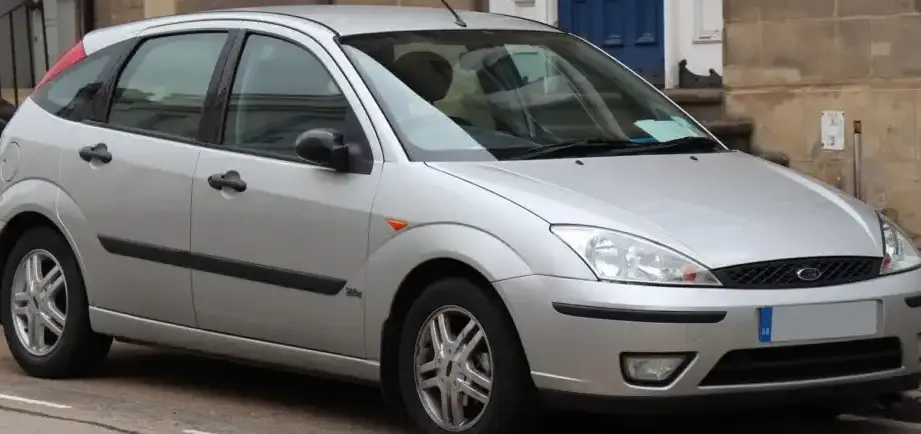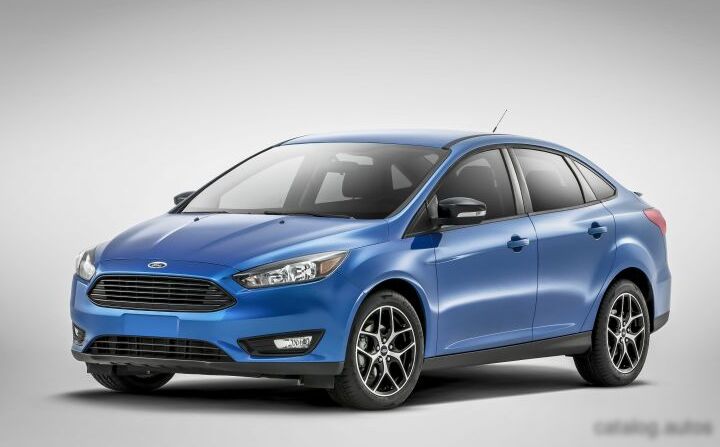
The Ford Focus III Sedan, specifically the facelifted version introduced in 2014, represented a significant step forward for Ford’s compact offerings in the global market. While the Focus had been a mainstay in Europe for decades, the third generation marked a concerted effort to create a truly global vehicle, with versions sold in North America, Asia, and beyond. The 1.0 EcoBoost 125 horsepower variant, produced from 2014 to 2018, occupied a key position in the lineup, offering a balance of fuel efficiency and reasonable performance. It was positioned as an entry-level to mid-range option, appealing to buyers prioritizing economy and practicality.
Technical Specifications
| Brand | Ford |
| Model | Focus |
| Generation | Focus III Sedan (facelift 2014) |
| Type (Engine) | 1.0 EcoBoost (125 Hp) |
| Start of production | 2014 |
| End of production | 2018 |
| Powertrain Architecture | Internal Combustion engine |
| Body type | Sedan |
| Seats | 5 |
| Doors | 4 |
| Fuel consumption (urban) | 6.5 l/100 km (36.2 US mpg, 43.5 UK mpg, 15.4 km/l) |
| Fuel consumption (extra urban) | 4.2 l/100 km (56 US mpg, 67.3 UK mpg, 23.8 km/l) |
| Fuel consumption (combined) | 5 l/100 km (47 US mpg, 56.5 UK mpg, 20 km/l) |
| CO2 emissions | 116 g/km |
| Fuel Type | Petrol (Gasoline) |
| Acceleration 0 – 100 km/h | 11.1 sec |
| Acceleration 0 – 62 mph | 11.1 sec |
| Acceleration 0 – 60 mph | 10.5 sec |
| Maximum speed | 192 km/h (119.3 mph) |
| Emission standard | Euro 6 |
| Weight-to-power ratio | 10.4 kg/Hp, 95.7 Hp/tonne |
| Weight-to-torque ratio | 7.7 kg/Nm, 130.2 Nm/tonne |
| Power | 125 Hp @ 6000 rpm |
| Power per litre | 125.3 Hp/l |
| Torque | 170 Nm @ 1400-4500 rpm (125.39 lb.-ft. @ 1400-4500 rpm) |
| Engine layout | Front, Transverse |
| Engine Model/Code | M1DC, M1DD |
| Engine displacement | 998 cm3 (60.9 cu. in.) |
| Number of cylinders | 3 |
| Engine configuration | Inline |
| Cylinder Bore | 71.9 mm (2.83 in.) |
| Piston Stroke | 82 mm (3.23 in.) |
| Compression ratio | 10:1 |
| Number of valves per cylinder | 4 |
| Fuel injection system | Direct injection |
| Engine aspiration | Turbocharger, Intercooler |
| Valvetrain | DOHC |
| Engine oil capacity | 4.1 l (4.33 US qt | 3.61 UK qt) |
| Coolant | 5.8 l (6.13 US qt | 5.1 UK qt) |
| Kerb Weight | 1306 kg (2879.24 lbs.) |
| Max. weight | 1900 kg (4188.78 lbs.) |
| Max load | 594 kg (1309.55 lbs.) |
| Trunk (boot) space – minimum | 372 l (13.14 cu. ft.) |
| Fuel tank capacity | 55 l (14.53 US gal | 12.1 UK gal) |
| Length | 4534 mm (178.5 in.) |
| Width | 1823 mm (71.77 in.) |
| Height | 1484 mm (58.43 in.) |
| Wheelbase | 2648 mm (104.25 in.) |
| Front track | 1544 mm (60.79 in.) |
| Rear (Back) track | 1559 mm (61.38 in.) |
| Minimum turning circle | 11 m (36.09 ft.) |
| Drivetrain Architecture | ICE, Front wheel drive |
| Number of gears | 6 |
| Gearbox type | Manual transmission |
| Front suspension | Independent, McPherson with coil spring and anti-roll bar |
| Rear suspension | Independent multi-link suspension |
| Front brakes | Disc |
| Rear brakes | Disc |
| Assisting systems | ABS |
| Steering type | Steering rack and pinion |
| Tires size | 205/55 R16; 215/50 R17 |
| Wheel rims size | 6.5J x 16; 7.0J x 17 |
Powertrain & Engine Architecture
The heart of this Focus variant is the 1.0 EcoBoost engine, a three-cylinder turbocharged gasoline engine. Ford’s EcoBoost technology was a key selling point, emphasizing efficiency without sacrificing all performance. The engine, designated with codes M1DC or M1DD depending on the specific calibration, utilizes direct fuel injection and a single scroll turbocharger with an integrated exhaust manifold. This design minimizes turbo lag and improves responsiveness. The engine’s aluminum block and head contribute to its relatively lightweight construction. The 125 horsepower output is achieved at 6000 rpm, while peak torque of 170 Nm (125 lb-ft) is available from a low 1400 rpm all the way to 4500 rpm, providing a broad powerband. The engine is paired with a six-speed manual transmission, chosen for its efficiency and driver engagement. While an automatic transmission was offered in some markets with the 1.0 EcoBoost, the manual was more common in the US and Europe.
Driving Characteristics
The 1.0 EcoBoost-equipped Focus Sedan delivers a surprisingly refined driving experience. While not a performance machine, the engine provides adequate power for everyday driving situations. Acceleration from 0-60 mph takes around 10.5 seconds, which is competitive within its class. The turbocharger provides a noticeable boost in power, making overtaking maneuvers manageable. The six-speed manual transmission allows drivers to keep the engine in its optimal powerband. Compared to higher-output versions of the Focus, such as those with the 1.6L or 2.0L engines, the 1.0 EcoBoost feels less powerful, particularly when fully loaded or climbing hills. However, the lighter engine weight contributes to improved handling and agility. The gear ratios are well-chosen to maximize fuel efficiency and provide reasonable acceleration.
Equipment & Trim Levels
The 1.0 EcoBoost variant typically came equipped with a reasonable level of standard features. Base models included air conditioning, power windows and locks, a basic audio system, and steel wheels with wheel covers. Higher trim levels, such as the SE or Titanium, added features like alloy wheels, a more advanced infotainment system with a touchscreen display, automatic climate control, and upgraded interior upholstery. Optional extras included a sunroof, navigation system, and parking sensors. Interior materials were generally durable and functional, though not particularly luxurious. The dashboard layout was clean and straightforward, with easy-to-use controls.
Chassis & Braking
The Focus III Sedan utilizes an independent front suspension with McPherson struts and a multi-link independent rear suspension. This setup provides a comfortable ride and good handling characteristics. The front and rear brakes are both disc brakes, providing adequate stopping power. Anti-lock Braking System (ABS) is standard. The suspension tuning is geared towards comfort, but the car still feels relatively stable and composed in corners. Stabilizer bars are fitted to both the front and rear axles to reduce body roll. The steering is precise and responsive, providing good feedback to the driver.
Market Reception & Comparison
The 1.0 EcoBoost Focus Sedan was generally well-received by automotive critics. It was praised for its fuel efficiency, surprisingly punchy engine, and comfortable ride. However, some reviewers noted that the engine could feel strained at higher speeds or when carrying a full load. Compared to other trims in the Focus lineup, the 1.0 EcoBoost offered the best fuel economy, making it an attractive option for budget-conscious buyers. The 1.6L engine offered more power but at the expense of fuel efficiency, while the diesel variants provided even better economy but with a different driving experience. Reliability reports suggest that the 1.0 EcoBoost engine is generally reliable, although some owners have reported issues with the turbocharger and fuel injectors.
Legacy
The 1.0 EcoBoost engine has become a mainstay in Ford’s lineup, and the Focus III Sedan with this engine remains a popular choice in the used car market. Its combination of fuel efficiency, practicality, and affordability makes it an appealing option for commuters and small families. While the engine may require occasional maintenance, such as turbocharger servicing or fuel injector cleaning, it is generally considered to be a durable and long-lasting powertrain. The Focus III Sedan, particularly the 1.0 EcoBoost variant, represents a significant step forward in Ford’s efforts to create a globally competitive compact car.