
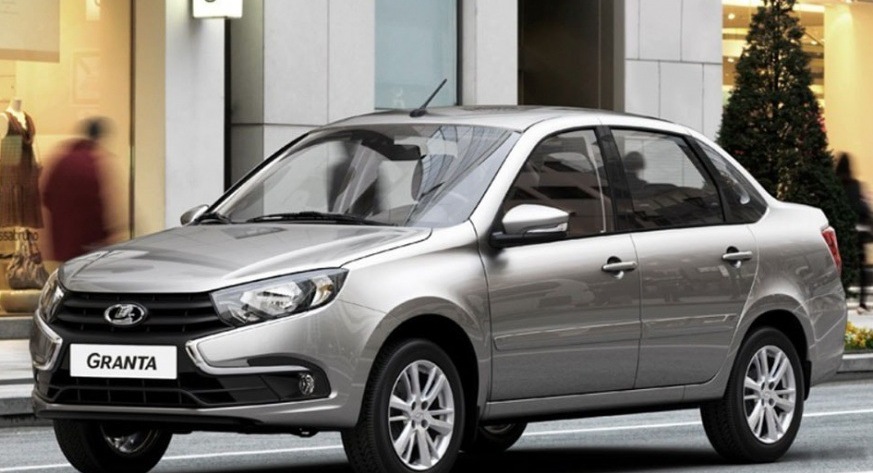
The Lada Granta I (facelift 2018) Sedan 1.6 (87 hp) represents a significant iteration of the Granta model, a mainstay of the Russian automotive market. Introduced in 2018, this facelift brought updated styling and minor mechanical refinements to the already popular Granta platform. Positioned as an entry-level sedan, the 1.6-liter, 87 horsepower variant served as the foundation of the Granta lineup, offering affordable transportation for a broad customer base. It was built on the Lada B/C platform, a derivative of the Renault Logan’s architecture, reflecting the close collaboration between AvtoVAZ (Lada’s manufacturer) and Renault-Nissan. This model aimed to provide a practical and economical solution for everyday commuting and family use within Russia and neighboring export markets.
Technical Specifications
| Brand | Lada |
| Model | Granta |
| Generation | Granta I (facelift 2018) Sedan |
| Type (Engine) | 1.6 (87 Hp) |
| Start of production | 2018 |
| Powertrain Architecture | Internal Combustion engine |
| Body type | Sedan |
| Seats | 5 |
| Doors | 4 |
| Fuel consumption (urban) | 9.1 l/100 km (25.8 US mpg, 31 UK mpg, 11 km/l) |
| Fuel consumption (extra urban) | 5.3 l/100 km (44.4 US mpg, 53.3 UK mpg, 18.9 km/l) |
| Fuel consumption (combined) | 6.8 l/100 km (34.6 US mpg, 41.5 UK mpg, 14.7 km/l) |
| Fuel Type | Petrol (Gasoline) |
| Acceleration 0 – 100 km/h | 11.6 sec |
| Acceleration 0 – 62 mph | 11.6 sec |
| Acceleration 0 – 60 mph | 11 sec |
| Maximum speed | 172 km/h (106.88 mph) |
| Weight-to-power ratio | 12.4 kg/Hp, 80.9 Hp/tonne |
| Weight-to-torque ratio | 7.7 kg/Nm, 130.2 Nm/tonne |
| Power | 87 Hp @ 5100 rpm |
| Power per litre | 54.5 Hp/l |
| Torque | 140 Nm @ 3800 rpm (103.26 lb.-ft. @ 3800 rpm) |
| Engine layout | Front, Transverse |
| Engine Model/Code | 11186 |
| Engine displacement | 1596 cm3 (97.39 cu. in.) |
| Number of cylinders | 4 |
| Engine configuration | Inline |
| Cylinder Bore | 82 mm (3.23 in.) |
| Piston Stroke | 75.6 mm (2.98 in.) |
| Compression ratio | 10.5:1 |
| Number of valves per cylinder | 2 |
| Fuel injection system | Multi-port manifold injection |
| Engine aspiration | Naturally aspirated engine |
| Engine oil capacity | 3.2 l (3.38 US qt | 2.82 UK qt) |
| Coolant capacity | 6.5 l (6.87 US qt | 5.72 UK qt) |
| Kerb Weight | 1075-1160 kg (2369.97 – 2557.36 lbs.) |
| Max. weight | 1560 kg (3439.21 lbs.) |
| Max load | 400-485 kg (881.85 – 1069.24 lbs.) |
| Trunk (boot) space | 520 l (18.36 cu. ft.) |
| Fuel tank capacity | 50 l (13.21 US gal | 11 UK gal) |
| Length | 4268 mm (168.03 in.) |
| Width | 1700 mm (66.93 in.) |
| Height | 1500 mm (59.06 in.) |
| Wheelbase | 2476 mm (97.48 in.) |
| Front track | 1430 mm (56.3 in.) |
| Rear track | 1414 mm (55.67 in.) |
| Front overhang | 806 mm (31.73 in.) |
| Rear overhang | 986 mm (38.82 in.) |
| Ride height (ground clearance) | 160 mm (6.3 in.) |
| Drivetrain Architecture | Front wheel drive, Internal Combustion engine |
| Drive wheel | Front wheel drive |
| Number of gears | 5 gears, manual transmission |
| Front suspension | Independent, type McPherson with coil spring and anti-roll bar |
| Rear suspension | Semi-independent, coil spring |
| Front brakes | Ventilated discs |
| Rear brakes | Drum |
| Steering type | Steering rack and pinion |
| Tires size | 175/65 R14 82 H; 185/60 R14 82 H; 185/55 R15 82 H |
| Wheel rims size | 14; 15 |
Powertrain & Engine Architecture
The heart of the Granta 1.6 (87 hp) is the Lada 11186 engine, an 8-valve, 1.6-liter inline-four cylinder petrol engine. This engine is a descendant of the original VAZ-2108 engine, continually refined over decades of production. It utilizes a multi-point fuel injection system, providing adequate fuel delivery for its modest power output. The engine’s relatively low compression ratio of 10.5:1 contributes to its ability to run on the commonly available, and often lower-octane, fuel found in Russia and surrounding regions. The engine is transversely mounted, driving the front wheels. The standard transmission for this variant was a five-speed manual gearbox. While an automated manual transmission (AMT) was offered on some Granta models, the 87 hp version was primarily sold with the manual, prioritizing simplicity and cost-effectiveness.
Driving Characteristics
The Granta 1.6 (87 hp) offers a utilitarian driving experience. Acceleration is modest, taking approximately 11.6 seconds to reach 62 mph (100 km/h). The engine delivers its peak torque of 140 Nm (103 lb-ft) at 3800 rpm, providing sufficient power for everyday driving situations, but lacking the punch of higher-output versions. The five-speed manual transmission is geared for economy, with relatively tall gear ratios. This contributes to reasonable fuel economy but requires frequent downshifting when overtaking or climbing hills. Compared to the more powerful 1.6-liter (106 hp) or the 1.6-liter with automatic transmission, the 87 hp version feels noticeably slower and less refined. However, its simplicity and lighter weight can make it more engaging to drive for those prioritizing driver involvement over outright performance.
Equipment & Trim Levels
The Granta 1.6 (87 hp) typically came with a basic level of equipment, reflecting its position as the entry point to the Granta range. Standard features generally included power steering, central locking, and front power windows. Interior upholstery was typically cloth, with a simple dashboard layout. Air conditioning, power rear windows, and an audio system were often offered as optional extras. Trim levels varied depending on the market, but generally followed a tiered approach, with higher trims adding features like alloy wheels, fog lights, and upgraded interior materials. The focus was on providing essential features at an affordable price point.
Chassis & Braking
The Granta utilizes a McPherson strut front suspension and a semi-independent coil spring rear suspension. This setup provides a comfortable ride quality, albeit with limited handling precision. The front brakes are ventilated discs, while the rear brakes are drums. This configuration is typical for vehicles in this price segment, prioritizing cost-effectiveness over ultimate stopping power. The steering is a rack and pinion system, providing adequate steering feel. The ride height is relatively generous, providing good ground clearance for navigating rough roads, a common characteristic in many of the regions where the Granta was sold.
Market Reception & Comparison
The Lada Granta 1.6 (87 hp) was well-received in its primary market, Russia, due to its affordability and practicality. Critics generally praised its low purchase price and running costs, but noted its basic interior and modest performance. Compared to other trims in the Granta lineup, the 87 hp version offered the lowest price of entry, making it attractive to budget-conscious buyers. However, the more powerful 1.6-liter (106 hp) and the automatic transmission options offered a more refined and convenient driving experience, albeit at a higher cost. Fuel economy was a strong point, with combined fuel consumption figures around 6.8 l/100 km (34.6 US mpg).
Legacy
The Lada Granta 1.6 (87 hp) remains a common sight on Russian roads today. The 11186 engine, while aging, is known for its relative reliability and ease of maintenance. Spare parts are readily available and affordable, making it a practical choice for owners. In the used car market, these Granta models represent a very affordable option for basic transportation. While not known for its performance or luxury, the Granta 1.6 (87 hp) served its purpose as a dependable and economical vehicle for a large segment of the population.

