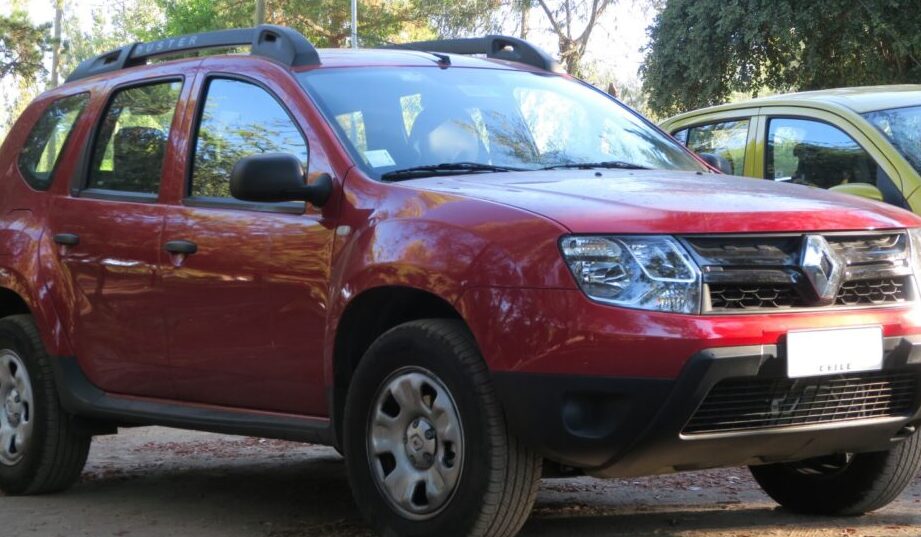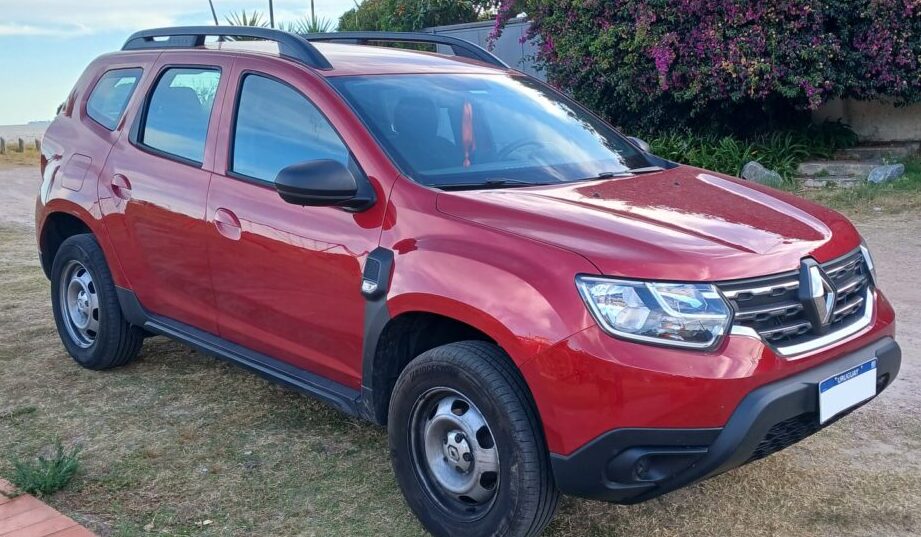
The Renault Duster II 1.6 (114 hp) is a front-wheel-drive, five-seater subcompact SUV produced by Renault from May 2021 through 2024. Positioned as an entry-level offering within the second generation Duster lineup, it served as a more affordable alternative to the higher-powered engine options and trims. The Duster II, built on the B0+ platform, represented a significant upgrade over the first-generation model, offering improved interior space, updated technology, and enhanced safety features. This 1.6-liter variant was primarily aimed at buyers seeking a practical and economical SUV for everyday use, particularly in markets where fuel efficiency and affordability are key considerations.
Technical Specifications
| Brand | Renault |
| Model | Duster |
| Generation | Duster II |
| Type (Engine) | 1.6 (114 Hp) |
| Start of production | May, 2021 |
| End of production | 2024 |
| Powertrain Architecture | Internal Combustion engine |
| Body type | SUV |
| Seats | 5 |
| Doors | 5 |
| Fuel consumption (economy) – urban (NEDC) | 9.1 l/100 km (25.8 US mpg, 31 UK mpg, 11 km/l) |
| Fuel consumption (economy) – extra urban (NEDC) | 6.0 l/100 km (39.2 US mpg, 47.1 UK mpg, 16.7 km/l) |
| Fuel consumption (economy) – combined (NEDC) | 7.2 l/100 km (32.7 US mpg, 39.2 UK mpg, 13.9 km/l) |
| CO2 emissions (NEDC) | 166 g/km |
| Fuel Type | Petrol (Gasoline) |
| Acceleration 0 – 100 km/h | 12.1 sec |
| Acceleration 0 – 62 mph | 12.1 sec |
| Acceleration 0 – 60 mph | 11.5 sec |
| Maximum speed | 172 km/h (106.88 mph) |
| Emission standard | Euro 5 |
| Weight-to-power ratio | 10.7 kg/Hp, 93.7 Hp/tonne |
| Weight-to-torque ratio | 7.8 kg/Nm, 128.2 Nm/tonne |
| Power | 114 Hp @ 5500 rpm |
| Power per litre | 71.3 Hp/l |
| Torque | 156 Nm @ 4000 rpm (115.06 lb.-ft. @ 4000 rpm) |
| Engine layout | Front, Transverse |
| Engine Model/Code | H4M 736 |
| Engine displacement | 1598 cm3 (97.52 cu. in.) |
| Number of cylinders | 4 |
| Engine configuration | Inline |
| Cylinder Bore | 78 mm (3.07 in.) |
| Piston Stroke | 83.6 mm (3.29 in.) |
| Number of valves per cylinder | 4 |
| Fuel injection system | Multi-port manifold injection |
| Kerb Weight | 1217 kg (2683.03 lbs.) |
| Max. weight | 1767 kg (3895.57 lbs.) |
| Max load | 550 kg (1212.54 lbs.) |
| Trunk (boot) space – minimum | 468 l (16.53 cu. ft.) |
| Trunk (boot) space – maximum | 1761 l (62.19 cu. ft.) |
| Fuel tank capacity | 50 l (13.21 US gal, 11 UK gal) |
| Max. roof load | 80 kg (176.37 lbs.) |
| Permitted trailer load with brakes (12%) | 1500 kg (3306.93 lbs.) |
| Permitted trailer load without brakes | 645 kg (1421.98 lbs.) |
| Length | 4341 mm (170.91 in.) |
| Width | 1804 mm (71.02 in.) |
| Width including mirrors | 2052 mm (80.79 in.) |
| Height | 1693 mm (66.65 in.) |
| Wheelbase | 2673 mm (105.24 in.) |
| Front track | 1557 mm (61.3 in.) |
| Rear (Back) track | 1560 mm (61.42 in.) |
| Front overhang | 837 mm (32.95 in.) |
| Rear overhang | 830 mm (32.68 in.) |
| Ride height (ground clearance) | 210 mm (8.27 in.) |
| Minimum turning circle (turning diameter) | 10.9 m (35.76 ft.) |
| Approach angle | 30° |
| Departure angle | 34° |
| Drivetrain Architecture | The Internal combustion engine (ICE) drives the front wheels of the vehicle. |
| Drive wheel | Front wheel drive |
| Number of gears and type of gearbox | 5 gears, manual transmission |
| Front suspension | Independent, type McPherson with coil spring and anti-roll bar |
| Rear suspension | Semi-independent, coil spring, Transverse stabilizer |
| Front brakes | Ventilated discs, 280×24 mm |
| Rear brakes | Drum |
| Assisting systems | ABS (Anti-lock braking system) |
| Steering type | Steering rack and pinion |
| Power steering | Electric Steering |
| Tires size | 215/65 R16; 215/60 R17 |
Powertrain & Engine Architecture
The Renault Duster II 1.6 (114 hp) utilizes the H4M 736 engine, a 1.6-liter inline-four cylinder gasoline engine. This engine is part of the Renault-Nissan Alliance’s modular engine family. It features a multi-point fuel injection system and four valves per cylinder, contributing to a reasonable balance of power and efficiency. The engine’s 114 horsepower peak is achieved at 5500 rpm, while its 156 Nm (115 lb-ft) of torque is delivered at 4000 rpm. The engine is transversely mounted in the front of the vehicle. The 5-speed manual transmission was the standard offering for this variant, providing a relatively simple and durable drivetrain. The transmission’s gear ratios were tuned for fuel economy and everyday drivability rather than outright performance.
Driving Characteristics
The 1.6-liter engine, paired with the 5-speed manual transmission, delivers adequate performance for typical urban and highway driving. Acceleration from 0 to 100 km/h (0-62 mph) takes approximately 12.1 seconds. While not particularly quick, the engine provides sufficient power for overtaking maneuvers and maintaining comfortable cruising speeds. The gear ratios are spaced to prioritize fuel efficiency, meaning the engine needs to be revved somewhat to achieve brisk acceleration. Compared to the more powerful 1.3 TCe turbocharged engine option available in the Duster II range, the 1.6-liter feels noticeably less responsive. However, the 1.6L offers a smoother, more linear power delivery, which some drivers may prefer for everyday commuting.
Equipment & Trim Levels
The 1.6-liter Duster II typically came with a base level of equipment, focusing on essential features. Standard amenities included air conditioning, power steering, electric front windows, a basic audio system with USB connectivity, and ABS brakes. Safety features such as driver and passenger airbags were also standard. Higher trim levels, available as options, added features like alloy wheels, rear parking sensors, a touchscreen infotainment system with navigation, and cruise control. Interior upholstery was typically cloth, with a durable and practical design. The dashboard layout was functional and straightforward, prioritizing ease of use.
Chassis & Braking
The Duster II features a McPherson strut front suspension and a semi-independent coil spring rear suspension. This setup provides a comfortable ride quality, capable of absorbing bumps and irregularities in the road surface. The front brakes are ventilated discs, providing adequate stopping power, while the rear brakes are drums. The electric power steering offers light and easy steering, making it maneuverable in urban environments. With a ground clearance of 210 mm (8.27 inches), the Duster II is well-suited for tackling rough roads and uneven terrain.
Market Reception & Comparison
The Renault Duster II 1.6 (114 hp) was generally well-received as an affordable and practical SUV. Critics praised its spacious interior, comfortable ride, and reasonable fuel economy. However, some reviewers noted that the engine lacked power, particularly when fully loaded or driving uphill. Compared to the more expensive turbocharged variants, the 1.6-liter offered a lower price point, making it an attractive option for budget-conscious buyers. Fuel economy figures of around 7.2 l/100 km (32.7 US mpg) were competitive within its segment. Reliability reports suggest that the H4M engine is generally durable, although regular maintenance is essential.
Legacy
The Renault Duster II 1.6 (114 hp) remains a popular choice in the used car market, particularly in regions where affordability and practicality are highly valued. Its simple and robust powertrain, combined with its spacious interior and decent fuel economy, make it a sensible option for families and individuals seeking a reliable SUV. While not the most exciting vehicle to drive, it offers a good balance of features and value, ensuring its continued presence on roads for years to come. The H4M engine, while not known for groundbreaking performance, has proven to be a relatively reliable unit when properly maintained.