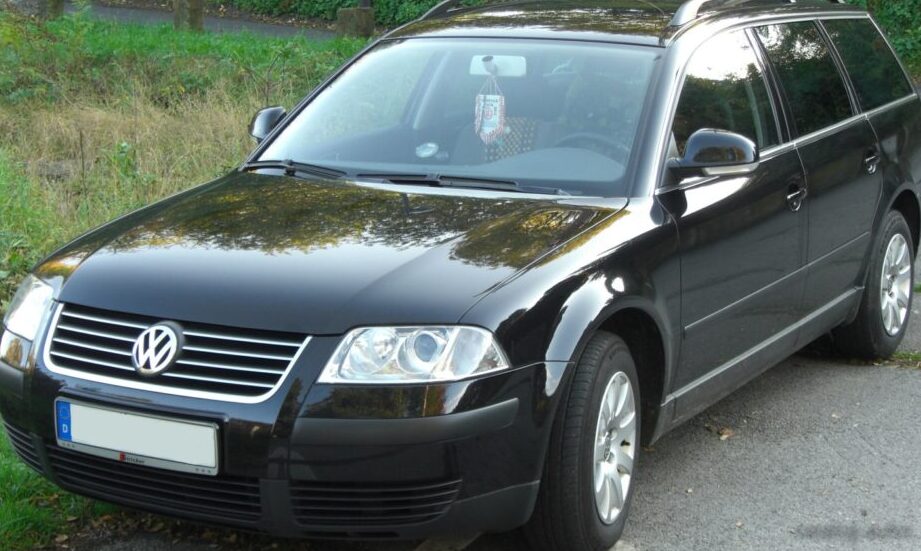
The Volkswagen Passat Variant (B5.5) 2.0 20V, producing 130 horsepower, was a popular iteration of Volkswagen’s mid-size family wagon, manufactured between 2002 and 2005. Positioned as a mid-range offering within the B5.5 Passat lineup – which spanned engines from smaller 1.6L petrols to more potent 1.9 TDI diesels and the performance-oriented 2.8L VR6 – this variant aimed to balance affordability, practicality, and reasonable performance. It represented a refinement of the earlier B5 Passat, with styling updates and improvements to the interior and technology. The B5.5 designation refers to a significant facelift applied to the B5 generation, giving it a more modern appearance and addressing some of the criticisms leveled at the original model.
Technical Specifications
| Brand | Volkswagen |
| Model | Passat |
| Generation | Passat Variant (B5.5) |
| Type (Engine) | 2.0 20V (130 Hp) |
| Start of production | 2002 |
| End of production | 2005 |
| Powertrain Architecture | Internal Combustion engine |
| Body type | Station wagon (estate) |
| Seats | 5 |
| Doors | 5 |
| Fuel consumption (economy) – urban (NEDC) | 11.8 l/100 km (19.9 US mpg, 23.9 UK mpg, 8.5 km/l) |
| Fuel consumption (economy) – extra urban (NEDC) | 6.4 l/100 km (36.8 US mpg, 44.1 UK mpg, 15.6 km/l) |
| Fuel consumption (economy) – combined (NEDC) | 8.4 l/100 km (28 US mpg, 33.6 UK mpg, 11.9 km/l) |
| CO2 emissions (NEDC) | 202 g/km |
| Fuel Type | Petrol (Gasoline) |
| Acceleration 0 – 100 km/h | 10.3 sec |
| Acceleration 0 – 62 mph | 10.3 sec |
| Acceleration 0 – 60 mph | 9.8 sec |
| Maximum speed | 204 km/h (126.76 mph) |
| Emission standard | Euro 4 |
| Weight-to-power ratio | 12.2 kg/Hp, 82 Hp/tonne |
| Weight-to-torque ratio | 8.1 kg/Nm, 123 Nm/tonne |
| Power | 130 Hp @ 5700 rpm |
| Power per litre | 65.5 Hp/l |
| Torque | 195 Nm @ 3300 rpm (143.82 lb.-ft. @ 3300 rpm) |
| Engine layout | Front, Longitudinal |
| Engine Model/Code | ALT |
| Engine displacement | 1984 cm3 (121.07 cu. in.) |
| Number of cylinders | 4 |
| Engine configuration | Inline |
| Cylinder Bore | 82.5 mm (3.25 in.) |
| Piston Stroke | 92.8 mm (3.65 in.) |
| Compression ratio | 10.3:1 |
| Number of valves per cylinder | 5 |
| Fuel injection system | Multi-port manifold injection |
| Engine aspiration | Naturally aspirated engine |
| Valvetrain | DOHC |
| Engine oil capacity | 4.2 l (4.44 US qt | 3.7 UK qt) |
| Coolant | 7 l (7.4 US qt | 6.16 UK qt) |
| Kerb Weight | 1586 kg (3496.53 lbs.) |
| Max. weight | 1990 kg (4387.2 lbs.) |
| Max load | 404 kg (890.67 lbs.) |
| Trunk (boot) space – minimum | 495 l (17.48 cu. ft.) |
| Trunk (boot) space – maximum | 1600 l (56.5 cu. ft.) |
| Fuel tank capacity | 62 l (16.38 US gal | 13.64 UK gal) |
| Max. roof load | 100 kg (220.46 lbs.) |
| Permitted trailer load with brakes (12%) | 1400 kg (3086.47 lbs.) |
| Permitted trailer load without brakes | 750 kg (1653.47 lbs.) |
| Permitted towbar download | 75 kg (165.35 lbs.) |
| Length | 4682 mm (184.33 in.) |
| Width | 1746 mm (68.74 in.) |
| Height | 1498 mm (58.98 in.) |
| Wheelbase | 2703 mm (106.42 in.) |
| Front track | 1515 mm (59.65 in.) |
| Rear (Back) track | 1515 mm (59.65 in.) |
| Minimum turning circle (turning diameter) | 11.4 m (37.4 ft.) |
| Drivetrain Architecture | The Internal combustion engine (ICE) drives the front wheels of the vehicle. |
| Drive wheel | Front wheel drive |
| Number of gears and type of gearbox | 5 gears, manual transmission |
| Front suspension | Independent multi-link suspension, Transverse stabilizer |
| Rear suspension | Trailing arm, Torsion |
| Front brakes | Ventilated discs |
| Rear brakes | Disc |
| Assisting systems | ABS (Anti-lock braking system) |
| Steering type | Steering rack and pinion |
| Power steering | Hydraulic Steering |
| Tires size | 195/65 R15 |
| Wheel rims size | 6J x 15 |
Powertrain & Engine Architecture
The heart of this Passat Variant was the 1.8-liter, 20-valve inline-four cylinder engine, designated the ALT engine code. This engine was a mainstay in the Volkswagen Group’s lineup for many years, known for its relative reliability and decent power output. The ALT featured a cast iron block and an aluminum cylinder head, incorporating a double overhead camshaft (DOHC) design with five valves per cylinder (three intake, two exhaust). This valvetrain configuration helped to improve breathing and enhance performance across the rev range. Fuel delivery was handled by a multi-port fuel injection system, providing precise fuel metering for optimal combustion. The engine’s 130 horsepower and 195 Nm (144 lb-ft) of torque were respectable for its displacement, but not exceptional compared to larger engines or turbocharged alternatives. The engine was longitudinally mounted, driving the front wheels through a five-speed automatic transmission. This transmission, while offering convenience, was not known for its sportiness or particularly quick shifts.
Driving Characteristics
The 2.0 20V automatic Passat Variant offered a comfortable and predictable driving experience. Acceleration was adequate for everyday driving, with a 0-60 mph time of around 9.8 seconds. However, it lacked the urgency of the manual transmission versions or the higher-output engines. The automatic transmission, while smooth, tended to hunt for gears under hard acceleration, and the overall feeling was one of relaxed cruising rather than spirited performance. The gear ratios were tuned for fuel efficiency and comfort, prioritizing smooth transitions over rapid acceleration. Compared to the 1.9 TDI, the 2.0 petrol offered less torque but a more responsive feel at higher RPMs. The VR6 models, with their six-cylinder engines, provided significantly more power and a more refined driving experience, but at a higher price point and with increased fuel consumption.
Equipment & Trim Levels
The 2.0 20V automatic Passat Variant typically came equipped with a reasonable level of standard features. These included power windows, power door locks, air conditioning, and an AM/FM radio with a CD player. Interior upholstery was typically cloth, with options for leather available at an extra cost. Higher trim levels, such as the Sport or Highline, added features like alloy wheels, a sunroof, upgraded audio systems, and automatic climate control. Optional extras included navigation systems, heated seats, and parking sensors. The dashboard layout was functional and straightforward, with easy-to-read gauges and logically placed controls.
Chassis & Braking
The B5.5 Passat Variant featured an independent multi-link front suspension and a trailing arm rear suspension. This setup provided a good balance of ride comfort and handling. The front suspension incorporated a transverse stabilizer bar to reduce body roll during cornering. Braking duties were handled by ventilated discs at the front and solid discs at the rear, with ABS (Anti-lock Braking System) as standard. The braking system was generally effective, providing adequate stopping power for everyday driving conditions. The suspension was tuned for comfort, resulting in a relatively soft ride, but it could feel somewhat wallowy when pushed hard through corners.
Market Reception & Comparison
The 2.0 20V automatic Passat Variant was generally well-received by critics as a practical and comfortable family car. It offered a good compromise between price, performance, and fuel economy. However, some reviewers criticized the automatic transmission for its lack of responsiveness and the engine for its relatively modest power output. Compared to the 1.9 TDI, the 2.0 petrol offered lower fuel economy but a smoother and quieter engine. The VR6 models were praised for their performance and refinement, but their higher price and fuel consumption made them less appealing to budget-conscious buyers. Reliability was generally good, although some owners reported issues with the automatic transmission and the occasional sensor failure.
Legacy
The Volkswagen Passat Variant (B5.5) 2.0 20V automatic remains a relatively common sight on used car lots today. The ALT engine is known for its durability, and with proper maintenance, it can provide many years of reliable service. However, potential buyers should be aware of the potential for automatic transmission issues and the cost of replacing sensors. The B5.5 Passat Variant is appreciated by enthusiasts for its practicality, comfortable ride, and relatively affordable price. It represents a solid and well-engineered family wagon that continues to offer good value in the used car market.