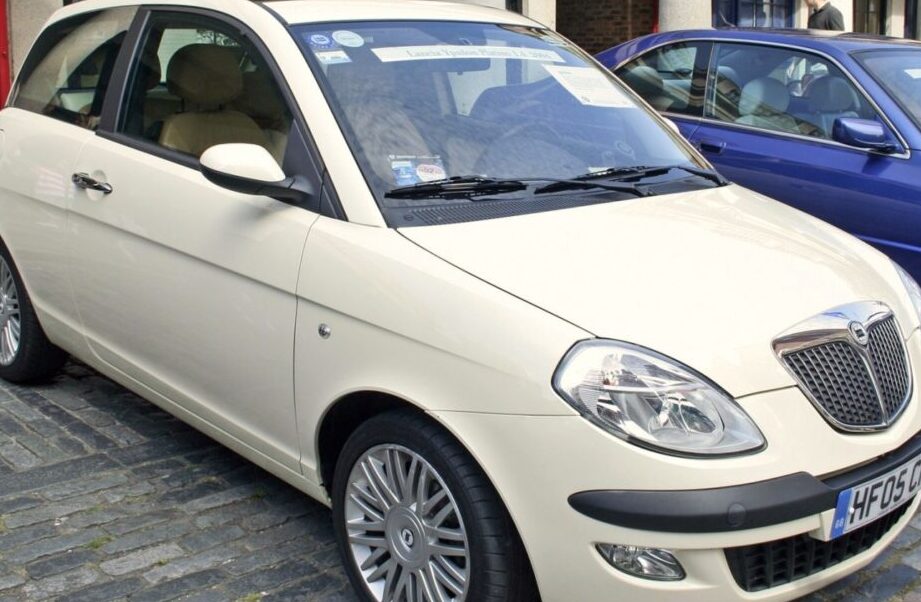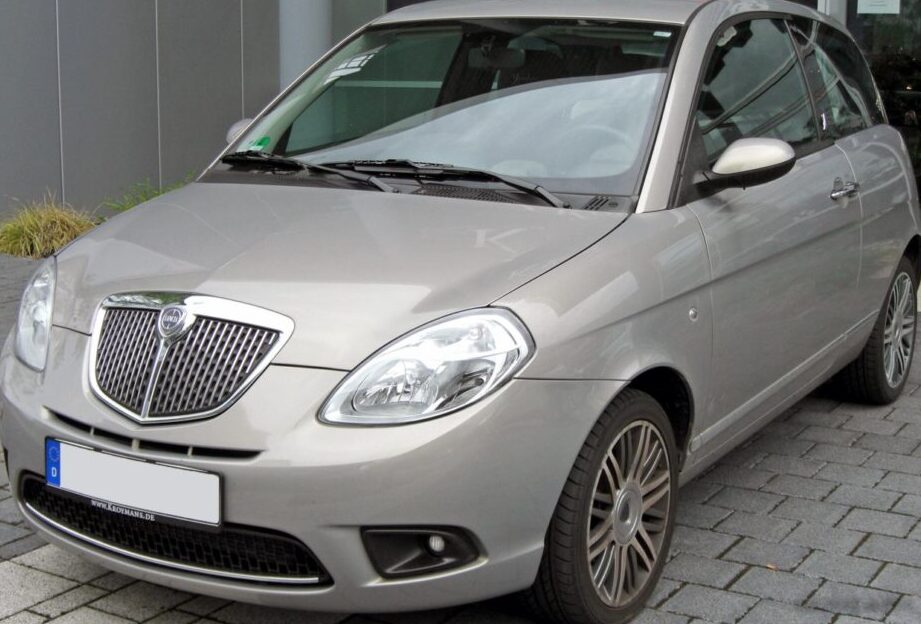
The Lancia Ypsilon (843 series, post-facelift introduced in 2006) 1.4 8V (77 horsepower) LPG variant was a specific configuration offered between 2009 and November 2011. This model represented an entry-level option within the Ypsilon range, designed for cost-conscious buyers seeking a compact and relatively economical city car. It was primarily marketed in Italy, Lancia’s home market, where small, stylish hatchbacks are highly popular. The Ypsilon 843 series itself was a significant model for Lancia, representing a move towards a more premium and fashion-conscious image for the brand. This particular version aimed to broaden the Ypsilon’s appeal by offering a lower price point and the benefits of LPG conversion.
Technical Specifications
| Brand | Lancia |
| Model | Ypsilon |
| Generation | Ypsilon (843, facelift 2006) |
| Type (Engine) | 1.4 8V (77 Hp) LPG |
| Start of production | 2009 |
| End of production | November, 2011 |
| Powertrain Architecture | Internal Combustion engine |
| Body type | Hatchback |
| Seats | 4 |
| Doors | 3 |
| Fuel consumption (economy) – urban (NEDC) | 7.1 l/100 km (33.1 US mpg, 39.8 UK mpg, 14.1 km/l) |
| Fuel consumption (economy) – urban (LPG) (NEDC) | 9 l/100 km |
| Fuel consumption (economy) – extra urban (NEDC) | 4.6 l/100 km (51.1 US mpg, 61.4 UK mpg, 21.7 km/l) |
| Fuel consumption (economy) – extra urban (LPG) (NEDC) | 5.9 l/100 km |
| Fuel consumption (economy) – combined (NEDC) | 5.5 l/100 km (42.8 US mpg, 51.4 UK mpg, 18.2 km/l) |
| Fuel consumption (economy) – combined (LPG) (NEDC) | 7 l/100 km |
| CO2 emissions (NEDC) | 128 g/km |
| CO2 emissions (LPG) (NEDC) | 114 g/km |
| Fuel Type | Petrol / LPG |
| Acceleration 0 – 100 km/h | 13.5 sec |
| Acceleration 0 – 62 mph | 13.5 sec |
| Acceleration 0 – 60 mph | 12.8 sec |
| Maximum speed | 167 km/h (103.77 mph) |
| Emission standard | Euro 5 |
| Weight-to-power ratio | 12.7 kg/Hp, 79 Hp/tonne |
| Weight-to-torque ratio | 8.5 kg/Nm, 117.9 Nm/tonne |
| Power | 77 Hp @ 6000 rpm |
| Power per litre | 56.3 Hp/l |
| Torque | 115 Nm @ 3750 rpm (84.82 lb.-ft. @ 3750 rpm) |
| Engine layout | Front, Transverse |
| Engine Model/Code | 350A1000 |
| Engine displacement | 1368 cm3 (83.48 cu. in.) |
| Number of cylinders | 4 |
| Engine configuration | Inline |
| Cylinder Bore | 72 mm (2.83 in.) |
| Piston Stroke | 84 mm (3.31 in.) |
| Compression ratio | 11:1 |
| Number of valves per cylinder | 2 |
| Fuel injection system | Multi-port manifold injection |
| Engine aspiration | Naturally aspirated engine |
| Valvetrain | SOHC |
| Engine oil capacity | 3.2 l (3.38 US qt | 2.82 UK qt) |
| Coolant | 4.5 l (4.76 US qt | 3.96 UK qt) |
| Kerb Weight | 975 kg (2149.51 lbs.) |
| Trunk (boot) space – minimum | 215 l (7.59 cu. ft.) |
| Fuel tank capacity | 47 l (12.42 US gal | 10.34 UK gal) |
| Fuel tank capacity (LPG) | 40 l |
| Max. roof load | 75 kg (165.35 lbs.) |
| Permitted trailer load with brakes (12%) | 900 kg (1984.16 lbs.) |
| Permitted trailer load without brakes | 400 kg (881.85 lbs.) |
| Permitted towbar download | 60 kg (132.28 lbs.) |
| Length | 3810 mm (150 in.) |
| Width | 1704 mm (67.09 in.) |
| Height | 1530 mm (60.24 in.) |
| Wheelbase | 2388 mm (94.02 in.) |
| Front track | 1450 mm (57.09 in.) |
| Rear (Back) track | 1440 mm (56.69 in.) |
| Front overhang | 819 mm (32.24 in.) |
| Rear overhang | 603 mm (23.74 in.) |
| Minimum turning circle (turning diameter) | 10.49 m (34.42 ft.) |
| Drivetrain Architecture | The Internal combustion engine (ICE) drives the front wheels of the vehicle. |
| Drive wheel | Front wheel drive |
| Number of gears and type of gearbox | 5 gears, manual transmission |
| Front suspension | Independent, type McPherson with coil spring and anti-roll bar |
| Rear suspension | Transverse stabilizer, Torsion |
| Front brakes | Ventilated discs, 257×22 mm |
| Rear brakes | Drum, 203×38 mm |
| Assisting systems | ABS (Anti-lock braking system) |
| Steering type | Steering rack and pinion |
| Power steering | Electric Steering |
| Tires size | 185/55 R15; 195/45 R16 |
| Wheel rims size | 6J x 15; 6.5J x 16 |
Powertrain & Engine Architecture
The heart of this Ypsilon variant is the 1.4-liter, naturally aspirated inline-four cylinder engine, designated as the 350A1000. This engine features an 8-valve SOHC (Single Overhead Camshaft) configuration. The engine utilizes a multi-port fuel injection system, delivering fuel to each cylinder individually. The LPG conversion is a key feature, allowing the engine to run on either petrol or liquefied petroleum gas, offering potential cost savings and reduced emissions. The LPG system typically involves a separate fuel tank installed in the spare wheel well and a vaporizer that converts the liquid LPG into a gaseous state for combustion. The 5-speed manual transmission was standard, chosen for its simplicity and affordability. This transmission featured typical gear ratios for a small city car, prioritizing acceleration in lower gears and fuel efficiency at highway speeds.
Driving Characteristics
The 77 horsepower output and 115 Nm of torque resulted in modest performance. Acceleration from 0 to 100 km/h (0-62 mph) took approximately 13.5 seconds, making it suitable for urban driving but less capable on highways or when overtaking. The LPG conversion slightly reduced power output compared to the petrol-only version. The manual transmission allowed for reasonable control, but the engine lacked the responsiveness of higher-output variants. The Ypsilon 1.4 8V LPG prioritized fuel economy and smooth, predictable driving over outright performance. The gear ratios were tuned for city use, providing adequate acceleration from a standstill and manageable cruising speeds.
Equipment & Trim Levels
The 1.4 8V LPG variant typically came with a basic level of equipment. Standard features generally included power steering, central locking, electric front windows, and an audio system. Interior upholstery was typically cloth, and the dashboard featured a simple, functional design. Optional extras could include air conditioning, alloy wheels, and upgraded audio systems. This trim level was positioned as the entry point to the Ypsilon range, appealing to buyers seeking an affordable and practical city car.
Chassis & Braking
The Ypsilon 843 series utilized a McPherson strut front suspension and a torsion beam rear suspension. This setup provided a comfortable ride quality, well-suited for city streets. The front brakes were ventilated discs, offering adequate stopping power, while the rear brakes were drums, a cost-saving measure for this entry-level variant. ABS (Anti-lock Braking System) was standard, enhancing safety during emergency braking situations. The relatively lightweight construction of the Ypsilon contributed to its nimble handling characteristics.
Market Reception & Comparison
The Lancia Ypsilon 1.4 8V LPG was generally well-received as an affordable and economical city car. Critics praised its stylish design and comfortable ride, but noted its modest performance. Compared to other Ypsilon variants, such as the 1.2-liter petrol or the more powerful 1.4 Turbo Jet, the LPG version offered lower running costs but sacrificed performance. It competed with other small hatchbacks in the Italian market, such as the Fiat Panda and the Renault Twingo.
Legacy
The 1.4 8V LPG Ypsilon has proven to be a relatively reliable powertrain, particularly when properly maintained. The LPG conversion, if well-installed and regularly serviced, can extend engine life due to the cleaner burning characteristics of LPG. In the used car market, these models are often sought after by buyers looking for an economical and stylish city car. However, potential buyers should be aware of the need for regular LPG system inspections and maintenance. The Ypsilon 843 series, including this LPG variant, remains a popular choice for those seeking a small, fashionable, and relatively affordable vehicle.