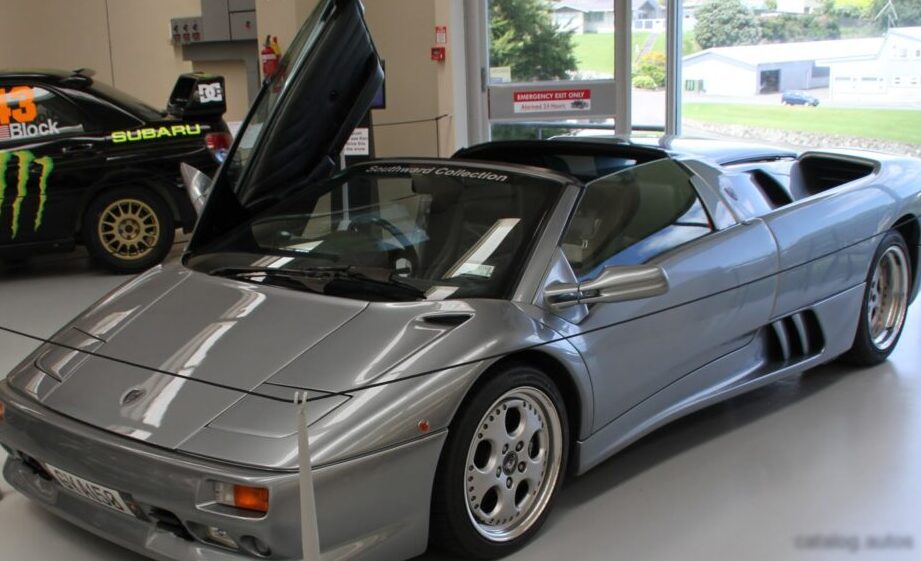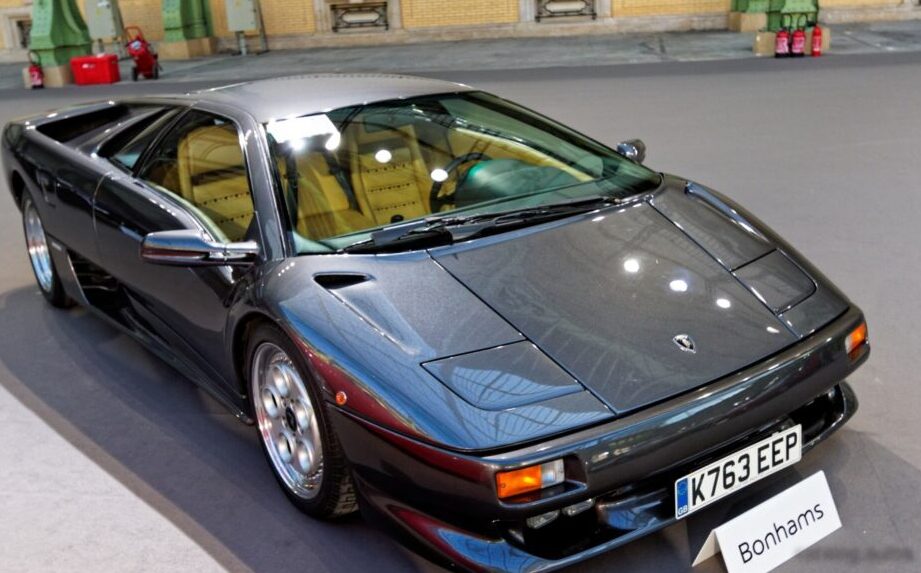
The Lamborghini Diablo SV (Sport Veloce) represents the final evolution of the original Diablo line, produced from 1999 to 2000. It served as the ultimate, most focused iteration of the Diablo before the introduction of the Diablo 6.0 and Murciélago. The SV was designed to recapture the raw, visceral driving experience of the original Countach, offering a more aggressive aesthetic and enhanced performance compared to the standard Diablo VT. It marked a return to a purer, driver-focused philosophy for Lamborghini, emphasizing lightweight construction and a powerful engine. The SV was exclusively available as a coupe, with a limited production run solidifying its status as a collector’s item.
Technical Specifications
| Brand | Lamborghini |
| Model | Diablo |
| Generation | Diablo |
| Type (Engine) | SV (530 Hp) |
| Start of production | 1999 |
| End of production | 2000 |
| Powertrain Architecture | Internal Combustion engine |
| Body type | Coupe |
| Seats | 2 |
| Doors | 2 |
| Fuel consumption (economy) – urban | 37.9 l/100 km (6.2 US mpg, 7.5 UK mpg, 2.6 km/l) |
| Fuel consumption (economy) – extra urban | 17.3 l/100 km (13.6 US mpg, 16.3 UK mpg, 5.8 km/l) |
| Fuel Type | Petrol (Gasoline) |
| Acceleration 0 – 100 km/h | 3.85 sec |
| Acceleration 0 – 62 mph | 3.85 sec |
| Acceleration 0 – 60 mph | 3.7 sec |
| Maximum speed | 320 km/h (198.84 mph) |
| Weight-to-power ratio | 3 kg/Hp, 336.5 Hp/tonne |
| Weight-to-torque ratio | 2.6 kg/Nm, 384.1 Nm/tonne |
| Power | 530 Hp @ 7100 rpm |
| Power per litre | 88.5 Hp/l |
| Torque | 605 Nm @ 5500 rpm (446.23 lb.-ft. @ 5500 rpm) |
| Engine layout | Middle, Longitudinal |
| Engine displacement | 5992 cm3 (365.65 cu. in.) |
| Number of cylinders | 12 |
| Engine configuration | V-engine |
| Piston Stroke | 80 mm (3.15 in.) |
| Compression ratio | 10:1 |
| Number of valves per cylinder | 4 |
| Fuel injection system | Multi-port manifold injection |
| Engine aspiration | Naturally aspirated engine |
| Valvetrain | DOHC |
| Engine oil capacity | 15 l (15.85 US qt | 13.2 UK qt) |
| Coolant | 15 l (15.85 US qt | 13.2 UK qt) |
| Kerb Weight | 1575 kg (3472.28 lbs.) |
| Max. weight | 1895 kg (4177.76 lbs.) |
| Max load | 320 kg (705.48 lbs.) |
| Trunk (boot) space – maximum | 140 l (4.94 cu. ft.) |
| Fuel tank capacity | 100 l (26.42 US gal | 22 UK gal) |
| Length | 4470 mm (175.98 in.) |
| Width | 2040 mm (80.31 in.) |
| Height | 1115 mm (43.9 in.) |
| Wheelbase | 2650 mm (104.33 in.) |
| Front track | 1540 mm (60.63 in.) |
| Rear (Back) track | 1640 mm (64.57 in.) |
| Drivetrain Architecture | The Internal combustion engine (ICE) drives the rear wheels of the vehicle. |
| Drive wheel | Rear wheel drive |
| Number of gears and type of gearbox | 5 gears, manual transmission |
| Front suspension | Double wishbone |
| Rear suspension | Double wishbone |
| Front brakes | Ventilated discs |
| Rear brakes | Ventilated discs |
| Assisting systems | ABS (Anti-lock braking system) |
| Steering type | Steering rack and pinion |
| Power steering | Hydraulic Steering |
| Tires size | 235/35 ZR18; 335/30 ZR18 |
Powertrain & Engine Architecture
The Diablo SV is powered by Lamborghini’s iconic 6.0-liter V12 engine, designated the L354. This engine is naturally aspirated and produces 530 horsepower at 7,100 rpm and 446 lb-ft of torque at 5,500 rpm. The engine features a 60-degree V-angle, four valves per cylinder, and dual overhead camshafts (DOHC). Fuel is delivered via multi-port fuel injection. The SV retained the five-speed manual transmission, a crucial element in its driver-focused character. Unlike the VT models which featured all-wheel drive, the SV is strictly rear-wheel drive, contributing to its more raw and engaging driving experience. The engine’s internal components were strengthened to handle the increased power output, and a revised exhaust system further enhanced performance.
Driving Characteristics
The Diablo SV delivers a significantly more visceral driving experience than its all-wheel-drive VT counterparts. The rear-wheel-drive configuration, combined with the potent V12 engine, results in a car that demands respect and skill. Acceleration is breathtaking, with 0-60 mph achieved in approximately 3.7 seconds and a top speed of 200 mph. The five-speed manual transmission provides precise control, but requires a firm hand and quick reflexes. The SV’s suspension is firm, prioritizing handling over outright comfort. The lack of electronic aids, such as traction control, means that the driver is fully responsible for managing the car’s power. This makes the SV a challenging but incredibly rewarding car to drive, particularly on a track or winding road.
Equipment & Trim Levels
The Diablo SV was relatively sparsely equipped compared to modern supercars, reflecting its focus on performance. Standard features included leather upholstery, power windows, and air conditioning. However, options were limited. The interior retained the Diablo’s distinctive angular design, with a focus on functionality rather than luxury. The SV featured a unique body kit, including a larger rear wing, revised front and rear fascias, and prominent air intakes. These modifications not only enhanced the car’s appearance but also improved aerodynamic efficiency. The SV was available in a range of exterior colors, but many were finished in iconic Lamborghini shades like Rosso Diablo.
Chassis & Braking
The Diablo SV utilizes a tubular steel chassis, providing a rigid and lightweight foundation. The suspension consists of independent double wishbones at all four corners, with coil springs and adjustable dampers. Braking is provided by ventilated discs on all four wheels, assisted by an anti-lock braking system (ABS). The SV’s braking performance is adequate for its performance level, but it lacks the advanced braking systems found on later supercars. The car’s relatively low weight (around 3,472 lbs) contributes to its agility and handling. The rear track is wider than the front, enhancing stability at high speeds.
Market Reception & Comparison
The Diablo SV was widely praised by automotive journalists for its raw performance and engaging driving experience. Critics lauded its return to the spirit of the original Countach, offering a more pure and visceral driving experience than the VT models. However, some criticized its lack of modern conveniences and its challenging handling characteristics. Compared to the Diablo VT, the SV offered significantly more performance for experienced drivers, but it was less forgiving and required more skill to drive quickly. The SV’s limited production run and its status as the final Diablo variant have made it a highly sought-after collector’s car.
Legacy
The Lamborghini Diablo SV represents a significant chapter in Lamborghini’s history. It served as a bridge between the classic Lamborghini era and the modern era, showcasing the company’s commitment to high performance and iconic design. The SV’s V12 engine is considered one of the greatest engines ever produced, and its rear-wheel-drive configuration provides a driving experience that is unmatched by modern supercars. Today, the Diablo SV is a highly collectible car, with values continuing to rise. Its robust mechanicals and relatively simple construction make it a surprisingly reliable supercar, provided it is properly maintained. The SV remains a testament to Lamborghini’s enduring legacy of building some of the world’s most exciting and desirable automobiles.