
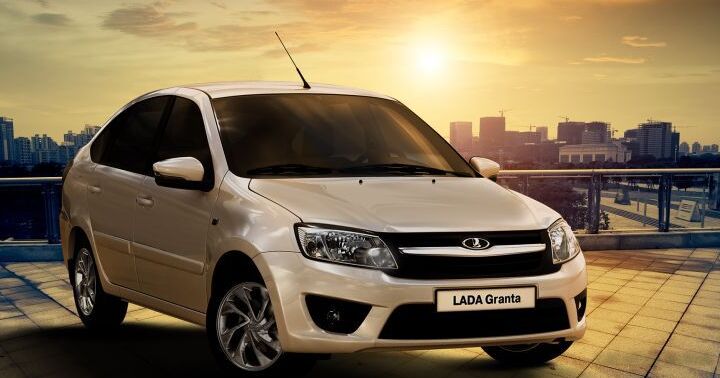
The Lada Granta I Hatchback 1.6 (106 hp) was a popular entry-level vehicle produced by the Russian automaker Lada between 2014 and 2018. Positioned as a budget-friendly option within the Granta range, it represented a significant step forward for Lada in terms of modern design and features, while still maintaining the brand’s reputation for affordability and practicality. This particular variant, equipped with a 1.6-liter engine and a five-speed manual transmission, was aimed at buyers seeking economical transportation with reasonable performance. It was a key model in Lada’s efforts to revitalize its image and compete in the increasingly competitive Eastern European and Russian automotive markets.
Technical Specifications
| Brand | Lada |
| Model | Granta |
| Generation | Granta I Hatchback |
| Type (Engine) | 1.6 (106 Hp) |
| Start of production | 2014 |
| End of production | 2018 |
| Powertrain Architecture | Internal Combustion engine |
| Body type | Hatchback |
| Seats | 5 |
| Doors | 5 |
| Fuel consumption (urban) | 8.6 l/100 km (27.4 US mpg, 32.8 UK mpg, 11.6 km/l) |
| Fuel consumption (extra urban) | 5.6 l/100 km (42 US mpg, 50.4 UK mpg, 17.9 km/l) |
| Fuel consumption (combined) | 6.7 l/100 km (35.1 US mpg, 42.2 UK mpg, 14.9 km/l) |
| Fuel Type | Petrol (Gasoline) |
| Acceleration 0 – 100 km/h | 10.9 sec |
| Acceleration 0 – 62 mph | 10.9 sec |
| Acceleration 0 – 60 mph | 10.4 sec |
| Maximum speed | 179 km/h (111.23 mph) |
| Weight-to-power ratio | 10.2 kg/Hp, 97.7 Hp/tonne |
| Weight-to-torque ratio | 7.3 kg/Nm, 136.4 Nm/tonne |
| Power | 106 Hp @ 5800 rpm |
| Power per litre | 66.4 Hp/l |
| Torque | 148 Nm @ 4000 rpm (109.16 lb.-ft. @ 4000 rpm) |
| Engine layout | Front, Transverse |
| Engine Model/Code | 21127 |
| Engine displacement | 1596 cm3 (97.39 cu. in.) |
| Number of cylinders | 4 |
| Engine configuration | Inline |
| Number of valves per cylinder | 4 |
| Fuel injection system | Multi-port manifold injection |
| Engine aspiration | Naturally aspirated engine |
| Engine oil capacity | 3.2 l (3.38 US qt | 2.82 UK qt) |
| Coolant capacity | 6.5 l (6.87 US qt | 5.72 UK qt) |
| Kerb Weight | 1085 kg (2392.02 lbs) |
| Max. weight | 1560 kg (3439.21 lbs) |
| Max load | 475 kg (1047.2 lbs) |
| Trunk (boot) space – minimum | 440 l (15.54 cu. ft) |
| Trunk (boot) space – maximum | 760 l (26.84 cu. ft) |
| Fuel tank capacity | 50 l (13.21 US gal | 11 UK gal) |
| Permitted trailer load with brakes (12%) | 900 kg (1984.16 lbs) |
| Permitted trailer load without brakes | 450 kg (992.08 lbs) |
| Length | 4246 mm (167.17 in) |
| Width | 1700 mm (66.93 in) |
| Height | 1500 mm (59.06 in) |
| Wheelbase | 2476 mm (97.48 in) |
| Front track | 1430 mm (56.3 in) |
| Rear (Back) track | 1414 mm (55.67 in) |
| Ride height (ground clearance) | 160 mm (6.3 in) |
| Drivetrain Architecture | Front wheel drive |
| Number of gears and type of gearbox | 5 gears, manual transmission |
| Front suspension | Independent, type McPherson with coil spring and anti-roll bar |
| Rear suspension | Semi-independent, coil spring |
| Assisting systems | ABS (Anti-lock braking system) |
| Steering type | Steering rack and pinion |
| Tires size | 175/65 R14; 185/60 R14; 185/55 R15 |
| Wheel rims size | 14; 15 |
Powertrain & Engine Architecture
The Lada Granta 1.6 utilized the 21127 engine, a four-cylinder, inline, naturally aspirated gasoline engine with a displacement of 1.6 liters (1596 cm3). This engine was a development of the older Lada engine family, but incorporated improvements in fuel injection and engine management. It featured a multi-port fuel injection system, which helped to improve fuel efficiency and reduce emissions compared to earlier carburetor-equipped Lada models. The engine produced 106 horsepower at 5800 rpm and 148 Nm (109.16 lb-ft) of torque at 4000 rpm. The five-speed manual transmission was the standard offering for this variant, providing a relatively direct and engaging driving experience. The engine’s design prioritized reliability and ease of maintenance over outright performance.
Driving Characteristics
The Granta 1.6 (106 hp) offered adequate, though not exhilarating, performance. Acceleration from 0 to 100 km/h (0-62 mph) took approximately 10.9 seconds, and the top speed was around 179 km/h (111.23 mph). The five-speed manual transmission was well-matched to the engine’s characteristics, providing reasonable gear spacing for everyday driving. While not as quick as higher-powered Granta variants, the 1.6-liter engine delivered sufficient power for navigating city streets and highways. The suspension, tuned for comfort, provided a relatively smooth ride, although it could feel somewhat soft during spirited cornering. Compared to the base 1.6-liter engine with less power, the 106 hp version offered a noticeable improvement in responsiveness, making it a more practical choice for drivers who frequently encountered hills or carried passengers.
Equipment & Trim Levels
The Granta I Hatchback 1.6 (106 hp) typically came with a basic level of standard equipment. This included power steering, central locking, front power windows, and an audio system with USB connectivity. Safety features included ABS (Anti-lock Braking System) and driver and passenger airbags. Interior upholstery was typically cloth, and the dashboard featured a functional, if somewhat utilitarian, design. Optional extras included air conditioning, electric rear windows, and upgraded audio systems. Trim levels varied depending on the market, but generally offered incremental improvements in interior comfort and features. The focus remained on providing a practical and affordable vehicle, so luxury features were limited.
Chassis & Braking
The Granta I Hatchback utilized a front-wheel-drive layout with an independent McPherson strut suspension at the front and a semi-independent coil spring suspension at the rear. The front suspension incorporated an anti-roll bar to reduce body roll during cornering. Braking was typically accomplished with disc brakes at the front and drum brakes at the rear. The braking system, while adequate for everyday use, lacked the stopping power of more sophisticated setups found in higher-end vehicles. The chassis was designed for durability and cost-effectiveness, prioritizing practicality over sporty handling.
Market Reception & Comparison
The Lada Granta 1.6 (106 hp) was generally well-received in its target markets, particularly in Russia and Eastern Europe. Critics praised its affordability, practicality, and improved build quality compared to previous Lada models. However, it was also noted that the interior was somewhat basic and the driving experience lacked refinement. Compared to other trims in the Granta lineup, the 1.6-liter 106 hp version offered a good balance between performance and fuel economy. It was a more appealing option for drivers who needed a bit more power than the base engine provided, without the added cost of the more expensive trims. Fuel economy was a strong point, with combined fuel consumption averaging around 6.7 l/100 km (35.1 US mpg).
Legacy
The Lada Granta I Hatchback 1.6 (106 hp) played a significant role in Lada’s efforts to modernize its product lineup and regain market share. The powertrain, while not groundbreaking, proved to be relatively reliable and easy to maintain. In the used car market, these Granta models are still relatively common and offer an affordable entry point for buyers seeking a practical and economical vehicle. While not known for its performance or luxury, the Granta 1.6 remains a testament to Lada’s commitment to providing basic, reliable transportation at an accessible price point. Its simplicity and durability continue to appeal to budget-conscious buyers.

