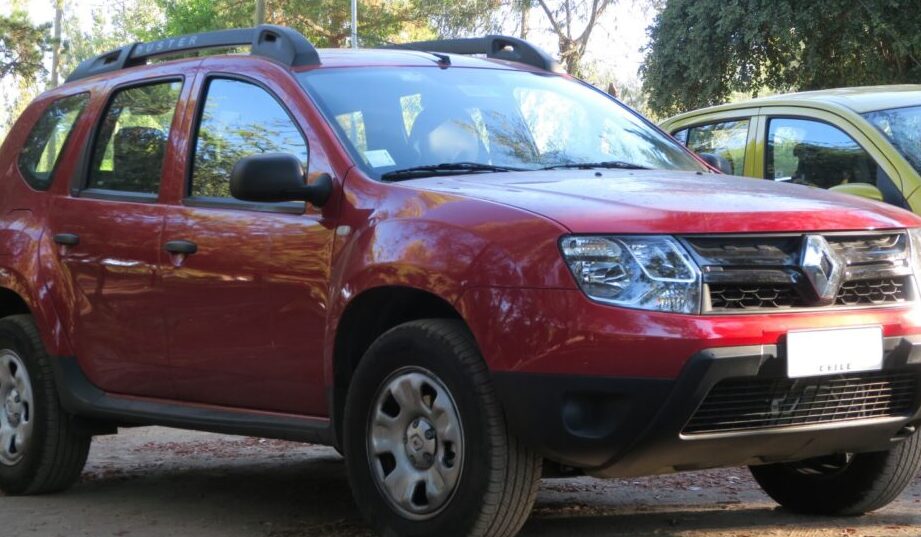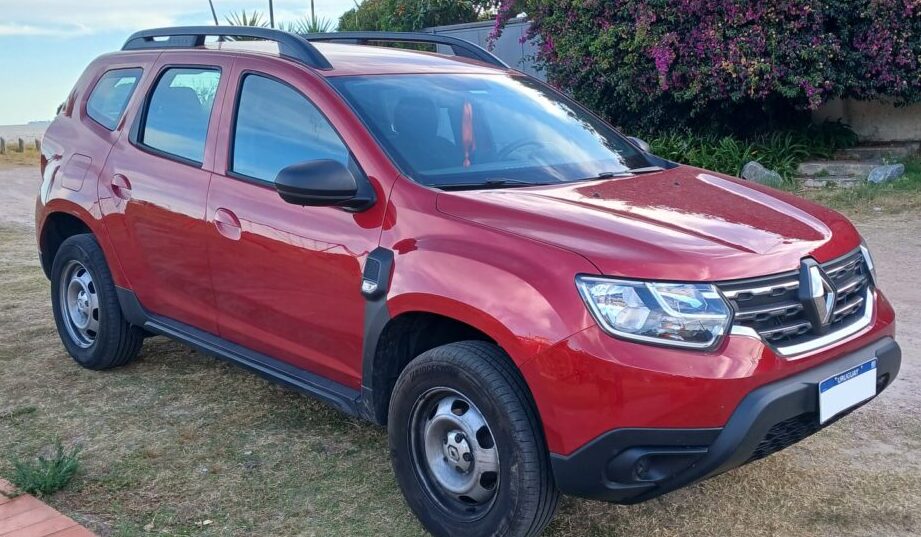
The Renault Duster II 2.0 (143 Hp) 4×4, produced from May 2021 through 2022, represents a significant offering in the compact SUV segment, particularly within European and emerging markets. This variant sits within the second generation of the Duster (Duster II), built on the B0/B+ platform, and provides a robust, all-wheel-drive option for buyers seeking practicality and off-road capability at a competitive price point. It occupies a mid-range position within the Duster II lineup, offering a step up in performance from the base 1.6-liter engine while remaining more accessible than potential future, higher-specification trims. The 2.0-liter 4×4 model aimed to broaden the Duster’s appeal to customers needing enhanced traction and versatility.
Technical Specifications
| Brand | Renault |
| Model | Duster |
| Generation | Duster II |
| Type (Engine) | 2.0 (143 Hp) 4×4 |
| Start of production | May, 2021 |
| End of production | 2022 |
| Powertrain Architecture | Internal Combustion engine |
| Body type | SUV |
| Seats | 5 |
| Doors | 5 |
| Fuel consumption (economy) – urban (NEDC) | 10.1 l/100 km (23.3 US mpg, 28 UK mpg, 9.9 km/l) |
| Fuel consumption (economy) – extra urban (NEDC) | 6.7 l/100 km (35.1 US mpg, 42.2 UK mpg, 14.9 km/l) |
| Fuel consumption (economy) – combined (NEDC) | 8 l/100 km (29.4 US mpg, 35.3 UK mpg, 12.5 km/l) |
| CO2 emissions (NEDC) | 185 g/km |
| Fuel Type | Petrol (Gasoline) |
| Acceleration 0 – 100 km/h | 10.9 sec |
| Acceleration 0 – 62 mph | 10.9 sec |
| Acceleration 0 – 60 mph | 10.4 sec |
| Maximum speed | 182 km/h (113.09 mph) |
| Emission standard | Euro 5 |
| Weight-to-power ratio | 9.8 kg/Hp, 102.5 Hp/tonne |
| Weight-to-torque ratio | 7.2 kg/Nm, 139.8 Nm/tonne |
| Power | 143 Hp @ 5750 rpm |
| Power per litre | 71.6 Hp/l |
| Torque | 195 Nm @ 4000 rpm (143.82 lb.-ft. @ 4000 rpm) |
| Engine layout | Front, Transverse |
| Engine Model/Code | F4R |
| Engine displacement | 1998 cm3 (121.93 cu. in.) |
| Number of cylinders | 4 |
| Engine configuration | Inline |
| Cylinder Bore | 82.7 mm (3.26 in.) |
| Piston Stroke | 93 mm (3.66 in.) |
| Number of valves per cylinder | 4 |
| Fuel injection system | Multi-port manifold injection |
| Kerb Weight | 1395 kg (3075.45 lbs.) |
| Max. weight | 1945 kg (4287.99 lbs.) |
| Max load | 550 kg (1212.54 lbs.) |
| Trunk (boot) space – minimum | 428 l (15.11 cu. ft.) |
| Trunk (boot) space – maximum | 1720 l (60.74 cu. ft.) |
| Fuel tank capacity | 50 l (13.21 US gal, 11 UK gal) |
| Max. roof load | 80 kg (176.37 lbs.) |
| Permitted trailer load with brakes (12%) | 1400 kg (3086.47 lbs.) |
| Permitted trailer load without brakes | 735 kg (1620.4 lbs.) |
| Length | 4341 mm (170.91 in.) |
| Width | 1804 mm (71.02 in.) |
| Width including mirrors | 2052 mm (80.79 in.) |
| Height | 1682 mm (66.22 in.) |
| Wheelbase | 2673 mm (105.24 in.) |
| Front track | 1557 mm (61.3 in.) |
| Rear (Back) track | 1563 mm (61.54 in.) |
| Front overhang | 838 mm (32.99 in.) |
| Rear overhang | 827 mm (32.56 in.) |
| Ride height (ground clearance) | 210 mm (8.27 in.) |
| Minimum turning circle | 10.9 m (35.76 ft.) |
| Approach angle | 31° |
| Departure angle | 33° |
| Drivetrain Architecture | The Internal combustion engine (ICE) drives the front wheels permanently, and the rear wheels are driven through an electrically or mechanically operated clutch if necessary. |
| Drive wheel | All wheel drive (4×4) |
| Number of gears and type of gearbox | 6 gears, manual transmission |
| Front suspension | Independent, type McPherson with coil spring and anti-roll bar |
| Rear suspension | Independent multi-link spring suspension with stabilizer |
| Front brakes | Ventilated discs, 280×24 mm |
| Rear brakes | Drum |
| Assisting systems | ABS (Anti-lock braking system) |
| Steering type | Steering rack and pinion |
| Power steering | Electric Steering |
| Tires size | 215/65 R16; 215/60 R17 |
Powertrain & Engine Architecture
The Renault Duster II 2.0 (143 Hp) 4×4 is powered by the F4R engine, a 1.998-liter inline-four cylinder gasoline engine. This engine has been a mainstay in Renault’s lineup for many years, known for its relative simplicity and durability. The F4R utilizes a multi-point fuel injection system, delivering fuel directly into the intake ports. The engine features a dual overhead camshaft (DOHC) valvetrain with four valves per cylinder, contributing to its respectable power output. The 4×4 system employs an electromagnetic clutch to engage the rear wheels when traction is lost, offering both automatic and driver-selectable 2WD, 4WD, and lock modes. The six-speed manual transmission provides a good balance between fuel efficiency and performance, with gear ratios tailored for both on-road cruising and off-road crawling.
Driving Characteristics
The 143 horsepower and 195 Nm (143.82 lb-ft) of torque provide adequate performance for everyday driving. Acceleration from 0-60 mph takes approximately 10.4 seconds, and the top speed is around 113 mph. While not a particularly sporty vehicle, the Duster II 2.0 4×4 offers sufficient power for overtaking and maintaining highway speeds. The manual transmission allows for precise control, and the 4×4 system provides enhanced grip on loose surfaces. Compared to the base 1.6-liter engine, the 2.0-liter offers a noticeable improvement in responsiveness and pulling power, especially when fully loaded or tackling challenging terrain. The gear ratios are well-chosen for a balance of fuel economy and usability, though the engine can feel somewhat strained at very high RPMs.
Equipment & Trim Levels
The 2.0 4×4 trim typically included standard features such as air conditioning, power windows, central locking, and a basic audio system. Higher trim levels added features like alloy wheels, a touchscreen infotainment system with navigation, rear parking sensors, and cruise control. Interior upholstery was generally cloth, with options for leather seats on higher-spec models. Safety features included ABS, front airbags, and seatbelt pretensioners. The Duster II prioritized functionality over luxury, offering a practical and well-equipped interior without excessive frills.
Chassis & Braking
The Duster II utilizes a McPherson strut front suspension and an independent multi-link rear suspension, providing a comfortable ride quality and decent handling characteristics. The front brakes are ventilated discs, while the rear brakes are drums. The suspension is tuned for a balance between on-road comfort and off-road capability, offering a reasonable degree of articulation for tackling uneven terrain. The electric power steering provides light and responsive steering feel. The 210mm of ground clearance is a significant asset for off-road driving, allowing the Duster II to navigate obstacles with ease.
Market Reception & Comparison
The Renault Duster II 2.0 (143 Hp) 4×4 was generally well-received by automotive critics for its affordability, practicality, and off-road capability. It was often praised for offering a compelling value proposition compared to more expensive competitors. Fuel economy was considered average for its class, with combined fuel consumption around 8 l/100 km (29.4 US mpg). Reliability was generally good, although some owners reported minor issues with the electrical system. Compared to the 1.6-liter version, the 2.0 4×4 offered a significant performance upgrade, making it a more suitable choice for drivers who frequently tow trailers or drive on challenging terrain.
Legacy
The Renault Duster II 2.0 (143 Hp) 4×4 has proven to be a durable and reliable vehicle, maintaining a strong presence in the used car market. The F4R engine is known for its longevity, and the 4×4 system is generally robust. While not a particularly sophisticated vehicle, the Duster II 2.0 4×4 offers a practical and affordable solution for buyers seeking a capable and versatile SUV. Its combination of affordability, practicality, and off-road capability has cemented its position as a popular choice in many markets.