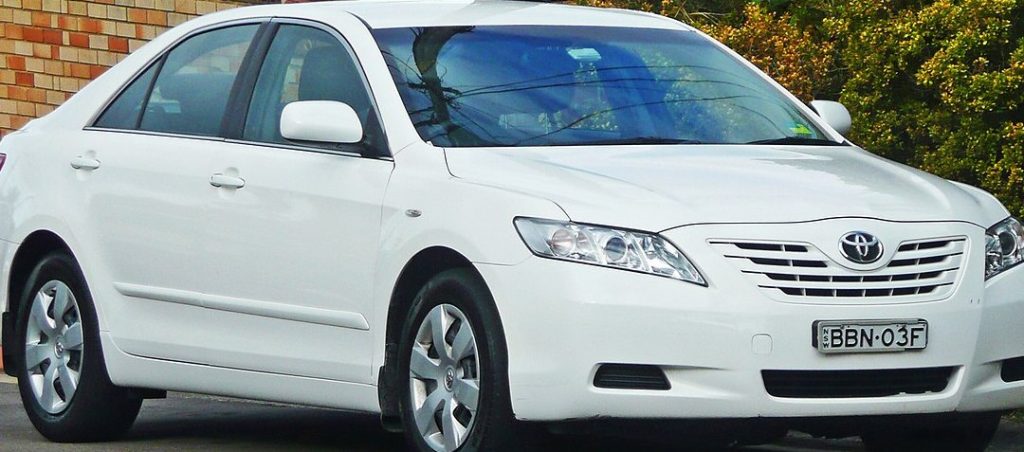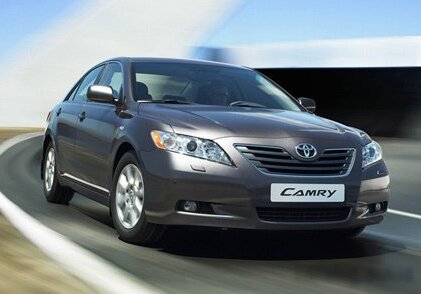
The Toyota Camry XV40, produced between 2006 and 2009, represented the sixth generation of Toyota’s globally successful Camry mid-size sedan. Within the XV40 range, the 3.5i V6 Automatic variant occupied the premium position, offering a significant step up in performance and features compared to the base 2.4L four-cylinder models. This model was primarily targeted at the North American market, where larger displacement engines and automatic transmissions were highly favored. It aimed to provide a comfortable, reliable, and relatively powerful family sedan experience.
Technical Specifications
| Brand | Toyota |
| Model | Camry |
| Generation | Camry VI (XV40) |
| Type (Engine) | 3.5i V6 (268 Hp) Automatic |
| Start of production | 2006 |
| End of production | 2009 |
| Powertrain Architecture | Internal Combustion engine |
| Body type | Sedan |
| Seats | 5 |
| Doors | 4 |
| Fuel consumption (urban) | 10.7 l/100 km (22 US mpg) |
| Fuel consumption (extra urban) | 7 l/100 km (33.6 US mpg) |
| Fuel Type | Petrol (Gasoline) |
| Weight-to-power ratio | 5.9 kg/Hp |
| Weight-to-torque ratio | 4.7 kg/Nm |
| Power | 268 Hp @ 6200 rpm |
| Power per litre | 77.5 Hp/l |
| Torque | 336 Nm @ 4700 rpm (247.82 lb.-ft. @ 4700 rpm) |
| Engine layout | Front, Transverse |
| Engine Model/Code | 2GR-FE |
| Engine displacement | 3456 cm3 (210.9 cu. in.) |
| Number of cylinders | 6 |
| Engine configuration | V-engine |
| Cylinder Bore | 94 mm (3.7 in.) |
| Piston Stroke | 83 mm (3.27 in.) |
| Compression ratio | 10.8:1 |
| Number of valves per cylinder | 4 |
| Fuel injection system | Multi-port manifold injection |
| Engine aspiration | Naturally aspirated engine |
| Valvetrain | DOHC, VVT-i |
| Engine oil capacity | 6.1 l (6.45 US qt | 5.37 UK qt) |
| Coolant | 9 l (9.51 US qt | 7.92 UK qt) |
| Kerb Weight | 1570-1595 kg (3461.26 – 3516.37 lbs.) |
| Max. weight | 2028 kg (4470.97 lbs.) |
| Max load | 433-458 kg (954.6 – 1009.72 lbs.) |
| Trunk (boot) space | 425 l (15.01 cu. ft.) |
| Fuel tank capacity | 70 l (18.49 US gal | 15.4 UK gal) |
| Length | 4805 mm (189.17 in.) |
| Width | 1820 mm (71.65 in.) |
| Height | 1460 mm (57.48 in.) |
| Wheelbase | 2775 mm (109.25 in.) |
| Front track | 1575 mm (62.01 in.) |
| Rear track | 1565 mm (61.61 in.) |
| Minimum turning circle | 11 m (36.09 ft.) |
| Drivetrain Architecture | Front wheel drive |
| Number of gears | 6 |
| Gearbox type | Automatic transmission |
| Front suspension | Independent, McPherson with coil spring and anti-roll bar |
| Rear suspension | Independent multi-link with stabilizer |
| Front brakes | Ventilated discs |
| Rear brakes | Disc |
| Steering type | Steering rack and pinion |
| Power steering | Hydraulic |
| Tires size | 215/60 R16; 215/55 R17 |
| Wheel rims size | 16; 17 |
INTRODUCTION
The 2006-2009 Toyota Camry XV40 3.5i V6 Automatic represented a significant upgrade within the Camry lineup. Building upon the solid foundation of the XV40 platform – which also underpinned the Lexus ES 350 – this variant offered a more powerful and refined driving experience. It was positioned as the top-tier Camry, appealing to buyers who desired a comfortable, spacious, and well-equipped sedan with strong acceleration capabilities. The XV40 generation itself was a departure from the more rounded styling of the previous generation, adopting a more angular and contemporary aesthetic.
Powertrain & Engine Architecture
At the heart of the 3.5i V6 was Toyota’s 2GR-FE 3.5-liter V6 engine. This engine is a naturally aspirated, 60-degree V6 featuring a cast aluminum alloy block and cylinder heads. It employed a dual overhead camshaft (DOHC) design with Toyota’s Variable Valve Timing-intelligent (VVT-i) system on both intake and exhaust valves, optimizing performance and fuel efficiency across the rev range. Fuel delivery was handled by a multi-port fuel injection system. The 2GR-FE is known for its robust construction and reliability. The engine was paired exclusively with a six-speed automatic transmission, designed to provide smooth and responsive shifts. This transmission featured overdrive and selectable shift modes, allowing for some degree of driver control. The automatic transmission was chosen to cater to the American market’s preference for convenience and ease of use.
Driving Characteristics
The 3.5i V6 Automatic Camry delivered noticeably stronger acceleration than the base 2.4L models. With 268 horsepower and 247 lb-ft of torque, it offered brisk performance for everyday driving and confident passing maneuvers. The six-speed automatic transmission was well-tuned, providing smooth upshifts and downshifts. While not a sports sedan, the Camry 3.5i V6 offered a more engaging driving experience than many of its competitors. The gear ratios were optimized for a balance of acceleration and fuel economy. Compared to the manual transmission options available on the 2.4L models, the V6 automatic prioritized comfort and convenience over outright driver involvement. The suspension was tuned for a comfortable ride, absorbing bumps and imperfections in the road effectively.
Equipment & Trim Levels
The 3.5i V6 Automatic trim typically came standard with a generous array of features. These included power-adjustable front seats, a premium audio system (often with a CD changer), automatic climate control, cruise control, and keyless entry. Higher trim levels, such as the XLE, added features like leather upholstery, wood-grain interior trim, a sunroof, and upgraded wheels. Optional extras included a navigation system, premium sound systems (like JBL), and advanced safety features. The interior design was focused on comfort and practicality, with ample space for passengers and cargo.
Chassis & Braking
The Camry XV40 utilized a front-wheel-drive layout with an independent McPherson strut suspension in the front and an independent multi-link suspension in the rear. This suspension setup provided a comfortable ride and predictable handling. The 3.5i V6 models typically featured larger brakes than the base models, with ventilated discs up front and solid discs in the rear. Anti-lock brakes (ABS) were standard, enhancing safety during emergency braking situations. The steering was a rack-and-pinion system with hydraulic power assist, providing a responsive and precise feel.
Market Reception & Comparison
The Camry 3.5i V6 Automatic was generally well-received by automotive critics. It was praised for its smooth and powerful engine, comfortable ride, and spacious interior. However, some reviewers noted that the handling was not as sporty as some of its competitors. Compared to the 2.4L four-cylinder models, the V6 offered a significant performance advantage but came at a higher price and with slightly lower fuel economy. Against rivals like the Honda Accord V6 and Nissan Maxima, the Camry 3.5i V6 held its own, offering a compelling combination of value, reliability, and refinement. Fuel economy was rated at 22 mpg city and 33 mpg highway, which was competitive for its class.
Legacy
The 2GR-FE engine, used in the Camry 3.5i V6, has proven to be exceptionally reliable over the long term. With proper maintenance, these engines can easily exceed 200,000 miles. The six-speed automatic transmission is also known for its durability. Today, used XV40 Camry 3.5i V6 models are considered a good value, offering a comfortable and reliable transportation option. They are often sought after by buyers who prioritize dependability and a smooth driving experience. The XV40 generation Camry solidified Toyota’s reputation for building high-quality, long-lasting vehicles, and the 3.5i V6 variant remains a desirable choice in the used car market.