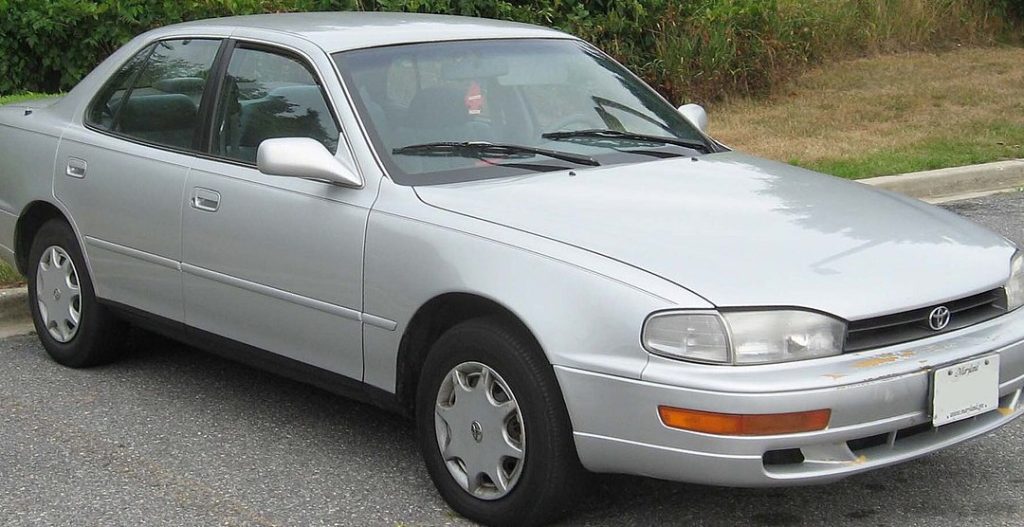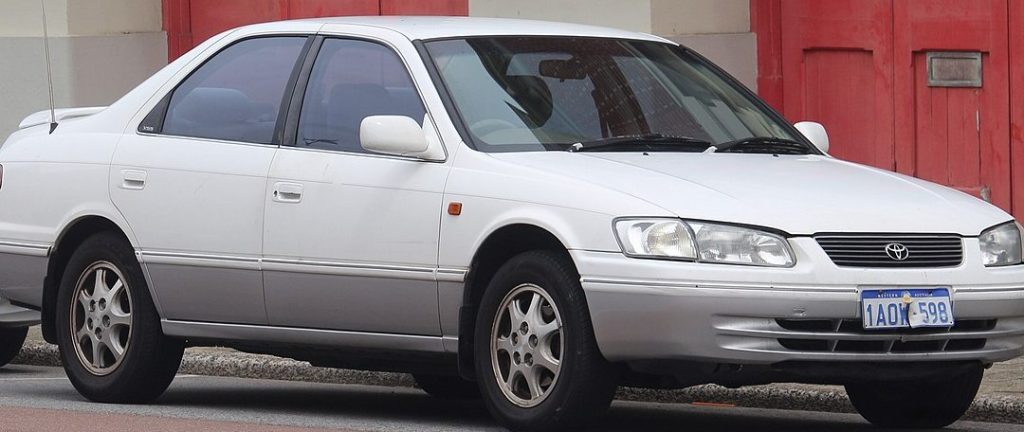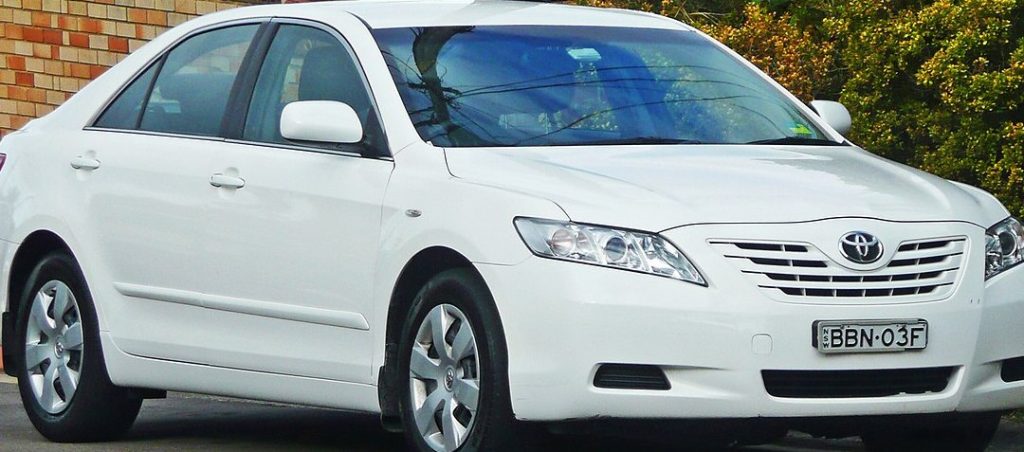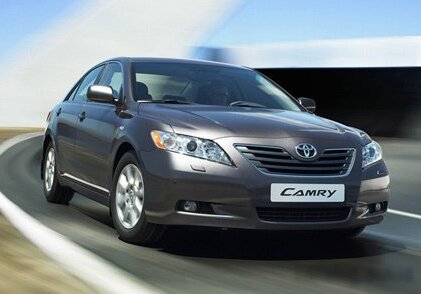
The Toyota Camry VI (XV40) 3.5i V6 Automatic, produced between 2006 and 2009, represented the top-tier performance option within the sixth generation of Toyota’s globally successful Camry sedan. Positioned as the premium trim level, it catered to buyers seeking a blend of comfort, refinement, and substantial power in a mid-size family car. The XV40 generation Camry, built on the Toyota K platform, aimed to elevate the Camry’s image beyond its reputation for reliability and practicality, offering a more engaging driving experience and a more sophisticated interior. This 3.5i V6 variant was primarily sold in North America and select international markets, where larger displacement engines were favored.
Technical Specifications
| Brand | Toyota |
| Model | Camry |
| Generation | Camry VI (XV40) |
| Type (Engine) | 3.5i V6 (277 Hp) Automatic |
| Start of production | 2006 |
| End of production | 2009 |
| Powertrain Architecture | Internal Combustion engine |
| Body type | Sedan |
| Seats | 5 |
| Doors | 4 |
| Fuel consumption (economy) – urban | 14.1 l/100 km (16.7 US mpg, 20 UK mpg, 7.1 km/l) |
| Fuel consumption (economy) – extra urban | 7.4 l/100 km (31.8 US mpg, 38.2 UK mpg, 13.5 km/l) |
| Fuel consumption (economy) – combined | 9.9 l/100 km (23.8 US mpg, 28.5 UK mpg, 10.1 km/l) |
| CO2 emissions | 233 g/km |
| Fuel Type | Petrol (Gasoline) |
| Acceleration 0 – 100 km/h | 6.8 sec |
| Acceleration 0 – 62 mph | 6.8 sec |
| Acceleration 0 – 60 mph | 6.5 sec |
| Maximum speed | 230 km/h (142.92 mph) |
| Emission standard | Euro 4 |
| Weight-to-power ratio | 5.8 kg/Hp, 172 Hp/tonne |
| Weight-to-torque ratio | 4.7 kg/Nm, 214.9 Nm/tonne |
| Power | 277 Hp @ 6200 rpm |
| Power per litre | 80.2 Hp/l |
| Torque | 346 Nm @ 4700 rpm (255.2 lb.-ft. @ 4700 rpm) |
| Engine layout | Front, Transverse |
| Engine Model/Code | 2GR-FE |
| Engine displacement | 3456 cm3 (210.9 cu. in.) |
| Number of cylinders | 6 |
| Engine configuration | V-engine |
| Cylinder Bore | 94 mm (3.7 in.) |
| Piston Stroke | 83 mm (3.27 in.) |
| Compression ratio | 10.8:1 |
| Number of valves per cylinder | 4 |
| Fuel injection system | Multi-port manifold injection |
| Engine aspiration | Naturally aspirated engine |
| Valvetrain | DOHC, VVT-i |
| Engine oil capacity | 6.1 l (6.45 US qt | 5.37 UK qt) |
| Coolant | 9 l (9.51 US qt | 7.92 UK qt) |
| Kerb Weight | 1610-1685 kg (3549.44 – 3714.79 lbs.) |
| Max. weight | 2050 kg (4519.48 lbs.) |
| Max load | 365-440 kg (804.69 – 970.03 lbs.) |
| Trunk (boot) space – minimum | 535 l (18.89 cu. ft.) |
| Fuel tank capacity | 70 l (18.49 US gal | 15.4 UK gal) |
| Length | 4815 mm (189.57 in.) |
| Width | 1820 mm (71.65 in.) |
| Height | 1480 mm (58.27 in.) |
| Wheelbase | 2775 mm (109.25 in.) |
| Front track | 1580 mm (62.2 in.) |
| Rear (Back) track | 1575 mm (62.01 in.) |
| Front overhang | 955 mm (37.6 in.) |
| Rear overhang | 1085 mm (42.72 in.) |
| Ride height (ground clearance) | 160 mm (6.3 in.) |
| Drag coefficient (Cd) | 0.28 |
| Minimum turning circle (turning diameter) | 11 m (36.09 ft.) |
| Drivetrain Architecture | The Internal combustion engine (ICE) drives the front wheels of the vehicle. |
| Drive wheel | Front wheel drive |
| Number of gears and type of gearbox | 6 gears, automatic transmission |
| Front suspension | Independent, type McPherson with coil spring and anti-roll bar |
| Rear suspension | Independent multi-link spring suspension with stabilizer |
| Front brakes | Ventilated discs |
| Rear brakes | Disc |
| Assisting systems | ABS (Anti-lock braking system) |
| Steering type | Steering rack and pinion |
| Power steering | Hydraulic Steering |
| Tires size | 215/60 R16 |
| Wheel rims size | 6.5J x 16 |
Powertrain & Engine Architecture
The heart of the Camry 3.5i V6 was the 2GR-FE engine, a 3.5-liter (3456 cc) naturally aspirated V6. This engine featured a 60-degree V-angle, contributing to its smooth operation. It employed a dual overhead camshaft (DOHC) design with Toyota’s Variable Valve Timing-intelligent (VVT-i) system, optimizing valve timing for improved performance and fuel efficiency across the rev range. Fuel delivery was handled by a multi-port fuel injection system. The 2GR-FE was known for its robust construction and relatively simple design, contributing to its long-term reliability. The engine was transversely mounted in the front of the vehicle. Paired with the 2GR-FE was a six-speed automatic transmission, providing smooth and responsive shifts. This transmission was designed to handle the engine’s substantial torque output and contribute to a comfortable driving experience. The transmission featured overdrive for improved highway fuel economy.
Driving Characteristics
The 3.5i V6 Automatic Camry offered a noticeable performance upgrade compared to the base four-cylinder models. Acceleration from 0-60 mph was achieved in approximately 6.5 seconds, making it one of the quicker sedans in its class at the time. The automatic transmission provided seamless gear changes, although it wasn’t as sporty or engaging as some of the manual transmission options available in other vehicles. The power delivery was linear and predictable, making it easy to modulate the throttle. While the suspension was tuned for comfort, it provided adequate handling for everyday driving. Compared to the 2.4L four-cylinder Camry, the V6 offered significantly more torque, resulting in effortless passing maneuvers and a more confident feel when fully loaded. The six-speed automatic helped keep the engine in its optimal power band, maximizing acceleration and responsiveness.
Equipment & Trim Levels
The 3.5i V6 Automatic typically came standard with a generous array of features. These included leather upholstery, power-adjustable front seats, a premium audio system (often with a CD changer), automatic climate control, and alloy wheels. Optional extras often included a sunroof, navigation system, and upgraded sound systems. The interior trim was generally more refined than lower trims, with wood-grain accents and higher-quality materials. Safety features such as anti-lock brakes (ABS) and multiple airbags were standard.
Chassis & Braking
The Camry XV40 utilized an independent McPherson strut suspension in the front and an independent multi-link suspension in the rear. This setup provided a comfortable ride while maintaining reasonable handling characteristics. The 3.5i V6 models typically featured larger brakes than the base models, with ventilated discs at all four corners, providing ample stopping power. Anti-lock brakes (ABS) were standard, enhancing safety during emergency braking situations. The steering was a rack-and-pinion system with hydraulic power assist, offering a responsive and precise feel.
Market Reception & Comparison
The Camry 3.5i V6 Automatic was generally well-received by automotive critics. It was praised for its smooth engine, comfortable ride, and spacious interior. However, some reviewers noted that the handling wasn’t as sporty as some of its competitors, such as the Honda Accord V6. Fuel economy was also a point of concern, as the V6 engine consumed significantly more fuel than the four-cylinder options. Compared to the 2.4L Camry, the V6 offered a substantial performance boost but came at the cost of increased fuel consumption and a higher purchase price. The V6 also required slightly more frequent maintenance due to its more complex engine design.
Legacy
The 2GR-FE engine, in general, has proven to be remarkably reliable, and the Camry 3.5i V6 is no exception. With proper maintenance, these engines can easily exceed 200,000 miles. The six-speed automatic transmission has also demonstrated good durability. On the used car market, the 3.5i V6 models tend to command a slightly higher price than the four-cylinder versions, reflecting their increased performance and features. However, potential buyers should be aware of the higher fuel consumption and potential for increased maintenance costs compared to the more economical base models. The XV40 Camry, particularly the V6 variant, remains a popular choice for those seeking a comfortable, reliable, and reasonably powerful mid-size sedan.