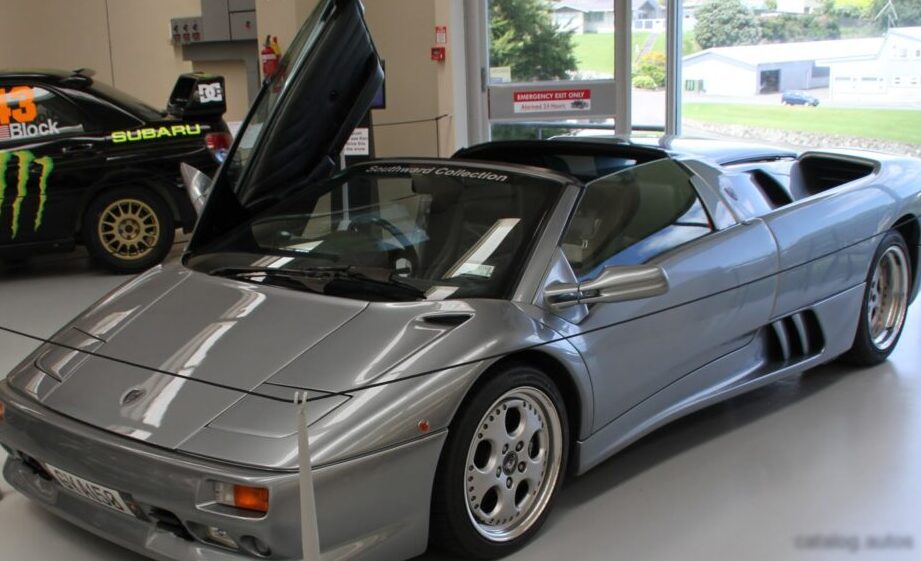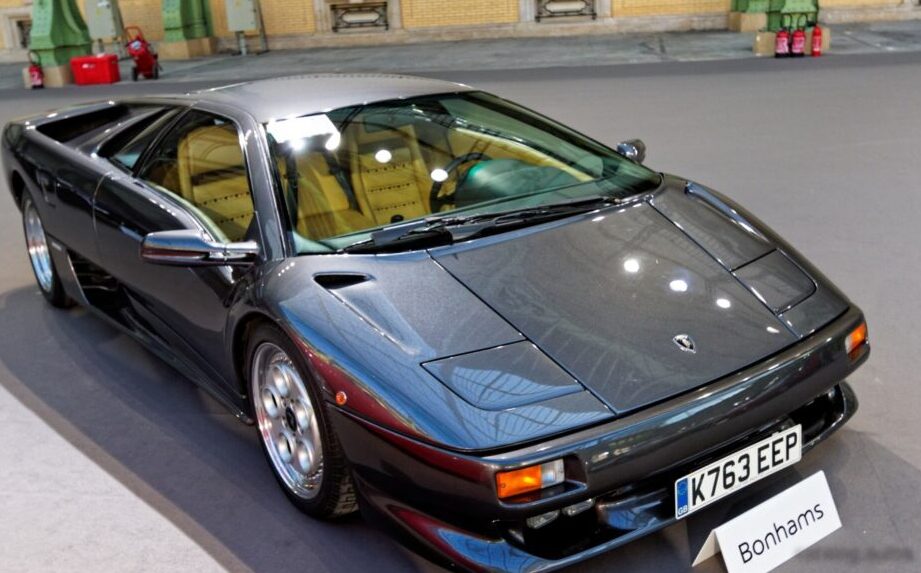
The Lamborghini Diablo VT, produced from 1998 to 2006, represents a significant evolution of the iconic Diablo model line. Introduced as a response to customer demand for a more usable and technologically advanced supercar, the VT (Viscous Traction) incorporated all-wheel drive, enhancing stability and performance. This variant, boasting a 6.0-liter V12 engine producing 530 horsepower, served as a flagship model during the latter years of the Diablo’s production run, bridging the gap between the original Diablo and the subsequent Murciélago. It was positioned as the top-tier, all-weather capable version of the Diablo, appealing to buyers who desired both extreme performance and a degree of everyday usability.
Technical Specifications
| Brand | Lamborghini |
| Model | Diablo |
| Generation | Diablo |
| Type (Engine) | VT (530 Hp) |
| Start of production | 1998 |
| End of production | 2006 |
| Powertrain Architecture | Internal Combustion engine |
| Body type | Coupe |
| Seats | 2 |
| Doors | 2 |
| Fuel Type | Petrol (Gasoline) |
| Acceleration 0 – 100 km/h | 3.9 sec |
| Acceleration 0 – 62 mph | 3.9 sec |
| Acceleration 0 – 60 mph | 3.7 sec |
| Maximum speed | 335 km/h / 208.16 mph |
| Weight-to-power ratio | 3.1 kg/Hp, 326.2 Hp/tonne |
| Weight-to-torque ratio | 2.6 kg/Nm, 381.5 Nm/tonne |
| Power | 530 Hp @ 7100 rpm |
| Power per litre | 88.5 Hp/l |
| Torque | 620 Nm @ 5500 rpm / 457.29 lb.-ft. @ 5500 rpm |
| Engine layout | Middle, Longitudinal |
| Engine displacement | 5992 cm3 / 365.65 cu. in. |
| Number of cylinders | 12 |
| Engine configuration | V-engine |
| Compression ratio | 10:1 |
| Number of valves per cylinder | 4 |
| Fuel injection system | Multi-port manifold injection |
| Engine aspiration | Naturally aspirated engine |
| Valvetrain | DOHC |
| Engine oil capacity | 15 l / 15.85 US qt | 13.2 UK qt |
| Coolant | 15 l / 15.85 US qt | 13.2 UK qt |
| Kerb Weight | 1625 kg / 3582.51 lbs |
| Max. weight | 1895 kg / 4177.76 lbs |
| Max load | 270 kg / 595.25 lbs |
| Trunk (boot) space – minimum | 140 l / 4.94 cu. ft. |
| Fuel tank capacity | 100 l / 26.42 US gal | 22 UK gal |
| Length | 4470 mm / 175.98 in |
| Width | 2040 mm / 80.31 in |
| Height | 1115 mm / 43.9 in |
| Wheelbase | 2650 mm / 104.33 in |
| Front track | 1540 mm / 60.63 in |
| Rear (Back) track | 1640 mm / 64.57 in |
| Drive wheel | All wheel drive (4×4) |
| Number of gears and type of gearbox | 5 gears, manual transmission |
| Front suspension | Double wishbone |
| Rear suspension | Double wishbone |
| Front brakes | Ventilated discs |
| Rear brakes | Ventilated discs |
| Assisting systems | ABS (Anti-lock braking system) |
| Steering type | Steering rack and pinion |
| Power steering | Hydraulic Steering |
| Tires size | 235/35 ZR18; 335/30 ZR18 |
Powertrain & Engine Architecture
At the heart of the Diablo VT lies the Lamborghini L510 6.0-liter V12 engine. This naturally aspirated powerplant, derived from the original Diablo engine but extensively revised, features a 60-degree V-angle and utilizes a four-valve-per-cylinder DOHC (Double Overhead Camshaft) configuration. The engine employs multi-port fuel injection, delivering precise fuel metering for optimal combustion. The 530 horsepower output is achieved through a combination of increased compression ratio (10:1), optimized intake and exhaust systems, and refined engine management software. The engine’s longitudinal mid-engine placement contributes to the car’s balanced handling characteristics. The VT model exclusively came with a five-speed manual transmission, delivering direct power transfer to all four wheels. The all-wheel-drive system, utilizing a viscous coupling, distributes torque between the front and rear axles, providing enhanced traction and stability, particularly in adverse weather conditions.
Driving Characteristics
The Diablo VT’s driving experience is defined by its raw power and engaging dynamics. The 530 hp engine delivers a surge of torque throughout the rev range, providing exhilarating acceleration. The all-wheel-drive system significantly improves grip, allowing for confident cornering and impressive launch control. Compared to rear-wheel-drive Diablo variants, the VT feels more planted and predictable, reducing the risk of oversteer. However, the all-wheel-drive system does add weight, slightly diminishing the car’s agility compared to its lighter counterparts. The five-speed manual transmission offers a direct and satisfying shift feel, allowing drivers to fully exploit the engine’s power. The gear ratios are well-matched to the engine’s torque curve, providing strong acceleration in all gears. While not as brutally raw as some earlier Diablo models, the VT offers a thrilling and rewarding driving experience that blends performance with a degree of usability.
Equipment & Trim Levels
The Diablo VT was generally well-equipped, reflecting its status as a flagship model. Standard features included leather upholstery, power windows, power steering, air conditioning, and an upgraded audio system. The interior design, while retaining the Diablo’s characteristic angular aesthetic, featured refinements in material quality and ergonomics. Optional extras included custom paint colors, upgraded audio systems, and carbon fiber interior trim. The VT also benefited from improved sound insulation compared to earlier Diablo models, enhancing cabin comfort. While not offering the extensive customization options of some contemporary supercars, the Diablo VT allowed buyers to personalize their vehicles to a degree.
Chassis & Braking
The Diablo VT utilizes a lightweight chassis constructed from aluminum and steel, providing a rigid and durable foundation for the car’s high-performance capabilities. The suspension system employs double wishbones at both the front and rear, with adjustable dampers and anti-roll bars. This configuration provides a balance between ride comfort and handling precision. The VT features ventilated disc brakes at all four corners, providing ample stopping power. An ABS (Anti-lock Braking System) is standard, enhancing braking stability and control. The car’s wide track and low center of gravity contribute to its exceptional handling characteristics.
Market Reception & Comparison
The Diablo VT was generally well-received by automotive critics, who praised its improved stability, enhanced performance, and increased usability. The all-wheel-drive system was lauded for its ability to inspire confidence in a wider range of driving conditions. Compared to the rear-wheel-drive Diablo, the VT was considered a more accessible and forgiving supercar. However, some critics noted that the added weight of the all-wheel-drive system slightly diminished the car’s agility. In terms of fuel economy, the VT offered little improvement over other Diablo variants, remaining relatively thirsty. Reliability was generally good, although maintenance costs remained high, typical of a high-performance Italian supercar.
Legacy
The Lamborghini Diablo VT represents a pivotal moment in the Diablo’s evolution, successfully integrating all-wheel drive into the iconic supercar formula. The VT’s enhanced stability and performance paved the way for future Lamborghini models, including the Murciélago. Today, the Diablo VT remains a highly sought-after collectible, prized for its rarity, performance, and iconic design. The L510 V12 engine is renowned for its durability and character, and well-maintained VT models continue to provide an exhilarating driving experience. While maintenance costs can be substantial, the Diablo VT’s enduring appeal and historical significance ensure its place as a legend in the world of supercars.