
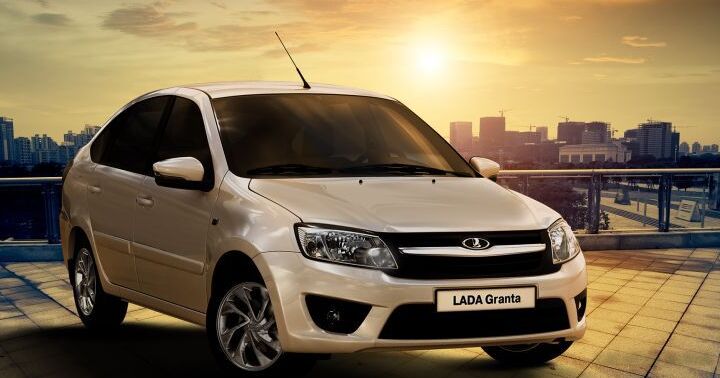
The Lada Granta I Hatchback 1.6 16V (98 hp) Automatic, produced between 2014 and 2018, represented a significant step in Lada’s modernization efforts. Positioned as a relatively affordable and practical option within the Granta range, this variant aimed to provide a comfortable and convenient driving experience, particularly for urban commuters. It was built on the aging, but cost-effective, 1HX0 platform, also known as the A3 platform, which underpinned several Dacia and Renault models. The introduction of an automatic transmission to the Granta lineup broadened its appeal to a wider demographic, moving beyond the traditionally budget-conscious buyer focused solely on price.
Technical Specifications
| Brand | Lada |
| Model | Granta |
| Generation | Granta I Hatchback |
| Type (Engine) | 1.6 16V (98 Hp) Automatic |
| Start of production | 2014 |
| End of production | 2018 |
| Powertrain Architecture | Internal Combustion engine |
| Body type | Hatchback |
| Seats | 5 |
| Doors | 5 |
| Fuel consumption (urban) | 9.9 l/100 km (23.8 US mpg) |
| Fuel consumption (extra urban) | 6.1 l/100 km (38.6 US mpg) |
| Fuel consumption (combined) | 7.6 l/100 km (30.9 US mpg) |
| Fuel Type | Petrol (Gasoline) |
| Acceleration 0 – 100 km/h | 13.5 sec |
| Acceleration 0 – 62 mph | 13.5 sec |
| Acceleration 0 – 60 mph | 12.8 sec |
| Maximum speed | 172 km/h (106.88 mph) |
| Weight-to-power ratio | 11.1 kg/Hp |
| Weight-to-torque ratio | 7.5 kg/Nm |
| Power | 98 Hp @ 5600 rpm |
| Torque | 145 Nm @ 4000 rpm (106.95 lb.-ft. @ 4000 rpm) |
| Engine layout | Front, Transverse |
| Engine Model/Code | 21126 |
| Engine displacement | 1596 cm3 (97.39 cu. in.) |
| Number of cylinders | 4 |
| Engine configuration | Inline |
| Number of valves per cylinder | 4 |
| Fuel injection system | Multi-port manifold injection |
| Engine aspiration | Naturally aspirated engine |
| Engine oil capacity | 4.4 l (4.65 US qt | 3.87 UK qt) |
| Coolant capacity | 6.5 l (6.87 US qt | 5.72 UK qt) |
| Kerb Weight | 1085-1160 kg (2392.02 – 2557.36 lbs.) |
| Max. weight | 1560 kg (3439.21 lbs.) |
| Max load | 400-475 kg (881.85 – 1047.2 lbs.) |
| Trunk (boot) space – minimum | 440 l (15.54 cu. ft.) |
| Trunk (boot) space – maximum | 760 l (26.84 cu. ft.) |
| Fuel tank capacity | 50 l (13.21 US gal | 11 UK gal) |
| Permitted trailer load with brakes (12%) | 900 kg (1984.16 lbs.) |
| Permitted trailer load without brakes | 450 kg (992.08 lbs.) |
| Length | 4246 mm (167.17 in.) |
| Width | 1700 mm (66.93 in.) |
| Height | 1500 mm (59.06 in.) |
| Wheelbase | 2476 mm (97.48 in.) |
| Front track | 1430 mm (56.3 in.) |
| Rear (Back) track | 1414 mm (55.67 in.) |
| Ride height (ground clearance) | 145 mm (5.71 in.) |
| Drivetrain Architecture | Front wheel drive |
| Number of gears and type of gearbox | 4 gears, automatic transmission |
| Front suspension | Independent, type McPherson with coil spring and anti-roll bar |
| Rear suspension | Semi-independent, coil spring |
| Front brakes | Ventilated discs |
| Assisting systems | ABS (Anti-lock braking system) |
| Steering type | Steering rack and pinion |
| Power steering | Electric Steering |
| Tires size | 175/65 R14; 185/60 R14; 185/55 R15 |
| Wheel rims size | 14; 15 |
Powertrain & Engine Architecture
The heart of the Granta 1.6 Automatic is the Lada 21126 engine, a 1.6-liter inline-four cylinder gasoline engine. This engine, while a development of older Lada designs, featured a 16-valve cylinder head and multi-point fuel injection. The 21126 produced 98 horsepower at 5600 rpm and 145 Nm (107 lb-ft) of torque at 4000 rpm. The engine’s design prioritized simplicity and durability over outright performance. The automatic transmission paired with this engine was a four-speed unit, sourced from Japan. While providing convenience, this transmission wasn’t known for its responsiveness or fuel efficiency compared to more modern automatic gearboxes. The transmission’s gear ratios were tuned for economy and smooth operation, rather than spirited acceleration.
Driving Characteristics
The Granta 1.6 Automatic offered a comfortable, if uninspiring, driving experience. Acceleration was modest, with a 0-60 mph time of around 12.8 seconds. The four-speed automatic transmission contributed to a noticeable lack of urgency, especially when attempting to overtake or merge onto highways. Compared to the five-speed manual version of the same engine, the automatic suffered a slight performance penalty. However, the automatic provided a smoother and more relaxed driving experience, particularly in congested urban environments. The suspension, tuned for comfort, absorbed bumps reasonably well, but the car’s relatively high center of gravity resulted in noticeable body roll during cornering.
Equipment & Trim Levels
The Granta 1.6 Automatic typically came with a base level of equipment, reflecting its position as an affordable vehicle. Standard features included power steering, central locking, front power windows, and an ABS anti-lock braking system. Interior upholstery was typically cloth, and the dashboard featured a simple, functional design. Optional extras included air conditioning, a radio with CD player, and power windows for the rear doors. Higher trim levels offered upgraded interior materials and additional convenience features, but the core focus remained on providing a practical and reliable vehicle at a competitive price point.
Chassis & Braking
The Granta I Hatchback utilized a McPherson strut front suspension and a semi-independent coil spring rear suspension. The front brakes were ventilated discs, providing adequate stopping power, while the rear brakes were typically drums. The chassis was relatively basic, prioritizing cost-effectiveness over sophisticated handling characteristics. The electric power steering offered light and easy steering, making it well-suited for city driving. Tire sizes varied depending on the trim level, with 14-inch and 15-inch wheels being common.
Market Reception & Comparison
The Lada Granta 1.6 Automatic was generally well-received in its primary markets, particularly Russia and other Eastern European countries. Critics praised its affordability, practicality, and relatively low running costs. However, the automatic transmission was often criticized for its lack of refinement and fuel efficiency. Compared to other trims in the Granta lineup, the 1.6 Automatic offered a more comfortable driving experience but sacrificed some performance. The manual transmission versions, particularly the 1.6 16V, were favored by drivers seeking a more engaging driving experience and slightly better fuel economy.
Legacy
The Lada Granta 1.6 Automatic, while not a performance icon, played a crucial role in Lada’s efforts to modernize its product lineup. The introduction of an automatic transmission broadened the Granta’s appeal and helped it compete with other budget-friendly hatchbacks. In the used car market, these models are known for their reliability and affordability, making them a popular choice for first-time car buyers or those seeking a practical and economical vehicle. While the powertrain isn’t known for its longevity compared to some Japanese or European counterparts, regular maintenance can ensure many years of reliable service. The Granta, in its various forms, remains a common sight on the roads of Eastern Europe and Russia, a testament to its enduring practicality and affordability.

