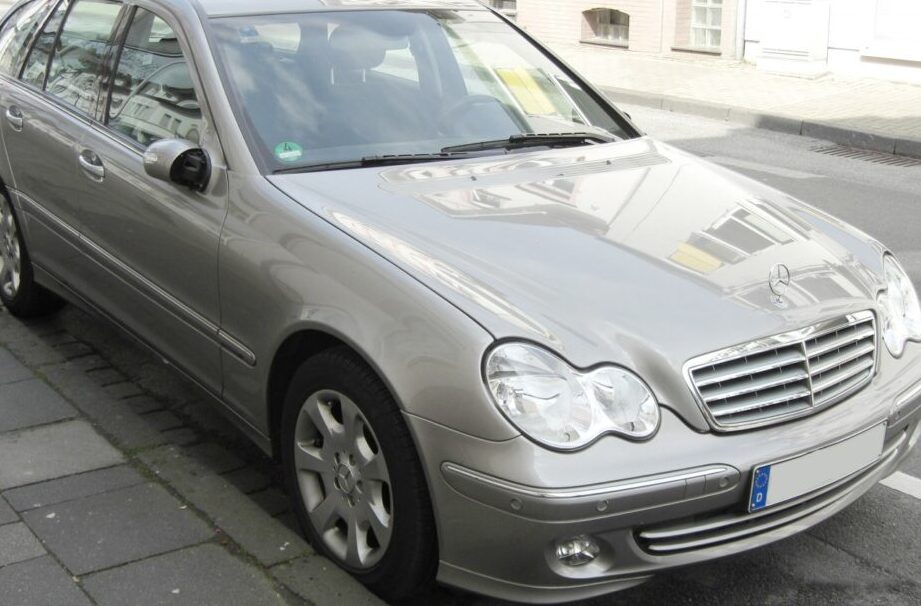
The Mercedes-Benz C-Class T-modell C 320 V6, produced from April 2004 to May 2005, represents a compelling blend of practicality and performance within the S203 facelifted generation of the C-Class estate (wagon). Positioned as a mid-to-upper range offering, it catered to buyers seeking a more powerful and refined alternative to the base models, while remaining a more accessible option than the high-performance AMG variants. This model combined a naturally aspirated 3.2-liter V6 engine with a six-speed manual transmission, offering a driving experience distinct from the more common four-cylinder and diesel options available in the C-Class lineup.
Technical Specifications
| Brand | Mercedes-Benz |
| Model | C-Class |
| Generation | C-Class T-modell (S203, facelift 2004) |
| Type (Engine) | C 320 V6 (218 Hp) |
| Start of production | April, 2004 |
| End of production | May, 2005 |
| Powertrain Architecture | Internal Combustion engine |
| Body type | Station wagon (estate) |
| Seats | 5 |
| Doors | 5 |
| Fuel consumption (economy) – urban (NEDC) | 16.7 l/100 km (14.1 US mpg, 16.9 UK mpg, 6 km/l) |
| Fuel consumption (economy) – extra urban (NEDC) | 8.2 l/100 km (28.7 US mpg, 34.4 UK mpg, 12.2 km/l) |
| Fuel consumption (economy) – combined (NEDC) | 11.4 l/100 km (20.6 US mpg, 24.8 UK mpg, 8.8 km/l) |
| CO2 emissions (NEDC) | 272 g/km |
| Fuel Type | Petrol (Gasoline) |
| Acceleration 0 – 100 km/h | 7.9 sec |
| Acceleration 0 – 62 mph | 7.9 sec |
| Acceleration 0 – 60 mph | 7.5 sec |
| Maximum speed | 244 km/h (151.61 mph) |
| Emission standard | Euro 4 |
| Weight-to-power ratio | 7 kg/Hp, 142.5 Hp/tonne |
| Weight-to-torque ratio | 5 kg/Nm, 201.3 Nm/tonne |
| Power | 218 Hp @ 5700 rpm |
| Power per litre | 68.1 Hp/l |
| Torque | 308 Nm @ 3000-4800 rpm (227.17 lb.-ft. @ 3000-4800 rpm) |
| Engine layout | Front, Longitudinal |
| Engine Model/Code | M 112.946 |
| Engine displacement | 3199 cm3 (195.21 cu. in.) |
| Number of cylinders | 6 |
| Engine configuration | V-engine |
| Cylinder Bore | 89.9 mm (3.54 in.) |
| Piston Stroke | 84 mm (3.31 in.) |
| Compression ratio | 10:1 |
| Number of valves per cylinder | 3 |
| Fuel injection system | Multi-port manifold injection |
| Engine aspiration | Naturally aspirated engine |
| Valvetrain | SOHC |
| Engine oil capacity | 8 l (8.45 US qt | 7.04 UK qt) |
| Coolant | 10.5 l (11.1 US qt | 9.24 UK qt) |
| Kerb Weight | 1530 kg (3373.07 lbs.) |
| Max. weight | 2130 kg (4695.85 lbs.) |
| Max load | 600 kg (1322.77 lbs.) |
| Trunk (boot) space – minimum | 470 l (16.6 cu. ft.) |
| Trunk (boot) space – maximum | 1384 l (48.88 cu. ft.) |
| Fuel tank capacity | 62 l (16.38 US gal | 13.64 UK gal) |
| Max. roof load | 100 kg (220.46 lbs.) |
| Permitted trailer load with brakes (12%) | 1500 kg (3306.93 lbs.) |
| Permitted trailer load without brakes | 750 kg (1653.47 lbs.) |
| Length | 4541 mm (178.78 in.) |
| Width | 1728 mm (68.03 in.) |
| Width including mirrors | 1980 mm (77.95 in.) |
| Height | 1466 mm (57.72 in.) |
| Wheelbase | 2715 mm (106.89 in.) |
| Front track | 1493 mm (58.78 in.) |
| Rear (Back) track | 1464 mm (57.64 in.) |
| Front overhang | 755 mm (29.72 in.) |
| Rear overhang | 1071 mm (42.17 in.) |
| Drag coefficient (Cd) | 0.31 |
| Minimum turning circle (turning diameter) | 10.76 m (35.3 ft.) |
| Drivetrain Architecture | The Internal combustion engine (ICE) drives the rear wheels of the vehicle. |
| Drive wheel | Rear wheel drive |
| Number of gears and type of gearbox | 6 gears, manual transmission |
| Front suspension | Independent type McPherson, Transverse stabilizer |
| Rear suspension | Independent multi-link suspension, Transverse stabilizer |
| Front brakes | Ventilated discs |
| Rear brakes | Disc |
| Assisting systems | ABS (Anti-lock braking system) |
| Steering type | Steering rack and pinion |
| Power steering | Hydraulic Steering |
| Tires size | 205/55 R 16 V |
| Wheel rims size | 7 J x 16 H 2 |
INTRODUCTION
The S203 C-Class T-modell, introduced in 2001 and facelifted in 2004, brought a more contemporary design and improved refinement to Mercedes-Benz’s compact executive estate. The C 320 V6, launched with the facelift, offered a significant step up in performance compared to the base models, utilizing a smooth and potent 3.2-liter V6 engine. This variant aimed to appeal to buyers who desired the practicality of a wagon but weren’t willing to compromise on driving enjoyment. It occupied a middle ground within the T-modell range, positioned above the 1.8 Kompressor and 2.2 CDI models, but below the more focused C55 AMG.
Powertrain & Engine Architecture
The heart of the C 320 T-modell is the M112.946 engine, a 3.2-liter naturally aspirated V6. This engine is a 60-degree V-configuration, featuring three valves per cylinder (two intake, one exhaust) and a single overhead camshaft (SOHC) per bank. The M112 engine family was known for its smooth operation and robust construction. Fuel delivery is managed by a multi-port fuel injection system, ensuring precise fuel atomization for optimal combustion. The engine produces 218 horsepower at 5700 rpm and 308 Nm (227 lb-ft) of torque between 3000 and 4800 rpm. Paired with the engine is a Getrag 219 six-speed manual transmission, providing precise shifts and allowing the driver to fully exploit the engine’s power band. This transmission was a significant upgrade over the older five-speed units found in earlier C-Class models.
Driving Characteristics
The C 320 T-modell with the manual transmission delivers a refined yet engaging driving experience. The V6 engine provides ample power for both everyday driving and spirited acceleration. The six-speed gearbox is well-matched to the engine’s characteristics, offering close ratios that keep the engine in its optimal power band. While not as overtly sporty as the C55 AMG, the C 320 offers a noticeably more responsive and enjoyable driving experience than the four-cylinder or diesel variants. The rear-wheel-drive configuration contributes to a balanced feel, although traction can be a concern in wet conditions. The suspension, tuned for comfort, provides a compliant ride without sacrificing handling precision.
Equipment & Trim Levels
The C 320 T-modell typically came well-equipped, reflecting its mid-range positioning. Standard features included automatic climate control, power windows and mirrors, a multi-function steering wheel, and a high-quality audio system. Interior upholstery was typically a combination of cloth and leatherette, with full leather options available as an upgrade. Optional extras included a sunroof, navigation system, heated seats, and upgraded audio systems. The dashboard layout was typical of the S203 facelift, featuring a more modern and integrated design compared to the pre-facelift models.
Chassis & Braking
The C 320 T-modell utilizes an independent suspension system all around. The front suspension employs a McPherson strut design with a transverse stabilizer bar, while the rear features a multi-link setup, also with a stabilizer bar. This configuration provides a good balance between ride comfort and handling. Braking duties are handled by ventilated discs at the front and solid discs at the rear, equipped with ABS (Anti-lock Braking System) as standard. The braking system provides adequate stopping power for everyday driving and occasional spirited use.
Market Reception & Comparison
The C 320 T-modell was generally well-received by automotive critics. It was praised for its smooth and powerful engine, comfortable ride, and practical estate body style. Compared to the 1.8 Kompressor, the C 320 offered a significant performance advantage, albeit at a higher price point. Against the 2.2 CDI, the C 320 traded fuel economy for a more refined and engaging driving experience. The C 320 offered a compelling alternative to rivals such as the Audi A4 Avant and BMW 3 Series Touring.
Legacy
The M112 V6 engine, found in the C 320 T-modell, is known for its reliability and longevity when properly maintained. While not immune to age-related issues, these engines are generally robust and capable of high mileage. Today, the C 320 T-modell represents a well-rounded and relatively affordable entry point into the world of Mercedes-Benz estates. Finding well-maintained examples can be challenging, but the combination of practicality, performance, and refinement makes it a desirable classic for enthusiasts.