
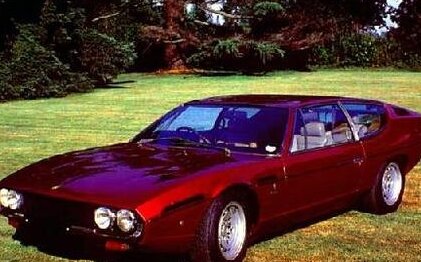
The Lamborghini Espada S1 3.9 V12, produced from 1968 to 1970, represents a pivotal moment in Lamborghini’s history. Positioned as a luxurious grand tourer, the Espada was designed to offer a more practical, four-seat alternative to the iconic Miura. It was the first Lamborghini to fully embrace the concept of a four-seater, and it played a significant role in establishing the brand’s reputation for both performance and opulent design. The “Espada” name, meaning “sword” in Spanish, alluded to its sleek, angular styling penned by Marcello Gandini at Bertone. The S1 designation denotes the initial series of the model, characterized by its 3.9-liter V12 engine and specific design features. It was built on a lengthened chassis derived from the earlier Islero model.
Technical Specifications
| Brand | Lamborghini |
| Model | Espada |
| Generation | Espada |
| Type (Engine) | S1 3.9 V12 (325 Hp) |
| Start of production | 1968 |
| End of production | 1970 |
| Powertrain Architecture | Internal Combustion engine |
| Body type | Coupe |
| Seats | 4 |
| Doors | 2 |
| Fuel consumption (combined) | 16-18 l/100 km (14.7 – 13.1 US mpg, 17.7 – 15.7 UK mpg, 6.3 – 5.6 km/l) |
| Fuel Type | Petrol (Gasoline) |
| Maximum speed | 245 km/h (152.24 mph) |
| Weight-to-power ratio | 4.6 kg/Hp, 219.3 Hp/tonne |
| Power | 325 Hp @ 6500 rpm |
| Power per litre | 82.7 Hp/l |
| Engine layout | Front, Longitudinal |
| Engine displacement | 3929 cm3 (239.76 cu. in.) |
| Number of cylinders | 12 |
| Engine configuration | V-engine |
| Cylinder Bore | 82 mm (3.23 in.) |
| Piston Stroke | 62 mm (2.44 in.) |
| Compression ratio | 9.5:1 |
| Number of valves per cylinder | 2 |
| Fuel injection system | Carburettor |
| Engine aspiration | Naturally aspirated engine |
| Valvetrain | DOHC |
| Engine oil capacity | 13.2 l (13.95 US qt | 11.61 UK qt) |
| Coolant capacity | 15 l (15.85 US qt | 13.2 UK qt) |
| Kerb Weight | 1482 kg (3267.25 lbs.) |
| Fuel tank capacity | 93 l (24.57 US gal | 20.46 UK gal) |
| Length | 4738 mm (186.54 in.) |
| Width | 1860 mm (73.23 in.) |
| Height | 1185 mm (46.65 in.) |
| Wheelbase | 2650 mm (104.33 in.) |
| Front track | 1490 mm (58.66 in.) |
| Rear track | 1490 mm (58.66 in.) |
| Minimum turning circle | 12 m (39.37 ft.) |
| Drivetrain Architecture | Rear wheel drive |
| Drive wheel | Rear wheel drive |
| Number of gears and type of gearbox | 5 gears, manual transmission |
| Front suspension | Coil spring, Double wishbone, Transverse stabilizer |
| Rear suspension | Double wishbone, Transverse stabilizer, Coil spring |
| Front brakes | Ventilated discs |
| Rear brakes | Ventilated discs |
| Steering type | Worm-reduction unit |
| Tires size | 205/80 R15 |
| Wheel rims size | 7J x 15 |
Powertrain & Engine Architecture
The heart of the Espada S1 is its 3.9-liter, naturally aspirated V12 engine, designated the Lamborghini 350G. This engine, a direct descendant of the legendary Bizzarrini-designed V12 found in earlier Lamborghini models, produced 325 horsepower at 6500 rpm. It featured a 60-degree V-angle, a robust cast iron block, and aluminum cylinder heads. The engine utilized a single overhead camshaft (SOHC) per bank, operating two valves per cylinder. Fuel delivery was managed by three twin-choke Weber 46 IDA carburetors, contributing to the engine’s responsive throttle behavior. The S1 was exclusively equipped with a five-speed manual transmission, providing drivers with full control over the engine’s considerable power. The engine’s longitudinal mounting and rear-wheel-drive configuration were standard for high-performance Italian sports cars of the era.
Driving Characteristics
The Espada S1 offered a unique driving experience, blending the performance of a sports car with the comfort of a grand tourer. The 3.9-liter V12 delivered strong acceleration throughout the rev range, with a particularly potent surge of power above 4000 rpm. The five-speed manual transmission allowed for precise gear selection, maximizing the engine’s output. While not as agile as the mid-engined Miura, the Espada’s longer wheelbase and sophisticated suspension – featuring coil springs, double wishbones, and transverse stabilizers – provided a relatively comfortable and stable ride, even on imperfect road surfaces. The car’s substantial weight (approximately 3267 lbs) was noticeable, but the powerful V12 compensated for this, enabling brisk performance and effortless cruising at high speeds. The steering, though requiring some effort, provided good feedback and precision.
Equipment & Trim Levels
The Espada S1 was a luxury vehicle, and as such, it came equipped with a number of desirable features as standard. The interior was lavishly appointed with leather upholstery, wood trim, and a comprehensive array of gauges. Power steering and power-assisted disc brakes were also standard equipment. The S1 featured a distinctive dashboard layout with a prominent central console housing the gearshift lever and various controls. Optional extras included air conditioning, a radio, and electric windows. The interior trim was typically available in a range of colors, allowing buyers to personalize their vehicles. The overall aesthetic was one of understated elegance, reflecting Lamborghini’s commitment to both performance and luxury.
Chassis & Braking
The Espada S1 utilized a steel monocoque chassis, providing a strong and rigid foundation for the vehicle. The suspension system, as mentioned previously, employed coil springs, double wishbones, and transverse stabilizers at both the front and rear. This configuration aimed to balance ride comfort with handling performance. The braking system consisted of ventilated disc brakes on all four wheels, providing ample stopping power. The steering system was a worm-reduction unit, offering a direct and responsive feel. The car rode on 7J x 15 inch wheels, shod with 205/80 R15 tires.
Market Reception & Comparison
The Lamborghini Espada S1 was generally well-received by automotive critics, who praised its stylish design, luxurious interior, and powerful engine. However, some critics noted the car’s high price and substantial weight. Compared to the Miura, the Espada offered greater practicality and comfort, but lacked the same level of outright performance. Compared to other grand tourers of the era, such as the Ferrari 365 GT 2+2, the Espada offered a more distinctive and aggressive design, as well as a uniquely Italian flair. Fuel economy was, unsurprisingly, poor, typical for a V12 engine of this period, averaging around 14.7-13.1 US mpg.
Legacy
The Lamborghini Espada S1 remains a highly sought-after classic car today. Its combination of striking design, powerful engine, and luxurious interior has cemented its place in automotive history. The 3.9-liter V12 engine is known for its reliability, provided it is properly maintained. However, like all classic Lamborghinis, the Espada requires careful attention to detail and regular servicing. Parts availability can be a challenge, but a dedicated network of specialists exists to support owners. The Espada’s influence can be seen in subsequent Lamborghini models, and it continues to be celebrated as a landmark achievement in Italian automotive design and engineering.
