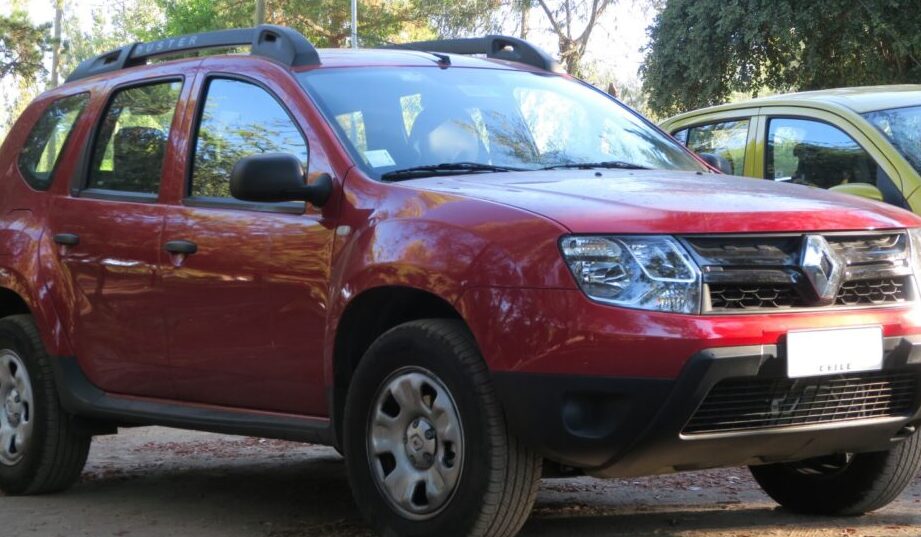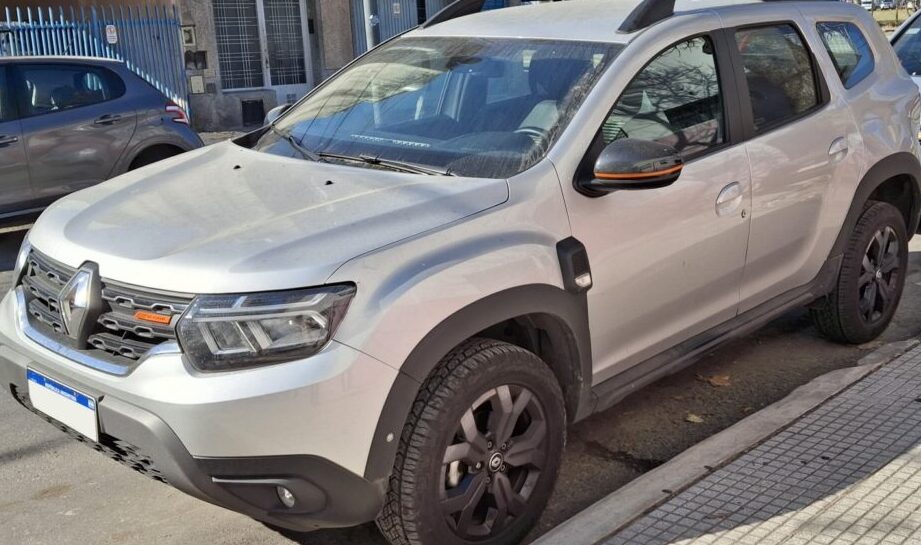
The Renault Duster II (facelift 2024) 1.3 TCe (162/170 Hp) Flex X-Tronic represents a significant iteration of Renault’s popular compact SUV, particularly tailored for markets outside of North America where the Duster has consistently been a strong seller. Introduced in January 2024, this variant builds upon the second-generation Duster (launched in 2018) with a refreshed design and a focus on powertrain efficiency. The “Flex” designation indicates its capability to run on both gasoline and ethanol (up to E100), a common feature in certain regions like Brazil and South America. The X-Tronic transmission refers to Renault’s continuously variable transmission (CVT), paired with the 1.3 TCe engine. This specific configuration positions itself as a mid-range offering, balancing performance with fuel economy and affordability within the Duster II lineup.
Technical Specifications
| Brand | Renault |
| Model | Duster |
| Generation | Duster II (facelift 2024) |
| Type (Engine) | 1.3 TCe (162/170 Hp) Flex X-Tronic |
| Start of production | January, 2024 |
| Powertrain Architecture | Internal Combustion engine |
| Body type | SUV |
| Seats | 5 |
| Doors | 5 |
| Fuel consumption (economy) – urban | 9.3 l/100 km (25.3 US mpg) |
| Fuel consumption (economy) – urban (Ethanol – E100) | 13 l/100 km |
| Fuel consumption (economy) – extra urban | 8.7 l/100 km (27 US mpg) |
| Fuel consumption (economy) – extra urban (Ethanol – E100) | 11.9 l/100 km |
| Fuel Type | Petrol / Ethanol – E100 |
| Acceleration 0 – 100 km/h | 9.2 sec |
| Acceleration 0 – 62 mph | 9.2 sec |
| Acceleration 0 – 60 mph | 8.7 sec |
| Maximum speed | 190 km/h (118.06 mph) |
| Weight-to-power ratio | 8.3 kg/Hp, 120.8 Hp/tonne |
| Weight-to-torque ratio | 5 kg/Nm, 201.3 Nm/tonne |
| Power | 162 Hp @ 5500 rpm |
| Power per litre | 121.6 Hp/l |
| Power (Ethanol – E100) | 170 Hp @ 5500 rpm |
| Power per litre (Ethanol – E100) | 127.6 Hp/l |
| Torque | 270 Nm @ 1600-3750 rpm (199.14 lb.-ft. @ 1600-3750 rpm) |
| Engine layout | Front, Transverse |
| Engine Model/Code | H5Ht |
| Engine displacement | 1332 cm3 (81.28 cu. in.) |
| Number of cylinders | 4 |
| Engine configuration | Inline |
| Cylinder Bore | 72.2 mm (2.84 in.) |
| Piston Stroke | 81.3 mm (3.2 in.) |
| Number of valves per cylinder | 4 |
| Fuel injection system | Direct injection |
| Engine aspiration | Turbocharger, Intercooler |
| Valvetrain | DOHC |
| Kerb Weight | 1341 kg (2956.4 lbs.) |
| Max. weight | 1853 kg (4085.17 lbs.) |
| Max load | 512 kg (1128.77 lbs.) |
| Trunk (boot) space – minimum | 475 l (16.77 cu. ft.) |
| Trunk (boot) space – maximum | 1478 l (52.2 cu. ft.) |
| Fuel tank capacity | 46 l (12.15 US gal | 10.12 UK gal) |
| Max. roof load | 80 kg (176.37 lbs.) |
| Permitted trailer load with brakes (12%) | 1200 kg (2645.55 lbs.) |
| Permitted trailer load without brakes | 705 kg (1554.26 lbs.) |
| Permitted towbar download | 75 kg (165.35 lbs.) |
| Length | 4376 mm (172.28 in.) |
| Width | 1832 mm (72.13 in.) |
| Height | 1693 mm (66.65 in.) |
| Wheelbase | 2673 mm (105.24 in.) |
| Front track | 1557 mm (61.3 in.) |
| Rear (Back) track | 1560 mm (61.42 in.) |
| Front overhang | 872 mm (34.33 in.) |
| Rear overhang | 831 mm (32.72 in.) |
| Ride height (ground clearance) | 237 mm (9.33 in.) |
| Approach angle | 30° |
| Departure angle | 34.5° |
| Drivetrain Architecture | The Internal combustion engine (ICE) drives the front wheels of the vehicle. |
| Drive wheel | Front wheel drive |
| Number of gears and type of gearbox | automatic transmission X-Tronic CVT |
| Front suspension | Independent, type McPherson with coil spring and anti-roll bar |
| Rear suspension | Semi-dependent beam with stabilizer lateral stability, Coil spring |
| Front brakes | Ventilated discs |
| Rear brakes | Drum |
| Assisting systems | ABS (Anti-lock braking system) |
| Steering type | Steering rack and pinion |
| Power steering | Electric Steering |
| Tires size | 215/60 R17 |
| Wheel rims size | 6.5J x 17 |
Powertrain & Engine Architecture
At the heart of the Duster II 1.3 TCe Flex X-Tronic lies the Renault H5Ht engine, a 1.3-liter turbocharged inline-four cylinder. This engine is part of Renault’s broader family of turbocharged gasoline engines, known for its balance of efficiency and performance. The engine utilizes direct fuel injection, a technology that improves combustion efficiency and power output. The turbocharger, coupled with an intercooler, forces more air into the cylinders, boosting power. The engine is designed to operate efficiently on both gasoline and ethanol, with a slight power increase (170 hp) when running on E100 ethanol. The X-Tronic transmission is a continuously variable transmission (CVT). Unlike traditional automatic transmissions with fixed gear ratios, a CVT provides a seamless and theoretically infinite number of gear ratios within its range. This allows the engine to operate at its most efficient RPM for any given speed, improving fuel economy. However, CVTs are sometimes criticized for a “rubber band” feel during acceleration, where engine RPM rises without a corresponding immediate increase in vehicle speed.
Driving Characteristics
The 1.3 TCe engine, producing 162 hp and 270 Nm (199 lb-ft) of torque, provides adequate performance for everyday driving in the Duster II. Acceleration from 0 to 100 km/h (0-62 mph) takes approximately 9.2 seconds. The X-Tronic CVT contributes to smooth acceleration, but as mentioned, it lacks the immediate responsiveness of a traditional automatic or manual transmission. The CVT is programmed to mimic gear shifts to provide a more familiar driving experience. Compared to higher-output versions of the Duster II, such as those with more powerful gasoline engines or diesel options, this 1.3 TCe variant offers a more relaxed driving experience, prioritizing fuel economy over outright performance. The torque curve is relatively flat, providing good pulling power at lower RPMs, which is beneficial for navigating city traffic and moderate inclines.
Equipment & Trim Levels
The 1.3 TCe Flex X-Tronic trim typically includes standard features such as air conditioning, power windows, central locking, and a basic audio system with Bluetooth connectivity. Higher trim levels add features like alloy wheels, a touchscreen infotainment system with navigation, rear parking sensors, and a rearview camera. Interior upholstery is typically cloth, with options for leatherette or full leather in higher trims. Safety features generally include ABS, electronic stability control, and airbags. Optional extras often include a panoramic sunroof, automatic climate control, and advanced driver-assistance systems (ADAS) like lane departure warning and automatic emergency braking.
Chassis & Braking
The Duster II utilizes a McPherson strut front suspension and a semi-independent beam rear suspension. This setup provides a comfortable ride quality, suitable for various road conditions. The front suspension incorporates a stabilizer bar to reduce body roll during cornering. Braking duties are handled by ventilated discs at the front and drum brakes at the rear. While the front discs provide adequate stopping power, the rear drums are a cost-saving measure and may not offer the same level of performance as rear discs. The electric power steering provides light and easy steering, making it convenient for urban driving.
Market Reception & Comparison
The Renault Duster II 1.3 TCe Flex X-Tronic has been well-received in markets where it’s offered, particularly for its combination of affordability, fuel efficiency, and practicality. Critics have praised its spacious interior and comfortable ride. The CVT transmission has received mixed reviews, with some appreciating its smoothness and fuel efficiency, while others find it lacking in responsiveness. Compared to other trims in the Duster II lineup, the 1.3 TCe X-Tronic offers a compelling value proposition for buyers who prioritize fuel economy and a comfortable driving experience over outright performance. The fuel economy is competitive within its class, and the ability to run on ethanol provides added flexibility in regions where ethanol is readily available.
Legacy
The Renault H5Ht 1.3 TCe engine, coupled with the X-Tronic CVT, has proven to be a relatively reliable powertrain. While CVTs generally require more diligent maintenance than traditional automatics (including regular fluid changes), they are becoming increasingly common and reliable. The Duster II, in general, has established a reputation for being a robust and affordable SUV. On the used car market, the 1.3 TCe Flex X-Tronic variant is likely to hold its value reasonably well, particularly in regions where fuel efficiency and ethanol compatibility are highly valued. Its practicality and affordability make it an attractive option for budget-conscious buyers seeking a versatile and reliable SUV.