
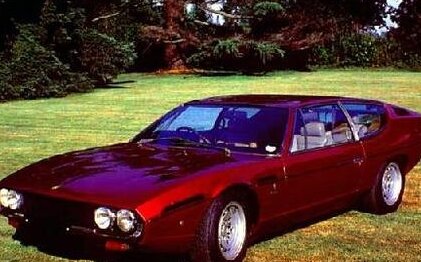
The Lamborghini Espada S2 3.9 V12, produced between 1970 and 1972, represents a pivotal iteration of the Espada model, Lamborghini’s four-seat grand touring coupe. Positioned as a more refined and powerful evolution of the original Espada launched in 1968, the S2 featured a larger engine displacement and subtle styling updates. It was built upon the chassis code 112, and played a crucial role in solidifying Lamborghini’s reputation for building luxurious, high-performance automobiles. The Espada, meaning “sword” in Spanish, was intended to broaden Lamborghini’s appeal beyond the realm of pure sports cars, offering a more practical, yet still undeniably exotic, alternative to traditional grand tourers.
Technical Specifications
| Brand | Lamborghini |
| Model | Espada |
| Generation | Espada |
| Type (Engine) | S2 3.9 V12 (350 Hp) |
| Start of production | 1970 |
| End of production | 1972 |
| Powertrain Architecture | Internal Combustion engine |
| Body type | Coupe |
| Seats | 4 |
| Doors | 2 |
| Fuel Type | Petrol (Gasoline) |
| Maximum speed | 250 km/h (155.34 mph) |
| Weight-to-power ratio | 4.7 kg/Hp, 214.1 Hp/tonne |
| Weight-to-torque ratio | 4.2 kg/Nm, 240.4 Nm/tonne |
| Power | 350 Hp @ 7500 rpm |
| Power per litre | 89.1 Hp/l |
| Torque | 393 Nm @ 5500 rpm (289.86 lb.-ft. @ 5500 rpm) |
| Maximum engine speed | 7900 rpm |
| Engine layout | Front, Longitudinal |
| Engine displacement | 3929 cm3 (239.76 cu. in.) |
| Number of cylinders | 12 |
| Engine configuration | V-engine |
| Cylinder Bore | 82 mm (3.23 in.) |
| Piston Stroke | 62 mm (2.44 in.) |
| Compression ratio | 10.7:1 |
| Number of valves per cylinder | 2 |
| Fuel injection system | Carburettor |
| Engine aspiration | Naturally aspirated engine |
| Valvetrain | DOHC |
| Coolant | 14 l (14.79 US qt | 12.32 UK qt) |
| Kerb Weight | 1635 kg (3604.56 lbs.) |
| Trunk (boot) space – minimum | 330 l (11.65 cu. ft.) |
| Fuel tank capacity | 93 l (24.57 US gal | 20.46 UK gal) |
| Length | 4738 mm (186.54 in.) |
| Width | 1860 mm (73.23 in.) |
| Height | 1185 mm (46.65 in.) |
| Wheelbase | 2650 mm (104.33 in.) |
| Minimum turning circle (turning diameter) | 12 m (39.37 ft.) |
| Drivetrain Architecture | The Internal combustion engine (ICE) drives the rear wheels of the vehicle. |
| Drive wheel | Rear wheel drive |
| Number of gears and type of gearbox | 5 gears, manual transmission |
| Front suspension | Coil spring, Double wishbone, Transverse stabilizer |
| Rear suspension | Double wishbone, Transverse stabilizer, Coil spring |
| Front brakes | Ventilated discs, 300×32 mm |
| Rear brakes | Ventilated discs, 280×22 mm |
| Steering type | Worm-reduction unit |
| Tires size | 205/80 R15 |
| Wheel rims size | 7J x 15 |
Powertrain & Engine Architecture
The heart of the Espada S2 is its 3.9-liter (3929 cc) naturally aspirated V12 engine, designated the Lamborghini Tipo 352. This engine represents an increase in displacement over the earlier Espada’s 4.0-liter unit, and delivers 350 horsepower at 7,500 rpm and 393 Nm (289.86 lb-ft) of torque at 5,500 rpm. The engine utilizes a 60-degree V configuration, contributing to its smooth operation and relatively compact size. It features a dual overhead camshaft (DOHC) valvetrain with two valves per cylinder. Fuel delivery is managed by three twin-choke Weber 46 IDA carburetors, a relatively archaic system by modern standards, but one that contributed to the engine’s responsive throttle characteristics. The engine is longitudinally mounted in the front of the chassis, driving the rear wheels. The S2 retained the robust five-speed manual transmission, providing drivers with full control over the engine’s considerable power.
Driving Characteristics
The Espada S2 3.9 offers a grand touring experience characterized by effortless cruising and impressive acceleration. While not as overtly sporty as some of Lamborghini’s other models, the Espada S2 delivers a substantial surge of power when prompted. The 3.9-liter V12 provides a broad torque curve, making it tractable in everyday driving situations. The five-speed manual transmission allows for precise gear selection, and the rear-wheel drive configuration contributes to a balanced feel. However, the car’s considerable weight (1635 kg / 3604.56 lbs) does limit its agility compared to lighter sports cars. The steering, utilizing a worm-reduction unit, is relatively heavy but provides good feedback. The suspension, comprised of coil springs, double wishbones, and transverse stabilizers, offers a comfortable ride, absorbing bumps and imperfections in the road surface effectively.
Equipment & Trim Levels
The Espada S2 was a luxurious vehicle for its time, offering a well-appointed interior. Standard features included leather upholstery, power windows, and a wood-trimmed dashboard. The interior layout prioritized comfort and space, accommodating four adults with ease. Optional extras included air conditioning, a radio with an antenna, and a limited-slip differential. The S2 also featured minor styling revisions compared to the earlier Espada, including a redesigned grille and updated interior trim. The overall aesthetic aimed for a blend of Italian elegance and sporting flair.
Chassis & Braking
The Espada S2 utilizes a steel monocoque chassis, providing a rigid and lightweight platform. The suspension system employs independent double wishbones at both the front and rear, with coil springs and transverse stabilizers to enhance handling and stability. Braking duties are handled by ventilated disc brakes on all four wheels, providing ample stopping power. The front brakes measure 300×32 mm, while the rear brakes are 280×22 mm. The steering system is a worm-reduction unit, offering a direct but somewhat heavy feel.
Market Reception & Comparison
The Espada S2 was generally well-received by automotive critics, who praised its luxurious interior, powerful engine, and comfortable ride. However, some critics noted the car’s high price and relatively complex maintenance requirements. Compared to the earlier Espada, the S2 offered improved performance and refinement thanks to the larger engine. Compared to other grand tourers of the era, such as the Ferrari 365 GTB/4 Daytona, the Espada S2 offered a more practical and spacious interior, but lacked the same level of outright sporting performance. The 1.8L and 1.9 TDI versions of the VW Passat, for example, were aimed at a much broader market and prioritized fuel efficiency and affordability over outright performance and luxury.
Legacy
The Lamborghini Espada S2 3.9 V12 remains a highly sought-after classic car today. Its combination of Italian styling, powerful V12 engine, and luxurious interior has cemented its place in automotive history. While maintenance can be expensive due to the car’s age and complexity, the Espada S2 offers a unique and rewarding driving experience. The Tipo 352 V12 engine is known for its durability when properly maintained, and parts availability, while not abundant, is generally adequate. The Espada S2 represents a significant chapter in Lamborghini’s history, demonstrating the company’s ability to create both exotic sports cars and luxurious grand tourers.
