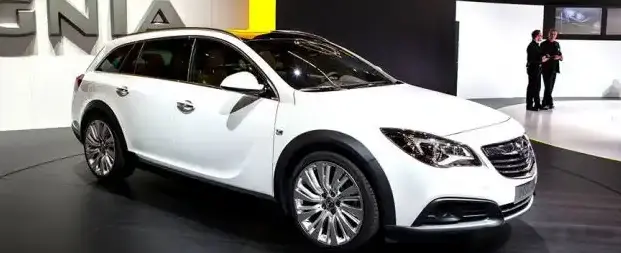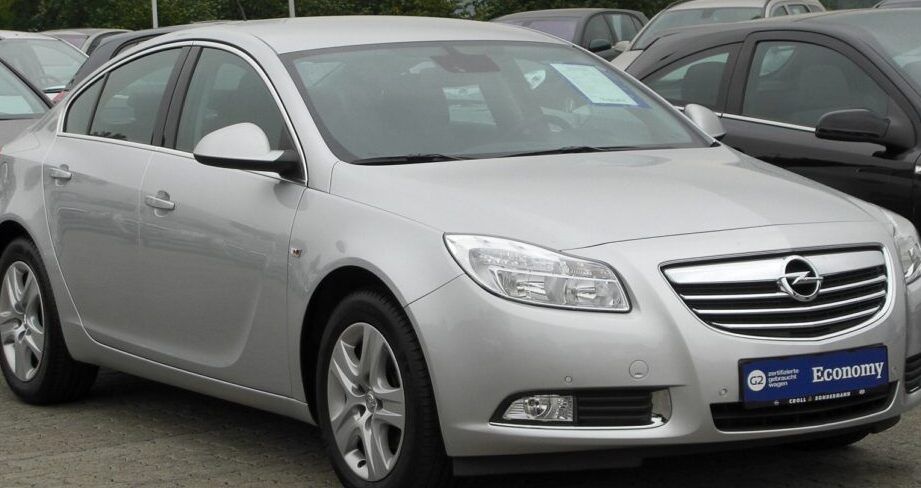
The Opel Insignia Sedan (A) 1.6 Turbo, producing 180 horsepower, was a key variant in the first generation of the Insignia, launched in November 2008 and continuing through a mid-cycle refresh until production ended in June 2013. Positioned as a mid-range offering within the Insignia lineup, it aimed to balance performance and fuel efficiency for buyers seeking a comfortable and capable family sedan. The Insignia, as a whole, represented Opel’s attempt to move upmarket and compete with established players like the Ford Mondeo and Volkswagen Passat, offering a more stylish and technologically advanced package than its predecessor, the Vectra. This particular 1.6L turbocharged engine and six-speed manual transmission combination was a popular choice in European markets.
Technical Specifications
| Brand | Opel |
| Model | Insignia |
| Generation | Insignia Sedan (A) |
| Type (Engine) | 1.6 Turbo (180 Hp) |
| Start of production | November, 2008 |
| End of production | June, 2013 |
| Powertrain Architecture | Internal Combustion engine |
| Body type | Sedan |
| Seats | 5 |
| Doors | 4 |
| Fuel consumption (combined) | 7.7 l/100 km |
| Fuel consumption (US mpg) | 30.5 US mpg |
| Fuel consumption (UK mpg) | 36.7 UK mpg |
| Fuel consumption (km/l) | 13 km/l |
| CO2 emissions | 184 g/km |
| Fuel Type | Petrol (Gasoline) |
| Acceleration 0 – 100 km/h | 8.9 sec |
| Acceleration 0 – 62 mph | 8.9 sec |
| Acceleration 0 – 60 mph | 8.5 sec |
| Maximum speed | 225 km/h (139.81 mph) |
| Emission standard | Euro 5 |
| Weight-to-power ratio | 8.7 kg/Hp, 114.6 Hp/tonne |
| Weight-to-torque ratio | 6.8 kg/Nm, 146.5 Nm/tonne |
| Power | 180 Hp @ 5500 rpm |
| Power per litre | 112.6 Hp/l |
| Torque | 230 Nm @ 2200-5500 rpm (169.64 lb.-ft. @ 2200-5500 rpm) |
| Engine layout | Front, Transverse |
| Engine Model/Code | A16LET |
| Engine displacement | 1598 cm3 (97.52 cu. in.) |
| Number of cylinders | 4 |
| Engine configuration | Inline |
| Cylinder Bore | 79 mm (3.11 in.) |
| Piston Stroke | 81.5 mm (3.21 in.) |
| Compression ratio | 8.8:1 |
| Number of valves per cylinder | 4 |
| Fuel injection system | Multi-port manifold injection |
| Engine aspiration | Turbocharger, Intercooler |
| Engine oil capacity | 4.5 l (4.76 US qt | 3.96 UK qt) |
| Coolant | 5.6 l (5.92 US qt | 4.93 UK qt) |
| Kerb Weight | 1570 kg (3461.26 lbs.) |
| Max. weight | 2075 kg (4574.59 lbs.) |
| Max load | 505 kg (1113.33 lbs.) |
| Trunk (boot) space – minimum | 500 l (17.66 cu. ft.) |
| Trunk (boot) space – maximum | 1010 l (35.67 cu. ft.) |
| Fuel tank capacity | 70 l (18.49 US gal | 15.4 UK gal) |
| Length | 4830 mm (190.16 in.) |
| Width | 1858 mm (73.15 in.) |
| Height | 1498 mm (58.98 in.) |
| Wheelbase | 2737 mm (107.76 in.) |
| Front track | 1585 mm (62.4 in.) |
| Rear (Back) track | 1587 mm (62.48 in.) |
| Ride height (ground clearance) | 160 mm (6.3 in.) |
| Minimum turning circle | 10.8 m (35.43 ft.) |
| Drivetrain Architecture | The Internal combustion engine (ICE) drives the front wheels of the vehicle. |
| Drive wheel | Front wheel drive |
| Number of gears and type of gearbox | 6 gears, manual transmission |
| Front brakes | Ventilated discs |
| Rear brakes | Disc |
| Assisting systems | ABS (Anti-lock braking system) |
| Tires size | 215/60 R16 |
| Wheel rims size | 16 |
Powertrain & Engine Architecture
The heart of this Insignia variant is the A16LET engine, a 1.6-liter inline-four cylinder gasoline engine equipped with a turbocharger and intercooler. This engine belongs to Opel’s family of Ecotec engines, known for their focus on efficiency and refinement. The A16LET utilizes multi-port fuel injection and a single overhead camshaft (SOHC) valvetrain with four valves per cylinder. The turbocharger provides a significant boost in power output compared to naturally aspirated engines of similar displacement. Peak torque of 230 Nm (169.64 lb-ft) is available across a broad rev range, from 2200 to 5500 rpm, contributing to good in-gear acceleration. The engine is transversely mounted in the front of the vehicle. Paired with the A16LET is a Getrag six-speed manual transmission, offering precise shifts and contributing to the car’s overall driving experience. While an automatic transmission was available on other Insignia models, this 180 hp version was primarily offered with the manual gearbox.
Driving Characteristics
The 1.6 Turbo Insignia Sedan delivers a respectable driving experience. Acceleration from 0 to 100 km/h (0-62 mph) takes approximately 8.9 seconds, making it adequately quick for everyday driving and highway merging. The turbocharger provides a noticeable surge of power, but it’s not as dramatic as the larger displacement engines offered in the Insignia range, such as the 2.8L V6. The six-speed manual transmission allows drivers to keep the engine in its optimal power band, maximizing performance. Compared to the 2.0L diesel variants, the 1.6 Turbo offers a more responsive and engaging driving experience, albeit with slightly higher fuel consumption. The gear ratios are well-chosen for both city and highway driving, providing good flexibility and minimizing the need for frequent gear changes. The suspension is tuned for comfort, providing a smooth ride over most road surfaces, but it doesn’t offer the same level of sporting handling as some of its rivals.
Equipment & Trim Levels
The 1.6 Turbo Insignia Sedan typically came equipped with a reasonable level of standard features. These included air conditioning, power windows, power mirrors, a CD/MP3 stereo system, and alloy wheels. Safety features such as ABS, electronic stability control (ESP), and multiple airbags were also standard. Higher trim levels, such as the Cosmo, offered additional features like leather upholstery, heated front seats, a sunroof, and a more advanced infotainment system. Optional extras included parking sensors, a navigation system, and upgraded audio systems. The interior design was modern and well-appointed, with a focus on ergonomics and user-friendliness.
Chassis & Braking
The Insignia Sedan (A) utilizes a MacPherson strut front suspension and a multi-link rear suspension, providing a good balance of ride comfort and handling. The front brakes are ventilated discs, while the rear brakes are solid discs. ABS (Anti-lock Braking System) is standard, enhancing braking performance and stability, particularly in adverse conditions. The steering is electrically assisted, providing a light and precise feel. The chassis is relatively lightweight, contributing to the car’s agility and fuel efficiency. Stabilizer bars are fitted to both the front and rear axles to reduce body roll during cornering.
Market Reception & Comparison
The Opel Insignia 1.6 Turbo was generally well-received by automotive critics. It was praised for its stylish design, comfortable ride, and good fuel economy. However, some critics noted that the engine could feel a little strained when fully loaded or driving uphill. Compared to the more powerful Insignia variants, the 1.6 Turbo offered a more affordable entry point into the range, making it attractive to budget-conscious buyers. Its fuel economy of 7.7 l/100 km (30.5 US mpg) was competitive with other mid-size sedans in its class. The 2.0L diesel models offered superior fuel economy, but the 1.6 Turbo provided a more engaging driving experience.
Legacy
The A16LET engine, while generally reliable, is known to have some potential issues with the timing chain, particularly on higher mileage examples. Regular oil changes and maintenance are crucial to ensure its longevity. The Insignia Sedan (A) 1.6 Turbo remains a popular choice in the used car market, offering a good balance of style, comfort, and affordability. Its relatively simple engine design and readily available parts make it a relatively easy car to maintain. Today, it represents a solid and practical option for buyers seeking a well-equipped and reasonably priced family sedan.