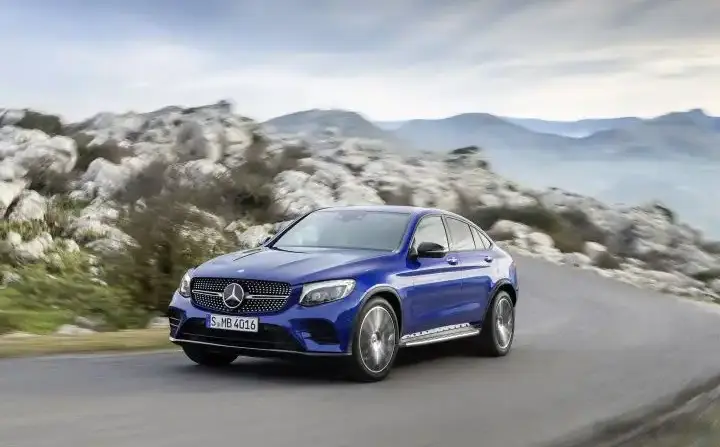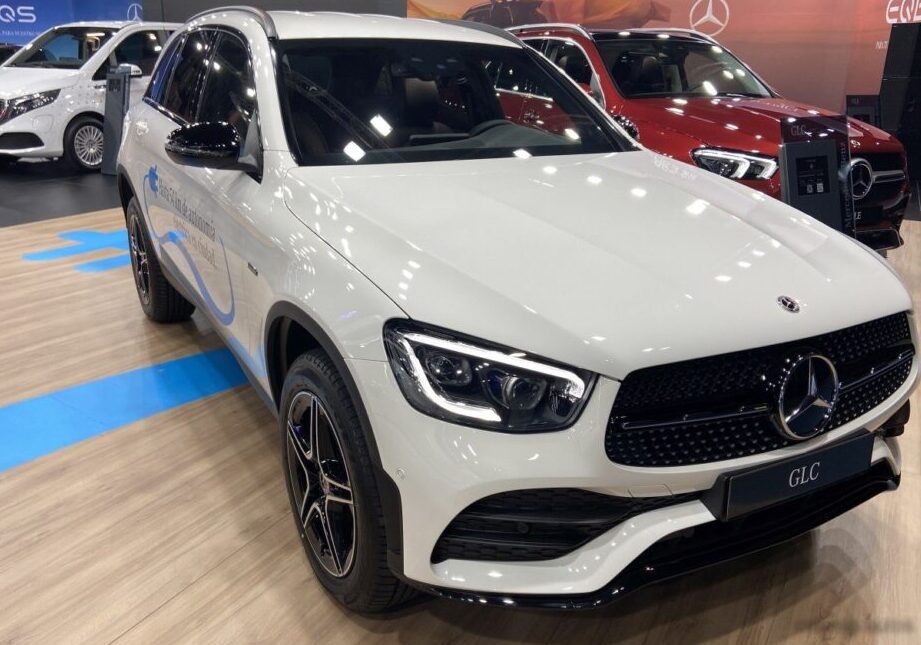
The Mercedes-Benz GLC 300de 4MATIC, produced from May 2020 to July 2022, represents a significant step in the X253 GLC SUV generation’s push towards electrification. This plug-in hybrid variant combined a diesel engine with an electric motor, offering a balance of efficiency, performance, and all-weather capability. Positioned as a premium offering within the GLC lineup, the 300de aimed to appeal to buyers seeking reduced emissions and the flexibility of electric driving without sacrificing the range and practicality of a traditional SUV. It was a key model in Mercedes-Benz’s strategy to expand its hybrid and electric vehicle portfolio in the European market, where diesel-electric hybrids were particularly popular due to favorable tax incentives and emissions regulations.
Technical Specifications
| Brand | Mercedes-Benz |
| Model | GLC |
| Generation | GLC SUV (X253, facelift 2019) |
| Type | GLC 300de (306 Hp) Plug-in Hybrid 4MATIC 9G-TRONIC |
| Start of production | May, 2020 |
| End of production | July, 2022 |
| Powertrain Architecture | PHEV (Plug-in Hybrid Electric Vehicle) |
| Body type | SUV |
| Seats | 5 |
| Doors | 5 |
| Combined fuel consumption (WLTP) | 1.7-2.2 l/100 km (138.4 – 106.9 US mpg, 166.2 – 128.4 UK mpg, 58.8 – 45.5 km/l) |
| CO2 emissions (WLTP) | 45-58 g/km |
| Fuel consumption (NEDC) | 1.8-2 l/100 km (130.7 – 117.6 US mpg, 156.9 – 141.2 UK mpg, 55.6 – 50 km/l) |
| CO2 emissions (NEDC) | 45-53 g/km |
| Fuel Type | Diesel / electricity |
| Acceleration 0 – 100 km/h | 6.2 sec |
| Acceleration 0 – 62 mph | 6.2 sec |
| Acceleration 0 – 60 mph | 5.9 sec |
| Maximum speed | 230 km/h (142.92 mph) |
| Emission standard | Euro 6d-ISC-FCM |
| Weight-to-power ratio | 6.7 kg/Hp, 149.3 Hp/tonne |
| Weight-to-torque ratio | 2.9 kg/Nm, 341.5 Nm/tonne |
| Gross battery capacity | 13.5 kWh |
| Net (usable) battery capacity | 9.3 kWh |
| Battery technology | Lithium-ion (Li-Ion) |
| Battery location | Under the trunk |
| All-electric range (WLTP) | 41-45 km (25.48 – 27.96 mi) |
| All-electric range (NEDC) | 45-51 km (27.96 – 31.69 mi) |
| Average Energy consumption (WLTP) | 18.2 kWh/100 km (29.29 kWh/100 mi, 115 MPGe, 5.5 km/kWh, 3.4 mi/kWh) |
| Average Energy consumption (NEDC) | 14.6-17.3 kWh/100 km (23.5 – 27.84 kWh/100 mi, 143 – 121 MPGe, 6.8 – 5.8 km/kWh, 4.3 – 3.6 mi/kWh) |
| Max speed (electric) | 130 km/h (80.78 mph) |
| Electric motor power | 122 Hp |
| Electric motor Torque | 440 Nm (324.53 lb.-ft.) |
| Electric motor location | Between the combustion engine and the transmission |
| System power | 306 Hp |
| System torque | 700 Nm (516.29 lb.-ft.) |
| Power | 194 Hp |
| Torque | 400 Nm (295.02 lb.-ft.) |
| Engine layout | Front, Longitudinal |
| Engine Model/Code | OM 654.920 |
| Engine displacement | 1950 cm3 (119 cu. in.) |
| Number of cylinders | 4 |
| Engine configuration | Inline |
| Cylinder Bore | 82 mm (3.23 in.) |
| Piston Stroke | 92.3 mm (3.63 in.) |
| Compression ratio | 15.5:1 |
| Number of valves per cylinder | 4 |
| Fuel injection system | Diesel Commonrail |
| Engine aspiration | Turbocharger, Intercooler |
| Valvetrain | DOHC |
| Engine oil capacity | 6 l (6.34 US qt | 5.28 UK qt) |
| Coolant | 12.5 l (13.21 US qt | 11 UK qt) |
| Kerb Weight | 2050 kg (4519.48 lbs.) |
| Max. weight | 2650 kg (5842.25 lbs.) |
| Max load | 600 kg (1322.77 lbs.) |
| Trunk (boot) space – minimum | 395 l (13.95 cu. ft.) |
| Trunk (boot) space – maximum | 1445 l (51.03 cu. ft.) |
| Fuel tank capacity | 50 l (13.21 US gal | 11 UK gal) |
| Max. roof load | 75 kg (165.35 lbs.) |
| Permitted trailer load with brakes (12%) | 2000 kg (4409.25 lbs.) |
| Permitted trailer load without brakes | 750 kg (1653.47 lbs.) |
| Permitted towbar download | 80 kg (176.37 lbs.) |
| Length | 4658 mm (183.39 in.) |
| Width | 1890 mm (74.41 in.) |
| Width including mirrors | 2096 mm (82.52 in.) |
| Height | 1644 mm (64.72 in.) |
| Wheelbase | 2873 mm (113.11 in.) |
| Front track | 1621 mm (63.82 in.) |
| Rear (Back) track | 1617 mm (63.66 in.) |
| Front overhang | 830 mm (32.68 in.) |
| Rear overhang | 955 mm (37.6 in.) |
| Drag coefficient (Cd) | 0.33 |
| Minimum turning circle (turning diameter) | 11.8 m (38.71 ft.) |
| Approach angle | 19.9° |
| Departure angle | 14.1° |
| Ramp-over (brakeover) angle | 12.1° |
| Drivetrain Architecture | The Internal combustion engine (ICE) and the electric motor permanently drive the four wheels of the car with the ability to work in full electric or mixed mode. |
| Drive wheel | All wheel drive (4×4) |
| Number of gears and type of gearbox | 9 gears, automatic transmission G-TRONIC |
| Front suspension | Coil spring, Double wishbone, Transverse stabilizer |
| Rear suspension | Independent multi-link suspension, Transverse stabilizer, Coil spring |
| Front brakes | Ventilated discs |
| Rear brakes | Ventilated discs |
INTRODUCTION
The Mercedes-Benz GLC 300de 4MATIC, launched in 2020 as part of the X253 facelift, is a plug-in hybrid SUV that combines a 2.0-liter four-cylinder diesel engine with an electric motor. Built on the Modular High Architecture (MHA) platform, also known as the 1HX0 platform, the 300de aimed to provide a compelling alternative to traditional gasoline and diesel SUVs, offering improved fuel economy and reduced emissions. This model was primarily targeted at the European market, where government incentives favored plug-in hybrid vehicles. The “de” designation signifies the diesel-electric powertrain configuration.
Powertrain & Engine Architecture
At the heart of the GLC 300de lies the OM 654.920, a 2.0-liter inline-four cylinder diesel engine. This engine, a member of Mercedes-Benz’s modular engine family, features a turbocharger, intercooler, and direct injection technology. It produces 194 horsepower and 400 Nm (295 lb-ft) of torque. The engine utilizes a diesel commonrail injection system for precise fuel delivery and optimized combustion. Paired with the diesel engine is a 122 horsepower electric motor, integrated between the engine and the 9G-TRONIC nine-speed automatic transmission. This configuration allows for both electric-only driving and a combined output of 306 horsepower and 700 Nm (516 lb-ft) of torque. The 13.5 kWh lithium-ion battery pack is located under the trunk floor, providing a usable capacity of 9.3 kWh. The 9G-TRONIC transmission is specifically calibrated to work seamlessly with the electric motor, offering smooth and efficient gear changes.
Driving Characteristics
The GLC 300de offers a unique driving experience, blending the refinement of a Mercedes-Benz SUV with the benefits of electric propulsion. In electric mode, the vehicle provides near-silent operation and instant torque, making it ideal for city driving. The all-electric range of 41-45 km (25-28 miles) allows for many daily commutes to be completed without using the diesel engine. When the battery is depleted or more power is needed, the diesel engine seamlessly kicks in, providing ample power for highway cruising and overtaking. The 9G-TRONIC transmission contributes to a smooth and comfortable ride, with well-spaced gear ratios that optimize fuel efficiency and performance. Compared to the gasoline-powered GLC 300, the 300de offers superior fuel economy and lower emissions, but with a slightly heavier curb weight due to the battery pack. It also delivers quicker acceleration than the standard diesel models, thanks to the electric motor’s instant torque.
Equipment & Trim Levels
The GLC 300de 4MATIC typically came well-equipped as standard, reflecting its premium positioning. Standard features included Mercedes-Benz’s MBUX infotainment system with a touchscreen display, leather upholstery, automatic climate control, and a suite of safety features such as automatic emergency braking, lane keeping assist, and adaptive cruise control. Optional extras included a panoramic sunroof, premium sound system, head-up display, and various driver assistance packages. Interior trim options ranged from aluminum to wood finishes, allowing buyers to personalize the cabin to their preferences. The exterior styling was largely consistent with other GLC models, with subtle badging indicating the plug-in hybrid powertrain.
Chassis & Braking
The GLC 300de utilizes a sophisticated suspension system designed to provide a comfortable and controlled ride. The front suspension features coil springs and a double wishbone setup, while the rear suspension employs an independent multi-link design. Both ends are equipped with transverse stabilizers to minimize body roll during cornering. The braking system consists of ventilated discs on all four wheels, providing ample stopping power. Anti-lock braking system (ABS) and electronic stability control (ESC) are standard features, enhancing safety and stability. The suspension tuning was optimized to accommodate the added weight of the battery pack, ensuring a balanced and predictable handling experience.
Market Reception & Comparison
The GLC 300de was generally well-received by automotive critics, who praised its fuel efficiency, smooth ride, and refined powertrain. It was often compared to other plug-in hybrid SUVs, such as the BMW X3 xDrive30e and the Volvo XC60 Recharge. The GLC 300de stood out for its comfortable interior, advanced technology, and the reputation for reliability associated with the Mercedes-Benz brand. However, some critics noted that the battery pack reduced cargo space compared to non-hybrid GLC models. In terms of fuel economy, the 300de consistently outperformed traditional gasoline and diesel SUVs, offering significantly lower running costs. Its reliability was generally considered good, although the complexity of the hybrid system could potentially lead to higher maintenance costs in the long run.
Legacy
The Mercedes-Benz GLC 300de 4MATIC represents an important step in the brand’s transition towards electrification. While production ended in 2022, the model remains a popular choice in the used car market, particularly among buyers seeking a fuel-efficient and environmentally friendly SUV. The OM 654 diesel engine has proven to be a reliable and durable unit, and the 9G-TRONIC transmission is known for its smooth operation. The long-term reliability of the hybrid system is still being evaluated, but early indications suggest that it is generally robust. The GLC 300de paved the way for future plug-in hybrid models from Mercedes-Benz, demonstrating the potential of combining diesel and electric power to deliver a compelling driving experience.