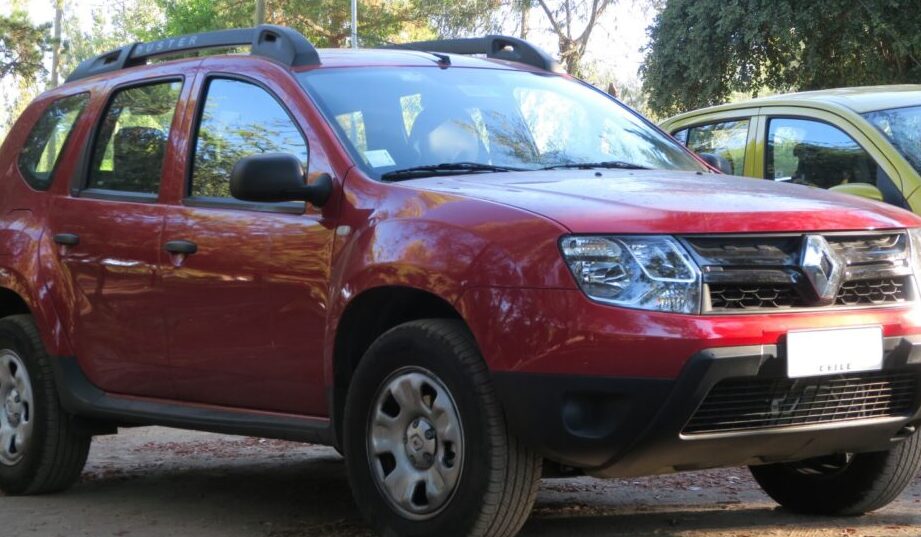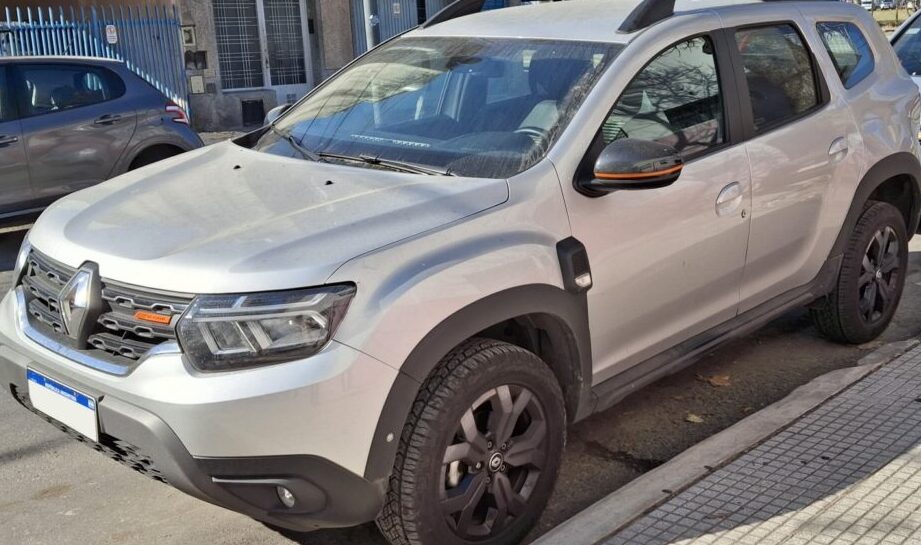
The Renault Duster II (facelift 2024) 1.3 TCe (163 Hp) X-Tronic represents a significant iteration of Renault’s popular compact SUV, launched in January 2024. This variant occupies a mid-range position within the updated Duster II lineup, offering a balance between performance, fuel efficiency, and modern convenience features. The facelift builds upon the foundation of the second-generation Duster, known for its robust build quality and affordability, and aims to enhance its appeal in a competitive segment. It’s primarily marketed in Europe and other international markets where the Duster has established a strong presence as a value-oriented SUV.
| Brand | Renault |
| Model | Duster |
| Generation | Duster II (facelift 2024) |
| Type (Engine) | 1.3 TCe (163 Hp) X-Tronic |
| Start of production | January, 2024 |
| Powertrain Architecture | Internal Combustion engine |
| Body type | SUV |
| Seats | 5 |
| Doors | 5 |
| Fuel Type | Petrol (Gasoline) |
| Weight-to-power ratio | 8.2 kg/Hp, 121.3 Hp/tonne |
| Weight-to-torque ratio | 5 kg/Nm, 200.9 Nm/tonne |
| Power | 163 Hp |
| Power per litre | 122.4 Hp/l |
| Torque | 270 Nm @ 1800 rpm (199.14 lb.-ft. @ 1800 rpm) |
| Engine layout | Front, Transverse |
| Engine Model/Code | H5Ht |
| Engine displacement | 1332 cm3 (81.28 cu. in.) |
| Number of cylinders | 4 |
| Engine configuration | Inline |
| Cylinder Bore | 72.2 mm (2.84 in.) |
| Piston Stroke | 81.3 mm (3.2 in.) |
| Number of valves per cylinder | 4 |
| Fuel injection system | Direct injection |
| Engine aspiration | Turbocharger, Intercooler |
| Valvetrain | DOHC |
| Kerb Weight | 1344 kg (2963.01 lbs.) |
| Max. weight | 1845 kg (4067.53 lbs.) |
| Max load | 501 kg (1104.52 lbs.) |
| Trunk (boot) space – minimum | 475 l (16.77 cu. ft.) |
| Trunk (boot) space – maximum | 1478 l (52.2 cu. ft.) |
| Fuel tank capacity | 50 l (13.21 US gal | 11 UK gal) |
| Max. roof load | 80 kg (176.37 lbs.) |
| Length | 4376 mm (172.28 in.) |
| Width | 1832 mm (72.13 in.) |
| Height | 1693 mm (66.65 in.) |
| Wheelbase | 2673 mm (105.24 in.) |
| Front track | 1557 mm (61.3 in.) |
| Rear (Back) track | 1560 mm (61.42 in.) |
| Front overhang | 872 mm (34.33 in.) |
| Rear overhang | 831 mm (32.72 in.) |
| Ride height (ground clearance) | 237 mm (9.33 in.) |
| Approach angle | 30° |
| Departure angle | 34.5° |
| Drivetrain Architecture | The Internal combustion engine (ICE) drives the front wheels of the vehicle. |
| Drive wheel | Front wheel drive |
| Number of gears and type of gearbox | automatic transmission X-Tronic CVT |
| Front suspension | Independent, type McPherson with coil spring and anti-roll bar |
| Rear suspension | Semi-dependent beam with stabilizer lateral stability, Coil spring |
| Front brakes | Ventilated discs |
| Rear brakes | Drum |
| Assisting systems | ABS (Anti-lock braking system) |
| Steering type | Steering rack and pinion |
| Power steering | Electric Steering |
| Tires size | 215/60 R17 |
| Wheel rims size | 6.5J x 17 |
Powertrain & Engine Architecture
At the heart of the Duster II 1.3 TCe X-Tronic lies the Renault H5Ht engine, a 1.3-liter turbocharged inline-four cylinder gasoline engine. This engine is part of the Alliance’s (Renault-Nissan-Mitsubishi) modular engine family, designed for efficiency and versatility. The engine utilizes direct fuel injection, a technology that improves combustion efficiency and reduces emissions. The turbocharger, coupled with an intercooler, provides a noticeable boost in power and torque compared to naturally aspirated engines of similar displacement. The engine produces 163 horsepower and 270 Nm (199.14 lb-ft) of torque at 1800 rpm. The X-Tronic transmission is a continuously variable transmission (CVT), known for its smooth, stepless gear changes and contribution to improved fuel economy. Unlike traditional automatic transmissions with fixed gear ratios, the CVT allows the engine to operate at its most efficient point across a wider range of speeds.
Driving Characteristics
The 1.3 TCe engine paired with the X-Tronic CVT delivers a comfortable and refined driving experience. While not offering the outright acceleration of higher-powered Duster variants, the 163 hp engine provides adequate performance for everyday driving and highway cruising. The CVT transmission contributes to smooth acceleration, although it can sometimes exhibit a slight “rubber band” effect under hard acceleration, a characteristic common to many CVTs. The gear ratios are optimized for fuel efficiency, and the transmission adapts to driving conditions to provide a balance between performance and economy. Compared to the manual transmission versions of the 1.3 TCe, the X-Tronic offers greater convenience, particularly in urban traffic. However, the manual transmission generally provides slightly better fuel economy and a more engaging driving experience for enthusiasts.
Equipment & Trim Levels
The 1.3 TCe X-Tronic trim typically includes a generous array of standard features. These commonly include air conditioning, power windows, central locking, a touchscreen infotainment system with smartphone integration (Apple CarPlay and Android Auto), and basic safety features like ABS, ESP (Electronic Stability Program), and multiple airbags. Higher trim levels within the 1.3 TCe range may add features such as alloy wheels, a rearview camera, parking sensors, automatic climate control, and more advanced driver-assistance systems. Interior upholstery is typically cloth, with options for upgraded materials on higher trims. The dashboard layout is functional and modern, with a focus on ease of use.
Chassis & Braking
The Duster II utilizes a robust chassis designed to handle various road conditions. The front suspension employs an independent McPherson strut setup, providing a comfortable ride and good handling characteristics. The rear suspension features a semi-independent beam axle, which is a cost-effective and durable solution. The 1.3 TCe X-Tronic variant typically features ventilated disc brakes at the front and drum brakes at the rear. The braking system is assisted by ABS (Anti-lock Braking System) and ESP (Electronic Stability Program) to enhance safety and control. The ride height of 237 mm (9.33 inches) provides excellent ground clearance, making the Duster well-suited for tackling rough terrain and unpaved roads.
Market Reception & Comparison
The Renault Duster II 1.3 TCe X-Tronic has been generally well-received by automotive critics and consumers alike. It’s praised for its value for money, spacious interior, and comfortable ride. The CVT transmission has received mixed reviews, with some appreciating its smoothness and efficiency, while others find it less engaging than a traditional automatic or manual gearbox. Compared to other trims in the Duster lineup, the 1.3 TCe X-Tronic offers a good balance between performance and fuel economy. The diesel variants (where available) typically offer better fuel economy but may come with higher maintenance costs. The higher-powered gasoline engines provide more exhilarating performance but at the expense of fuel efficiency.
Legacy
The Renault H5Ht 1.3 TCe engine and X-Tronic CVT combination represents a modern and efficient powertrain option for the Duster II. While long-term reliability data is still emerging, the engine is based on a proven architecture and has shown promising results in other Renault and Nissan vehicles. The X-Tronic CVT, while not without its critics, is a well-established transmission technology. In the used car market, the Duster II 1.3 TCe X-Tronic is expected to hold its value reasonably well, thanks to its practicality, affordability, and reputation for reliability. Its appeal will likely be strongest among buyers seeking a comfortable, fuel-efficient, and well-equipped compact SUV.