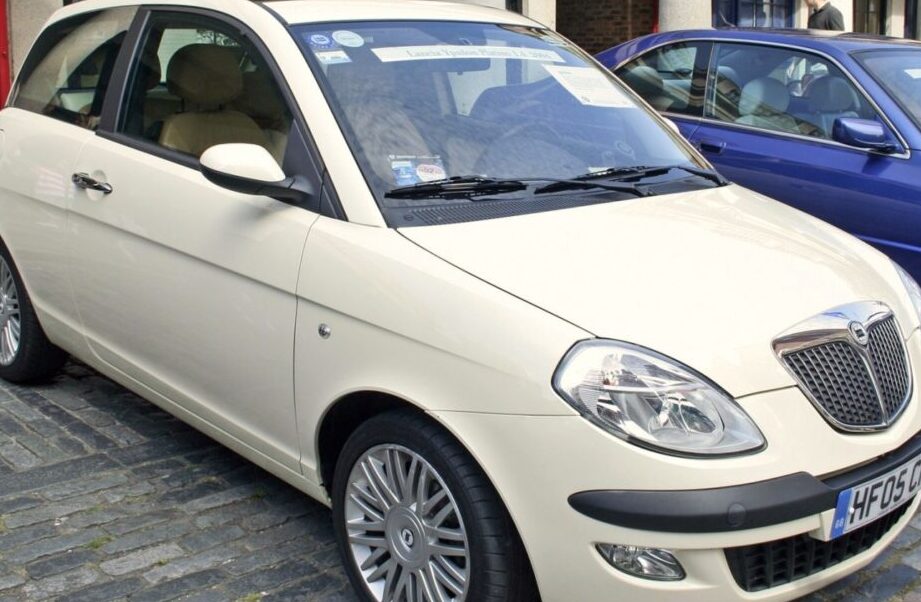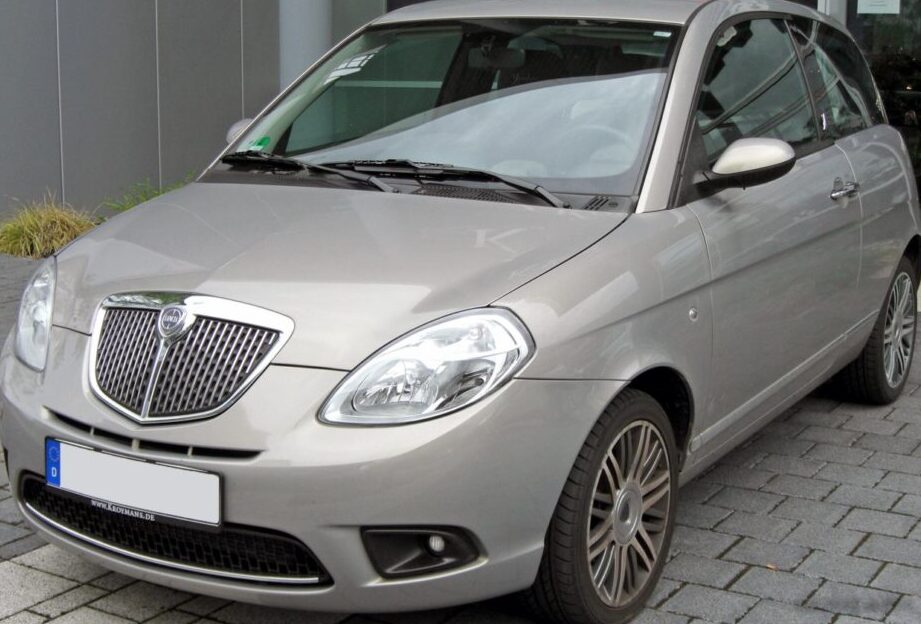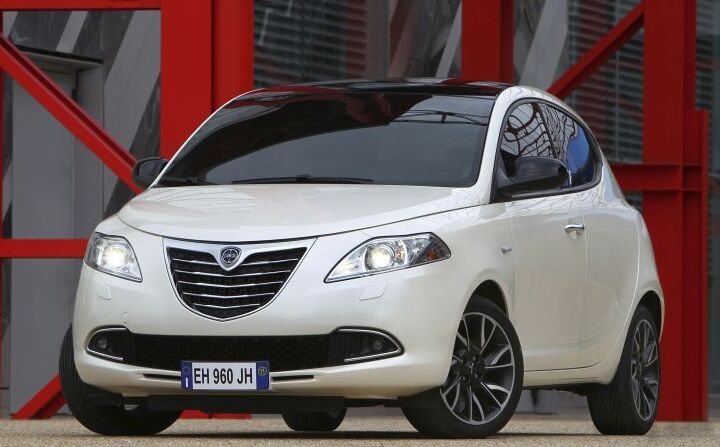
The Lancia Ypsilon (846) 0.9 TwinAir (85 hp) start&stop was a subcompact hatchback produced by the Italian manufacturer Lancia between 2011 and 2015. This variant represented an entry-level offering within the broader Ypsilon (846) range, which was the third generation of the popular city car. Positioned as a fuel-efficient and affordable option, it aimed to attract buyers seeking a stylish and practical vehicle for urban environments. The 846 series Ypsilon was a significant model for Lancia, representing a move towards a more modern and sophisticated design language, and was primarily marketed in Europe, particularly in Italy, where Lancia retained a strong brand following.
Technical Specifications
| Brand | Lancia |
| Model | Ypsilon |
| Generation | Ypsilon (846) |
| Type (Engine) | 0.9 TwinAir (85 Hp) start&stop |
| Start of production | 2011 |
| End of production | 2015 |
| Powertrain Architecture | Internal Combustion engine |
| Body type | Hatchback |
| Seats | 5 |
| Doors | 5 |
| Fuel consumption (urban) | 5 l/100 km (47 US mpg, 56.5 UK mpg, 20 km/l) |
| Fuel consumption (extra urban) | 3.8 l/100 km (61.9 US mpg, 74.3 UK mpg, 26.3 km/l) |
| Fuel consumption (combined) | 4.2 l/100 km (56 US mpg, 67.3 UK mpg, 23.8 km/l) |
| CO2 emissions | 99 g/km |
| Fuel Type | Petrol (Gasoline) |
| Acceleration 0 – 100 km/h | 11.9 sec |
| Acceleration 0 – 62 mph | 11.9 sec |
| Acceleration 0 – 60 mph | 11.3 sec |
| Maximum speed | 176 km/h (109.36 mph) |
| Emission standard | Euro 5 |
| Weight-to-power ratio | 11.5 kg/Hp, 87.2 Hp/tonne |
| Weight-to-torque ratio | 6.7 kg/Nm, 148.7 Nm/tonne |
| Power | 85 Hp @ 5500 rpm |
| Power per litre | 97.1 Hp/l |
| Torque | 145 Nm @ 1900 rpm (106.95 lb.-ft. @ 1900 rpm) |
| Engine layout | Front, Transverse |
| Engine Model/Code | 312 A2.000 |
| Engine displacement | 875 cm3 (53.4 cu. in.) |
| Number of cylinders | 4 |
| Engine configuration | Inline |
| Compression ratio | 10:1 |
| Number of valves per cylinder | 2 |
| Fuel injection system | Multi-port manifold injection |
| Engine aspiration | Turbocharger, Intercooler |
| Valvetrain | OHC |
| Engine oil capacity | 3.2 l (3.38 US qt | 2.82 UK qt) |
| Coolant capacity | 5.3 l (5.6 US qt | 4.66 UK qt) |
| Kerb Weight | 975 kg (2149.51 lbs) |
| Trunk (boot) space – minimum | 245 l (8.65 cu. ft) |
| Fuel tank capacity | 40 l (10.57 US gal | 8.8 UK gal) |
| Permitted trailer load with brakes (12%) | 750 kg (1653.47 lbs) |
| Length | 3842 mm (151.26 in) |
| Width | 1875 mm (73.82 in) |
| Height | 1520 mm (59.84 in) |
| Wheelbase | 2390 mm (94.09 in) |
| Front track | 1414 mm (55.67 in) |
| Rear track | 1408 mm (55.43 in) |
| Minimum turning circle | 9.4 m (30.84 ft) |
| Drivetrain Architecture | The Internal combustion engine (ICE) drives the front wheels of the vehicle. |
| Drive wheel | Front wheel drive |
| Number of gears and type of gearbox | 5 gears, manual transmission |
| Front suspension | Independent type McPherson |
| Rear suspension | Semi-independent, coil spring |
| Front brakes | Ventilated discs |
| Rear brakes | Drum |
| Assisting systems | ABS (Anti-lock braking system) |
| Steering type | Steering rack and pinion |
| Tires size | 185/55 R15 82 H |
| Wheel rims size | 15 |
Powertrain & Engine Architecture
The heart of this Ypsilon variant was the 875cc Fiat TwinAir two-cylinder turbocharged engine, designated as the 312 A2.000. This engine was a key component of Fiat and Lancia’s efforts to improve fuel efficiency and reduce emissions. Despite its small displacement, the TwinAir engine utilized a turbocharger and intercooler to produce 85 horsepower at 5500 rpm and 145 Nm (107 lb-ft) of torque at 1900 rpm. The engine employed multi-point fuel injection and an overhead camshaft (OHC) valvetrain with two valves per cylinder. A notable feature was the inclusion of a Start&Stop system, which automatically shut off the engine when the vehicle came to a halt, further enhancing fuel economy. The engine was transversely mounted at the front of the vehicle. The transmission was a standard five-speed manual gearbox, chosen for its simplicity and contribution to fuel efficiency.
Driving Characteristics
The 0.9 TwinAir engine, while offering good fuel economy, provided a unique driving experience. Acceleration from 0-60 mph took around 11.3 seconds, and the top speed was 109 mph. The turbocharger provided a noticeable boost in power, but the engine’s small displacement meant that it required frequent gear changes to maintain momentum, especially when overtaking or climbing hills. Compared to higher-powered Ypsilon variants, such as those equipped with the 1.3 Multijet diesel engine, the TwinAir felt less refined and had a more pronounced engine note. The five-speed manual transmission was well-matched to the engine’s characteristics, offering precise shifts and a relatively short throw. The overall driving experience was best suited for urban environments where the engine’s fuel efficiency and nimble handling were most appreciated.
Equipment & Trim Levels
The 85 hp TwinAir Ypsilon typically came with a base level of equipment, focusing on practicality and affordability. Standard features included air conditioning, power steering, central locking, and an audio system with USB connectivity. Interior upholstery was typically cloth, and the dashboard featured a simple, functional design. Optional extras included alloy wheels, a panoramic sunroof, parking sensors, and a more advanced infotainment system with navigation. The trim level often dictated the availability of these options, with higher trims offering more standard features and customization possibilities. Safety features included ABS brakes, airbags, and electronic stability control.
Chassis & Braking
The Ypsilon (846) utilized a McPherson strut independent suspension at the front and a semi-independent coil spring suspension at the rear. This setup provided a comfortable ride quality, particularly on smooth roads. The front brakes were ventilated discs, offering good stopping power, while the rear brakes were drums, a cost-saving measure common in this segment. The steering was a rack and pinion system, providing precise and responsive handling. The vehicle’s relatively light weight (975 kg or 2149 lbs) contributed to its agility and fuel efficiency. Tire size was typically 185/55 R15.
Market Reception & Comparison
The Lancia Ypsilon 0.9 TwinAir received mixed reviews. Critics praised its fuel efficiency and stylish design, but some found the engine to be underpowered and noisy. Compared to other Ypsilon variants, the TwinAir offered the lowest price point but also the lowest performance. The 1.3 Multijet diesel, for example, provided significantly more torque and better fuel economy, while the 1.2 petrol offered a smoother and more refined driving experience. However, the TwinAir appealed to buyers prioritizing fuel economy and low running costs, particularly in urban areas. Its CO2 emissions of 99 g/km also made it an attractive option in countries with strict emissions regulations.
Legacy
The 0.9 TwinAir engine, while innovative, has had a mixed reputation for long-term reliability. Some owners have reported issues with turbocharger failure and oil leaks. However, with regular maintenance and careful driving, the engine can prove to be reasonably durable. In the used car market, the Ypsilon 0.9 TwinAir represents an affordable and stylish option for city driving. Its fuel efficiency and low running costs continue to be attractive features, but potential buyers should be aware of the engine’s potential reliability issues and factor in the cost of preventative maintenance. The Ypsilon (846) itself, while discontinued, remains a popular choice for those seeking a small, fashionable, and relatively affordable hatchback.