
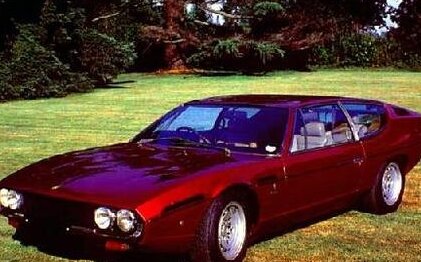
The Lamborghini Espada S3 3.9 V12, produced between 1972 and 1978, represents the final evolution of the Espada model line. Positioned as Lamborghini’s flagship grand tourer during this period, the S3 offered a blend of striking Bertone design, a powerful V12 engine, and a luxurious interior intended for high-speed, long-distance travel. The Espada, meaning “sword” in Spanish, was designed to be a four-seat counterpart to the Lamborghini Miura, offering a more practical, yet still exceptionally stylish, alternative. The S3 variant, with its increased displacement and refined features, aimed to solidify the Espada’s position in the high-end GT market.
Technical Specifications
| Brand | Lamborghini |
| Model | Espada |
| Generation | Espada |
| Type (Engine) | S3 3.9 V12 (350 Hp) |
| Start of production | 1972 |
| End of production | 1978 |
| Powertrain Architecture | Internal Combustion engine |
| Body type | Coupe |
| Seats | 4 |
| Doors | 2 |
| Fuel consumption (combined) | 16-18 l/100 km (14.7 – 13.1 US mpg, 17.7 – 15.7 UK mpg, 6.3 – 5.6 km/l) |
| Fuel Type | Petrol (Gasoline) |
| Maximum speed | 250 km/h (155.34 mph) |
| Weight-to-power ratio | 4.7 kg/Hp, 214.1 Hp/tonne |
| Weight-to-torque ratio | 4.2 kg/Nm, 240.4 Nm/tonne |
| Power | 350 Hp @ 7500 rpm |
| Power per litre | 89.1 Hp/l |
| Torque | 393 Nm @ 5500 rpm (289.86 lb.-ft. @ 5500 rpm) |
| Maximum engine speed | 7900 rpm |
| Engine layout | Front, Longitudinal |
| Engine Model/Code | L 403 |
| Engine displacement | 3929 cm3 (239.76 cu. in.) |
| Number of cylinders | 12 |
| Engine configuration | V-engine |
| Cylinder Bore | 82 mm (3.23 in.) |
| Piston Stroke | 62 mm (2.44 in.) |
| Compression ratio | 10.7:1 |
| Number of valves per cylinder | 2 |
| Fuel injection system | Carburettor |
| Engine aspiration | Naturally aspirated engine |
| Valvetrain | DOHC |
| Coolant | 14 l (14.79 US qt | 12.32 UK qt) |
| Kerb Weight | 1635 kg (3604.56 lbs.) |
| Trunk (boot) space – minimum | 330 l (11.65 cu. ft.) |
| Fuel tank capacity | 93 l (24.57 US gal | 20.46 UK gal) |
| Length | 4738 mm (186.54 in.) |
| Width | 1860 mm (73.23 in.) |
| Height | 1185 mm (46.65 in.) |
| Wheelbase | 2650 mm (104.33 in.) |
| Minimum turning circle (turning diameter) | 12 m (39.37 ft.) |
| Drivetrain Architecture | The Internal combustion engine (ICE) drives the rear wheels of the vehicle. |
| Drive wheel | Rear wheel drive |
| Number of gears and type of gearbox | 5 gears, manual transmission |
| Front suspension | Coil spring, Double wishbone, Transverse stabilizer |
| Rear suspension | Double wishbone, Transverse stabilizer, Coil spring |
| Front brakes | Ventilated discs, 300×32 mm |
| Rear brakes | Ventilated discs, 280×22 mm |
| Steering type | Worm-reduction unit |
| Power steering | Hydraulic Steering |
| Tires size | 215/70 R15 |
| Wheel rims size | 7J x 15 |
Powertrain & Engine Architecture
The heart of the Espada S3 is the Lamborghini L403 engine, a 3.9-liter naturally aspirated V12. This engine represents an increase in displacement over the earlier 3.5-liter versions, contributing to the S3’s increased power output of 350 horsepower at 7500 rpm and 393 Nm (289.86 lb-ft) of torque at 5500 rpm. The engine utilizes a 60-degree V configuration, providing a balance of smoothness and compactness. It employs dual overhead camshafts (DOHC) operating two valves per cylinder. Notably, the S3 retained the use of three Weber 46 IDA3C1 carburetors for fuel delivery, a somewhat archaic system for the era but one that Lamborghini continued to employ for its characteristic engine sound and response. The engine is longitudinally mounted in the front of the vehicle, driving the rear wheels. The S3 was exclusively offered with a five-speed manual transmission, providing drivers with full control over the V12’s power.
Driving Characteristics
The Espada S3 delivers a driving experience that is both exhilarating and demanding. The 3.9-liter V12 provides strong acceleration, capable of propelling the relatively heavy car (1635 kg or 3604.56 lbs) to a top speed of 250 km/h (155.34 mph). The five-speed manual transmission allows for precise gear selection, although the long shifter throw requires deliberate movements. The car’s weight and relatively soft suspension setup contribute to a comfortable ride, but also result in noticeable body roll during cornering. Compared to earlier Espada models, the S3’s increased power and torque provide a more responsive and engaging driving experience. However, it lacks the razor-sharp handling of more modern sports cars.
Equipment & Trim Levels
The Espada S3 was a luxury grand tourer, and as such, came equipped with a number of features designed to enhance comfort and convenience. Standard equipment included leather upholstery, power windows, and a wood-trimmed dashboard. Air conditioning was also a common feature. The interior design was characterized by its spaciousness and elegant styling. Optional extras included a sunroof, upgraded audio systems, and custom leather trim. The S3 did not offer a wide range of trim levels; customization was primarily achieved through the selection of optional equipment and individual color choices.
Chassis & Braking
The Espada S3 utilizes a steel monocoque chassis, providing a solid and rigid platform. The suspension system consists of independent double wishbones with coil springs and transverse stabilizers at both the front and rear. This setup provides a reasonable balance between ride comfort and handling. The braking system features ventilated disc brakes on all four wheels, providing adequate stopping power for the car’s weight and performance. The front brakes measure 300×32 mm, while the rear brakes are 280×22 mm. Power steering was standard, making the car relatively easy to maneuver at low speeds.
Market Reception & Comparison
The Lamborghini Espada S3 was generally well-received by automotive critics, who praised its stunning design, powerful engine, and luxurious interior. However, some critics noted the car’s high price and relatively complex maintenance requirements. Compared to other grand tourers of the era, such as the Ferrari Daytona, the Espada offered a more practical and spacious interior, making it a more suitable choice for long-distance travel. However, the Ferrari typically offered superior performance and handling. Fuel economy was predictably poor, averaging between 14.7 and 13.1 US mpg. The Espada S3 was positioned as a more accessible alternative to the Miura, appealing to buyers who desired a luxurious and high-performance grand tourer but did not require the ultimate in sporting prowess.
Legacy
The Lamborghini Espada S3 represents a significant chapter in Lamborghini’s history. It was the final iteration of a model that helped establish Lamborghini as a major player in the high-end automotive market. Today, the Espada S3 is a highly sought-after classic car, prized for its unique design, powerful engine, and rarity. The L403 V12 engine is known for its durability and reliability, although maintenance can be expensive due to the engine’s complexity and the scarcity of parts. Well-maintained examples of the Espada S3 command high prices in the collector car market, reflecting their status as a desirable and iconic Italian grand tourer.
