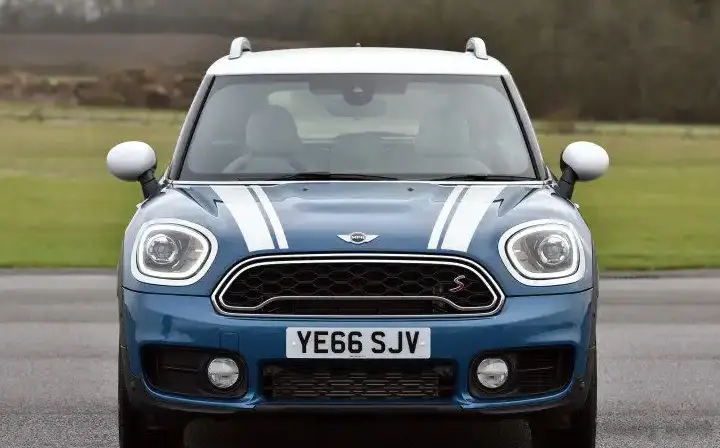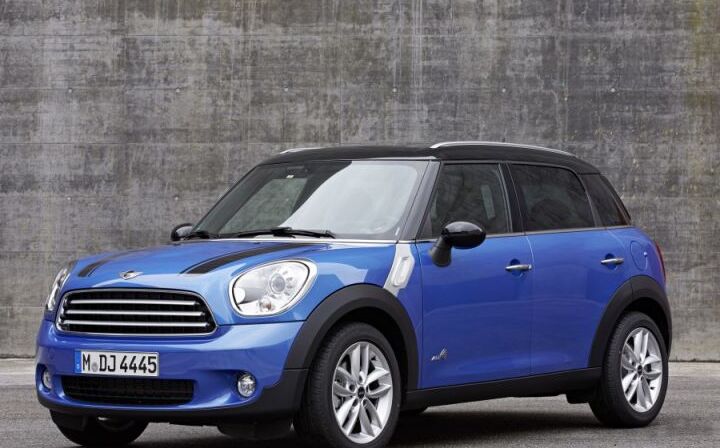
The Mini Countryman Cooper 1.6 (122 hp) represents an important entry point into the first generation (R60) of Mini’s larger, more practical crossover vehicle. Introduced in 2010 and continuing through the 2014 model year, this variant aimed to broaden the Mini brand’s appeal beyond its traditionally small-car focus. Positioned as the base model within the Countryman lineup, it offered a more affordable option compared to the Cooper S and John Cooper Works (JCW) variants, targeting buyers seeking a stylish and fuel-efficient vehicle with a premium feel. The R60 Countryman, built upon the BMW-derived 1HX0/A3 platform, was Mini’s first four or five-door model, and the 1.6-liter Cooper version played a significant role in establishing the model’s initial market presence.
Technical Specifications
| Brand | Mini |
| Model | Countryman |
| Generation | Countryman (R60) |
| Type (Engine) | Cooper 1.6 (122 Hp) |
| Start of production | 2010 |
| End of production | 2014 |
| Powertrain Architecture | Internal Combustion engine |
| Body type | SUV |
| Seats | 4-5 |
| Doors | 5 |
| Fuel consumption (urban) | 7.4 l/100 km (31.8 US mpg) |
| Fuel consumption (extra urban) | 5.2 l/100 km (45.2 US mpg) |
| Fuel consumption (combined) | 6 l/100 km (39.2 US mpg) |
| CO2 emissions | 140 g/km |
| Fuel Type | Petrol (Gasoline) |
| Acceleration 0 – 100 km/h | 10.5 sec |
| Acceleration 0 – 62 mph | 10.5 sec |
| Acceleration 0 – 60 mph | 10 sec |
| Maximum speed | 190 km/h (118.06 mph) |
| Emission standard | Euro 5 |
| Weight-to-power ratio | 10.4 kg/Hp |
| Weight-to-torque ratio | 7.9 kg/Nm |
| Power | 122 Hp @ 6000 rpm |
| Torque | 160 Nm @ 4250 rpm (118.01 lb.-ft. @ 4250 rpm) |
| Engine layout | Front, Transverse |
| Engine Model/Code | N16B16A |
| Engine displacement | 1598 cm3 (97.52 cu. in.) |
| Number of cylinders | 4 |
| Engine configuration | Inline |
| Cylinder Bore | 77 mm (3.03 in.) |
| Piston Stroke | 85.8 mm (3.38 in.) |
| Compression ratio | 11:1 |
| Number of valves per cylinder | 4 |
| Fuel injection system | Multi-port manifold injection |
| Engine aspiration | Naturally aspirated engine |
| Engine oil capacity | 4.2 l (4.44 US qt | 3.7 UK qt) |
| Coolant | 5.5 l (5.81 US qt | 4.84 UK qt) |
| Kerb Weight | 1265 kg (2788.85 lbs.) |
| Max. weight | 1735 kg (3825.02 lbs.) |
| Max load | 470 kg (1036.17 lbs.) |
| Trunk (boot) space – minimum | 350 l (12.36 cu. ft.) |
| Trunk (boot) space – maximum | 1170 l (41.32 cu. ft.) |
| Fuel tank capacity | 47 l (12.42 US gal | 10.34 UK gal) |
| Max. roof load | 75 kg (165.35 lbs.) |
| Length | 4097 mm (161.3 in.) |
| Width | 1789 mm (70.43 in.) |
| Height | 1561 mm (61.46 in.) |
| Wheelbase | 2595 mm (102.17 in.) |
| Front track | 1534 mm (60.39 in.) |
| Rear (Back) track | 1559 mm (61.38 in.) |
| Ride height (ground clearance) | 149 mm (5.87 in.) |
| Minimum turning circle | 11.6 m (38.06 ft.) |
| Drivetrain Architecture | Front wheel drive |
| Number of gears | 6 gears, manual transmission |
| Front suspension | Independent, type McPherson with coil spring and anti-roll bar |
| Rear suspension | Independent multi-link suspension |
| Front brakes | Ventilated discs |
| Rear brakes | Disc |
| Assisting systems | ABS (Anti-lock braking system) |
| Steering type | Steering rack and pinion |
| Tires size | 205/60 R16 92H |
| Wheel rims size | 6.5J x 16 LM |
Powertrain & Engine Architecture
The heart of the Countryman Cooper 1.6 is the N16B16A engine, a 1.6-liter naturally aspirated inline-four cylinder gasoline engine. This engine, part of BMW’s N-series family, utilizes a multi-port fuel injection system and a single overhead camshaft (SOHC) valvetrain with four valves per cylinder. The engine’s design prioritizes fuel efficiency and smooth operation over outright performance. The 122 horsepower output is achieved at 6000 rpm, while peak torque of 160 Nm (118 lb-ft) arrives at 4250 rpm. The engine’s relatively modest power output is paired with either a six-speed manual transmission or, as in many examples, a six-speed automatic transmission. The automatic transmission, while offering convenience, was tuned for economy rather than sporty shifts. It features a torque converter and a relatively conservative shift program.
Driving Characteristics
The 1.6-liter Cooper Automatic Countryman delivers a comfortable, if not particularly exhilarating, driving experience. Acceleration from 0-60 mph takes around 10 seconds, making it adequate for everyday driving but noticeably slower than the Cooper S models. The automatic transmission contributes to a smooth ride, but can feel somewhat hesitant during quick acceleration or when attempting to overtake. The gear ratios are optimized for fuel economy, meaning the engine often operates at lower rpm, which can sometimes result in a lack of responsiveness. Compared to the manual transmission version, the automatic sacrifices some driver engagement and performance. The front-wheel-drive configuration provides predictable handling, but lacks the all-weather capability of the optional ALL4 all-wheel-drive system.
Equipment & Trim Levels
The base Countryman Cooper 1.6 typically came standard with features such as air conditioning, power windows and locks, a basic audio system, and alloy wheels. Interior upholstery was typically cloth, with options for leatherette or full leather available. Common optional extras included a panoramic sunroof, navigation system, upgraded audio, parking sensors, and heated seats. Trim levels were relatively simple, with the primary differentiation being the addition of option packages. The Countryman’s interior design echoed the classic Mini aesthetic, with a large central speedometer and toggle switches, but adapted for a more spacious and practical environment.
Chassis & Braking
The Countryman Cooper 1.6 utilizes an independent suspension setup, with McPherson struts at the front and a multi-link system at the rear. This configuration provides a good balance between ride comfort and handling. The front brakes are ventilated discs, while the rear brakes are solid discs. Anti-lock Braking System (ABS) is standard. The suspension tuning is geared towards comfort, resulting in a relatively soft ride. Stabilizer bars are fitted front and rear to reduce body roll during cornering, but the car’s higher center of gravity and weight compared to a standard Mini Cooper are noticeable.
Market Reception & Comparison
The Countryman Cooper 1.6 was generally well-received as an accessible entry point into the Countryman range. Critics praised its stylish design, comfortable ride, and relatively good fuel economy (around 39.2 US mpg combined). However, the engine’s lack of power was a common criticism, particularly when compared to the more potent Cooper S models. The 1.6-liter engine offered better fuel economy than the turbocharged Cooper S, but at the cost of performance. Reliability was generally good, although some owners reported minor issues with the cooling system and electrical components. The automatic transmission, while smooth, was not considered as refined or responsive as those found in some competing vehicles.
Legacy
The Countryman Cooper 1.6, while not the most powerful or dynamic version of the R60, remains a popular choice in the used car market. Its affordability, fuel efficiency, and relatively simple mechanicals make it an attractive option for buyers seeking a practical and stylish crossover. The N16B16A engine is generally considered reliable, although regular maintenance is essential. Parts availability is good, and the car’s widespread popularity means that qualified mechanics are readily available. The Cooper 1.6 played a crucial role in establishing the Countryman as a successful model for Mini, demonstrating the brand’s ability to expand beyond its traditional niche.