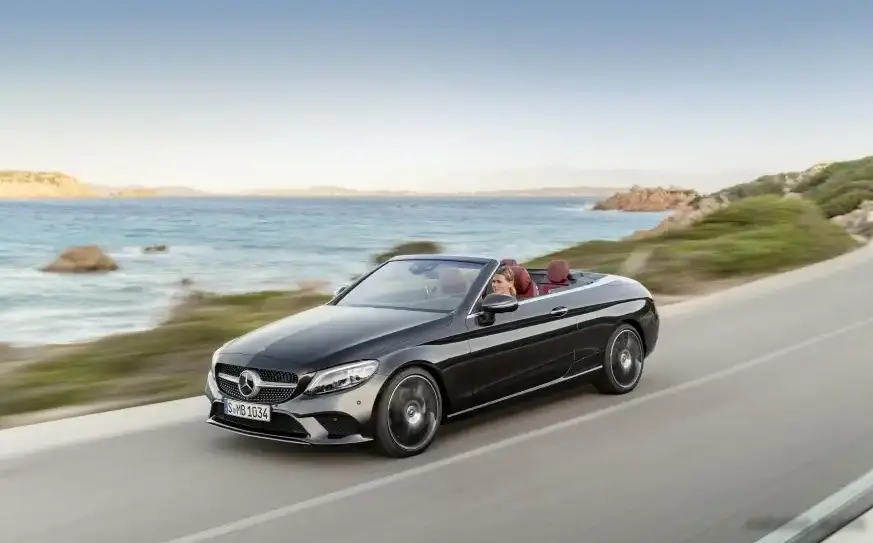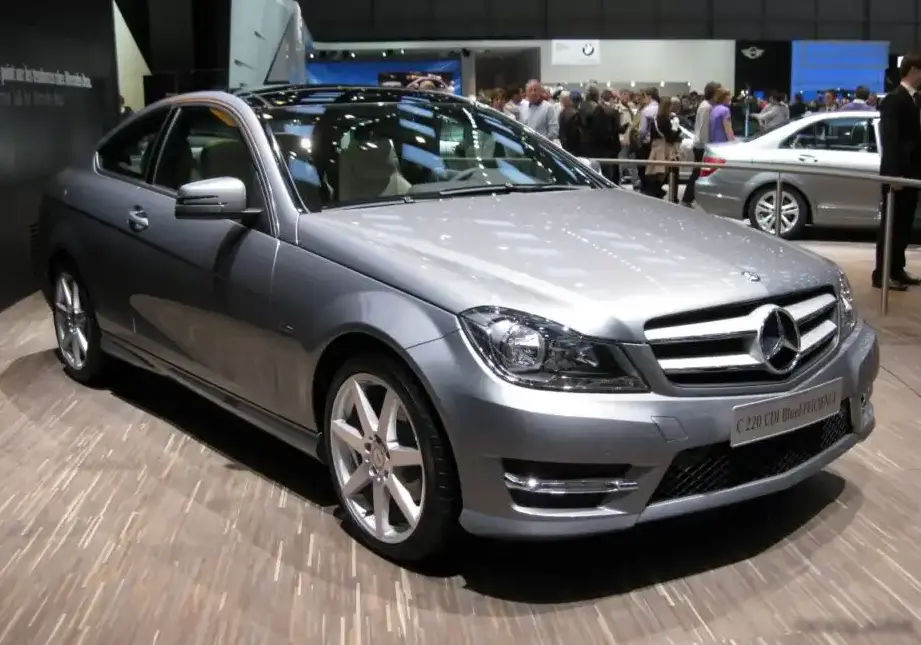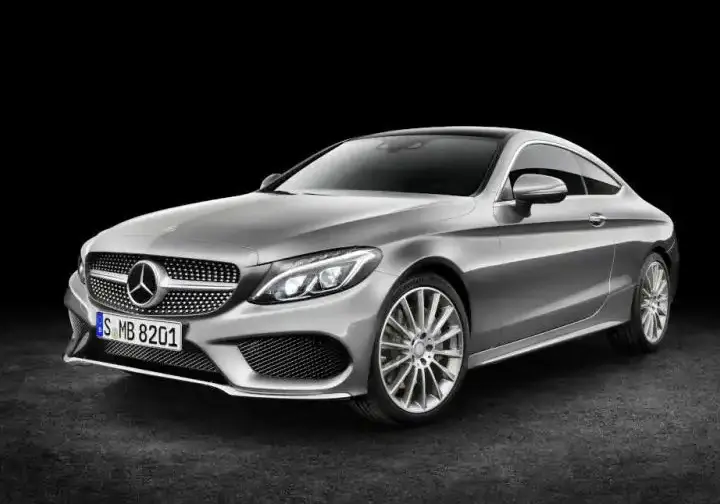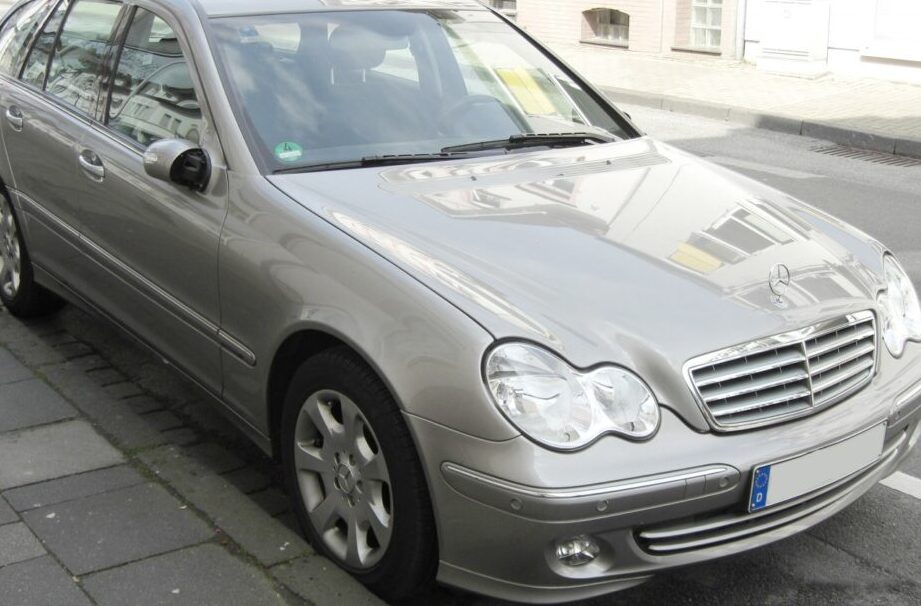
The Mercedes-Benz C-Class T-modell C 350 V6, produced from June 2005 to May 2007, represents a performance-oriented variant within the S203 facelifted generation of the C-Class estate (wagon). Positioned as a premium offering, it combined the practicality of the T-modell body style with a powerful naturally aspirated V6 engine. This model aimed to deliver a blend of luxury, space, and spirited driving dynamics, appealing to buyers seeking a more engaging experience than the four-cylinder options available. It was part of the broader W203 series, which spanned from 2000 to 2007, undergoing a significant facelift in 2004 that included revised styling and updated technology.
| Brand | Mercedes-Benz |
| Model | C-Class |
| Generation | C-Class T-modell (S203, facelift 2004) |
| Type (Engine) | C 350 V6 (272 Hp) |
| Start of production | June, 2005 |
| End of production | May, 2007 |
| Powertrain Architecture | Internal Combustion engine |
| Body type | Station wagon (estate) |
| Seats | 5 |
| Doors | 5 |
| Fuel consumption (urban) | 14-14.3 l/100 km (16.8 – 16.4 US mpg) |
| Fuel consumption (extra urban) | 7.4-7.7 l/100 km (31.8 – 30.5 US mpg) |
| Fuel consumption (combined) | 9.8-10.1 l/100 km (24 – 23.3 US mpg) |
| CO2 emissions | 234-241 g/km |
| Fuel Type | Petrol (Gasoline) |
| Acceleration 0 – 100 km/h | 6.5 sec |
| Acceleration 0 – 62 mph | 6.5 sec |
| Acceleration 0 – 60 mph | 6.2 sec |
| Maximum speed | 250 km/h (155.34 mph) – Electronically limited |
| Emission standard | Euro 4 |
| Weight-to-power ratio | 5.6 kg/Hp |
| Weight-to-torque ratio | 4.4 kg/Nm |
| Power | 272 Hp @ 6000 rpm |
| Torque | 350 Nm @ 2400-5000 rpm (258.15 lb.-ft. @ 2400-5000 rpm) |
| Engine layout | Front, Longitudinal |
| Engine Model/Code | M 272.960 |
| Engine displacement | 3498 cm3 (213.46 cu. in.) |
| Number of cylinders | 6 |
| Engine configuration | V-engine |
| Cylinder Bore | 92.9 mm (3.66 in.) |
| Piston Stroke | 86 mm (3.39 in.) |
| Compression ratio | 10.7:1 |
| Number of valves per cylinder | 4 |
| Fuel injection system | Multi-port manifold injection |
| Engine aspiration | Naturally aspirated |
| Valvetrain | DOHC |
| Engine oil capacity | 8 l (8.45 US qt | 7.04 UK qt) |
| Coolant capacity | 10 l (10.57 US qt | 8.8 UK qt) |
| Kerb Weight | 1525 kg (3362.05 lbs.) |
| Max. weight | 2125 kg (4684.82 lbs.) |
| Max load | 600 kg (1322.77 lbs.) |
| Trunk (boot) space – minimum | 470 l (16.6 cu. ft.) |
| Trunk (boot) space – maximum | 1384 l (48.88 cu. ft.) |
| Fuel tank capacity | 62 l (16.38 US gal | 13.64 UK gal) |
| Max. roof load | 100 kg (220.46 lbs.) |
| Permitted trailer load (braked) | 1800 kg (3968.32 lbs.) |
| Permitted trailer load (unbraked) | 750 kg (1653.47 lbs.) |
| Length | 4541 mm (178.78 in.) |
| Width | 1728 mm (68.03 in.) |
| Width including mirrors | 1980 mm (77.95 in.) |
| Height | 1470 mm (57.87 in.) |
| Wheelbase | 2715 mm (106.89 in.) |
| Front track | 1493 mm (58.78 in.) |
| Rear track | 1464 mm (57.64 in.) |
| Front overhang | 755 mm (29.72 in.) |
| Rear overhang | 1071 mm (42.17 in.) |
| Drag coefficient (Cd) | 0.31 |
| Minimum turning circle | 10.76 m (35.3 ft.) |
| Drivetrain | Rear wheel drive |
| Number of gears | 6 |
| Gearbox type | Manual transmission |
| Front suspension | Independent type McPherson, Transverse stabilizer |
| Rear suspension | Independent multi-link suspension, Transverse stabilizer |
| Front brakes | Ventilated discs |
| Rear brakes | Disc |
| Assisting systems | ABS (Anti-lock braking system) |
| Steering type | Steering rack and pinion |
| Power steering | Hydraulic |
| Tires size | 225/45 R 17 |
| Wheel rims size | 7.5 J x 17 H 2 |
Powertrain & Engine Architecture
The C 350 V6 was powered by the M272.960 engine, a 3.5-liter naturally aspirated V6. This engine was a significant departure from the smaller, turbocharged engines becoming increasingly common at the time, offering a smooth and linear power delivery. The M272 featured all-aluminum construction, contributing to its relatively lightweight design. It utilized a three-valve per cylinder (two intake, one exhaust) DOHC valvetrain and a multi-port fuel injection system. The engine produced 272 horsepower at 6000 rpm and 350 Nm (258 lb-ft) of torque between 2400 and 5000 rpm. The six-speed manual transmission was standard, providing precise gear changes and enhancing the driving experience. While an automatic transmission was available in other C-Class models, the C 350 V6 was exclusively offered with the manual gearbox in many markets, emphasizing its sporty character.
Driving Characteristics
The C 350 V6 with the six-speed manual transmission offered a noticeably more engaging driving experience compared to the lower-powered C-Class variants. Acceleration to 60 mph was achieved in approximately 6.2 seconds, and the car had an electronically limited top speed of 155 mph. The engine’s torque curve provided strong pull throughout the rev range, making it easy to accelerate in everyday driving situations. The manual gearbox allowed for precise control over the engine’s power, and the gear ratios were well-matched to the engine’s characteristics. Compared to the supercharged C 32 AMG, the C 350 V6 offered a more refined and less aggressive driving experience, while still providing ample performance. The handling was balanced and predictable, thanks to the well-tuned suspension and rear-wheel-drive layout.
Equipment & Trim Levels
The C 350 V6 typically came well-equipped, reflecting its position as a premium model. Standard features often included leather upholstery, automatic climate control, a multi-function steering wheel, and a high-end audio system. Optional extras included a sunroof, navigation system, and upgraded wheels. The interior design was typical of Mercedes-Benz at the time, with a focus on luxury and comfort. The dashboard layout was functional and well-organized, with easy-to-read gauges and intuitive controls. Specific trim packages could add wood or aluminum trim to the interior, further enhancing the luxurious feel.
Chassis & Braking
The C 350 V6 utilized an independent suspension system at all four corners, with McPherson struts at the front and a multi-link setup at the rear. This suspension design provided a good balance between ride comfort and handling performance. Stabilizer bars were fitted to both axles to reduce body roll during cornering. The braking system consisted of ventilated discs at the front and solid discs at the rear, providing ample stopping power. ABS (Anti-lock Braking System) was standard, enhancing safety and control in emergency braking situations. The steering was a rack-and-pinion system with hydraulic power assistance, offering precise and responsive steering feel.
Market Reception & Comparison
The C 350 V6 was generally well-received by automotive critics, who praised its powerful engine, engaging driving dynamics, and luxurious interior. However, some reviewers noted that the fuel economy was relatively poor compared to the four-cylinder models. Compared to the C 230 Kompressor, the C 350 V6 offered significantly more performance, but at a higher price point. The C 350 V6 also provided a more refined and less aggressive alternative to the C 32 AMG, appealing to buyers who wanted a sporty but comfortable driving experience. Reliability was generally good, although the complex engine and electrical systems could require more maintenance than the simpler four-cylinder models.
Legacy
The M272 engine family, including the 3.5-liter variant found in the C 350 V6, proved to be a reliable and durable powerplant when properly maintained. Today, the S203 C-Class T-modell C 350 V6 is considered a desirable classic by many Mercedes-Benz enthusiasts. Well-maintained examples command a premium in the used car market. While fuel economy is a concern by modern standards, the car’s performance, practicality, and luxurious features continue to appeal to buyers seeking a unique and engaging driving experience. The C 350 V6 represents a high point in the S203 C-Class lineup, offering a compelling combination of performance, luxury, and practicality.