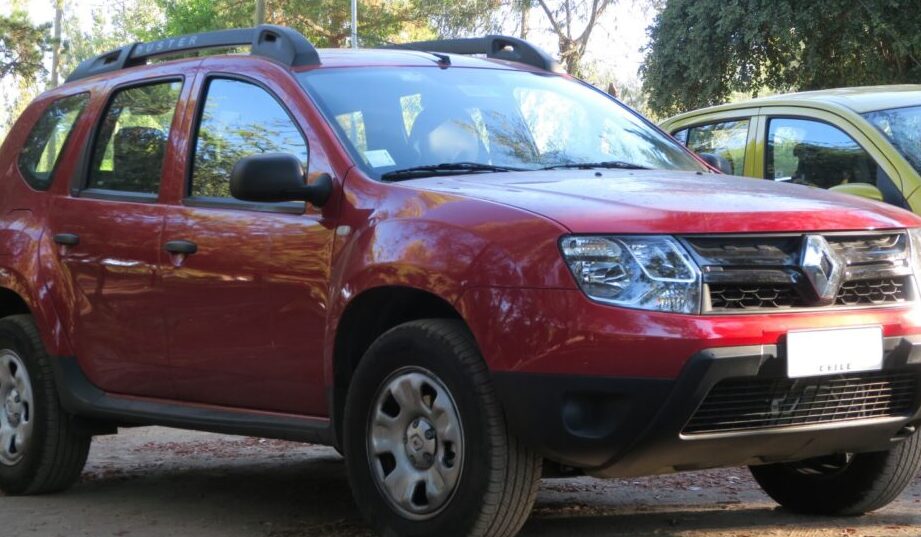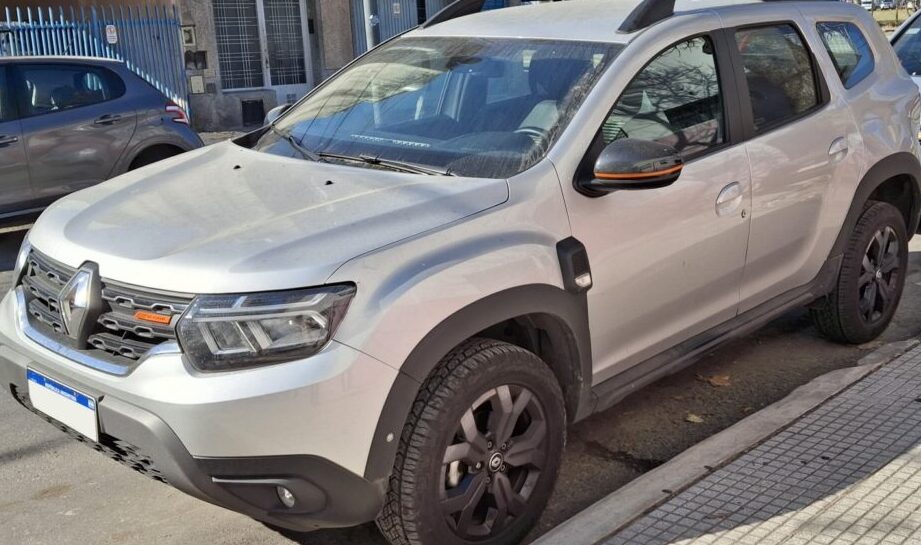
The Renault Duster II (facelift 2024) 1.6 SCe, producing 115 horsepower, represents an entry-level offering within the updated second-generation Duster lineup. Introduced in January 2024, this variant is primarily targeted at markets where affordability and practicality are key considerations. The Duster II, a compact sport utility vehicle (SUV), builds upon the success of the original Duster, offering increased refinement and updated technology while retaining the rugged character that made the first generation popular. This specific 1.6 SCe engine and five-speed manual transmission combination positions itself as a value-oriented choice, appealing to buyers seeking a spacious and capable SUV without the higher price tag of more powerful or feature-rich trims.
Technical Specifications
| Brand | Renault |
| Model | Duster |
| Generation | Duster II (facelift 2024) |
| Type (Engine) | 1.6 SCe (115 Hp) |
| Start of production | January, 2024 |
| Powertrain Architecture | Internal Combustion engine |
| Body type | SUV |
| Seats | 5 |
| Doors | 5 |
| Fuel Type | Petrol (Gasoline) |
| Weight-to-power ratio | 10.9 kg/Hp, 91.6 Hp/tonne |
| Weight-to-torque ratio | 8.1 kg/Nm, 124.2 Nm/tonne |
| Power | 115 Hp @ 5500 rpm |
| Power per litre | 72 Hp/l |
| Torque | 156 Nm @ 4250 rpm, 115.06 lb.-ft. @ 4250 rpm |
| Engine layout | Front, Transverse |
| Engine Model/Code | H4M |
| Engine displacement | 1598 cm3, 97.52 cu. in. |
| Number of cylinders | 4 |
| Engine configuration | Inline |
| Cylinder Bore | 78 mm, 3.07 in. |
| Piston Stroke | 83.6 mm, 3.29 in. |
| Compression ratio | 9.8:1 |
| Number of valves per cylinder | 4 |
| Fuel injection system | Multi-port manifold injection |
| Engine aspiration | Naturally aspirated engine |
| Valvetrain | DOHC |
| Engine oil capacity | 4.2 l, 4.44 US qt | 3.7 UK qt |
| Kerb Weight | 1256 kg, 2769.01 lbs |
| Max. weight | 1763 kg, 3886.75 lbs |
| Max load | 507 kg, 1117.74 lbs |
| Trunk (boot) space – minimum | 475 l, 16.77 cu. ft. |
| Trunk (boot) space – maximum | 1478 l, 52.2 cu. ft. |
| Fuel tank capacity | 50 l, 13.21 US gal | 11 UK gal |
| Max. roof load | 80 kg, 176.37 lbs |
| Length | 4376 mm, 172.28 in. |
| Width | 1832 mm, 72.13 in. |
| Height | 1693 mm, 66.65 in. |
| Wheelbase | 2673 mm, 105.24 in. |
| Front track | 1557 mm, 61.3 in. |
| Rear (Back) track | 1560 mm, 61.42 in. |
| Front overhang | 872 mm, 34.33 in. |
| Rear overhang | 831 mm, 32.72 in. |
| Ride height (ground clearance) | 237 mm, 9.33 in. |
| Approach angle | 30° |
| Departure angle | 34.5° |
| Drivetrain Architecture | The Internal combustion engine (ICE) drives the front wheels of the vehicle. |
| Drive wheel | Front wheel drive |
| Number of gears and type of gearbox | 5 gears, manual transmission |
| Front suspension | Independent, type McPherson with coil spring and anti-roll bar |
| Rear suspension | Semi-dependent beam with stabilizer lateral stability, Coil spring |
| Front brakes | Ventilated discs |
| Rear brakes | Drum |
| Assisting systems | ABS (Anti-lock braking system) |
| Steering type | Steering rack and pinion |
| Power steering | Electric Steering |
| Tires size | 215/65 R16 |
| Wheel rims size | 6.5J x 16 |
Powertrain & Engine Architecture
The Renault Duster II 1.6 SCe utilizes the H4M engine, a naturally aspirated 1.6-liter inline-four cylinder gasoline engine. This engine is a mainstay in Renault’s budget-focused offerings, known for its simplicity and relative reliability. The H4M features multi-point fuel injection and a double overhead camshaft (DOHC) valvetrain, contributing to reasonable efficiency and power output for its displacement. The engine produces 115 horsepower at 5500 rpm and 156 Nm (115.06 lb-ft) of torque at 4250 rpm. Paired with a five-speed manual transmission, the powertrain is designed for everyday usability rather than outright performance. The transmission is a conventional setup, prioritizing durability and ease of maintenance over advanced features. The engine incorporates a Start & Stop system to improve fuel economy in urban driving conditions.
Driving Characteristics
The 1.6 SCe-equipped Duster delivers adequate performance for typical driving scenarios. Acceleration is not brisk, but sufficient for merging onto highways and navigating city streets. The five-speed manual transmission allows drivers to maintain optimal engine speed for the conditions, though the gear ratios are spaced to prioritize fuel economy over spirited driving. Compared to higher-output versions of the Duster, such as those with more powerful engines, this variant feels noticeably less responsive. However, the lighter engine weight contributes to balanced handling and predictable cornering. The relatively long gearing helps to keep engine revs low at highway speeds, resulting in a quieter and more comfortable ride.
Equipment & Trim Levels
The 1.6 SCe trim typically serves as the entry point to the Duster II range. Standard equipment generally includes air conditioning, power steering, electric front windows, and a basic audio system with USB connectivity. Safety features such as ABS (Anti-lock Braking System) and driver/passenger airbags are also standard. Interior upholstery is typically cloth, and the dashboard features a functional, if somewhat basic, design. Optional extras often include alloy wheels, rear parking sensors, and an upgraded infotainment system with touchscreen display. The focus of this trim level is on providing essential features at an affordable price point.
Chassis & Braking
The Duster II utilizes a McPherson strut front suspension and a semi-independent beam rear suspension. This setup provides a good balance between ride comfort and handling capability. The front suspension incorporates a coil spring and anti-roll bar to reduce body roll during cornering. The rear suspension utilizes coil springs and a stabilizer bar for improved lateral stability. Braking duties are handled by ventilated discs at the front and drum brakes at the rear. While the drum brakes are cost-effective, they offer less stopping power and fade resistance compared to rear disc brakes found on higher trim levels. The electric power steering provides light and easy steering effort, making it well-suited for urban driving.
Market Reception & Comparison
The Renault Duster II 1.6 SCe has been well-received in markets where value for money is a primary concern. Critics have praised its spacious interior, rugged design, and affordable price. However, the engine’s modest power output has been a point of criticism, particularly when compared to more powerful engine options. In terms of fuel economy, the 1.6 SCe variant generally achieves respectable figures, making it an economical choice for daily commuting. Compared to diesel-powered Dusters, the 1.6 SCe offers lower maintenance costs but slightly higher fuel consumption. Its reliability is generally considered good, benefiting from the proven design of the H4M engine.
Legacy
The H4M engine, found in the Duster II 1.6 SCe, has a long-standing reputation for durability and ease of maintenance. While not known for its cutting-edge technology, its simplicity contributes to its longevity. In the used car market, Dusters equipped with this powertrain are generally considered a sensible and affordable option. The 1.6 SCe variant represents a practical choice for buyers seeking a reliable and spacious SUV without breaking the bank. Its continued presence in the Duster lineup demonstrates Renault’s commitment to offering accessible transportation options to a wide range of customers.