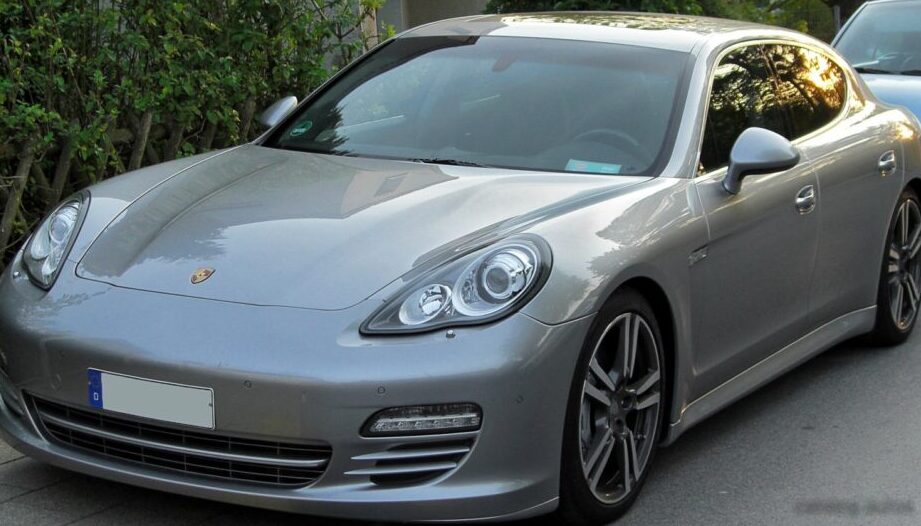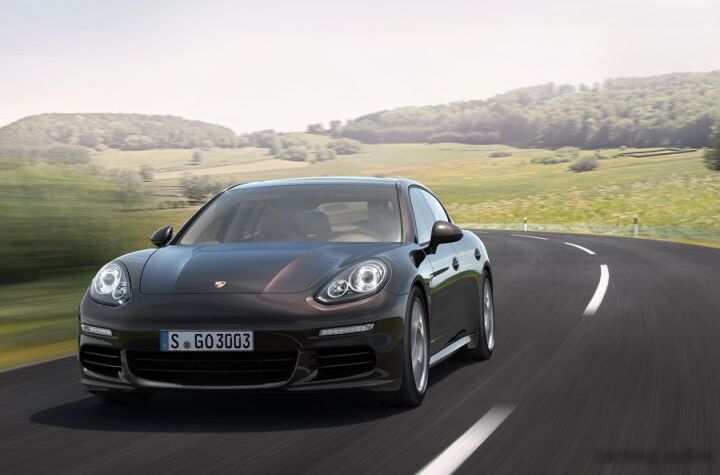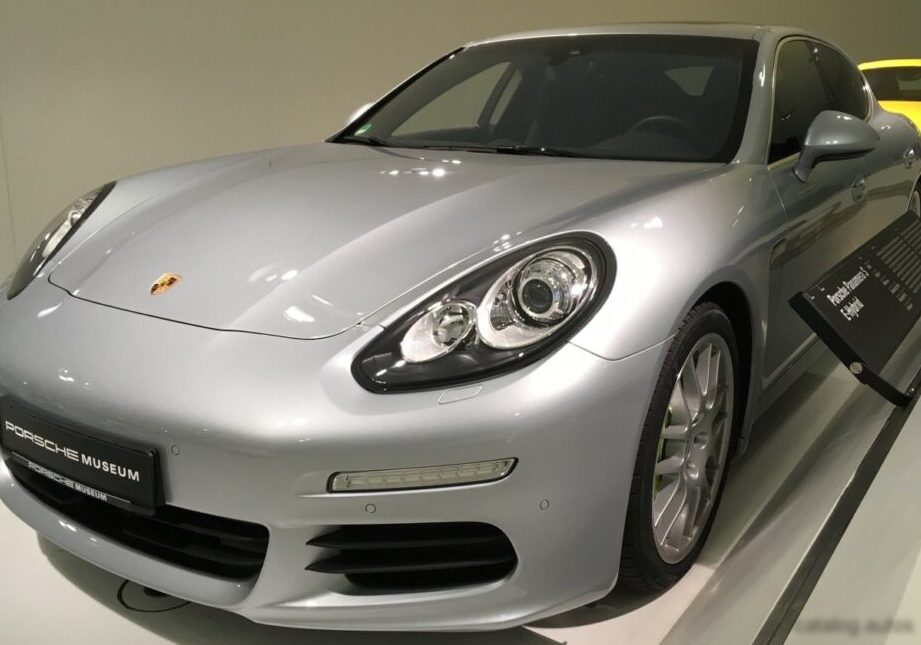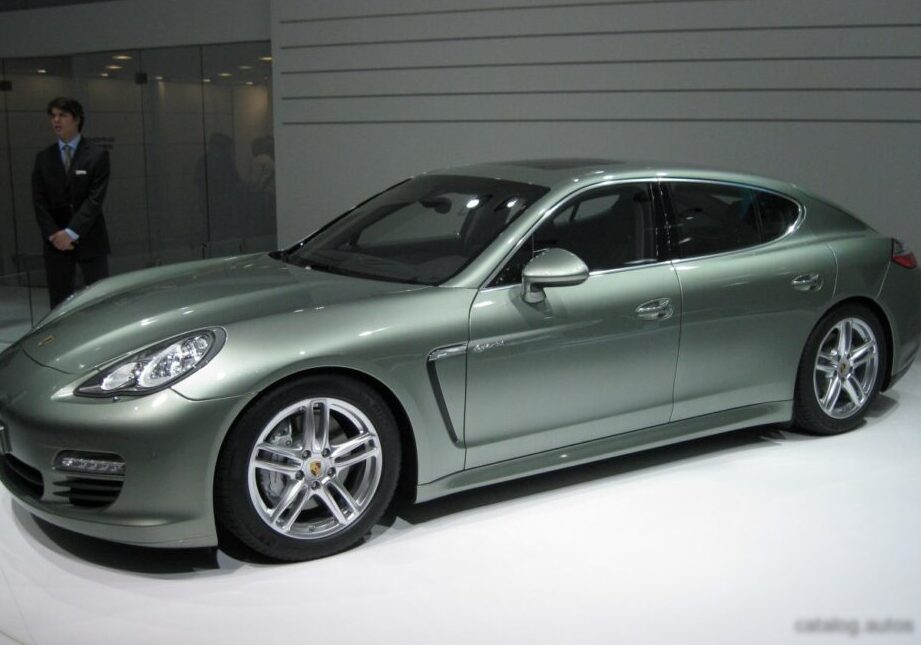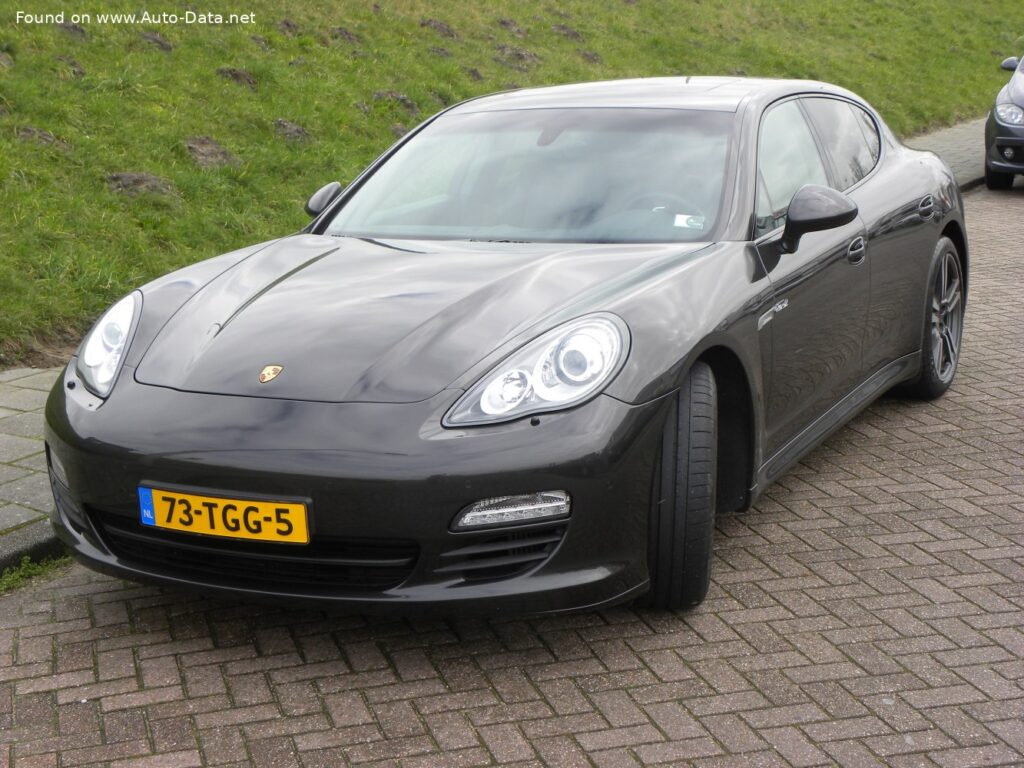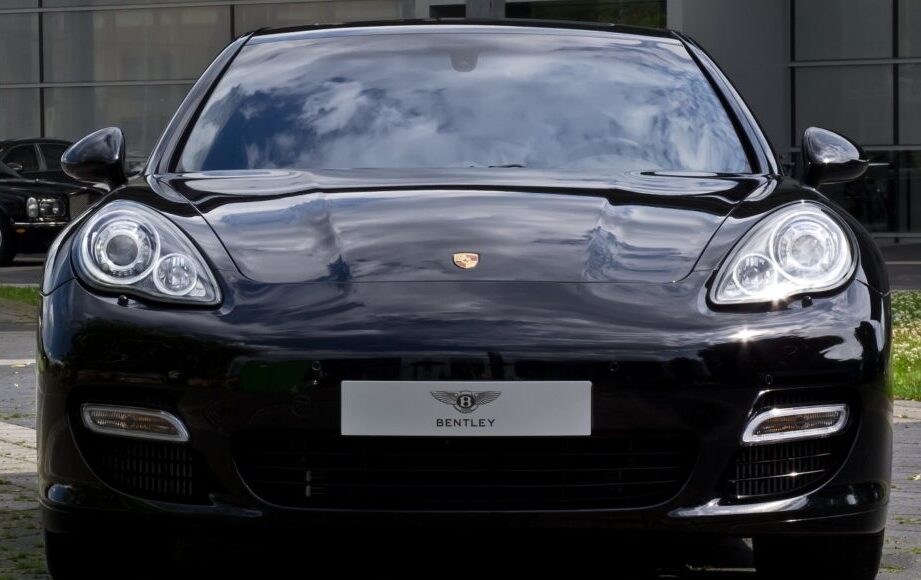
The Porsche Panamera Turbo, specifically the G1 generation produced between 2010 and 2013, represented Porsche’s ambitious entry into the luxury four-door grand touring segment. This variant, equipped with the 4.8-liter twin-turbocharged V8 engine producing 500 horsepower and paired with Porsche’s innovative PDK (Porsche Doppelkupplung) seven-speed dual-clutch transmission, was the flagship model of the initial Panamera lineup. It aimed to deliver the performance and driving experience expected of a Porsche, but within the more practical and spacious confines of a liftback body style. The G1 Panamera Turbo established the foundation for the Panamera’s continued success and cemented Porsche’s reputation for engineering excellence.
Technical Specifications
| Brand | Porsche |
| Model | Panamera |
| Generation | Panamera (G1) |
| Type (Engine) | Turbo 4.8 V8 (500 Hp) PDK |
| Start of production | 2010 |
| End of production | 2013 |
| Powertrain Architecture | Internal Combustion engine |
| Body type | Liftback |
| Seats | 4 |
| Doors | 5 |
| Fuel consumption (economy) – urban | 17 l/100 km (13.8 US mpg, 16.6 UK mpg, 5.9 km/l) |
| Fuel consumption (economy) – extra urban | 8.4 l/100 km (28 US mpg, 33.6 UK mpg, 11.9 km/l) |
| Fuel consumption (economy) – combined | 11.5 l/100 km (20.5 US mpg, 24.6 UK mpg, 8.7 km/l) |
| CO2 emissions | 270 g/km |
| Fuel Type | Petrol (Gasoline) |
| Acceleration 0 – 100 km/h | 4.2 sec |
| Acceleration 0 – 62 mph | 4.2 sec |
| Acceleration 0 – 60 mph | 4 sec |
| Maximum speed | 303 km/h (188.28 mph) |
| Emission standard | Euro 5 |
| Weight-to-power ratio | 3.9 kg/Hp, 253.8 Hp/tonne |
| Weight-to-torque ratio | 2.8 kg/Nm, 355.3 Nm/tonne |
| Power | 500 Hp @ 6000 rpm |
| Power per litre | 104 Hp/l |
| Torque | 700 Nm @ 2250-4500 rpm (516.29 lb.-ft. @ 2250-4500 rpm) |
| Engine layout | Front, Longitudinal |
| Engine Model/Code | 4870 |
| Engine displacement | 4806 cm3 (293.28 cu. in.) |
| Number of cylinders | 8 |
| Engine configuration | V-engine |
| Compression ratio | 10.5:1 |
| Number of valves per cylinder | 4 |
| Fuel injection system | Multi-port manifold injection |
| Engine aspiration | Twin-Turbo, Intercooler |
| Valvetrain | DOHC |
| Engine oil capacity | 9 l (9.51 US qt | 7.92 UK qt) |
| Kerb Weight | 1970 kg (4343.11 lbs.) |
| Max. weight | 2500 kg (5511.56 lbs.) |
| Max load | 530 kg (1168.45 lbs.) |
| Trunk (boot) space – minimum | 445 l (15.72 cu. ft.) |
| Trunk (boot) space – maximum | 1250 l (44.14 cu. ft.) |
| Fuel tank capacity | 100 l (26.42 US gal | 22 UK gal) |
| Length | 4970 mm (195.67 in.) |
| Width | 1913 mm (75.31 in.) |
| Width including mirrors | 2114 mm (83.23 in.) |
| Height | 1418 mm (55.83 in.) |
| Wheelbase | 2920 mm (114.96 in.) |
| Front track | 1656 mm (65.2 in.) |
| Rear (Back) track | 1646 mm (64.8 in.) |
| Drag coefficient (Cd) | 0.30 |
| Minimum turning circle | 12 m (39.37 ft.) |
| Drive wheel | All wheel drive (4×4) |
| Number of gears and type of gearbox | 7 gears, automatic transmission PDK |
| Front suspension | Double wishbone |
| Rear suspension | Independent multi-link suspension |
| Front brakes | Ventilated discs, 390 mm |
| Rear brakes | Ventilated discs, 350 mm |
| Assisting systems | ABS (Anti-lock braking system) |
| Steering type | Steering rack and pinion |
| Tires size | Front wheel tires: 255/45 ZR19 Rear wheel tires: 285/40 ZR19 |
| Wheel rims size | Front wheel rims: 9J x 19 ET60 Rear wheel rims: 10J x 19 ET61 |
Powertrain & Engine Architecture
At the heart of the Panamera Turbo lies the 4.8-liter twin-turbocharged V8 engine, internally designated as the 4870. This engine is a significant departure from Porsche’s traditional naturally aspirated flat-six designs, representing a move towards forced induction for increased power and torque. The engine utilizes a dry-sump lubrication system, a hallmark of Porsche engineering, ensuring consistent oil supply even under extreme cornering forces. Fuel is delivered via multi-port fuel injection, while the twin turbochargers, positioned within the V of the engine, provide significant boost, contributing to the engine’s impressive 500 horsepower and 700 Nm (516 lb-ft) of torque. The engine’s torque curve is remarkably flat, delivering substantial power across a wide RPM range, from 2250 to 4500 rpm.
The engine is mated to Porsche’s PDK, a seven-speed dual-clutch transmission. The PDK operates by utilizing two separate clutches – one for the odd-numbered gears and one for the even-numbered gears. This allows for incredibly fast and seamless gear changes, contributing to both acceleration performance and fuel efficiency. Drivers can choose to operate the PDK in fully automatic mode or manually shift gears using paddle shifters located behind the steering wheel.
Driving Characteristics
The Panamera Turbo delivers a driving experience that is both exhilarating and refined. The combination of the powerful V8 engine and the quick-shifting PDK results in blistering acceleration – 0 to 60 mph in around 4 seconds and a top speed of 188 mph. The all-wheel-drive system provides excellent traction, particularly in inclement weather. While the Panamera Turbo is a relatively large and heavy vehicle, Porsche’s engineering expertise ensures that it feels surprisingly agile and composed on the road. The suspension, featuring adaptive dampers, provides a comfortable ride without sacrificing handling precision. Compared to the base Panamera or the Panamera 4, the Turbo offers a significantly more potent driving experience. The higher-output Turbo S variant further elevates performance, but the standard Turbo provides a compelling balance of power, luxury, and practicality.
Equipment & Trim Levels
The Panamera Turbo came standard with a comprehensive list of features, befitting its flagship status. These included leather upholstery, heated and ventilated front seats, a premium audio system, a navigation system, and a panoramic sunroof. Optional extras were plentiful, allowing buyers to personalize their Panamera to their exact specifications. These options included adaptive cruise control, lane keep assist, rear-seat entertainment, and a variety of interior trim options. The interior design emphasized luxury and sophistication, with high-quality materials and meticulous attention to detail.
Chassis & Braking
The Panamera Turbo utilizes a sophisticated chassis design, featuring a double-wishbone front suspension and an independent multi-link rear suspension. This setup provides excellent ride quality and handling characteristics. The car is equipped with large, ventilated disc brakes on all four wheels, providing ample stopping power. The front brakes measure 390mm in diameter, while the rear brakes measure 350mm. An advanced ABS (Anti-lock Braking System) is standard, enhancing safety and control during emergency braking situations.
Market Reception & Comparison
The Panamera Turbo received generally positive reviews from automotive critics. It was praised for its performance, handling, and luxurious interior. However, some critics noted its relatively high price and complex infotainment system. Compared to other luxury sedans of the time, such as the BMW 7 Series and the Mercedes-Benz S-Class, the Panamera Turbo offered a more engaging driving experience, but at the expense of some traditional luxury features. Fuel economy, while respectable for a vehicle of its size and performance, was not a strong point, averaging around 20.5 mpg combined.
Legacy
The first-generation Panamera Turbo established the Panamera as a serious contender in the luxury grand touring segment. The 4.8-liter twin-turbo V8 and PDK transmission proved to be a reliable and durable powertrain combination. Today, well-maintained examples of the G1 Panamera Turbo are sought after by enthusiasts who appreciate its performance, luxury, and unique design. While maintenance costs can be higher than those of more mainstream vehicles, the Panamera Turbo remains a compelling option for those seeking a high-performance luxury sedan with a distinctive Porsche pedigree.