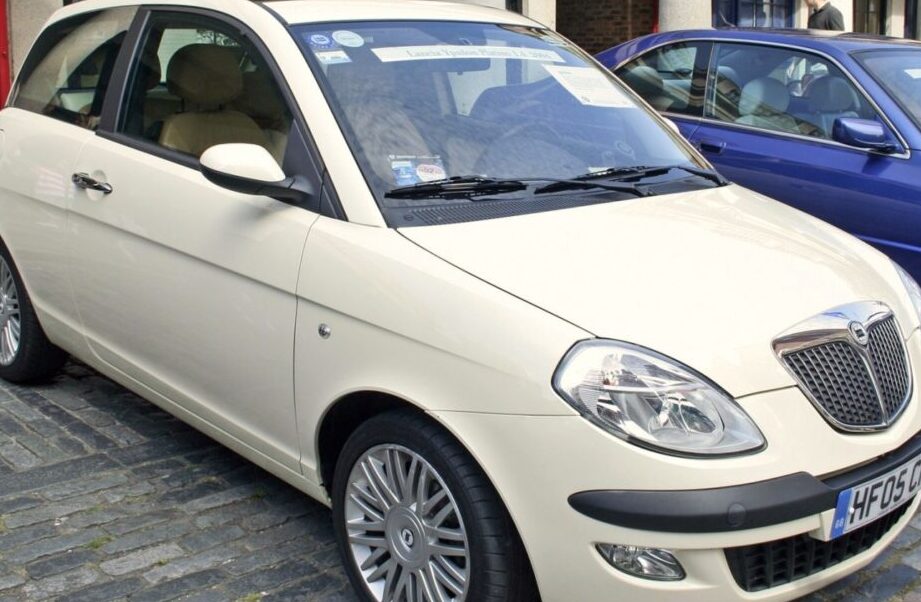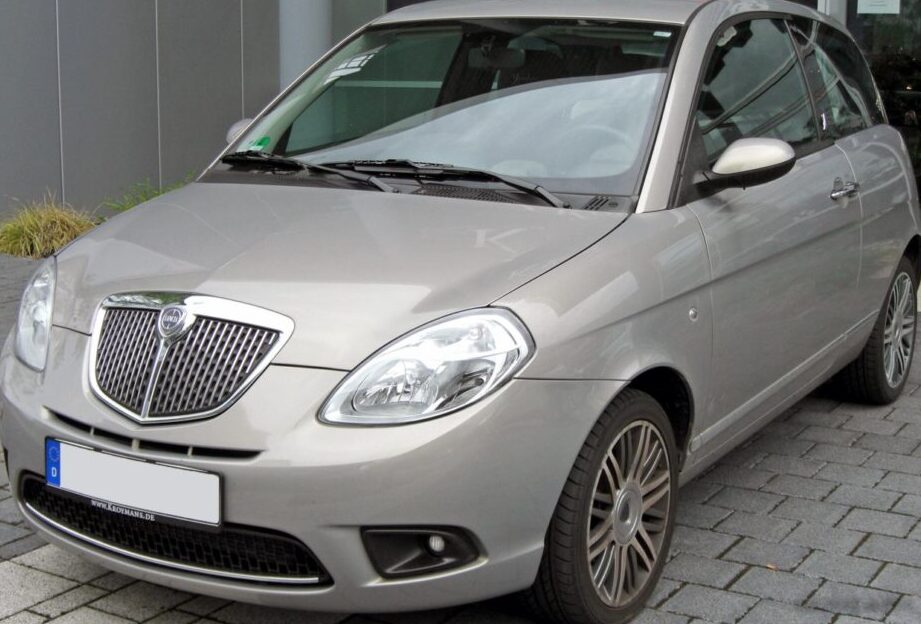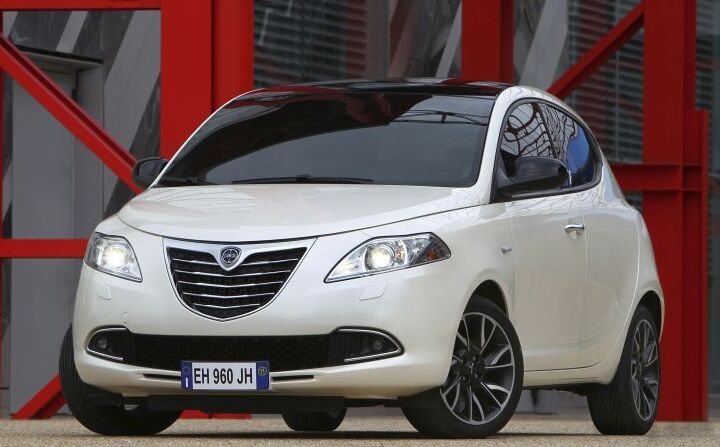
The Lancia Ypsilon (846) 1.2 (69 hp) Start&Stop, produced from 2011 to 2015, represented the entry point into the third generation of Lancia’s popular city car. Positioned within the Ypsilon range – which utilized the Fiat Group’s PF1 platform (internally known as 1HX0/A3) – this variant aimed to provide affordable and economical transportation, primarily targeting urban drivers. It was a key model for Lancia in the European market, particularly in Italy, where the Ypsilon enjoyed a strong following as a stylish and practical supermini. This specific engine and transmission combination was designed for fuel efficiency and ease of use, rather than outright performance.
Technical Specifications
| Brand | Lancia |
| Model | Ypsilon |
| Generation | Ypsilon (846) |
| Type (Engine) | 1.2 (69 Hp) start&stop |
| Start of production | 2011 year |
| End of production | 2015 year |
| Powertrain Architecture | Internal Combustion engine |
| Body type | Hatchback |
| Seats | 5 |
| Doors | 5 |
| Fuel consumption (urban) | 6.4 l/100 km (36.8 US mpg, 44.1 UK mpg, 15.6 km/l) |
| Fuel consumption (extra urban) | 4.3 l/100 km (54.7 US mpg, 65.7 UK mpg, 23.3 km/l) |
| Fuel consumption (combined) | 5.1 l/100 km (46.1 US mpg, 55.4 UK mpg, 19.6 km/l) |
| CO2 emissions | 118 g/km |
| Fuel Type | Petrol (Gasoline) |
| Acceleration 0 – 100 km/h | 14.5 sec |
| Acceleration 0 – 62 mph | 14.5 sec |
| Acceleration 0 – 60 mph | 13.8 sec |
| Maximum speed | 163 km/h (101.28 mph) |
| Emission standard | Euro 5 |
| Weight-to-power ratio | 14 kg/Hp, 71.5 Hp/tonne |
| Weight-to-torque ratio | 9.5 kg/Nm, 105.7 Nm/tonne |
| Power | 69 Hp @ 5500 rpm |
| Power per litre | 55.6 Hp/l |
| Torque | 102 Nm @ 3000 rpm (75.23 lb.-ft. @ 3000 rpm) |
| Engine layout | Front, Transverse |
| Engine Model/Code | 169 A4.000 |
| Engine displacement | 1242 cm3 (75.79 cu. in.) |
| Number of cylinders | 4 |
| Engine configuration | Inline |
| Compression ratio | 11.1:1 |
| Number of valves per cylinder | 2 |
| Fuel injection system | Multi-port manifold injection |
| Engine aspiration | Naturally aspirated engine |
| Valvetrain | DOHC |
| Engine oil capacity | 2.8 l (2.96 US qt | 2.46 UK qt) |
| Coolant capacity | 4.9 l (5.18 US qt | 4.31 UK qt) |
| Kerb Weight | 965 kg (2127.46 lbs.) |
| Trunk (boot) space – minimum | 245 l (8.65 cu. ft.) |
| Fuel tank capacity | 40 l (10.57 US gal | 8.8 UK gal) |
| Permitted trailer load with brakes (12%) | 750 kg (1653.47 lbs.) |
| Length | 3842 mm (151.26 in.) |
| Width | 1875 mm (73.82 in.) |
| Height | 1520 mm (59.84 in.) |
| Wheelbase | 2390 mm (94.09 in.) |
| Front track | 1414 mm (55.67 in.) |
| Rear track | 1408 mm (55.43 in.) |
| Minimum turning circle | 9.4 m (30.84 ft.) |
| Drivetrain Architecture | Front wheel drive |
| Number of gears and type of gearbox | 5 gears, manual transmission |
| Front suspension | Independent type McPherson |
| Rear suspension | Semi-independent, coil spring |
| Front brakes | Disc |
| Rear brakes | Drum |
| Assisting systems | ABS (Anti-lock braking system) |
| Steering type | Steering rack and pinion |
| Tires size | 185/55 R15 82 H |
| Wheel rims size | 15 |
Powertrain & Engine Architecture
The Ypsilon 1.2 (69 hp) utilized the Fiat 169 A4.000 engine, a 1.2-liter inline-four cylinder petrol engine. This engine was a mainstay in many Fiat Group vehicles, known for its simplicity and fuel efficiency. It featured a dual overhead camshaft (DOHC) valvetrain with two valves per cylinder. Fuel delivery was handled by a multi-point fuel injection system. The Start&Stop system, a key feature for reducing emissions and improving fuel economy, automatically shut off the engine when the vehicle came to a halt and restarted it upon releasing the brake pedal. The engine was transversely mounted at the front of the vehicle. The standard transmission was a five-speed manual gearbox, designed for smooth and economical operation. The engine’s relatively low output meant it wasn’t designed for spirited driving, but rather for maximizing fuel efficiency in urban environments.
Driving Characteristics
The 1.2-liter, 69 horsepower engine paired with the five-speed manual transmission delivered modest performance. Acceleration was leisurely, with a 0-60 mph time around 13.8 seconds. The engine felt strained at higher speeds, and overtaking required careful planning. The gear ratios were optimized for fuel economy, meaning the engine didn’t have a lot of power in reserve. Compared to other Ypsilon variants, such as the 1.4-liter models, this version felt significantly slower. However, the light clutch and easy steering made it a comfortable and forgiving car to drive in city traffic. The suspension, tuned for comfort, absorbed bumps reasonably well, although it wasn’t particularly sporty.
Equipment & Trim Levels
The 1.2 (69 hp) Start&Stop Ypsilon typically served as the entry-level trim. Standard equipment generally included air conditioning, power steering, central locking, and an audio system with USB connectivity. Safety features included ABS brakes and driver and passenger airbags. Interior upholstery was typically cloth, with a functional but basic dashboard layout. Optional extras included alloy wheels, a panoramic sunroof, and upgraded audio systems. Higher trim levels, such as the Eleganza and Platino, added features like leather upholstery, automatic climate control, and parking sensors.
Chassis & Braking
The Ypsilon 846 utilized a McPherson strut independent suspension at the front and a semi-independent coil spring suspension at the rear. This setup prioritized ride comfort over handling precision. The front brakes were discs, while the rear brakes were drums – a cost-saving measure common in this segment. ABS (Anti-lock Braking System) was standard, providing enhanced braking performance in emergency situations. The relatively lightweight construction of the vehicle helped to offset the modest engine output.
Market Reception & Comparison
The Ypsilon 1.2 (69 hp) Start&Stop was generally well-received as an affordable and economical city car. Critics praised its fuel efficiency and ease of driving, but noted its lack of performance. Compared to the more powerful Ypsilon variants, such as the 1.4-liter models, this version offered significantly less power but also lower running costs. It competed with other superminis like the Fiat Punto, Volkswagen Polo, and Renault Clio, often undercutting them on price. Its reliability was generally considered good, although the Start&Stop system could occasionally experience issues.
Legacy
The Lancia Ypsilon 1.2 (69 hp) Start&Stop remains a relatively common sight on European roads. The 169 A4.000 engine is known for its durability, although regular maintenance is essential. On the used car market, these models are typically affordable and represent a practical choice for budget-conscious buyers. While not a performance icon, the Ypsilon 1.2 (69 hp) played an important role in providing economical and stylish transportation to a wide range of drivers, solidifying the Ypsilon’s position as a popular city car in Europe.