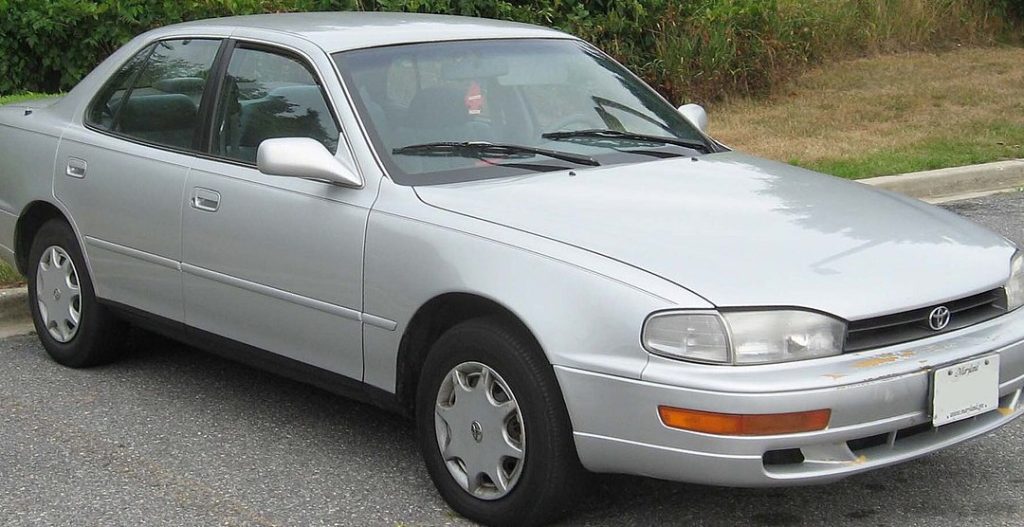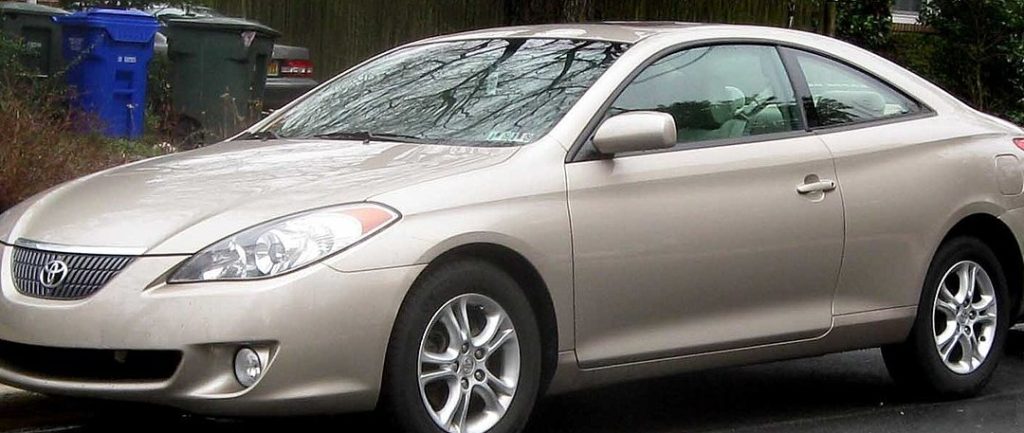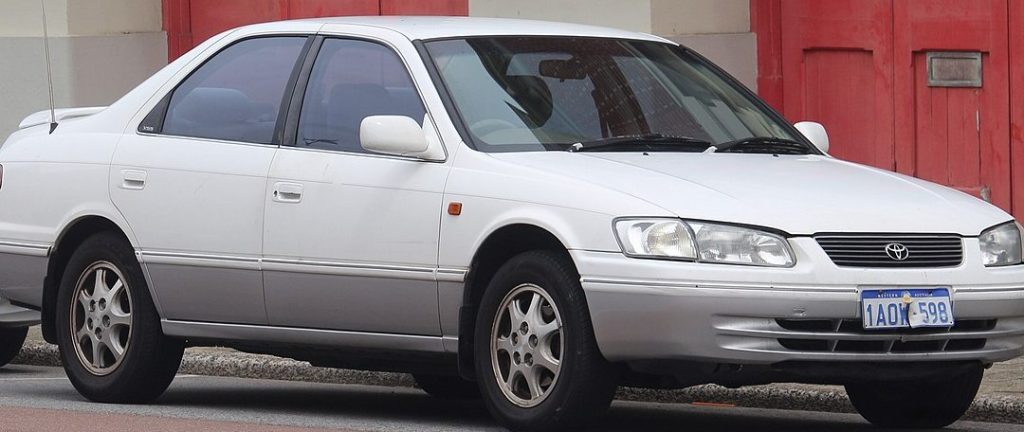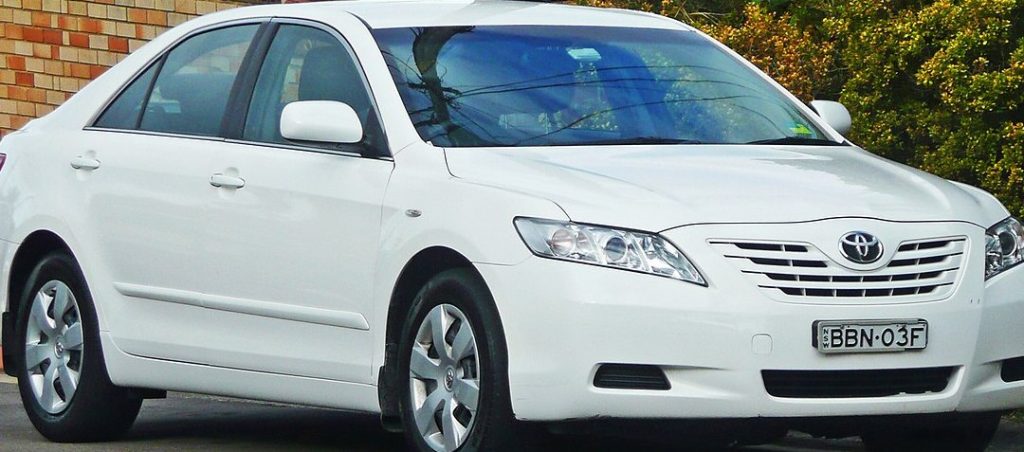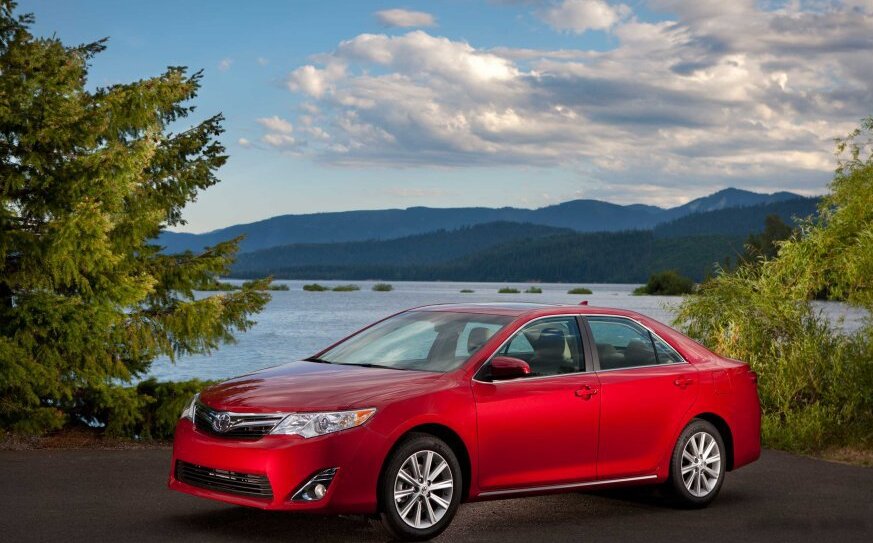
The Toyota Camry VII (XV50) 2.0, equipped with a 148 horsepower engine and automatic transmission, was a mainstay of the Camry lineup produced between 2011 and 2014. Representing the seventh generation of Toyota’s globally successful mid-size sedan, the XV50 was designed to appeal to a broad range of buyers seeking a comfortable, reliable, and fuel-efficient vehicle. This particular 2.0-liter variant occupied a middle ground within the XV50 range, offering a balance between affordability and performance, slotting below the more powerful 2.5-liter engine options but providing a more refined experience than the base 2.0-liter manual transmission models available in some markets. The XV50 Camry was primarily targeted at the North American, Asian, and Australian markets, where family sedans remained a popular choice.
Technical Specifications
| Brand | Toyota |
| Model | Camry |
| Generation | Camry VII (XV50) |
| Type (Engine) | 2.0 (148 Hp) Automatic |
| Start of production | 2011 |
| End of production | 2014 |
| Powertrain Architecture | Internal Combustion engine |
| Body type | Sedan |
| Seats | 5 |
| Doors | 4 |
| Fuel Type | Petrol (Gasoline) |
| Acceleration 0 – 100 km/h | 12.5 sec |
| Acceleration 0 – 62 mph | 12.5 sec |
| Acceleration 0 – 60 mph | 11.9 sec |
| Maximum speed | 190 km/h (118.06 mph) |
| Weight-to-power ratio | 10.2 kg/Hp, 98.3 Hp/tonne |
| Weight-to-torque ratio | 7.9 kg/Nm, 126.2 Nm/tonne |
| Power | 148 Hp @ 6000 rpm |
| Power per litre | 74.1 Hp/l |
| Torque | 190 Nm @ 4000 rpm (140.14 lb.-ft. @ 4000 rpm) |
| Engine layout | Front, Transverse |
| Engine Model/Code | 1AZ-FE |
| Engine displacement | 1998 cm3 (121.93 cu. in.) |
| Number of cylinders | 4 |
| Engine configuration | Inline |
| Cylinder Bore | 86 mm (3.39 in.) |
| Piston Stroke | 86 mm (3.39 in.) |
| Compression ratio | 9.8:1 |
| Number of valves per cylinder | 4 |
| Fuel injection system | Multi-port manifold injection |
| Engine aspiration | Naturally aspirated engine |
| Engine oil capacity | 4.4 l (4.65 US qt | 3.87 UK qt) |
| Kerb Weight | 1505 kg (3317.96 lbs.) |
| Max. weight | 2100 kg (4629.71 lbs.) |
| Max load | 595 kg (1311.75 lbs.) |
| Trunk (boot) space – minimum | 506 l (17.87 cu. ft.) |
| Fuel tank capacity | 70 l (18.49 US gal | 15.4 UK gal) |
| Length | 4825 mm (189.96 in.) |
| Width | 1825 mm (71.85 in.) |
| Height | 1480 mm (58.27 in.) |
| Wheelbase | 2775 mm (109.25 in.) |
| Front track | 1575 mm (62.01 in.) |
| Rear (Back) track | 1565 mm (61.61 in.) |
| Ride height (ground clearance) | 160 mm (6.3 in.) |
| Drivetrain Architecture | The Internal combustion engine (ICE) drives the front wheels of the vehicle. |
| Drive wheel | Front wheel drive |
| Number of gears and type of gearbox | 4 gears, automatic transmission |
| Front suspension | Independent, type McPherson with coil spring and anti-roll bar |
| Rear suspension | Independent multi-link spring suspension with stabilizer |
| Front brakes | Ventilated discs |
| Rear brakes | Disc |
| Assisting systems | ABS (Anti-lock braking system) |
| Steering type | Steering rack and pinion |
| Power steering | Electric Steering |
| Tires size | 215/60 R16 |
| Wheel rims size | 16 |
Powertrain & Engine Architecture
The heart of the XV50 2.0 Automatic is the 1AZ-FE engine, a 1.998-liter (2.0L) inline-four cylinder gasoline engine. This engine is a member of Toyota’s AZ series, known for its reliability and relatively simple design. The 1AZ-FE utilizes a cast iron block with an aluminum cylinder head, featuring dual overhead camshafts (DOHC) and four valves per cylinder. Fuel delivery is managed by a multi-port fuel injection system, providing precise fuel metering for optimal combustion. The engine produces 148 horsepower at 6000 rpm and 190 Nm (140 lb-ft) of torque at 4000 rpm. Paired with the 1AZ-FE is a four-speed automatic transmission. While not as sophisticated as the continuously variable transmissions (CVTs) becoming increasingly common at the time, this automatic offered smooth shifts and ease of use, appealing to a wider demographic. The transmission was tuned for comfort and fuel efficiency rather than outright performance.
Driving Characteristics
The Camry 2.0 Automatic delivers a comfortable and predictable driving experience. Acceleration from 0-60 mph takes approximately 11.9 seconds, which is adequate for everyday driving but doesn’t offer particularly sporty performance. The four-speed automatic transmission, while smooth, can feel somewhat dated compared to transmissions with more gears. Gear ratios are optimized for fuel economy, meaning the engine can feel strained during aggressive acceleration or when climbing hills. Compared to the 2.5-liter Camry models, the 2.0-liter version feels noticeably less powerful, especially when fully loaded with passengers and cargo. However, the 2.0-liter engine is lighter, contributing to slightly improved handling and fuel efficiency. The steering is light and precise, making it easy to maneuver in urban environments.
Equipment & Trim Levels
The 2.0-liter Automatic Camry typically came standard with features such as air conditioning, power windows and locks, a basic audio system with CD player, and standard safety equipment including ABS and multiple airbags. Higher trim levels, often denoted by designations like “LE” or “XLE”, added features such as alloy wheels, upgraded audio systems with Bluetooth connectivity, a sunroof, and leather upholstery. Optional extras included navigation systems, premium sound systems, and advanced safety features like stability control. Interior upholstery was typically cloth on the base models, with leather available on higher trims. The dashboard layout was functional and straightforward, prioritizing ease of use over stylistic flair.
Chassis & Braking
The XV50 Camry utilizes a front-wheel-drive layout with an independent McPherson strut suspension in the front and an independent multi-link suspension in the rear. This suspension setup provides a comfortable ride quality, effectively absorbing bumps and irregularities in the road surface. The front suspension incorporates a stabilizer bar to reduce body roll during cornering. Braking duties are handled by ventilated discs in the front and solid discs in the rear. ABS (Anti-lock Braking System) is standard, enhancing braking performance and stability, particularly in adverse weather conditions. The chassis was designed to prioritize comfort and safety over sporty handling, resulting in a predictable and stable driving experience.
Market Reception & Comparison
The Camry 2.0 Automatic was generally well-received by critics as a practical and reliable family sedan. It was praised for its comfortable ride, spacious interior, and Toyota’s reputation for dependability. However, some reviewers noted that the engine lacked the power of its larger counterparts and that the four-speed automatic transmission felt somewhat outdated. Compared to the 2.5-liter Camry models, the 2.0-liter version offered better fuel economy but at the expense of performance. Against competitors like the Honda Accord and Nissan Altima, the Camry 2.0 Automatic held its own, offering a compelling combination of value, reliability, and comfort.
Legacy
The 1AZ-FE engine, when properly maintained, is known for its longevity and reliability. Camry models equipped with this engine have proven to be capable of exceeding 200,000 miles with minimal major repairs. In the used car market, the XV50 Camry 2.0 Automatic remains a popular choice due to its affordability, fuel efficiency, and Toyota’s reputation for dependability. While not a performance standout, it represents a solid and practical option for buyers seeking a reliable and comfortable mid-size sedan. Common maintenance items include regular oil changes, timing belt replacement (depending on mileage), and inspection of the cooling system. The simplicity of the engine and transmission contributes to relatively low maintenance costs.