
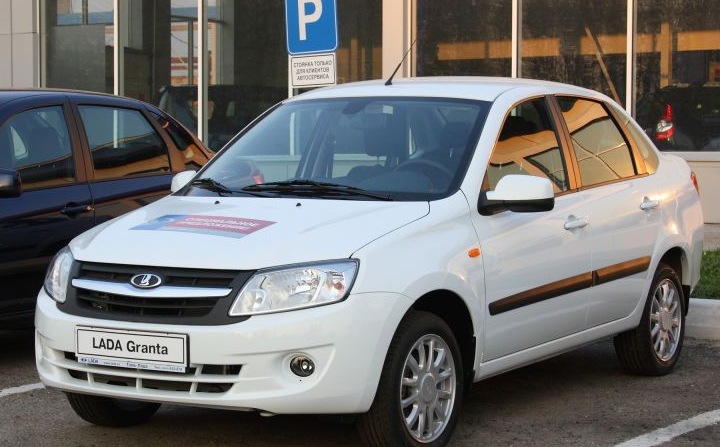
The Lada Granta I Sedan 1.6 (87 hp) represents a significant entry point into the Lada model range, produced from 2011 to 2018. Positioned as an affordable and practical sedan, it was a key component of Lada’s revitalization efforts following its acquisition by the Renault-Nissan Alliance. The Granta, built on the aging but robust 1HX0 platform (derived from the original 2190 platform), aimed to provide basic transportation with improved reliability and a more modern aesthetic compared to its predecessors. This 1.6-liter, 87 horsepower variant served as the base model, offering a balance between cost and usability for the Russian and Eastern European markets.
Technical Specifications
| Brand | Lada |
| Model | Granta |
| Generation | Granta I Sedan |
| Type (Engine) | 1.6 (87 Hp) |
| Start of production | 2011 |
| End of production | 2018 |
| Powertrain Architecture | Internal Combustion engine |
| Body type | Sedan |
| Seats | 5 |
| Doors | 4 |
| Fuel consumption (urban) | 9 l/100 km (26.1 US mpg, 31.4 UK mpg, 11.1 km/l) |
| Fuel consumption (extra urban) | 5.8 l/100 km (40.6 US mpg, 48.7 UK mpg, 17.2 km/l) |
| Fuel consumption (combined) | 7 l/100 km (33.6 US mpg, 40.4 UK mpg, 14.3 km/l) |
| Fuel Type | Petrol (Gasoline) |
| Acceleration 0 – 100 km/h | 12.2 sec |
| Acceleration 0 – 62 mph | 12.2 sec |
| Acceleration 0 – 60 mph | 11.6 sec |
| Maximum speed | 167 km/h (103.77 mph) |
| Weight-to-power ratio | 12.4 kg/Hp, 80.9 Hp/tonne |
| Weight-to-torque ratio | 7.7 kg/Nm, 130.2 Nm/tonne |
| Power | 87 Hp @ 5100 rpm |
| Power per litre | 54.5 Hp/l |
| Torque | 140 Nm @ 3800 rpm (103.26 lb.-ft. @ 3800 rpm) |
| Engine layout | Front, Transverse |
| Engine Model/Code | 11186 |
| Engine displacement | 1596 cm3 (97.39 cu. in.) |
| Number of cylinders | 4 |
| Engine configuration | Inline |
| Number of valves per cylinder | 2 |
| Fuel injection system | Multi-port manifold injection |
| Engine aspiration | Naturally aspirated engine |
| Engine oil capacity | 3.2 l (3.38 US qt | 2.82 UK qt) |
| Coolant capacity | 6.5 l (6.87 US qt | 5.72 UK qt) |
| Kerb Weight | 1075 kg (2369.97 lbs.) |
| Max. weight | 1560 kg (3439.21 lbs.) |
| Max load | 485 kg (1069.24 lbs.) |
| Trunk (boot) space – minimum | 520 l (18.36 cu. ft.) |
| Fuel tank capacity | 50 l (13.21 US gal | 11 UK gal) |
| Permitted trailer load with brakes (12%) | 900 kg (1984.16 lbs.) |
| Permitted trailer load without brakes | 450 kg (992.08 lbs.) |
| Length | 4260 mm (167.72 in.) |
| Width | 1700 mm (66.93 in.) |
| Height | 1500 mm (59.06 in.) |
| Wheelbase | 2476 mm (97.48 in.) |
| Front track | 1430 mm (56.3 in.) |
| Rear (Back) track | 1414 mm (55.67 in.) |
| Ride height (ground clearance) | 160 mm (6.3 in.) |
| Drivetrain Architecture | Front wheel drive |
| Number of gears and type of gearbox | 5 gears, manual transmission |
| Front suspension | Independent, type McPherson with coil spring and anti-roll bar |
| Rear suspension | Semi-independent, coil spring |
| Assisting systems | ABS (Anti-lock braking system) |
| Steering type | Steering rack and pinion |
| Tires size | 175/65 R14; 185/60 R14; 185/55 R15 |
| Wheel rims size | 14; 15 |
Powertrain & Engine Architecture
The heart of the Granta 1.6 is the Lada 11186 engine, an 8-valve, 1.6-liter inline-four cylinder petrol engine. This engine is a direct descendant of the Volga engine family, continuously developed over decades. It utilizes a multi-point fuel injection system, a relatively simple setup that prioritizes affordability and ease of maintenance. The engine’s 8-valve configuration, while not offering the performance of more modern multi-valve designs, contributes to its robustness and lower complexity. The engine produces 87 horsepower at 5100 rpm and 140 Nm (103 lb-ft) of torque at 3800 rpm. This power is delivered to the front wheels through a standard five-speed manual transmission. The transmission is known for its durability, but its shift quality is often described as notchy and imprecise. An optional four-speed automatic transmission was available, but it was less common and generally considered less refined than the manual.
Driving Characteristics
The Granta 1.6 (87 hp) offers modest performance. Acceleration from 0 to 60 mph takes around 11.6 to 12.2 seconds, and the top speed is approximately 104 mph. The engine feels strained at higher speeds, and overtaking maneuvers require careful planning. The five-speed manual transmission helps to keep the engine in its optimal power band, but the long gearing can make the car feel sluggish in city driving. Compared to higher-spec Granta models with more powerful engines (like the 1.6 16V), the 87 hp version feels significantly underpowered. However, the lower power output also contributes to better fuel economy, making it a practical choice for daily commuting. The automatic transmission further diminishes performance, resulting in slower acceleration and increased fuel consumption.
Equipment & Trim Levels
The base-level Granta 1.6 was sparsely equipped, reflecting its budget-oriented positioning. Standard features typically included power steering, central locking, and front airbags. Interior upholstery was basic cloth, and the dashboard featured a simple, functional design. Optional extras included air conditioning, power windows, and an upgraded audio system. Higher trim levels, such as the “Standard” and “Comfort,” added more features, but the base 1.6 model prioritized affordability above all else. The interior plastics were durable but lacked a premium feel. The focus was on providing a functional and reliable interior rather than luxury.
Chassis & Braking
The Granta I Sedan utilizes a McPherson strut front suspension and a semi-independent coil spring rear suspension. This setup provides a reasonably comfortable ride, although it’s not particularly sporty. The front brakes are disc brakes, while the rear brakes are typically drum brakes on the base model. ABS (Anti-lock Braking System) was standard, enhancing safety. The steering is a rack and pinion system, providing adequate control but lacking in feedback. The relatively lightweight construction of the Granta (around 2370 lbs) helps to offset the modest power output, resulting in acceptable handling characteristics for everyday driving.
Market Reception & Comparison
The Lada Granta 1.6 (87 hp) was generally well-received in its target markets, particularly Russia and other Eastern European countries. Critics praised its affordability, practicality, and improved reliability compared to earlier Lada models. However, it was often criticized for its basic interior, lackluster performance, and somewhat crude driving experience. Compared to other entry-level sedans available at the time, such as the Renault Logan or Hyundai Solaris, the Granta offered a lower price point but lacked the refinement and features of its competitors. Fuel economy was a strong point, with combined fuel consumption averaging around 33.6 US mpg.
Legacy
The Lada Granta 1.6 (87 hp) proved to be a popular and reliable workhorse for many owners. The 11186 engine, while simple, is known for its durability and relatively low maintenance costs. In the used car market, these Granta models remain affordable and readily available. While not a performance icon, the Granta 1.6 served as a crucial stepping stone in Lada’s modernization efforts, providing a foundation for future models. Its simplicity and robust construction continue to make it a viable option for budget-conscious buyers seeking a dependable and practical sedan.

