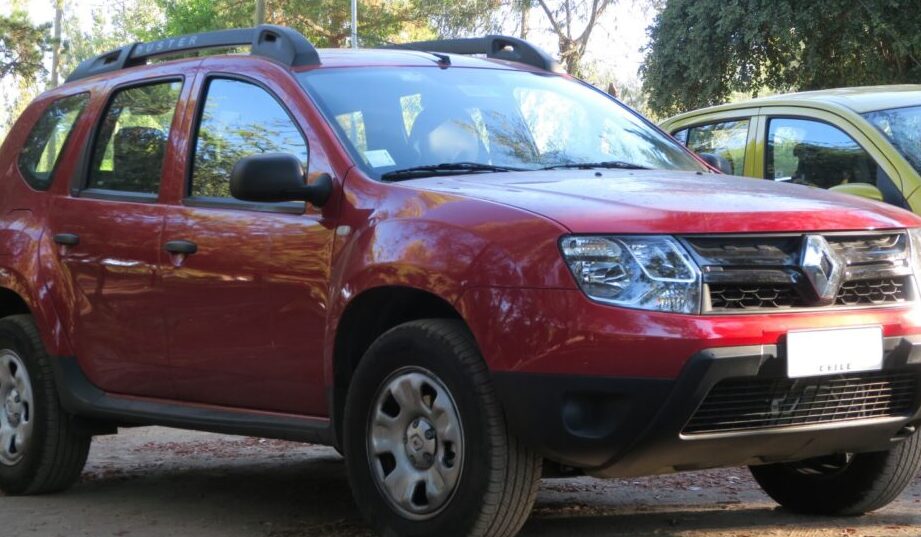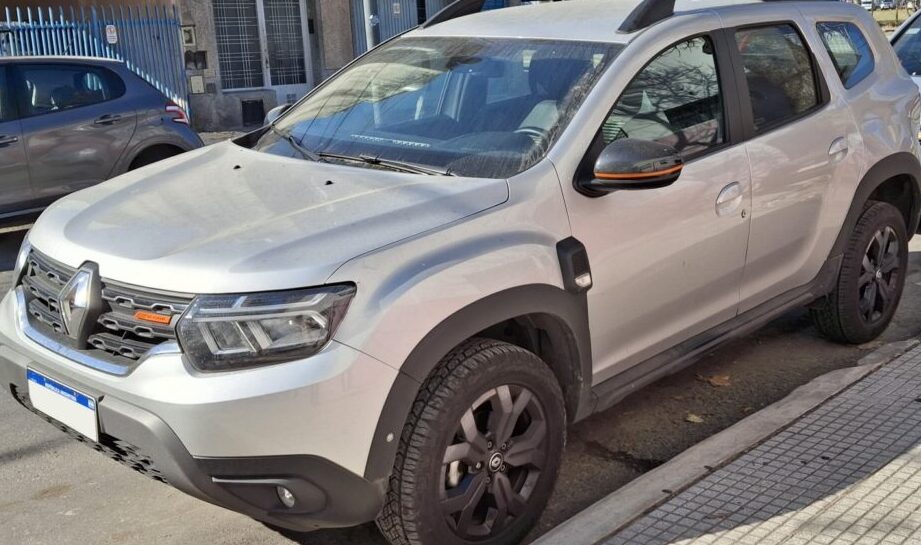
The Renault Duster II (facelift 2024) 1.6 SCe (118/120 hp) Flex X-Tronic represents a significant iteration of Renault’s popular compact SUV, particularly within the South American market where the Duster enjoys substantial sales success. Introduced in January 2024, this variant builds upon the second-generation Duster (launched in 2019) with a refreshed design and a focus on fuel efficiency and practicality. The “Flex” designation indicates the engine’s capability to run on both gasoline and ethanol (E100), a common feature in Brazil and other Latin American countries. The X-Tronic transmission refers to Renault’s continuously variable transmission (CVT), paired with the 1.6-liter engine to provide a smooth and efficient driving experience. This specific configuration positions itself as a mid-range offering within the Duster II lineup, balancing affordability with a degree of comfort and convenience.
Technical Specifications
| Brand | Renault |
| Model | Duster |
| Generation | Duster II (facelift 2024) |
| Type (Engine) | 1.6 SCe (118/120 Hp) Flex X-Tronic |
| Start of production | January, 2024 |
| Powertrain Architecture | Internal Combustion engine |
| Body type | SUV |
| Seats | 5 |
| Doors | 5 |
| Fuel consumption (economy) – urban | 9.5 l/100 km (24.8 US mpg, 29.7 UK mpg, 10.5 km/l) |
| Fuel consumption (economy) – urban (Ethanol – E100) | 13.9 l/100 km |
| Fuel consumption (economy) – extra urban | 8.7 l/100 km (27 US mpg, 32.5 UK mpg, 11.5 km/l) |
| Fuel consumption (economy) – extra urban (Ethanol – E100) | 12.3 l/100 km |
| Fuel Type | Petrol / Ethanol – E100 |
| Acceleration 0 – 100 km/h | 12.2 sec |
| Acceleration 0 – 62 mph | 12.2 sec |
| Acceleration 0 – 100 km/h (Ethanol – E100) | 12 sec |
| Acceleration 0 – 60 mph (Calculated) | 11.6 sec |
| Maximum speed | 172 km/h (106.88 mph) |
| Maximum speed (Ethanol – E100) | 173 km/h |
| Weight-to-power ratio | 10.6 kg/Hp, 94.1 Hp/tonne |
| Weight-to-torque ratio | 8 kg/Nm, 125.2 Nm/tonne |
| Power | 118 Hp @ 5500 rpm |
| Power per litre | 73.8 Hp/l |
| Power (Ethanol – E100) | 120 Hp @ 5500 rpm |
| Power per litre (Ethanol – E100) | 75.1 Hp/l |
| Torque | 157 Nm @ 4000 rpm (115.8 lb.-ft. @ 4000 rpm) |
| Engine layout | Front, Transverse |
| Engine Model/Code | H4M |
| Engine displacement | 1598 cm3 (97.52 cu. in.) |
| Number of cylinders | 4 |
| Engine configuration | Inline |
| Cylinder Bore | 78 mm (3.07 in.) |
| Piston Stroke | 83.6 mm (3.29 in.) |
| Number of valves per cylinder | 4 |
| Fuel injection system | Multi-port manifold injection |
| Engine aspiration | Naturally aspirated engine |
| Valvetrain | DOHC |
| Engine oil capacity | 4.2 l (4.44 US qt, 3.7 UK qt) |
| Kerb Weight | 1254 kg (2764.6 lbs.) |
| Max. weight | 1798 kg (3963.91 lbs.) |
| Max load | 544 kg (1199.31 lbs.) |
| Trunk (boot) space – minimum | 475 l (16.77 cu. ft.) |
| Trunk (boot) space – maximum | 1478 l (52.2 cu. ft.) |
| Fuel tank capacity | 46 l (12.15 US gal, 10.12 UK gal) |
| Max. roof load | 80 kg (176.37 lbs.) |
| Permitted trailer load with brakes (12%) | 1200 kg (2645.55 lbs.) |
| Permitted trailer load without brakes | 675 kg (1488.12 lbs.) |
| Permitted towbar download | 75 kg (165.35 lbs.) |
| Length | 4376 mm (172.28 in.) |
| Width | 1832 mm (72.13 in.) |
| Height | 1693 mm (66.65 in.) |
| Wheelbase | 2673 mm (105.24 in.) |
| Front track | 1557 mm (61.3 in.) |
| Rear (Back) track | 1560 mm (61.42 in.) |
| Front overhang | 872 mm (34.33 in.) |
| Rear overhang | 831 mm (32.72 in.) |
| Ride height (ground clearance) | 237 mm (9.33 in.) |
| Approach angle | 30° |
| Departure angle | 34.5° |
| Drivetrain Architecture | Front wheel drive |
| Drive wheel | Front wheel drive |
| Number of gears and type of gearbox | automatic transmission X-Tronic CVT |
| Front suspension | Independent, type McPherson with coil spring and anti-roll bar |
| Rear suspension | Semi-dependent beam with stabilizer lateral stability, Coil spring |
| Front brakes | Ventilated discs |
| Rear brakes | Drum |
| Assisting systems | ABS (Anti-lock braking system) |
| Steering type | Steering rack and pinion |
| Power steering | Electric Steering |
| Tires size | 215/65 R16 |
| Wheel rims size | 6.5J x 16 |
Powertrain & Engine Architecture
The heart of this Duster variant is the Renault H4M 1.6-liter inline-four cylinder engine. This engine is a long-standing design within the Renault-Nissan alliance, known for its robustness and relatively simple construction. It utilizes a multi-point fuel injection system, delivering fuel directly into the intake ports. The engine features a double overhead camshaft (DOHC) valvetrain, optimizing airflow for improved efficiency and power output. The H4M engine is designed to operate efficiently on both gasoline and ethanol, with adjustments made to the engine control unit (ECU) to accommodate the different fuel characteristics. The X-Tronic CVT transmission is a key component, offering stepless gear ratios for smooth acceleration and optimized fuel economy. Unlike traditional automatic transmissions with fixed gears, the CVT uses a belt and pulley system to provide a virtually infinite number of gear ratios within its operating range.
Driving Characteristics
The 1.6 SCe engine paired with the X-Tronic CVT delivers a comfortable and predictable driving experience. Acceleration from 0-60 mph takes approximately 11.6 seconds, which is adequate for everyday driving but doesn’t offer particularly sporty performance. The CVT transmission prioritizes fuel efficiency, keeping the engine within its optimal operating range. This can sometimes result in a “rubber band” feel during hard acceleration, where engine RPMs rise quickly without a corresponding increase in speed. However, the CVT offers a smoother driving experience compared to traditional automatics, especially in stop-and-go traffic. Compared to higher-output Duster variants (like those with a 1.3 TCe turbocharged engine), this 1.6L version provides less overall power and torque, making it less suitable for demanding driving situations or towing. However, it excels in fuel economy and offers a more relaxed driving experience.
Equipment & Trim Levels
The 1.6 SCe X-Tronic trim typically includes standard features such as air conditioning, power windows, power door locks, and a basic audio system with Bluetooth connectivity. Safety features generally include ABS brakes, front airbags, and rear parking sensors. Higher trim levels within the Duster II range offer additional features like alloy wheels, a touchscreen infotainment system with navigation, automatic climate control, and more advanced safety systems. Interior upholstery is typically cloth, with options for leatherette available on higher trims. The dashboard layout is functional and straightforward, prioritizing usability over luxury.
Chassis & Braking
The Duster II utilizes a McPherson strut front suspension and a semi-independent beam rear suspension. This setup provides a good balance between ride comfort and handling. The front suspension incorporates a stabilizer bar to reduce body roll during cornering. Braking duties are handled by ventilated discs at the front and drum brakes at the rear. While the front discs provide adequate stopping power, the rear drums are a cost-saving measure and may not offer the same level of performance as rear discs. The Duster II boasts a relatively high ground clearance of 237 mm (9.33 inches), making it well-suited for tackling rough roads and uneven terrain.
Market Reception & Comparison
The Renault Duster II 1.6 SCe X-Tronic has been well-received in markets where it’s offered, particularly in South America. Critics have praised its practicality, affordability, and fuel efficiency. Compared to other Duster variants, the 1.6L automatic offers a more accessible price point, making it attractive to budget-conscious buyers. However, it lacks the performance of the turbocharged engines. Fuel economy is competitive within its class, especially when running on ethanol. Reliability has generally been good, with the H4M engine proving to be a durable and dependable unit.
Legacy
The Renault Duster II 1.6 SCe X-Tronic represents a practical and efficient option within the compact SUV segment. The H4M engine, while not the most powerful, has a proven track record of reliability. The X-Tronic CVT transmission provides a smooth and comfortable driving experience, prioritizing fuel economy. In the used car market, these models are likely to hold their value due to their reputation for dependability and affordability. As technology advances, the Duster II will eventually be superseded by newer models, but its legacy as a practical and accessible SUV will endure.