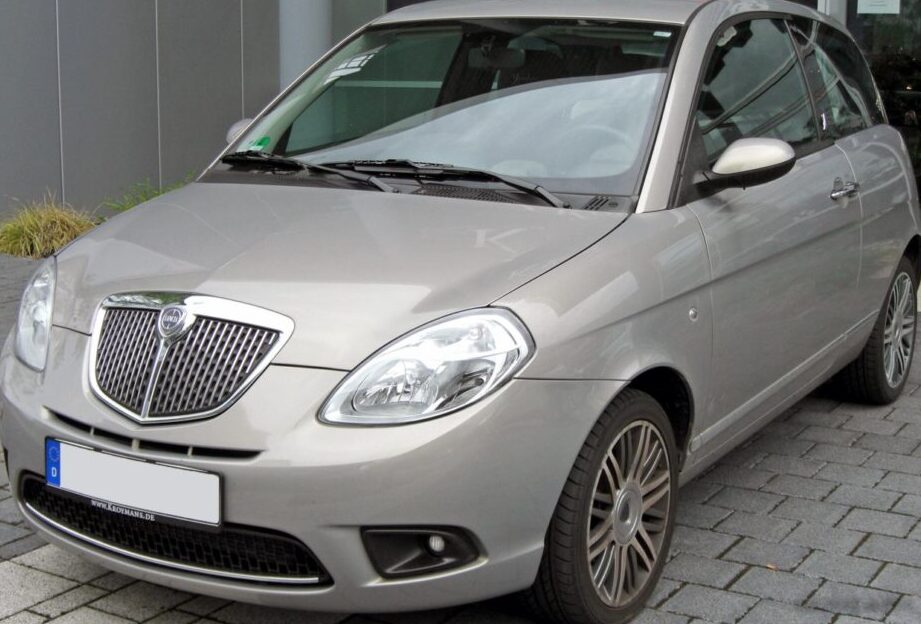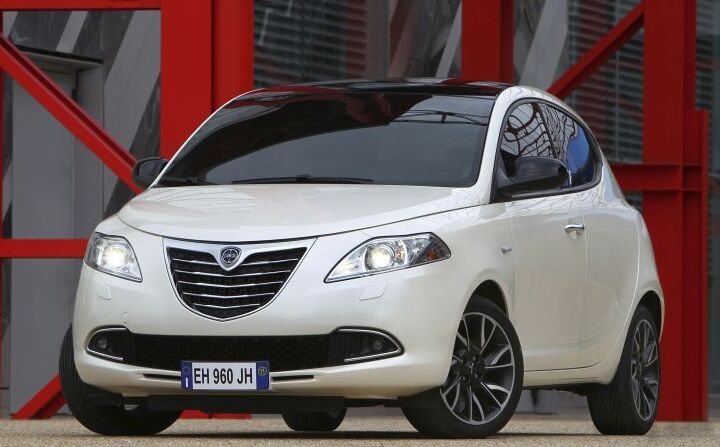
The Lancia Ypsilon (846) 1.3 MultiJet2 95 Hp Start&Stop, produced from 2011 to 2015, represents a significant iteration of Lancia’s long-running city car. Positioned as an efficient and economical option within the Ypsilon range, this variant aimed to appeal to buyers prioritizing fuel economy and lower running costs. It was built on the Fiat/Chrysler Small Wide platform, shared with the Fiat 500 and Fiat Punto, and represented Lancia’s attempt to modernize and remain competitive in the European small car segment. This particular model was primarily marketed in Europe, particularly Italy, where Lancia retained a stronger brand presence.
Technical Specifications
| Brand | Lancia |
| Model | Ypsilon |
| Generation | Ypsilon (846) |
| Type (Engine) | 1.3 MultiJet2 (95 Hp) start&stop |
| Start of production | 2011 year |
| End of production | 2015 year |
| Powertrain Architecture | Internal Combustion engine |
| Body type | Hatchback |
| Seats | 5 |
| Doors | 5 |
| Fuel consumption (economy) – urban | 4.7 l/100 km (50 US mpg, 60.1 UK mpg, 21.3 km/l) |
| Fuel consumption (economy) – extra urban | 3.2 l/100 km (73.5 US mpg, 88.3 UK mpg, 31.3 km/l) |
| Fuel consumption (economy) – combined | 3.8 l/100 km (61.9 US mpg, 74.3 UK mpg, 26.3 km/l) |
| CO2 emissions | 99 g/km |
| Fuel Type | Diesel |
| Acceleration 0 – 100 km/h | 11.4 sec |
| Acceleration 0 – 62 mph | 11.4 sec |
| Acceleration 0 – 60 mph | 10.8 sec |
| Maximum speed | 183 km/h (113.71 mph) |
| Emission standard | Euro 5 |
| Weight-to-power ratio | 11.1 kg/Hp, 90.5 Hp/tonne |
| Weight-to-torque ratio | 5.3 kg/Nm, 190.5 Nm/tonne |
| Power | 95 Hp @ 4000 rpm |
| Power per litre | 76.1 Hp/l |
| Torque | 200 Nm @ 1500 rpm (147.51 lb.-ft. @ 1500 rpm) |
| Engine layout | Front, Transverse |
| Engine Model/Code | 312 B1.000 |
| Engine displacement | 1248 cm3 (76.16 cu. in.) |
| Number of cylinders | 4 |
| Engine configuration | Inline |
| Compression ratio | 16.8:1 |
| Number of valves per cylinder | 4 |
| Fuel injection system | Diesel Commonrail |
| Engine aspiration | Turbocharger, Intercooler |
| Valvetrain | DOHC |
| Engine oil capacity | 3 l (3.17 US qt | 2.64 UK qt) |
| Coolant | 6.35 l (6.71 US qt | 5.59 UK qt) |
| Kerb Weight | 1050 kg (2314.85 lbs.) |
| Trunk (boot) space – minimum | 245 l (8.65 cu. ft.) |
| Fuel tank capacity | 40 l (10.57 US gal | 8.8 UK gal) |
| Permitted trailer load with brakes (12%) | 1000 kg (2204.62 lbs.) |
| Length | 3842 mm (151.26 in.) |
| Width | 1875 mm (73.82 in.) |
| Height | 1520 mm (59.84 in.) |
| Wheelbase | 2390 mm (94.09 in.) |
| Front track | 1414 mm (55.67 in.) |
| Rear (Back) track | 1408 mm (55.43 in.) |
| Minimum turning circle (turning diameter) | 9.4 m (30.84 ft.) |
| Drivetrain Architecture | The Internal combustion engine (ICE) drives the front wheels of the vehicle. |
| Drive wheel | Front wheel drive |
| Number of gears and type of gearbox | 5 gears, manual transmission |
| Front suspension | Independent type McPherson |
| Rear suspension | Semi-independent, coil spring |
| Front brakes | Ventilated discs |
| Rear brakes | Drum |
| Assisting systems | ABS (Anti-lock braking system) |
| Steering type | Steering rack and pinion |
| Tires size | 185/55 R15 82 H |
| Wheel rims size | 15 |
Powertrain & Engine Architecture
The heart of the Ypsilon 1.3 MultiJet2 is the Fiat-developed 312 B1.000 engine, a 1.3-liter inline-four cylinder diesel. This engine is a second-generation MultiJet design, incorporating common-rail direct injection and a variable geometry turbocharger. The MultiJet technology allows for multiple fuel injections per combustion cycle, improving efficiency and reducing noise. The engine produces 95 horsepower at 4000 rpm and 200 Nm (147.51 lb-ft) of torque at 1500 rpm. This torque output, available at relatively low engine speeds, is a key characteristic of the engine, contributing to its drivability in urban environments. The engine features a double overhead camshaft (DOHC) valvetrain with four valves per cylinder. The 5-speed manual transmission was the standard offering for this variant, chosen for its simplicity and contribution to fuel economy. The Start&Stop system, standard on this model, automatically shuts off the engine when the vehicle is stationary (e.g., at traffic lights) and restarts it when the driver depresses the clutch pedal, further enhancing fuel efficiency.
Driving Characteristics
The Ypsilon 1.3 MultiJet2 with the 5-speed manual transmission offers a practical and economical driving experience. Acceleration is adequate for city driving, with a 0-60 mph time of around 10.8 seconds. However, it’s not designed for rapid acceleration or high-speed cruising. The engine’s strong low-end torque makes it feel more responsive than its horsepower figure suggests, particularly in urban traffic. The gear ratios are geared towards fuel efficiency, meaning the engine operates at relatively low revolutions per minute (RPM) at highway speeds. Compared to higher-output Ypsilon variants, such as those with larger gasoline engines, the 1.3 MultiJet2 prioritizes fuel economy over outright performance. The manual transmission provides a more engaging driving experience than an automatic, allowing the driver to better control the engine’s power delivery.
Equipment & Trim Levels
The 1.3 MultiJet2 typically came equipped with a reasonable level of standard equipment. This included air conditioning, power steering, electric front windows, a radio with CD player, and ABS brakes. Interior upholstery was typically cloth, with a relatively simple dashboard layout. Optional extras included alloy wheels, a panoramic sunroof, parking sensors, and a more advanced audio system. Trim levels varied slightly depending on the market, but generally, this variant occupied a mid-range position in the Ypsilon lineup, offering a good balance of features and affordability. Safety features included driver and passenger airbags, and a basic stability control system.
Chassis & Braking
The Ypsilon 846 utilizes a McPherson strut front suspension and a semi-independent coil spring rear suspension. This setup provides a comfortable ride quality, well-suited for city streets. The front brakes are ventilated discs, offering good stopping power, while the rear brakes are drums, a cost-saving measure common in this class of vehicle. The steering is a rack and pinion system, providing precise and responsive handling. The relatively lightweight construction of the Ypsilon (around 1050 kg or 2314.85 lbs) contributes to its agility and fuel efficiency. Stabilizer bars were fitted to both the front and rear axles to reduce body roll during cornering.
Market Reception & Comparison
The Lancia Ypsilon 1.3 MultiJet2 was generally well-received by critics for its fuel efficiency and low running costs. It was seen as a practical and economical choice for urban commuters. However, some reviewers noted that the engine could be somewhat noisy and that the interior, while functional, lacked the premium feel associated with the Lancia brand. Compared to other Ypsilon variants, the 1.3 MultiJet2 offered significantly better fuel economy than the gasoline-powered models, but less outright performance. Against competitors like the Fiat 500, Renault Twingo, and Volkswagen Polo, the Ypsilon offered a distinctive Italian style and a comfortable ride, but often at a slightly higher price point.
Legacy
The 1.3 MultiJet2 engine proved to be a reliable and durable powertrain, and many examples are still on the road today. While not known for blistering performance, its fuel efficiency and relatively low maintenance costs have made it a popular choice in the used car market. Common issues are typically related to wear and tear on components like the turbocharger and fuel injectors, but these are generally not major concerns if the vehicle has been properly maintained. The Ypsilon 846, while not a commercial success on a global scale, remains a fondly remembered city car, representing a unique blend of Italian style and practicality.