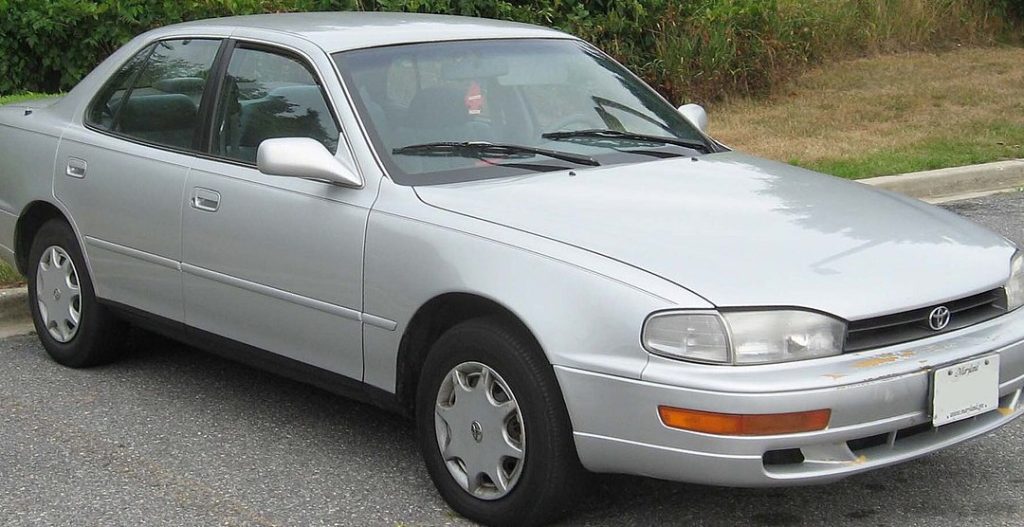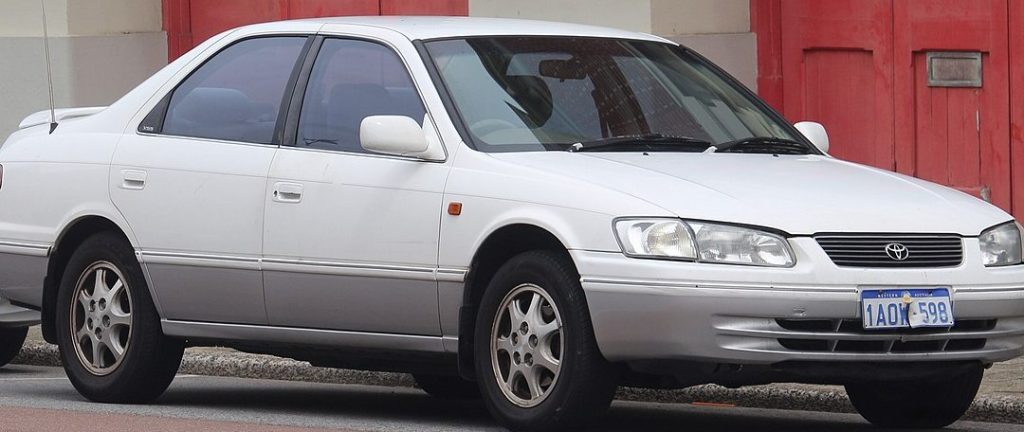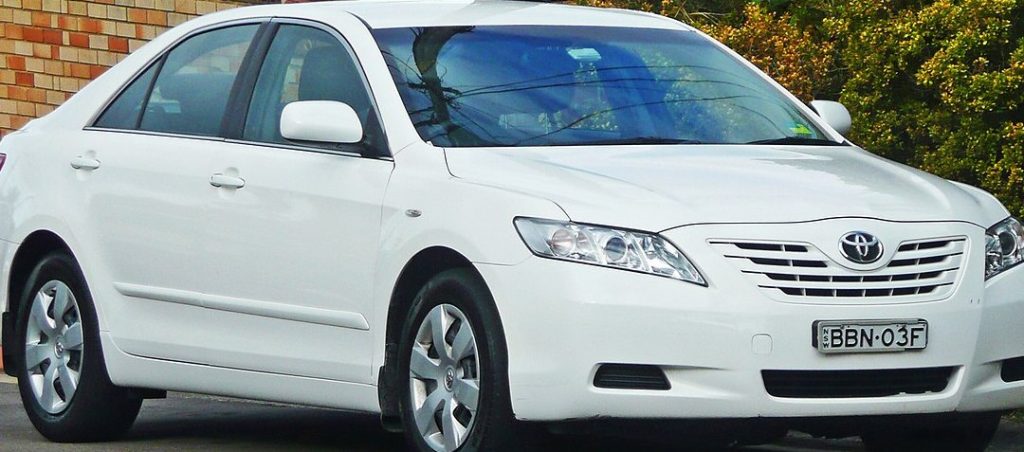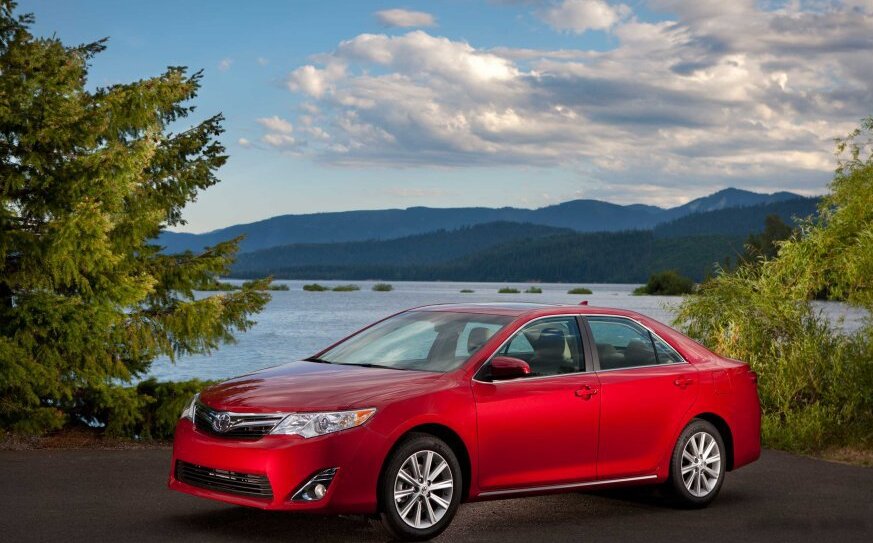
The Toyota Camry VII (XV50) 2.5, produced between 2011 and 2014, represented a significant evolution of Toyota’s best-selling mid-size sedan. Positioned as a mainstream offering within the XV50 generation, which spanned from 2011 to 2017, the 2.5-liter variant with the automatic transmission aimed to provide a balance of fuel efficiency, comfortable driving dynamics, and Toyota’s renowned reliability. This model served as a key volume seller in the North American market, where the Camry consistently ranked among the top vehicles in its class. It was a direct response to increasing consumer demand for a more refined and fuel-conscious family sedan, while still maintaining the Camry’s reputation for dependability.
Technical Specifications
| Brand | Toyota |
| Model | Camry |
| Generation | Camry VII (XV50) |
| Type (Engine) | 2.5 (178 Hp) Automatic |
| Start of production | 2011 |
| End of production | 2014 |
| Powertrain Architecture | Internal Combustion engine |
| Body type | Sedan |
| Seats | 5 |
| Doors | 4 |
| Fuel consumption (urban) | 9.4 l/100 km (25 US mpg) |
| Fuel consumption (extra urban) | 6.7 l/100 km (35.1 US mpg) |
| Fuel consumption (combined) | 8.4 l/100 km (28 US mpg) |
| Fuel Type | Petrol (Gasoline) |
| Weight-to-power ratio | 8.1 kg/Hp |
| Weight-to-torque ratio | 6.3 kg/Nm |
| Power | 178 Hp @ 6000 rpm |
| Power per litre | 71.4 Hp/l |
| Torque | 230 Nm @ 4100 rpm (169.64 lb.-ft. @ 4100 rpm) |
| Engine layout | Front, Transverse |
| Engine Model/Code | 2AR-FE |
| Engine displacement | 2494 cm3 (152.19 cu. in.) |
| Number of cylinders | 4 |
| Engine configuration | Inline |
| Cylinder Bore | 90 mm (3.54 in.) |
| Piston Stroke | 98 mm (3.86 in.) |
| Compression ratio | 10.4:1 |
| Number of valves per cylinder | 4 |
| Fuel injection system | Multi-port manifold injection |
| Engine aspiration | Naturally aspirated engine |
| Valvetrain | DOHC, Dual VVT-i |
| Engine oil capacity | 4.4 l (4.65 US qt | 3.87 UK qt) |
| Coolant | 7.3 l (7.71 US qt | 6.42 UK qt) |
| Kerb Weight | 1445-1472 kg (3185.68 – 3245.2 lbs.) |
| Trunk (boot) space | 436 l (15.4 cu. ft.) |
| Fuel tank capacity | 64 l (16.91 US gal | 14.08 UK gal) |
| Length | 4806 mm (189.21 in.) |
| Width | 1821 mm (71.69 in.) |
| Height | 1470 mm (57.87 in.) |
| Wheelbase | 2776 mm (109.29 in.) |
| Front track | 1575-1585 mm (62.01 – 62.4 in.) |
| Rear track | 1566-1575 mm (61.65 – 62.01 in.) |
| Ride height (ground clearance) | 155 mm (6.1 in.) |
| Drag coefficient (Cd) | 0.280 |
| Minimum turning circle | 11.1 m (36.42 ft.) |
| Drivetrain Architecture | Front wheel drive |
| Number of gears | 6 |
| Gearbox type | Automatic transmission ECT-i |
| Front suspension | Independent, type McPherson with coil spring and anti-roll bar |
| Rear suspension | Independent multi-link spring suspension with stabilizer |
| Front brakes | Ventilated discs |
| Rear brakes | Disc |
| Assisting systems | ABS (Anti-lock braking system) |
| Steering type | Steering rack and pinion |
| Power steering | Electric Steering |
| Tires size | 205/65 R16; 215/55 R17 |
| Wheel rims size | 6.5J x 16; 7.0J x 17 |
INTRODUCTION
The XV50 Camry, launched in 2011, represented a significant step forward in terms of interior refinement and overall driving experience compared to its predecessor. The 2.5-liter four-cylinder engine paired with a six-speed automatic transmission was a popular choice, offering a balance between performance and fuel economy. This configuration was generally considered a mid-range offering, slotting between the base 2.0-liter engine and the more powerful 3.5-liter V6. It was designed to appeal to buyers seeking a comfortable, reliable, and reasonably efficient family sedan without the added cost of the V6.
Powertrain & Engine Architecture
The heart of the Camry 2.5 was the 2AR-FE engine, a 2.5-liter inline-four cylinder powerplant. This engine utilized a dual Variable Valve Timing with intelligence (VVT-i) system, optimizing valve timing for both intake and exhaust to improve efficiency and power delivery across the rev range. The 2AR-FE employed multi-port fuel injection, delivering fuel directly into the intake ports. The six-speed automatic transmission, designated ECT-i (Electronically Controlled Transmission – intelligent), was designed for smooth and responsive shifting. It featured overdrive and manual shift modes for added driver control. The transmission’s programming prioritized fuel efficiency, with taller gear ratios in the higher gears.
Driving Characteristics
The 2.5-liter Camry Automatic offered a comfortable and predictable driving experience. While not particularly sporty, it provided adequate acceleration for everyday driving situations. The automatic transmission generally shifted smoothly, although it could sometimes feel hesitant during quick acceleration maneuvers. Compared to the manual transmission versions of the 2.5-liter engine, the automatic offered greater convenience, but at the expense of some responsiveness. The V6 models provided significantly more power and quicker acceleration, but the 2.5-liter offered a noticeable improvement in fuel economy. The gear ratios were tuned for relaxed cruising, making it a pleasant vehicle for highway driving.
Equipment & Trim Levels
The Camry 2.5 Automatic typically came standard with features such as air conditioning, power windows and locks, a basic audio system with CD player, and keyless entry. Higher trim levels, such as the XLE, added features like leather upholstery, a sunroof, upgraded audio systems (often with navigation), and automatic climate control. Optional extras included features like a backup camera, blind-spot monitoring, and premium wheel designs. Interior upholstery was typically cloth on the base models, with leather available on higher trims. Dashboard configurations were generally straightforward and user-friendly, prioritizing ease of use over flashy design.
Chassis & Braking
The XV50 Camry utilized an independent McPherson strut suspension in the front and an independent multi-link suspension in the rear. This setup provided a comfortable ride quality, absorbing bumps and irregularities in the road surface effectively. The 2.5-liter models typically featured ventilated disc brakes in the front and solid disc brakes in the rear. Anti-lock Braking System (ABS) was standard. Stabilizer bars were included both front and rear to reduce body roll during cornering. The suspension tuning was geared towards comfort rather than sporty handling, prioritizing a smooth and stable ride.
Market Reception & Comparison
The Camry 2.5 Automatic was generally well-received by critics and consumers alike. It was praised for its reliability, comfortable ride, and fuel efficiency. However, some reviewers noted that the engine could feel underpowered when fully loaded or when climbing hills. Compared to other mid-size sedans in its class, such as the Honda Accord and Nissan Altima, the Camry 2.5 Automatic offered a competitive combination of features and value. Fuel economy was generally comparable to its rivals, and its reputation for long-term reliability was a significant selling point. The 3.5L V6 Camry was often criticized for its lower fuel economy, making the 2.5L a more practical choice for many buyers.
Legacy
The 2AR-FE engine, in general, has proven to be a remarkably durable and reliable powerplant. Camry models equipped with this engine and the six-speed automatic transmission have a reputation for requiring minimal maintenance and offering long-term dependability. In the used car market, these Camrys continue to be popular choices due to their affordability, reliability, and relatively low cost of ownership. While not known for being particularly exciting to drive, the Camry 2.5 Automatic remains a practical and dependable option for buyers seeking a comfortable and reliable mid-size sedan.