
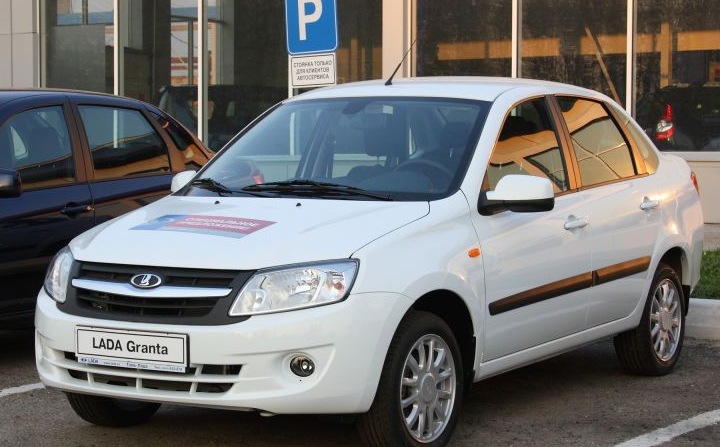
The Lada Granta I Sedan 1.6 (87 hp) Automatic, produced between 2011 and 2018, represented an entry-level offering within the broader Granta range. The Granta itself was a significant model for AvtoVAZ, Russia’s largest automobile manufacturer, designed to replace the aging Lada Classic series (specifically the Lada 2105, 2106, and 2107). Positioned as an affordable and practical sedan, the 1.6L automatic variant aimed to provide a convenient, albeit modestly powered, option for buyers prioritizing ease of use over outright performance. It was built on the R90 platform, a modified version of the older 2190 platform, and played a crucial role in modernizing Lada’s lineup and appealing to a wider customer base within Russia and export markets.
Technical Specifications
| Brand | Lada |
| Model | Granta |
| Generation | Granta I Sedan |
| Type (Engine) | 1.6 (87 Hp) Automatic |
| Start of production | 2011 |
| End of production | 2018 |
| Powertrain Architecture | Internal Combustion engine |
| Body type | Sedan |
| Seats | 5 |
| Doors | 4 |
| Fuel consumption (urban) | 10.4 l/100 km (22.6 US mpg, 27.2 UK mpg, 9.6 km/l) |
| Fuel consumption (extra urban) | 6.1 l/100 km (38.6 US mpg, 46.3 UK mpg, 16.4 km/l) |
| Fuel consumption (combined) | 7.7 l/100 km (30.5 US mpg, 36.7 UK mpg, 13 km/l) |
| Fuel Type | Petrol (Gasoline) |
| Acceleration 0 – 100 km/h | 14.2 sec |
| Acceleration 0 – 62 mph | 14.2 sec |
| Acceleration 0 – 60 mph | 13.5 sec |
| Maximum speed | 160 km/h (99.42 mph) |
| Weight-to-power ratio | 12.4 kg/Hp, 80.9 Hp/tonne |
| Weight-to-torque ratio | 7.7 kg/Nm, 130.2 Nm/tonne |
| Power | 87 Hp @ 5100 rpm |
| Power per litre | 54.5 Hp/l |
| Torque | 140 Nm @ 3800 rpm (103.26 lb.-ft. @ 3800 rpm) |
| Engine layout | Front, Transverse |
| Engine Model/Code | 11186 |
| Engine displacement | 1596 cm3 (97.39 cu. in.) |
| Number of cylinders | 4 |
| Engine configuration | Inline |
| Number of valves per cylinder | 2 |
| Fuel injection system | Multi-port manifold injection |
| Engine aspiration | Naturally aspirated engine |
| Engine oil capacity | 4.4 l (4.65 US qt | 3.87 UK qt) |
| Coolant capacity | 6.5 l (6.87 US qt | 5.72 UK qt) |
| Kerb Weight | 1075 kg (2369.97 lbs.) |
| Max. weight | 1560 kg (3439.21 lbs.) |
| Max load | 485 kg (1069.24 lbs.) |
| Trunk (boot) space – minimum | 520 l (18.36 cu. ft.) |
| Fuel tank capacity | 50 l (13.21 US gal | 11 UK gal) |
| Permitted trailer load with brakes (12%) | 900 kg (1984.16 lbs.) |
| Permitted trailer load without brakes | 450 kg (992.08 lbs.) |
| Length | 4260 mm (167.72 in.) |
| Width | 1700 mm (66.93 in.) |
| Height | 1500 mm (59.06 in.) |
| Wheelbase | 2476 mm (97.48 in.) |
| Front track | 1430 mm (56.3 in.) |
| Rear (Back) track | 1414 mm (55.67 in.) |
| Ride height (ground clearance) | 145 mm (5.71 in.) |
| Drivetrain Architecture | The Internal combustion engine (ICE) drives the front wheels of the vehicle. |
| Drive wheel | Front wheel drive |
| Number of gears and type of gearbox | 4 gears, automatic transmission |
| Front suspension | Independent, type McPherson with coil spring and anti-roll bar |
| Rear suspension | Semi-independent, coil spring |
| Assisting systems | ABS (Anti-lock braking system) |
| Steering type | Steering rack and pinion |
| Tires size | 175/65 R14; 185/60 R14 |
| Wheel rims size | 14 |
Powertrain & Engine Architecture
The Lada Granta 1.6 Automatic utilized the AvtoVAZ 11186 engine, an 8-valve, 1.6-liter inline-four cylinder gasoline engine. This engine, a descendant of the long-running VAZ-2108 powerplant, featured a cast iron block and aluminum cylinder head. Fuel delivery was managed by a multi-point fuel injection system, a significant upgrade from the carburetors found on earlier Lada models. The engine produced 87 horsepower at 5100 rpm and 140 Nm (103 lb-ft) of torque at 3800 rpm. Paired with this engine was a 4-speed automatic transmission, a relatively uncommon feature in the budget car segment at the time. This transmission, while providing convenience, was known for its relatively slow shift times and limited number of gears compared to more modern automatics.
Driving Characteristics
The 1.6L automatic Granta offered a comfortable, if uninspiring, driving experience. Acceleration was modest, with a 0-60 mph time of around 13.5 seconds. The 4-speed automatic transmission meant that the engine often operated at higher RPMs during highway cruising, impacting fuel economy and noise levels. Compared to the 5-speed manual version of the same engine, the automatic suffered a noticeable performance deficit. The automatic was geared more towards relaxed city driving than spirited performance. The suspension, tuned for comfort, provided a reasonably smooth ride on typical road surfaces, but handling was not particularly sharp.
Equipment & Trim Levels
The Granta 1.6 Automatic typically came with a base level of equipment. Standard features included power steering, central locking, electric front windows, and an ABS anti-lock braking system. Interior upholstery was typically cloth, and the dashboard featured a simple, functional design. Optional extras included air conditioning, a radio with CD player, and power windows for the rear doors. The trim level was generally considered entry-level, focusing on providing basic transportation at an affordable price point. Higher trim levels within the Granta range, such as those equipped with the 1.6L 16-valve engine or featuring more luxurious interior appointments, were available at a higher cost.
Chassis & Braking
The Granta I Sedan utilized a McPherson strut independent suspension setup at the front, providing a reasonable level of ride comfort. The rear suspension was a semi-independent torsion beam design, a cost-effective solution commonly found in vehicles of this class. Braking consisted of disc brakes on the front wheels and drum brakes on the rear. ABS was standard, enhancing braking performance and safety. The steering system employed a rack and pinion setup, offering adequate precision for everyday driving. The relatively lightweight construction of the Granta (approximately 1075 kg or 2369 lbs) helped to mitigate the performance limitations of the 87 hp engine.
Market Reception & Comparison
The Lada Granta 1.6 Automatic was generally viewed as a practical and affordable option in the Russian market. Critics acknowledged its value for money but often pointed to its lack of refinement and modest performance. Compared to other automatic transmission options available at the time, such as the Renault Logan or Hyundai Solaris, the Granta offered a lower price point but lacked the same level of sophistication. Fuel economy was reasonable for its class, but not exceptional. Reliability was generally considered acceptable, although the automatic transmission was sometimes cited as a potential weak point.
Legacy
The Lada Granta, and specifically the 1.6L Automatic variant, played a significant role in revitalizing the Lada brand. While not known for groundbreaking technology or performance, it provided a reliable and affordable transportation solution for a large segment of the Russian population. In the used car market, the Granta 1.6 Automatic remains a popular choice for budget-conscious buyers. The 11186 engine, while aging, is relatively simple to maintain and repair, and parts availability is generally good. However, potential buyers should be aware of the limitations of the 4-speed automatic transmission and the potential for age-related wear and tear.

