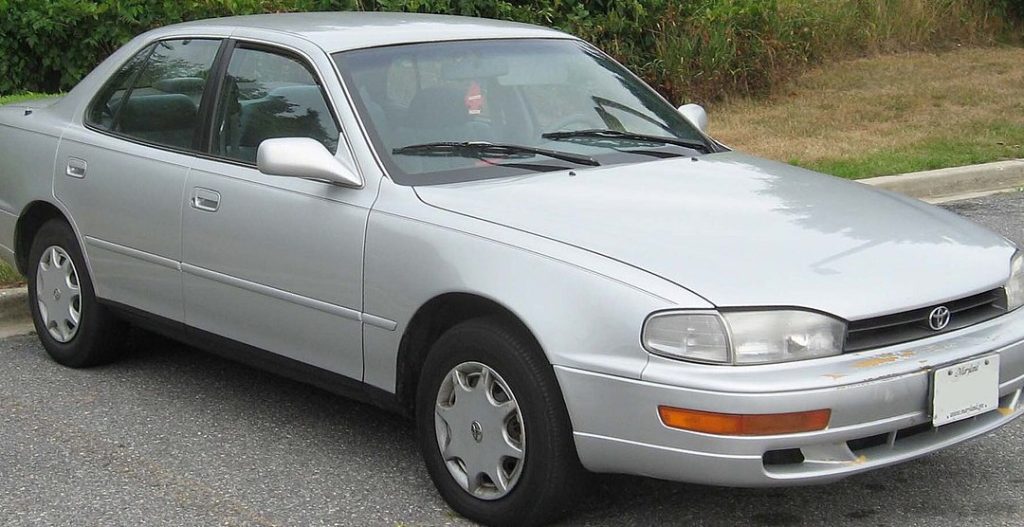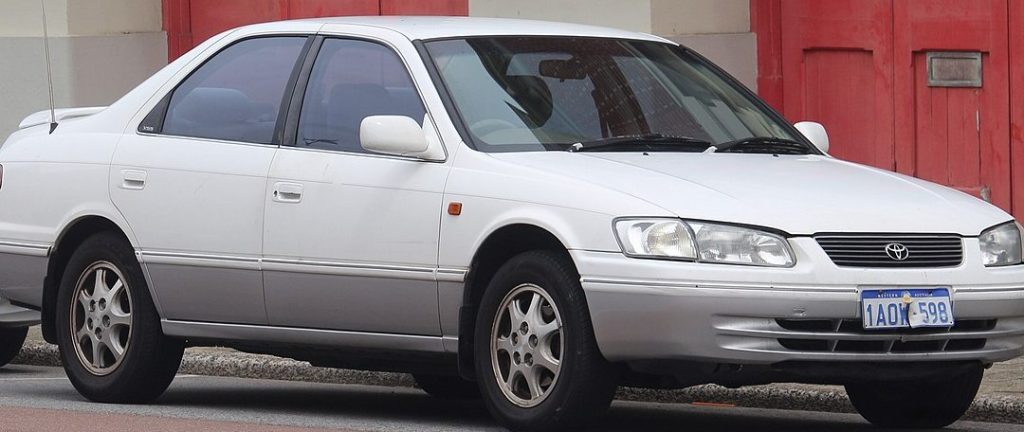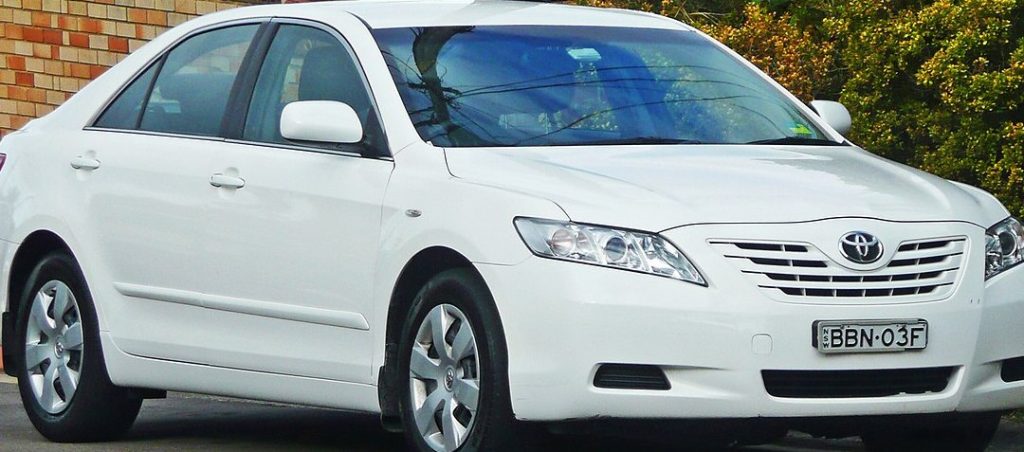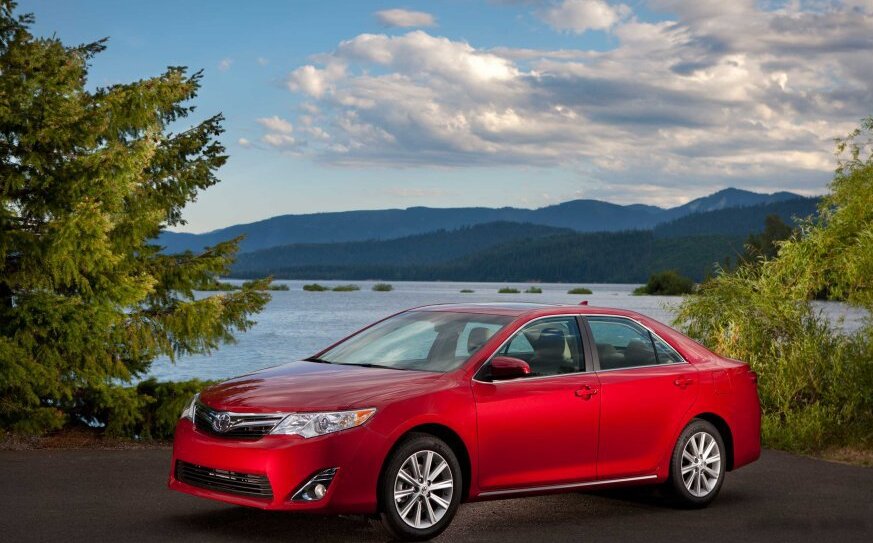
The Toyota Camry VII (XV50) 2.5, produced between 2011 and 2014, represented a significant evolution of Toyota’s globally successful mid-size sedan. This generation Camry, built on the XV50 platform, aimed to balance comfort, reliability, and a more contemporary driving experience. The 2.5-liter variant, generating 181 horsepower and paired with a six-speed automatic transmission, occupied a key position in the Camry lineup, offering a step up in performance from the base 2.0-liter engine while remaining more accessible than the hybrid model. It was primarily marketed towards families and individuals seeking a dependable and spacious vehicle with a reasonable level of refinement.
Technical Specifications
| Brand | Toyota |
| Model | Camry |
| Generation | Camry VII (XV50) |
| Type (Engine) | 2.5 (181 Hp) Automatic |
| Start of production | 2011 |
| End of production | 2014 |
| Powertrain Architecture | Internal Combustion engine |
| Body type | Sedan |
| Seats | 5 |
| Doors | 4 |
| Fuel Type | Petrol (Gasoline) |
| Acceleration 0 – 100 km/h | 9 sec |
| Acceleration 0 – 62 mph | 9 sec |
| Acceleration 0 – 60 mph | 8.6 sec |
| Maximum speed | 210 km/h (130.49 mph) |
| Weight-to-power ratio | 8.3 kg/Hp, 119.9 Hp/tonne |
| Weight-to-torque ratio | 6.5 kg/Nm, 153 Nm/tonne |
| Power | 181 Hp @ 6000 rpm |
| Power per litre | 72.6 Hp/l |
| Torque | 231 Nm @ 4100 rpm (170.38 lb.-ft. @ 4100 rpm) |
| Engine layout | Front, Transverse |
| Engine Model/Code | 2AR-FE |
| Engine displacement | 2494 cm3 (152.19 cu. in.) |
| Number of cylinders | 4 |
| Engine configuration | Inline |
| Cylinder Bore | 90 mm (3.54 in.) |
| Piston Stroke | 98 mm (3.86 in.) |
| Compression ratio | 10.4:1 |
| Number of valves per cylinder | 4 |
| Fuel injection system | Multi-port manifold injection |
| Engine aspiration | Naturally aspirated engine |
| Engine oil capacity | 4.4 l (4.65 US qt | 3.87 UK qt) |
| Coolant | 7.3 l (7.71 US qt | 6.42 UK qt) |
| Kerb Weight | 1510 kg (3328.98 lbs.) |
| Max. weight | 2100 kg (4629.71 lbs.) |
| Max load | 590 kg (1300.73 lbs.) |
| Trunk (boot) space – minimum | 506 l (17.87 cu. ft.) |
| Fuel tank capacity | 70 l (18.49 US gal | 15.4 UK gal) |
| Length | 4825 mm (189.96 in.) |
| Width | 1825 mm (71.85 in.) |
| Height | 1480 mm (58.27 in.) |
| Wheelbase | 2775 mm (109.25 in.) |
| Front track | 1575 mm (62.01 in.) |
| Rear (Back) track | 1565 mm (61.61 in.) |
| Ride height (ground clearance) | 160 mm (6.3 in.) |
| Drivetrain Architecture | The Internal combustion engine (ICE) drives the front wheels of the vehicle. |
| Drive wheel | Front wheel drive |
| Number of gears and type of gearbox | 6 gears, automatic transmission |
| Front suspension | Independent, type McPherson with coil spring and anti-roll bar |
| Rear suspension | Independent multi-link spring suspension with stabilizer |
| Front brakes | Ventilated discs |
| Rear brakes | Disc |
| Assisting systems | ABS (Anti-lock braking system) |
| Steering type | Steering rack and pinion |
| Power steering | Electric Steering |
| Tires size | 215/60 R16; 215/55 R17 |
| Wheel rims size | 16; 17 |
Powertrain & Engine Architecture
The heart of the XV50 2.5 Camry was the 2AR-FE engine, a 2.5-liter inline-four cylinder gasoline engine. This engine featured a dual independent variable valve timing system (VVT-i) on both intake and exhaust camshafts, optimizing performance and fuel efficiency across the rev range. The 2AR-FE utilized multi-port fuel injection, delivering fuel directly into the intake ports. The engine’s construction included an aluminum alloy cylinder head and block, contributing to weight reduction. Paired with this engine was a six-speed automatic transmission, replacing the older four-speed unit found in previous Camry generations. This new transmission offered smoother shifts and improved fuel economy. The transmission was electronically controlled, adapting shift patterns based on driving conditions and throttle input.
Driving Characteristics
The 2.5-liter Camry Automatic offered a comfortable and predictable driving experience. While not a sports sedan, the 181 horsepower and 170 lb-ft of torque provided adequate acceleration for everyday driving situations. The six-speed automatic transmission was well-tuned, offering smooth and timely shifts. Compared to the base 2.0-liter engine, the 2.5-liter variant provided noticeably more power, particularly when merging onto highways or overtaking other vehicles. However, it didn’t possess the same level of responsiveness as the available V6 engine. The automatic transmission’s gear ratios were optimized for fuel efficiency, resulting in a relaxed cruising experience. The Camry’s suspension was tuned for comfort, absorbing bumps and imperfections in the road effectively.
Equipment & Trim Levels
The 2.5-liter Camry typically came standard with features such as air conditioning, power windows and locks, a basic audio system with CD player, and keyless entry. Higher trim levels, such as the XLE, added features like leather upholstery, a sunroof, upgraded audio systems (often with navigation), and automatic climate control. Optional extras included features like a backup camera, Bluetooth connectivity, and alloy wheels. Interior upholstery was typically cloth on the base models, with leather available on higher trims. The dashboard layout was functional and user-friendly, with clearly labeled controls.
Chassis & Braking
The XV50 Camry utilized a front-wheel-drive layout. The front suspension consisted of a MacPherson strut design with coil springs and an anti-roll bar, while the rear suspension employed an independent multi-link setup, also with a stabilizer bar. This suspension configuration provided a good balance between ride comfort and handling. Braking duties were handled by ventilated disc brakes at the front and solid disc brakes at the rear. Anti-lock braking system (ABS) was standard, enhancing safety during emergency braking situations. Steering was rack-and-pinion with electric power assist, providing a light and responsive feel.
Market Reception & Comparison
The Camry VII (XV50) 2.5 Automatic was generally well-received by automotive critics. It was praised for its comfortable ride, spacious interior, and improved fuel economy compared to previous generations. However, some critics noted that the driving experience was somewhat bland and lacked the engagement of some competitors. Compared to the base 2.0-liter Camry, the 2.5-liter variant offered a significant performance upgrade, justifying the higher price point for many buyers. The hybrid Camry offered even better fuel economy, but at a considerably higher cost. Reliability was a key strength of the XV50 Camry, and the 2.5-liter engine proved to be durable and dependable.
Legacy
The Toyota Camry XV50 2.5 Automatic has proven to be a reliable and long-lasting vehicle. On the used car market, these Camrys are often sought after for their reputation for dependability and relatively low maintenance costs. The 2AR-FE engine is known for its robustness, and with proper maintenance, it can easily exceed 200,000 miles. While not a particularly exciting vehicle to drive, the XV50 2.5 Camry remains a practical and sensible choice for those seeking a comfortable, spacious, and reliable mid-size sedan. Its continued presence on roads today is a testament to Toyota’s engineering and build quality.