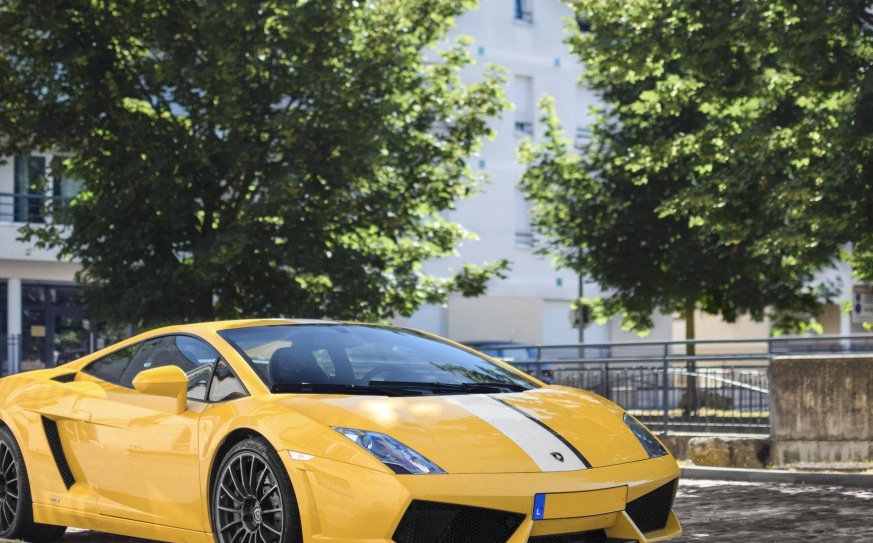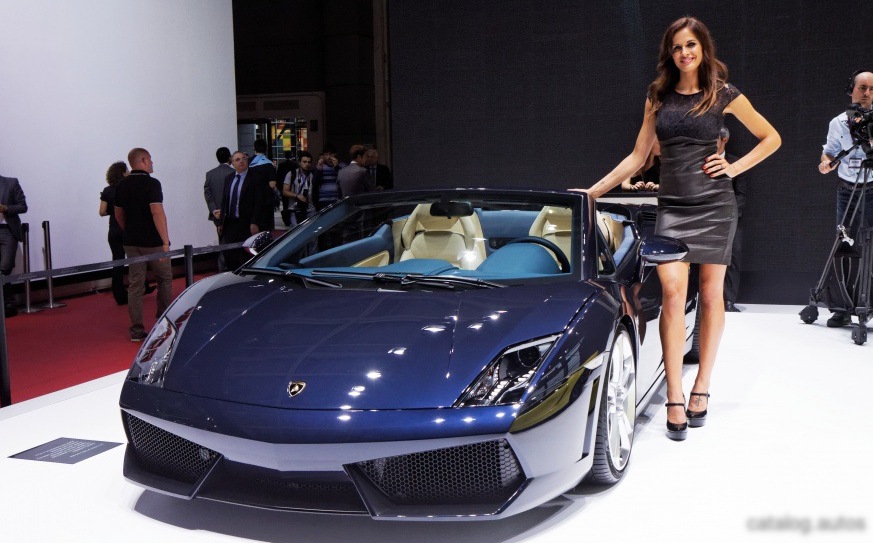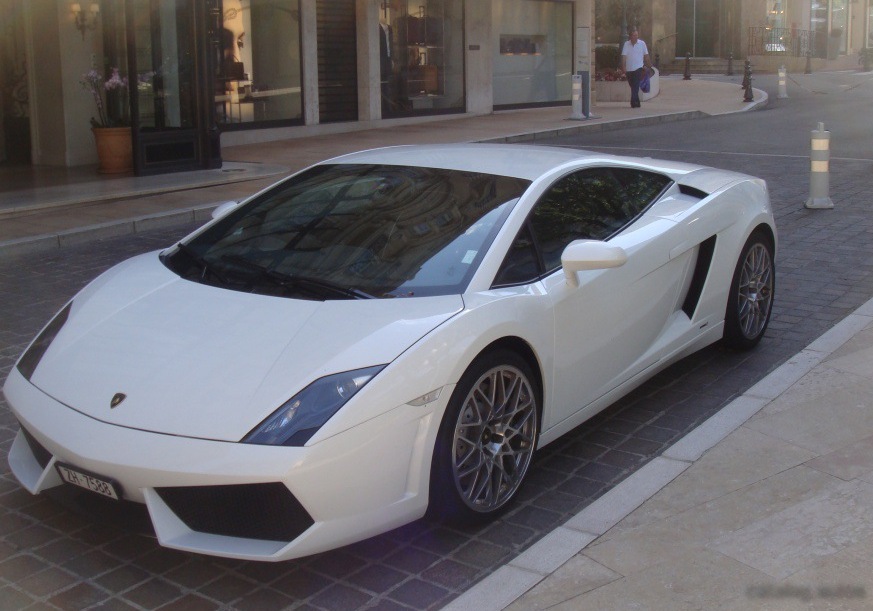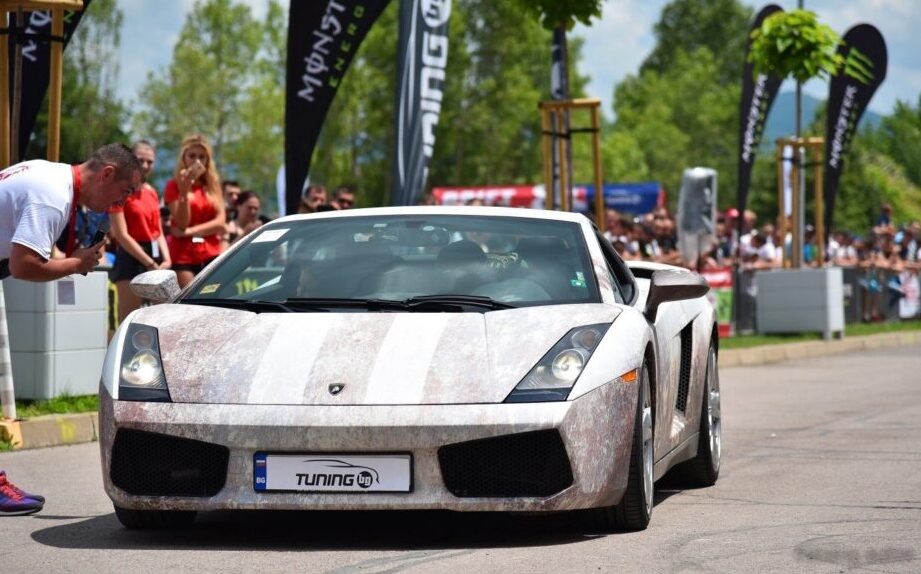
The Lamborghini Gallardo Coupe 5.0 V10, produced from 2003 to 2005, represents the initial iteration of Lamborghini’s entry-level model, designed to broaden the brand’s appeal and increase production volume. Positioned as a direct competitor to the Ferrari 360 Modena and other mid-engine supercars, the Gallardo marked a significant departure for Lamborghini, utilizing a new platform and a naturally aspirated 5.0-liter V10 engine. This first generation, internally designated as the 1J9, laid the foundation for the successful Gallardo lineage, which continued with various updates and performance enhancements throughout its production run. The 500 horsepower, all-wheel drive configuration with the E-Gear automated manual transmission was a cornerstone of the early Gallardo experience, offering a blend of exotic performance and relative usability.
Technical Specifications
| Brand | Lamborghini |
| Model | Gallardo |
| Generation | Gallardo Coupe |
| Type (Engine) | 5.0 V10 (500 Hp) AWD E-Gear |
| Start of production | 2003 |
| End of production | 2005 |
| Powertrain Architecture | Internal Combustion engine |
| Body type | Coupe |
| Seats | 2 |
| Doors | 2 |
| Fuel consumption (urban) | 29.1 l/100 km (8.1 US mpg, 9.7 UK mpg, 3.4 km/l) |
| Fuel consumption (extra urban) | 13.9 l/100 km (16.9 US mpg, 20.3 UK mpg, 7.2 km/l) |
| Fuel consumption (combined) | 19.5 l/100 km (12.1 US mpg, 14.5 UK mpg, 5.1 km/l) |
| CO2 emissions | 450 g/km |
| Fuel Type | Petrol (Gasoline) |
| Acceleration 0 – 100 km/h | 4.2 sec |
| Acceleration 0 – 62 mph | 4.2 sec |
| Acceleration 0 – 60 mph | 4 sec |
| Maximum speed | 309 km/h (192 mph) |
| Emission standard | Euro 3 |
| Weight-to-power ratio | 2.9 kg/Hp, 349.7 Hp/tonne |
| Weight-to-torque ratio | 2.8 kg/Nm, 356.6 Nm/tonne |
| Power | 500 Hp @ 7800 rpm |
| Power per litre | 100.8 Hp/l |
| Torque | 510 Nm @ 4500 rpm (376.16 lb.-ft. @ 4500 rpm) |
| Engine layout | Middle, Longitudinal |
| Engine Model/Code | 07L |
| Engine displacement | 4961 cm3 (302.74 cu. in.) |
| Number of cylinders | 10 |
| Engine configuration | V-engine |
| Cylinder Bore | 82.5 mm (3.25 in.) |
| Piston Stroke | 92.8 mm (3.65 in.) |
| Compression ratio | 11:1 |
| Number of valves per cylinder | 4 |
| Fuel injection system | Multi-port manifold injection |
| Engine aspiration | Naturally aspirated engine |
| Valvetrain | DOHC, VVT |
| Engine oil capacity | 9.5 l (10.04 US qt | 8.36 UK qt) |
| Coolant | 21 l (22.19 US qt | 18.48 UK qt) |
| Kerb Weight | 1430 kg (3152.61 lbs.) |
| Trunk (boot) space – minimum | 110 l (3.88 cu. ft.) |
| Fuel tank capacity | 90 l (23.78 US gal | 19.8 UK gal) |
| Length | 4300 mm (169.29 in.) |
| Width | 1900 mm (74.8 in.) |
| Height | 1165 mm (45.87 in.) |
| Wheelbase | 2560 mm (100.79 in.) |
| Front track | 1622 mm (63.86 in.) |
| Rear (Back) track | 1592 mm (62.68 in.) |
| Drag coefficient (Cd) | 0.36 |
| Minimum turning circle (turning diameter) | 11.5 m (37.73 ft.) |
| Drive wheel | All wheel drive (4×4) |
| Number of gears and type of gearbox | 6 gears, automatic transmission E-Gear |
| Front suspension | Double wishbone |
| Rear suspension | Double wishbone |
| Front brakes | Ventilated discs |
| Rear brakes | Ventilated discs |
| Assisting systems | ABS (Anti-lock braking system) |
| Steering type | Steering rack and pinion |
| Tires size | 235/35 R19; 295/30 R19 |
| Wheel rims size | 8.5J x 19; 11J x 19 |
Powertrain & Engine Architecture
At the heart of the early Gallardo Coupe lies the 07L engine, a 4.961-liter naturally aspirated V10. This engine, derived from Audi’s modular engine family, boasts a 90-degree V-angle and utilizes an aluminum alloy block and cylinder heads. It features multi-point fuel injection and double overhead camshafts (DOHC) with variable valve timing (VVT) on both intake and exhaust valves. The engine produces 500 horsepower at 7800 rpm and 376 lb-ft of torque at 4500 rpm. The E-Gear transmission, a six-speed automated manual, was a key feature. It allowed for both fully automatic operation and manual gear changes via steering wheel-mounted paddles, offering a compromise between convenience and driver engagement. The E-Gear system utilized electronically controlled actuators to shift gears, resulting in quicker shifts than a traditional manual transmission, though not as smooth as a conventional automatic.
Driving Characteristics
The Gallardo Coupe 5.0 V10 with the E-Gear transmission delivered exhilarating performance. Acceleration from 0 to 60 mph took approximately 4 seconds, and it could reach a top speed of 192 mph. The all-wheel drive system provided excellent traction, particularly during acceleration and cornering. However, the E-Gear transmission could be somewhat jerky at low speeds, and some drivers found the automated shifts less refined than those of a traditional automatic. Compared to later Gallardo models with updated transmissions and increased power, the early 5.0-liter version offered a more raw and visceral driving experience. The gear ratios were tuned for acceleration, prioritizing responsiveness over fuel economy.
Equipment & Trim Levels
The base Gallardo Coupe came standard with a relatively sparse but focused set of features. The interior was characterized by a driver-focused cockpit with leather upholstery, aluminum trim, and a simple, functional dashboard layout. Standard equipment included air conditioning, power windows, and a basic audio system. Optional extras were plentiful, allowing buyers to personalize their Gallardo with features such as upgraded audio systems, navigation, carbon fiber interior trim, and various exterior styling enhancements. The early Gallardos were not heavily laden with technology compared to modern supercars, emphasizing the driving experience above all else.
Chassis & Braking
The Gallardo Coupe utilized a space frame chassis constructed from aluminum, providing a lightweight and rigid platform. The suspension consisted of double wishbones at all four corners, offering a balance between ride comfort and handling precision. Braking duties were handled by ventilated disc brakes on all four wheels, equipped with ABS. The early Gallardo models did not feature carbon-ceramic brakes as an option, which became available in later iterations. The chassis was designed to maximize rigidity and minimize weight, contributing to the car’s agile handling characteristics.
Market Reception & Comparison
The Lamborghini Gallardo was initially met with positive reviews, praised for its stunning design, exhilarating performance, and relatively accessible price point compared to other supercars. Critics noted the E-Gear transmission’s occasional quirks but generally appreciated its speed and responsiveness. Compared to the Ferrari 360 Modena, the Gallardo offered a more aggressive styling and a more raw driving experience. However, the Ferrari was often lauded for its more refined transmission and overall build quality. Fuel economy was predictably poor, averaging around 12 mpg in combined driving, and maintenance costs were substantial, typical of a high-performance exotic car.
Legacy
The early Gallardo Coupe 5.0 V10 established the Gallardo as a successful model for Lamborghini, significantly increasing the brand’s sales and visibility. While the 5.0-liter engine was relatively short-lived, replaced by a 5.2-liter version in 2006, it remains a desirable and collectible variant. The E-Gear transmission, while not without its flaws, paved the way for the dual-clutch transmissions that are now commonplace in high-performance cars. Today, well-maintained examples of the 2003-2005 Gallardo Coupe 5.0 V10 command a premium in the used car market, appealing to collectors and enthusiasts seeking a taste of early 21st-century Lamborghini performance.