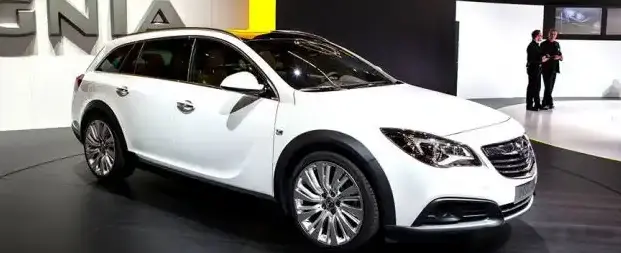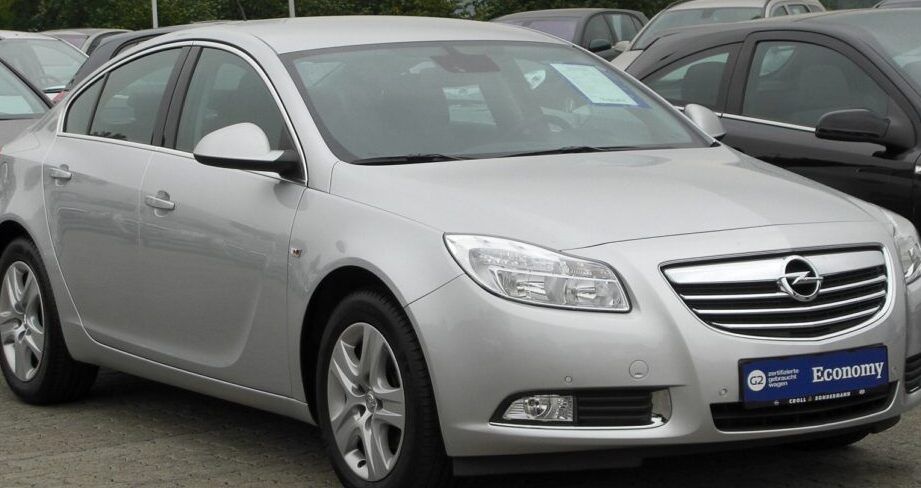
The Opel Insignia Sedan (A) 2.0 BiTurbo CDTI Automatic, produced from 2011 to June 2013, represented a significant offering in the mid-size sedan segment. Positioned as a premium trim within the broader Insignia A range, it aimed to deliver a blend of performance, efficiency, and comfort. This variant utilized a sophisticated twin-turbo diesel engine paired with a six-speed automatic transmission, targeting buyers seeking a refined driving experience without sacrificing power. The Insignia A, launched in 2008, was Opel’s flagship model, intended to replace the Vectra and Signum, and quickly became a popular choice in Europe, offering a more modern and stylish alternative to established competitors.
Technical Specifications
| Brand | Opel |
| Model | Insignia |
| Generation | Insignia Sedan (A) |
| Type (Engine) | 2.0 BiTurbo CDTI (195 Hp) Automatic |
| Start of production | 2011 |
| End of production | June, 2013 |
| Powertrain Architecture | Internal Combustion engine |
| Body type | Sedan |
| Seats | 5 |
| Doors | 4 |
| Fuel consumption (urban) | 7.8 l/100 km (30.2 US mpg) |
| Fuel consumption (extra urban) | 4.7 l/100 km (50 US mpg) |
| Fuel consumption (combined) | 5.9 l/100 km (39.9 US mpg) |
| CO2 emissions | 155 g/km |
| Fuel Type | Diesel |
| Acceleration 0 – 100 km/h | 8.8 sec |
| Acceleration 0 – 62 mph | 8.8 sec |
| Acceleration 0 – 60 mph | 8.4 sec |
| Maximum speed | 229 km/h (142.29 mph) |
| Emission standard | Euro 5 |
| Weight-to-power ratio | 7.7 kg/Hp |
| Weight-to-torque ratio | 3.8 kg/Nm |
| Power | 195 Hp @ 4000 rpm |
| Torque | 400 Nm @ 2000 rpm (295.02 lb.-ft. @ 2000 rpm) |
| Engine layout | Front, Transverse |
| Engine Model/Code | A20DTR |
| Engine displacement | 1956 cm3 (119.36 cu. in.) |
| Number of cylinders | 4 |
| Engine configuration | Inline |
| Cylinder Bore | 83 mm (3.27 in.) |
| Piston Stroke | 90.4 mm (3.56 in.) |
| Number of valves per cylinder | 4 |
| Fuel injection system | Diesel Commonrail |
| Engine aspiration | BiTurbo, Intercooler |
| Valvetrain | OHC |
| Engine oil capacity | 4.5 l (4.76 US qt | 3.96 UK qt) |
| Coolant | 9 l (9.51 US qt | 7.92 UK qt) |
| Kerb Weight | 1503 kg (3313.55 lbs.) |
| Max. weight | 2020 kg (4453.34 lbs.) |
| Max load | 517 kg (1139.79 lbs.) |
| Trunk (boot) space – minimum | 500 l (17.66 cu. ft.) |
| Trunk (boot) space – maximum | 1010 l (35.67 cu. ft.) |
| Fuel tank capacity | 70 l (18.49 US gal | 15.4 UK gal) |
| Length | 4830 mm (190.16 in.) |
| Width | 1856 mm (73.07 in.) |
| Height | 1498 mm (58.98 in.) |
| Wheelbase | 2737 mm (107.76 in.) |
| Front track | 1585 mm (62.4 in.) |
| Rear (Back) track | 1587 mm (62.48 in.) |
| Ride height (ground clearance) | 160 mm (6.3 in.) |
| Minimum turning circle | 10.8 m (35.43 ft.) |
| Drivetrain Architecture | Front wheel drive |
| Number of gears | 6 |
| Type of gearbox | automatic transmission |
| Front brakes | Ventilated discs |
| Rear brakes | Disc |
| Tires size | 215/60 R16; 225/55 R17; 245/45 R18 |
| Wheel rims size | 16; 17; 18 |
Powertrain & Engine Architecture
The heart of the Insignia 2.0 BiTurbo CDTI was the A20DTR engine, a 1.956-liter inline-four cylinder diesel. This engine employed a sophisticated twin-turbocharger setup – a smaller turbo for quick spool-up and responsiveness at low RPM, and a larger turbo for increased power at higher engine speeds. The common rail direct injection system, operating at extremely high pressures, ensured precise fuel delivery and optimized combustion. The engine featured an overhead camshaft (OHC) valvetrain with four valves per cylinder, contributing to its efficient breathing. The six-speed automatic transmission, sourced from Aisin, was chosen for its smooth shifting characteristics and ability to handle the engine’s substantial 400 Nm (295 lb-ft) of torque. This transmission was programmed for both comfort and efficiency, with adaptive shift patterns based on driving style and conditions.
Driving Characteristics
The 195 horsepower and 400 Nm of torque delivered by the 2.0 BiTurbo CDTI Automatic provided brisk acceleration, with a 0-60 mph time of around 8.4 seconds and a top speed of 142 mph. While not as overtly sporty as some of its rivals, the Insignia offered a comfortable and composed driving experience. The automatic transmission, while smooth, wasn’t particularly quick to downshift, meaning that overtaking maneuvers sometimes required a deliberate kickdown. Compared to the lower-powered 1.8L petrol versions, the BiTurbo CDTI offered significantly more torque and a broader powerband, making it more effortless on long journeys and when carrying a full load. It also outperformed the 2.0L turbo diesel with single turbo, offering a more responsive and powerful experience. The gear ratios were tuned for fuel efficiency, but also provided adequate performance in most driving situations.
Equipment & Trim Levels
The 2.0 BiTurbo CDTI Automatic typically came well-equipped, often positioned as a mid-to-high trim level. Standard features included climate control, alloy wheels (typically 17 or 18 inch), a CD/radio system with auxiliary input, and electric windows and mirrors. Higher trim levels added features like leather upholstery, heated front seats, a navigation system, and parking sensors. Interior upholstery was generally a combination of cloth and leatherette, with full leather options available. The dashboard layout was modern and functional, with a focus on ergonomics. Optional extras included a panoramic sunroof, adaptive cruise control, and a premium sound system.
Chassis & Braking
The Insignia Sedan (A) utilized a MacPherson strut front suspension and a multi-link rear suspension, providing a good balance between ride comfort and handling. The 2.0 BiTurbo CDTI models typically featured slightly stiffer suspension components compared to the lower-powered variants to cope with the increased weight and power. Braking was handled by ventilated discs at the front and solid discs at the rear, with ABS (Anti-lock Braking System) as standard. Stabilizer bars were fitted front and rear to reduce body roll during cornering. The steering was power-assisted and offered a reasonable level of feedback.
Market Reception & Comparison
The Opel Insignia 2.0 BiTurbo CDTI Automatic was generally well-received by automotive critics. It was praised for its refined engine, comfortable ride, and spacious interior. However, some reviewers noted that the automatic transmission could feel a little sluggish at times. Compared to rivals like the Ford Mondeo and Volkswagen Passat, the Insignia offered a more distinctive styling and a slightly more premium feel. Fuel economy was competitive, averaging around 40 mpg in combined driving. Reliability was generally good, although some owners reported minor issues with the electronic systems.
Legacy
The Opel Insignia A, and specifically the 2.0 BiTurbo CDTI Automatic variant, has proven to be a relatively reliable vehicle in the used car market. The A20DTR engine, while complex, is generally robust when properly maintained. Regular servicing, including oil changes and filter replacements, is crucial for long-term reliability. Common issues include turbocharger wear and potential problems with the diesel particulate filter (DPF), particularly on vehicles that have spent a lot of time in city driving. Today, the Insignia A represents a good value proposition for buyers seeking a comfortable, well-equipped, and relatively efficient mid-size sedan.