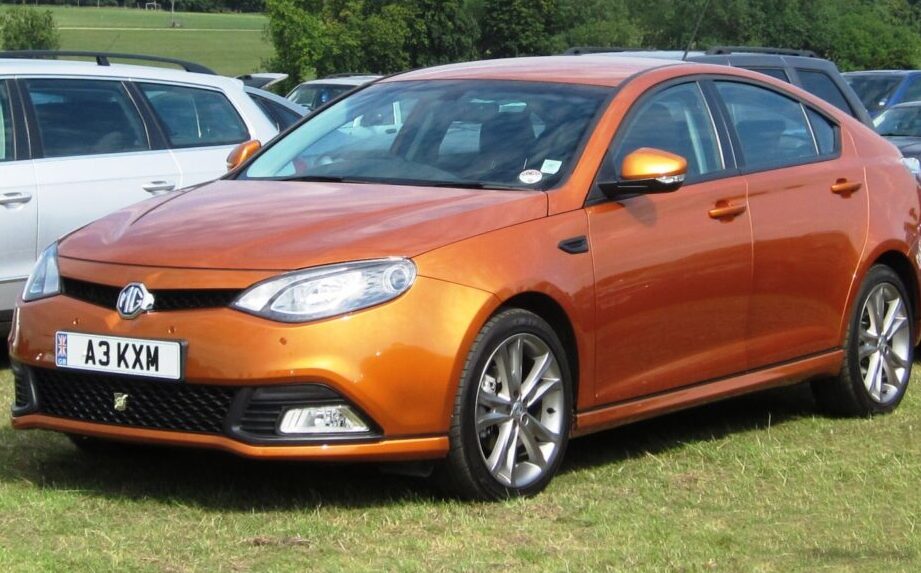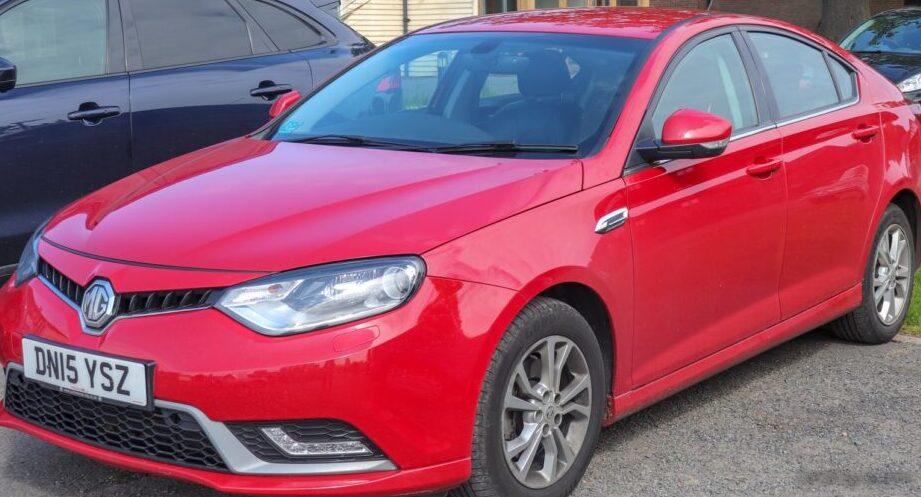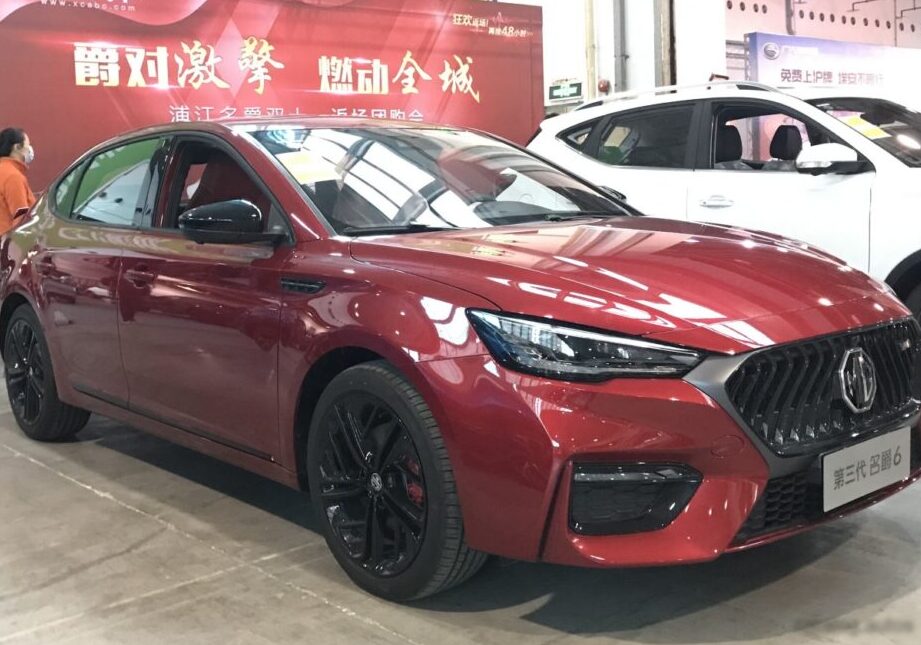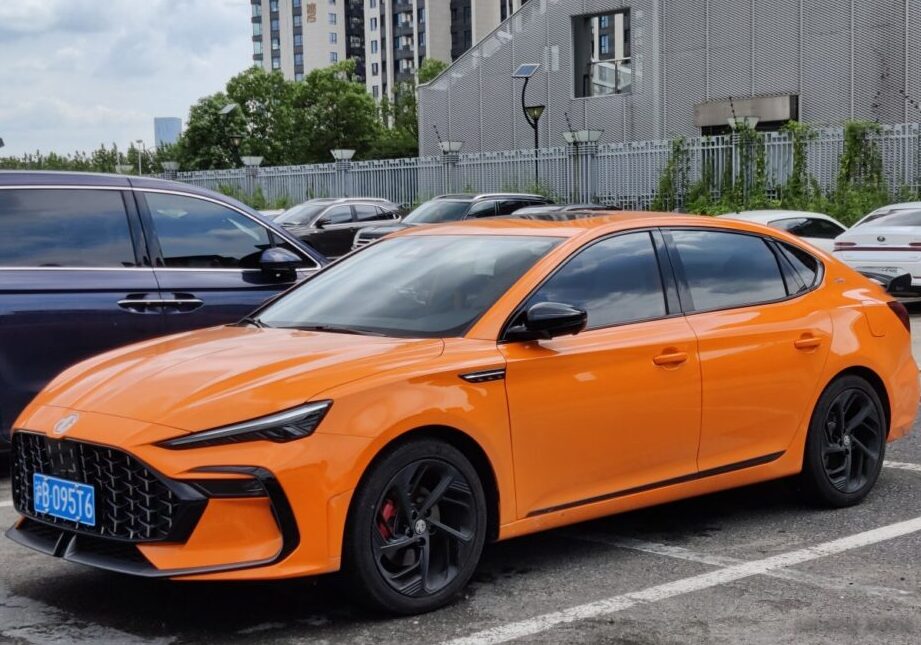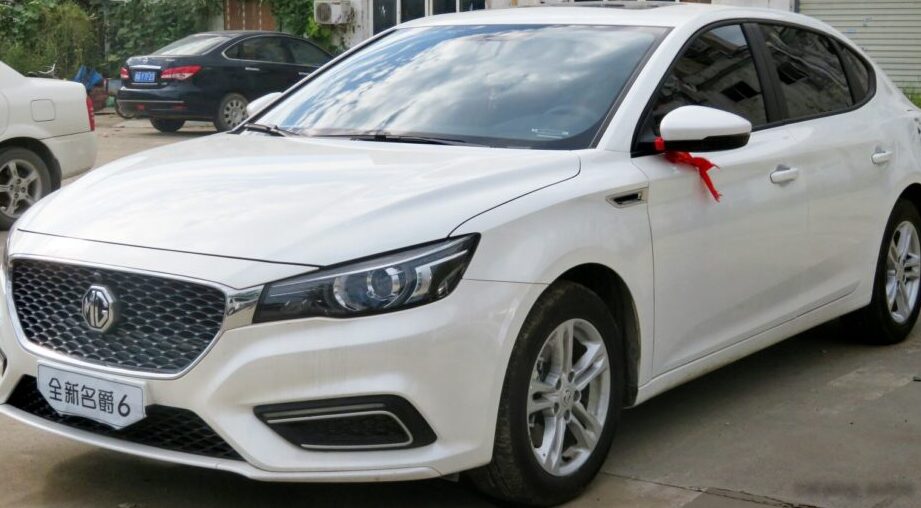
The MG6 II 1.5 TGI (169 hp) was a liftback produced by MG Motor from November 2017 to July 2020. Positioned as a mid-range offering within the MG6 II lineup, it aimed to provide a balance of performance, fuel efficiency, and modern features in a competitive segment. The MG6 II represented MG’s attempt to re-establish itself in the passenger car market, particularly targeting buyers in China where it was primarily sold. This model was built on the platform originally developed under SAIC Motor, MG’s parent company, and represented a significant step up in design and technology compared to earlier MG offerings.
Technical Specifications
| Brand | MG |
| Model | MG6 |
| Generation | MG6 II |
| Type (Engine) | 1.5 TGI (169 Hp) |
| Start of production | November, 2017 |
| End of production | July, 2020 |
| Powertrain Architecture | Internal Combustion engine |
| Body type | Liftback |
| Seats | 5 |
| Doors | 5 |
| Fuel consumption (urban) | 8 l/100 km (29.4 US mpg) |
| Fuel consumption (extra urban) | 4.7 l/100 km (50 US mpg) |
| Fuel consumption (combined) | 5.9 l/100 km (39.9 US mpg) |
| Fuel Type | Petrol (Gasoline) |
| Maximum speed | 210 km/h (130.49 mph) |
| Emission standard | China VI |
| Weight-to-power ratio | 7.7 kg/Hp |
| Weight-to-torque ratio | 5.2 kg/Nm |
| Power | 169 Hp @ 5500 rpm |
| Power per litre | 113.4 Hp/l |
| Torque | 250 Nm @ 1700-4300 rpm (184.39 lb.-ft.) |
| Engine layout | Front, Transverse |
| Engine Model/Code | 15E4E |
| Engine displacement | 1490 cm3 (90.93 cu. in.) |
| Number of cylinders | 4 |
| Engine configuration | Inline |
| Number of valves per cylinder | 4 |
| Fuel injection system | Direct injection |
| Engine aspiration | Turbocharger, Intercooler |
| Valvetrain | DOHC |
| Engine oil capacity | 4 l (4.23 US qt | 3.52 UK qt) |
| Coolant capacity | 5.4 l (5.71 US qt | 4.75 UK qt) |
| Kerb Weight | 1300 kg (2866.01 lbs.) |
| Trunk (boot) space – minimum | 499 l (17.62 cu. ft.) |
| Trunk (boot) space – maximum | 1383 l (48.84 cu. ft.) |
| Fuel tank capacity | 50 l (13.21 US gal | 11 UK gal) |
| Length | 4695 mm (184.84 in.) |
| Width | 1848 mm (72.76 in.) |
| Height | 1462 mm (57.56 in.) |
| Wheelbase | 2715 mm (106.89 in.) |
| Drivetrain Architecture | Front wheel drive, ICE |
| Drive wheel | Front wheel drive |
| Number of gears | 6 |
| Type of gearbox | Manual transmission |
| Front suspension | Independent type McPherson |
| Rear suspension | Independent multi-link suspension |
| Front brakes | Ventilated discs |
| Rear brakes | Disc |
| Assisting systems | ABS (Anti-lock braking system) |
| Steering type | Steering rack and pinion |
| Power steering | Electric Steering |
| Tires size | 205/55 R16; 215/50 R17 |
| Wheel rims size | 16; 17 |
Powertrain & Engine Architecture
The MG6 II 1.5 TGI was powered by the 15E4E engine, a 1.5-liter turbocharged inline-four cylinder gasoline engine. This engine utilized direct fuel injection and a double overhead camshaft (DOHC) valvetrain, contributing to its relatively high power output for its size. The turbocharger and intercooler were crucial components, boosting power and torque while mitigating turbo lag. The engine produced 169 horsepower at 5500 rpm and 250 Nm (184 lb-ft) of torque between 1700 and 4300 rpm. This broad torque curve aimed to provide good responsiveness in everyday driving situations. The engine was paired with a six-speed manual transmission, delivering power to the front wheels. The 15E4E engine was a relatively modern design, incorporating features aimed at improving fuel efficiency and reducing emissions, meeting the China VI emission standards.
Driving Characteristics
The 1.5 TGI engine, coupled with the six-speed manual transmission, offered a reasonably engaging driving experience. While not a performance-oriented variant, the turbocharger provided a noticeable boost in acceleration, particularly in the mid-range. The manual transmission allowed for greater driver control, but the gear ratios were tuned more for fuel economy than outright speed. Compared to potential higher-output versions (which were not widely available in most markets), the 1.5 TGI prioritized fuel efficiency and affordability. The power delivery was linear, making it easy to modulate the throttle for smooth driving. The front-wheel-drive configuration provided predictable handling, although it could exhibit some torque steer under hard acceleration.
Equipment & Trim Levels
The MG6 II 1.5 TGI typically came equipped with a range of standard features, including air conditioning, power windows, power mirrors, a basic audio system with USB connectivity, and ABS brakes. Higher trim levels offered additional features such as alloy wheels, a touchscreen infotainment system, a rearview camera, and automatic climate control. Interior upholstery was generally cloth, with options for leatherette in higher trims. Safety features included dual front airbags and side airbags. The MG6 II aimed to offer a competitive level of equipment for its price point, appealing to budget-conscious buyers.
Chassis & Braking
The MG6 II utilized an independent McPherson strut suspension at the front and an independent multi-link suspension at the rear. This suspension setup aimed to provide a comfortable ride while maintaining reasonable handling characteristics. The front brakes were ventilated discs, providing adequate stopping power, while the rear brakes were solid discs. Electric power steering was standard, offering light and easy steering feel. The chassis was designed to balance rigidity and weight, contributing to the car’s overall stability. Stabilizer bars were included at both the front and rear to reduce body roll during cornering.
Market Reception & Comparison
The MG6 II 1.5 TGI received mixed reviews. Critics generally praised its value for money and its relatively modern features. However, some criticized its interior quality and its overall refinement compared to established competitors. Fuel economy was generally considered good, with combined fuel consumption figures around 39.9 US mpg. Compared to other trims in the MG6 II lineup, the 1.5 TGI offered a more affordable entry point, sacrificing some performance for improved fuel efficiency. It competed with other compact liftbacks in the Chinese market, such as the Geely Emgrand GS and the Changan Yuexiang V7.
Legacy
The MG6 II 1.5 TGI, while not a groundbreaking vehicle, played a role in MG’s revitalization efforts. The 15E4E engine proved to be reasonably reliable, although long-term durability data is still emerging. In the used car market, the MG6 II 1.5 TGI represents an affordable option for buyers seeking a practical and reasonably well-equipped liftback. Maintenance costs are generally moderate, and parts availability is improving as MG’s presence in the market grows. The MG6 II 1.5 TGI serves as a reminder of MG’s ambition to become a significant player in the global automotive industry.