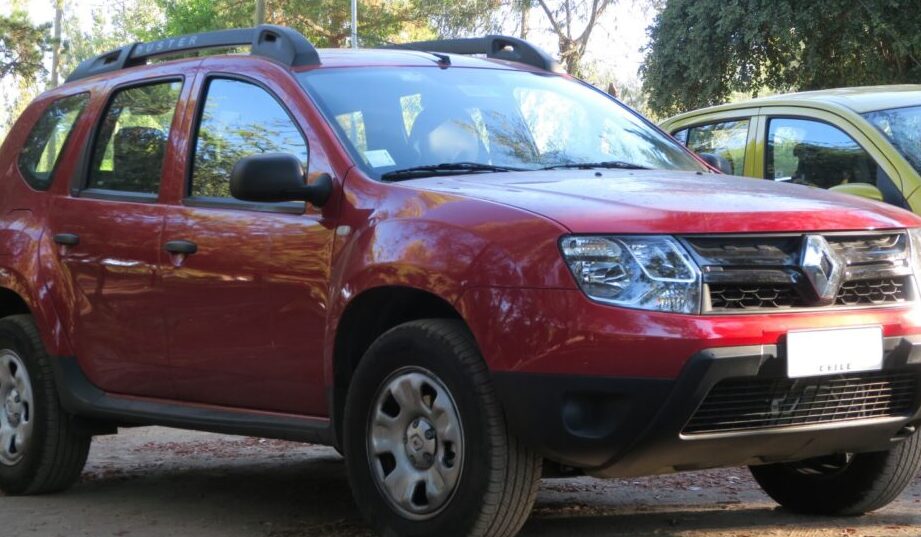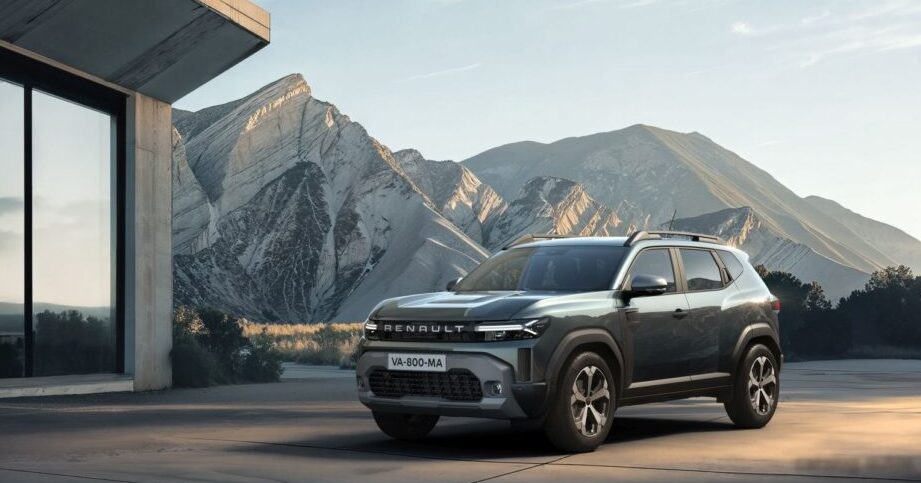
The Renault Duster III 1.2 TCe (130 hp) Mild Hybrid 4×4, introduced in 2024, represents the latest iteration of Renault’s popular compact SUV. Positioned as a mid-range offering within the third-generation Duster lineup, this variant combines a turbocharged gasoline engine with a 48-volt mild hybrid system and all-wheel drive capability. It builds upon the success of previous Duster models, aiming to deliver improved fuel efficiency and reduced emissions while maintaining the rugged practicality that has defined the nameplate. The Duster III is primarily targeted towards the European market, where demand for affordable and versatile SUVs remains strong, but is also available in select international markets.
Technical Specifications
| Brand | Renault |
| Model | Duster |
| Generation | Duster III |
| Type (Engine) | 1.2 TCe (130 Hp) Mild Hybrid 4×4 |
| Start of production | 2024 |
| Powertrain Architecture | MHEV (Mild Hybrid Electric Vehicle) |
| Body type | SUV |
| Seats | 5 |
| Doors | 5 |
| Combined fuel consumption (WLTP) | 6-6.1 l/100 km (39.2 – 38.6 US mpg, 47.1 – 46.3 UK mpg, 16.7 – 16.4 km/l) |
| CO2 emissions (WLTP) | 136-137 g/km |
| Fuel consumption (economy) – combined | 5.7-5.9 l/100 km (41.3 – 39.9 US mpg, 49.6 – 47.9 UK mpg, 17.5 – 16.9 km/l) |
| CO2 emissions | 129-133 g/km |
| Fuel Type | Petrol (Gasoline) |
| Acceleration 0 – 100 km/h | 11 sec |
| Acceleration 0 – 62 mph | 11 sec |
| Acceleration 0 – 60 mph | 10.5 sec |
| Maximum speed | 180 km/h (111.85 mph) |
| Emission standard | Euro 6 |
| Weight-to-power ratio | 10.7 kg/Hp, 93.5 Hp/tonne |
| Weight-to-torque ratio | 6 kg/Nm, 165.5 Nm/tonne |
| Gross battery capacity | 0.8 kWh |
| Battery voltage | 48 V |
| Battery technology | Lithium-ion (Li-Ion) |
| Battery location | Under the front right seat |
| Electric motor | 1 |
| Electric motor location | Front, Transverse |
| Power | 130 Hp @ 4500-5500 rpm |
| Torque | 230 Nm @ 2100-3500 rpm (169.64 lb.-ft. @ 2100-3500 rpm) |
| Engine layout | Front, Transverse |
| Engine Model/Code | H5Ft |
| Engine displacement | 1199 cm3 (73.17 cu. in.) |
| Number of cylinders | 3 |
| Engine configuration | Inline |
| Cylinder Bore | 75.5 mm (2.97 in.) |
| Piston Stroke | 89.3 mm (3.52 in.) |
| Number of valves per cylinder | 4 |
| Fuel injection system | Direct injection |
| Engine aspiration | Turbocharger, Intercooler |
| Valvetrain | DOHC |
| Engine oil capacity | 4.25 l (4.49 US qt | 3.74 UK qt) |
| Coolant | 10.2 l (10.78 US qt | 8.97 UK qt) |
| Kerb Weight | 1390 kg (3064.43 lbs.) |
| Max. weight | 1895 kg (4177.76 lbs.) |
| Max load | 505 kg (1113.33 lbs.) |
| Trunk (boot) space – minimum | 520 l (18.36 cu. ft.) |
| Trunk (boot) space – maximum | 1548 l (54.67 cu. ft.) |
| Fuel tank capacity | 50 l (13.21 US gal | 11 UK gal) |
| Max. roof load | 80 kg (176.37 lbs.) |
| Permitted trailer load with brakes (12%) | 1500 kg (3306.93 lbs.) |
| Permitted trailer load without brakes | 730 kg (1609.37 lbs.) |
| Permitted towbar download | 75 kg (165.35 lbs.) |
| Length | 4343 mm (170.98 in.) |
| Width | 1813 mm (71.38 in.) |
| Width with mirrors folded | 1921 mm (75.63 in.) |
| Width including mirrors | 2069 mm (81.46 in.) |
| Height | 1661 mm (65.39 in.) |
| Wheelbase | 2658 mm (104.65 in.) |
| Front track | 1574 mm (61.97 in.) |
| Rear (Back) track | 1556 mm (61.26 in.) |
| Front overhang | 857 mm (33.74 in.) |
| Rear overhang | 828 mm (32.6 in.) |
| Ride height (ground clearance) | 217 mm (8.54 in.) |
| Minimum turning circle (turning diameter) | 10.86 m (35.63 ft.) |
| Approach angle | 31° |
| Departure angle | 36° |
| Drivetrain Architecture | ICE and electric motor drive front wheels, rear wheels engaged via clutch. |
| Drive wheel | All wheel drive (4×4) |
| Number of gears and type of gearbox | 6 gears, manual transmission |
| Front suspension | Independent, McPherson with coil spring and anti-roll bar |
| Rear suspension | Independent multi-link spring suspension with stabilizer |
| Front brakes | Ventilated discs |
| Rear brakes | Drum |
Powertrain & Engine Architecture
At the heart of the Duster III 1.2 TCe 4×4 lies the Renault H5Ft engine, a 1.2-liter turbocharged three-cylinder gasoline engine. This engine is part of Renault’s latest generation of downsized, direct-injection powerplants. The engine utilizes a single-scroll turbocharger and intercooler to boost power and efficiency. The direct fuel injection system, operating at pressures up to 250 bar, ensures precise fuel delivery and optimized combustion. The engine features a Dual Variable Valve Timing (DOHC) system, allowing for optimized valve control throughout the rev range. The mild hybrid system incorporates a 48-volt starter-generator, which provides assistance during acceleration and enables regenerative braking to recapture energy. This system doesn’t allow for fully electric driving, but it significantly improves fuel economy and reduces CO2 emissions. The engine is paired with a 6-speed manual transmission, delivering power to all four wheels.
Driving Characteristics
The 130 hp output and 230 Nm (169.64 lb-ft) of torque provide adequate performance for everyday driving. Acceleration from 0 to 100 km/h (0-62 mph) takes approximately 11 seconds. While not particularly sporty, the engine delivers a usable amount of power for overtaking and navigating varied terrain. The mild hybrid system provides a noticeable boost during initial acceleration, smoothing out the power delivery. The manual transmission offers precise shifts, and the all-wheel-drive system provides enhanced traction in slippery conditions. Compared to higher-powered Duster variants, this version prioritizes fuel efficiency over outright performance. The gear ratios are tuned for economy, meaning the engine can feel slightly strained when climbing steep hills or carrying a full load.
Equipment & Trim Levels
The Duster III 1.2 TCe (130 hp) Mild Hybrid 4×4 typically comes equipped with a range of standard features, including air conditioning, a touchscreen infotainment system with smartphone integration (Apple CarPlay and Android Auto), and basic safety systems such as ABS, ESP, and multiple airbags. Higher trim levels offer additional features like automatic climate control, a larger touchscreen display, rear parking sensors, a reversing camera, and alloy wheels. Interior upholstery is typically cloth, with options for upgraded materials on higher trims. Optional extras include a panoramic sunroof, heated seats, and advanced driver-assistance systems (ADAS) such as adaptive cruise control and lane departure warning.
Chassis & Braking
The Duster III utilizes a robust chassis designed to handle both on-road and off-road conditions. The front suspension features a McPherson strut setup with a coil spring and anti-roll bar, while the rear suspension employs an independent multi-link system with a stabilizer bar. This configuration provides a good balance between ride comfort and handling. The braking system consists of ventilated discs at the front and drum brakes at the rear. ABS (Anti-lock Braking System) and ESP (Electronic Stability Program) are standard features, enhancing safety and control. The all-wheel-drive system provides enhanced traction, particularly on loose surfaces.
Market Reception & Comparison
The Renault Duster III 1.2 TCe (130 hp) Mild Hybrid 4×4 has been generally well-received by automotive critics, who praise its affordability, practicality, and improved fuel efficiency. Compared to other Duster variants, this version offers a compelling balance between performance and economy. The mild hybrid system helps to reduce fuel consumption and emissions, making it an attractive option for environmentally conscious buyers. However, some critics note that the engine can feel underpowered when fully loaded or driving uphill. Compared to competitors like the Skoda Karoq or Volkswagen T-Roc, the Duster offers a more affordable price point but may lack some of the refinement and advanced features found in those models.
Legacy
The Renault Duster has established itself as a popular and reliable SUV in Europe and other markets. The 1.2 TCe engine, while relatively new, is expected to offer good long-term reliability, benefiting from Renault’s experience in developing turbocharged engines. The mild hybrid system is also anticipated to be durable and require minimal maintenance. In the used car market, the Duster III 1.2 TCe (130 hp) Mild Hybrid 4×4 is expected to hold its value well, thanks to its practicality, fuel efficiency, and all-wheel-drive capability. Its affordability and ruggedness will likely continue to appeal to a wide range of buyers seeking a versatile and dependable SUV.