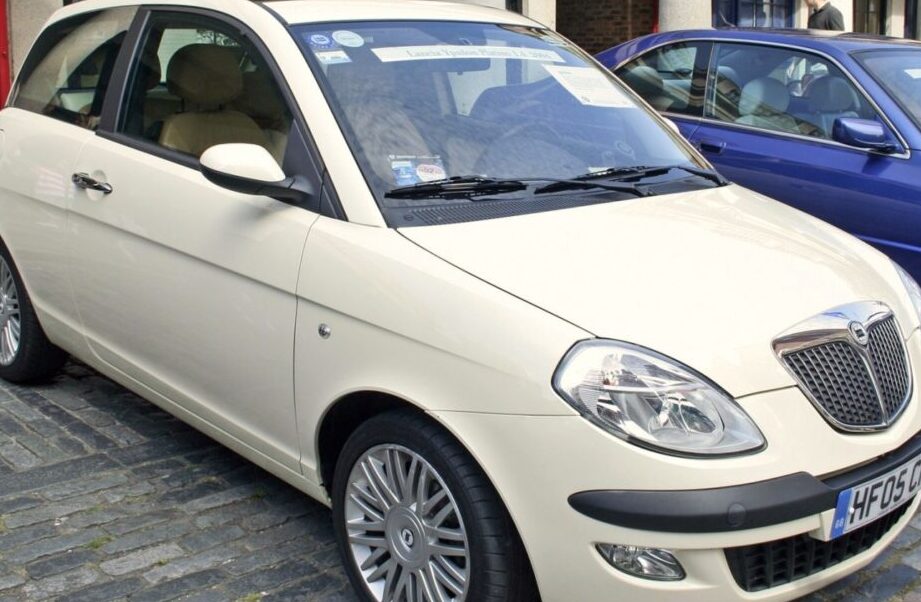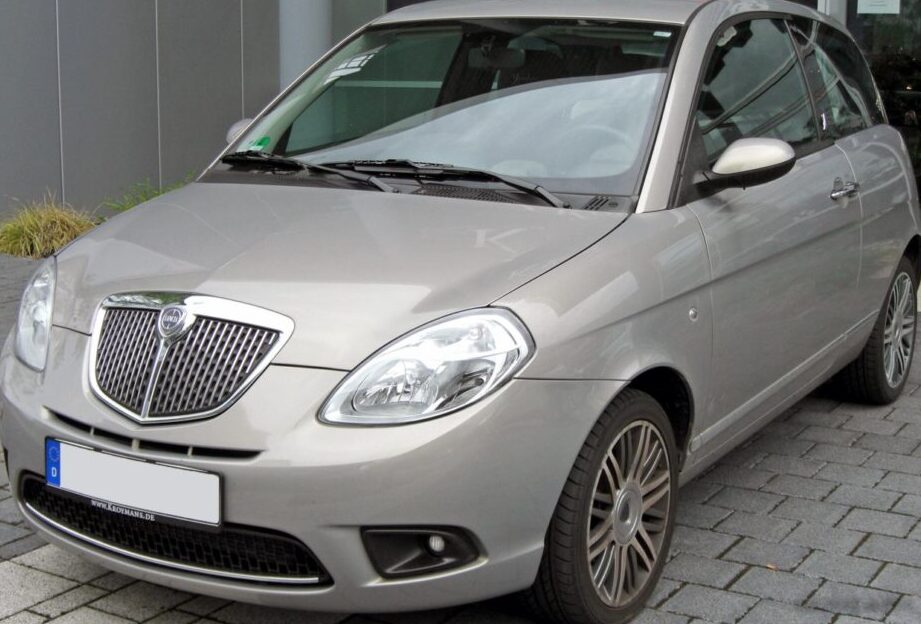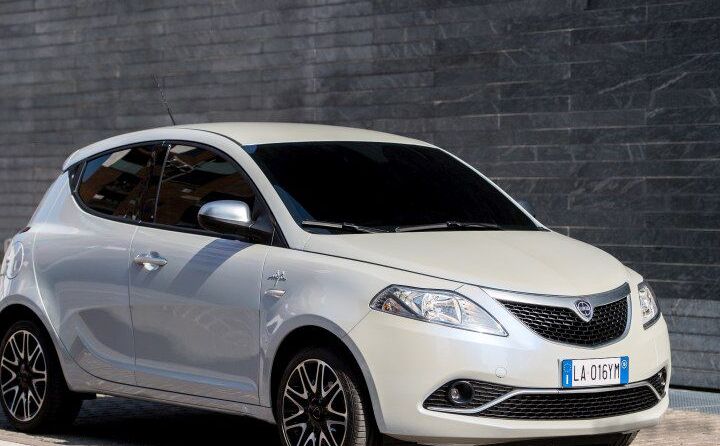
The Lancia Ypsilon 0.9 TwinAir (85 hp) DFN Start&Stop, produced from 2015 to August 2018, represents a specific iteration of the third-generation Ypsilon (846) hatchback. This variant, equipped with Lancia’s innovative two-cylinder engine and a Dualogic transmission, aimed to offer a blend of fuel efficiency and urban practicality within the Ypsilon range. Positioned as a mid-range offering, it sat between the base 1.2-liter engine and the more powerful 1.4-liter options. The facelifted Ypsilon, introduced in 2015, brought styling updates and refined interior appointments to the model line.
Technical Specifications
| Brand | Lancia |
| Model | Ypsilon |
| Generation | Ypsilon (846, facelift 2015) |
| Type (Engine) | 0.9 TwinAir (85 Hp) DFN Start&Stop |
| Start of production | 2015 |
| End of production | August, 2018 |
| Powertrain Architecture | Internal Combustion engine |
| Body type | Hatchback |
| Seats | 5 |
| Doors | 5 |
| Fuel consumption (urban) | 4.9 l/100 km (48 US mpg, 57.6 UK mpg, 20.4 km/l) |
| Fuel consumption (extra urban) | 3.8 l/100 km (61.9 US mpg, 74.3 UK mpg, 26.3 km/l) |
| Fuel consumption (combined) | 4.2 l/100 km (56 US mpg, 67.3 UK mpg, 23.8 km/l) |
| CO2 emissions | 97 g/km |
| Fuel Type | Petrol (Gasoline) |
| Acceleration 0 – 100 km/h | 12.2 sec |
| Acceleration 0 – 62 mph | 12.2 sec |
| Acceleration 0 – 60 mph | 11.6 sec |
| Maximum speed | 176 km/h (109.36 mph) |
| Emission standard | Euro 5 |
| Weight-to-power ratio | 11.5 kg/Hp, 86.7 Hp/tonne |
| Weight-to-torque ratio | 6.8 kg/Nm, 148 Nm/tonne |
| Power | 85 Hp @ 5500 rpm |
| Power per litre | 97.1 Hp/l |
| Torque | 145 Nm @ 2000 rpm (106.95 lb.-ft. @ 2000 rpm) |
| Engine layout | Front, Transverse |
| Engine Model/Code | 312 A2.000 |
| Engine displacement | 875 cm3 (53.4 cu. in.) |
| Engine configuration | Inline |
| Compression ratio | 10:1 |
| Fuel injection system | Multi-port manifold injection |
| Engine aspiration | Turbocharger, Intercooler |
| Engine oil capacity | 3.2 l (3.38 US qt, 2.82 UK qt) |
| Coolant capacity | 5.3 l (5.6 US qt, 4.66 UK qt) |
| Kerb Weight | 980 kg (2160.53 lbs) |
| Trunk (boot) space (minimum) | 245 l (8.65 cu. ft) |
| Fuel tank capacity | 40 l (10.57 US gal, 8.8 UK gal) |
| Length | 3842 mm (151.26 in) |
| Width | 1875 mm (73.82 in) |
| Height | 1520 mm (59.84 in) |
| Wheelbase | 2390 mm (94.09 in) |
| Front track | 1422 mm (55.98 in) |
| Rear track | 1414 mm (55.67 in) |
| Minimum turning circle | 9.4 m (30.84 ft) |
| Drivetrain Architecture | Front wheel drive |
| Number of gears and type of gearbox | 5 gears, automatic transmission DFN |
| Front suspension | Independent, type McPherson with coil spring and anti-roll bar |
| Rear suspension | Semi-independent, coil spring |
| Front brakes | Ventilated discs |
| Rear brakes | Drum |
| Assisting systems | ABS (Anti-lock braking system) |
| Steering type | Steering rack and pinion |
| Power steering | Electric Steering |
| Tires size | 185/55 R15 82 H; 195/45 R16 84 H |
| Wheel rims size | 15; 16 |
Powertrain & Engine Architecture
The heart of this Ypsilon variant is the 875cc TwinAir two-cylinder turbocharged engine, designated the 312 A2.000. This engine, a product of Fiat-Chrysler’s engineering, utilizes a multi-point fuel injection system and a low-pressure turbocharger with an intercooler. The engine’s small displacement and turbocharging contribute to its fuel efficiency, while the variable valve timing system optimizes performance across the rev range. The Dualogic (DFN) transmission is a five-speed automated manual gearbox. It operates as an automatic but allows for manual gear changes via steering wheel-mounted paddles or the gear selector. This transmission is known for its efficiency but can exhibit slightly slower and less smooth shifts compared to traditional torque-converter automatics.
Driving Characteristics
The 85 hp TwinAir engine, coupled with the DFN transmission, delivers adequate performance for urban driving. Acceleration from 0-60 mph takes around 11.6 seconds, and the top speed is 109 mph. However, the engine’s limited torque at lower RPMs means that it requires frequent downshifts, especially when overtaking or climbing hills. The Dualogic transmission, while improving fuel economy, can sometimes feel hesitant during gear changes. Compared to the 1.4-liter petrol versions, the TwinAir offers less outright power but significantly better fuel economy. The manual transmission versions of the TwinAir generally provide a more engaging driving experience due to the driver having more control over gear selection.
Equipment & Trim Levels
The 0.9 TwinAir DFN Start&Stop typically came equipped with air conditioning, power steering, electric front windows, a radio with USB connectivity, and ABS brakes. Higher trim levels added features such as alloy wheels, a touchscreen infotainment system, rear parking sensors, and climate control. Interior upholstery was generally cloth, with options for upgraded materials and colors. The Ypsilon’s interior design emphasized a stylish and modern aesthetic, with a focus on creating a comfortable and refined cabin environment.
Chassis & Braking
The Ypsilon 846 utilizes a McPherson strut front suspension and a semi-independent coil spring rear suspension. This setup provides a comfortable ride quality, particularly well-suited for city streets. The front brakes are ventilated discs, while the rear brakes are drums. This configuration is typical for vehicles in this weight class and provides adequate stopping power for everyday driving. The electric power steering offers light and precise steering feel, making it easy to maneuver in tight spaces.
Market Reception & Comparison
The Lancia Ypsilon 0.9 TwinAir DFN Start&Stop was generally well-received for its fuel efficiency and stylish design. Critics praised the engine’s innovative technology and its ability to deliver low running costs. However, some reviewers noted the engine’s lack of low-end torque and the Dualogic transmission’s occasional sluggishness. Compared to other small hatchbacks in the European market, the Ypsilon offered a more premium feel and a distinctive Italian design. Fuel economy figures of around 56 US mpg combined were a significant selling point, making it an attractive option for urban commuters.
Legacy
The Lancia Ypsilon 0.9 TwinAir DFN Start&Stop remains a relatively common sight on European roads. The TwinAir engine, while known for its fuel efficiency, has also been reported to experience occasional issues with turbocharger failure and oil leaks. The Dualogic transmission requires regular maintenance to ensure smooth operation. Despite these potential issues, the Ypsilon’s overall reliability is considered average for its class. In the used car market, these models are often sought after by buyers looking for a stylish and economical city car. The Ypsilon’s unique design and innovative engine technology continue to appeal to enthusiasts and those seeking a distinctive alternative to mainstream hatchbacks.